
Chef Thomas
A Proper Roast Chicken
A whole bird rubbed with butter, stuffed with lemon and thyme, roasted until the skin crackles and the kitchen smells like the kind of evening you want to sit down and stay in.
A cooking platform built around craft, culture, and the stories behind what we eat.
Created by Chef Thomas
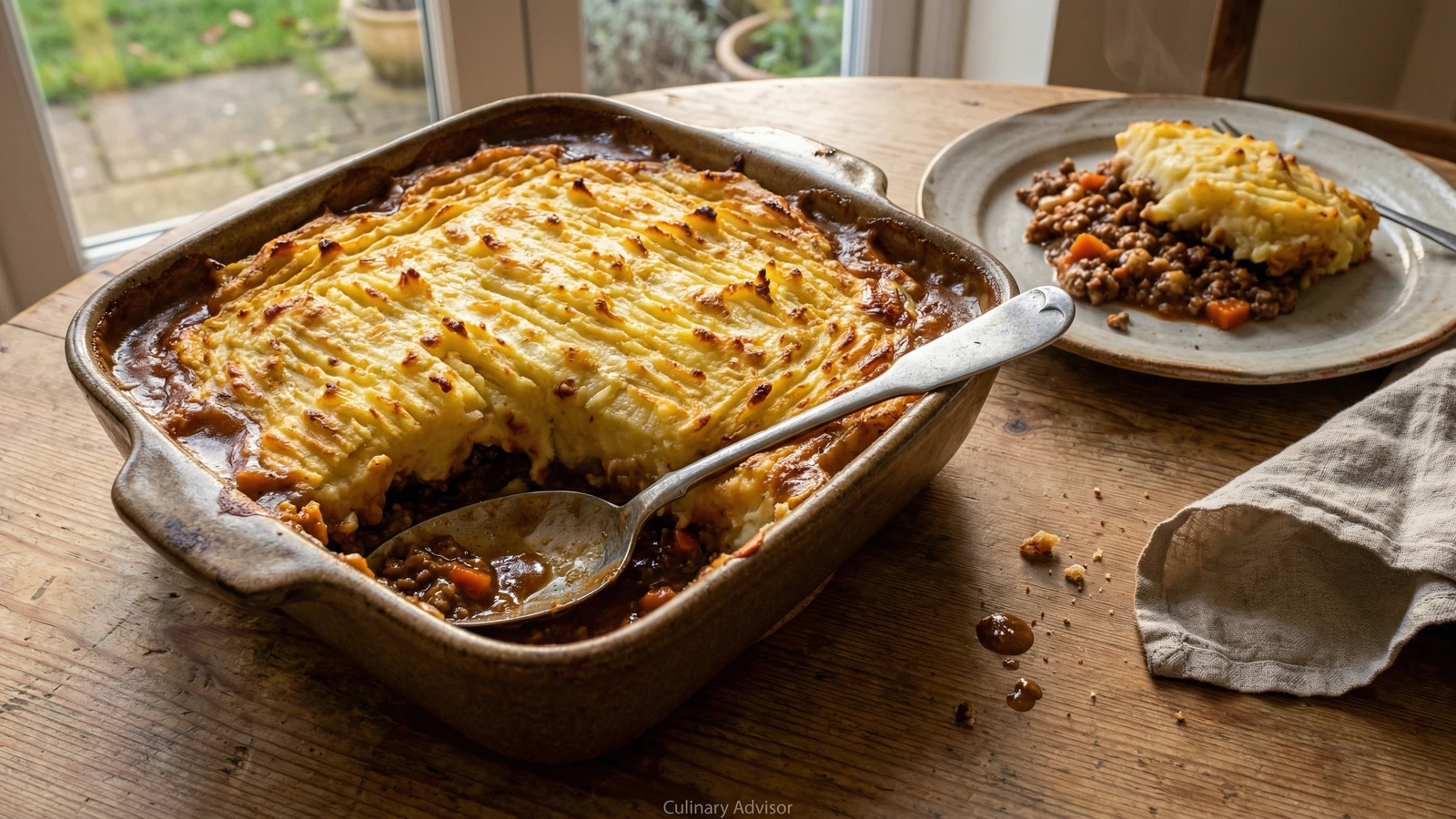
Beef mince, slow-cooked with carrots and celery and thyme, under a lid of golden, buttery mash. The kind of supper that fills a kitchen with the smell of a properly cold evening being taken care of.
There's a smell that belongs to October. Mince browning in a hot pan, onions going soft in the same fat, the kitchen window starting to cloud over while the oven warms up. Cottage pie is the source of that smell. It's not a complicated thing. It's not trying to impress anyone. But a good one, brought to the table with its mash lid cracked and golden and the filling just visible at the edges, is one of the more useful things you can cook on a weeknight.
The distinction from shepherd's pie matters, though people muddle them constantly. Shepherd's pie is lamb. Cottage pie is beef. The clue is in the name: shepherds tend sheep. I don't know who tends cottages, but they eat beef mince and they eat it well.
The secret, if it is one, is browning the meat properly and not drowning the filling. You want it rich and savoury and thick enough that the mash sits on top like a lid, not a raft. The mash itself should be generous with butter and just stiff enough to hold its fork marks. Those ridges catch the heat and go golden and slightly crisp while the filling bubbles beneath. There are few better feelings than carrying this to the table on a cold evening and watching someone's shoulders drop as they take the first spoonful.
I wrote it down in the notebook years ago: "Cottage pie. Tuesday. Rain. Second helpings all round." Nothing has changed.
Quantity
500g
not too lean
Quantity
1 large
finely diced
Quantity
2
peeled and finely diced
Quantity
2 sticks
finely diced
Quantity
2 cloves
crushed
Quantity
1 tablespoon
Quantity
1 tablespoon
Quantity
300ml
Quantity
a splash
Quantity
2
Quantity
a few sprigs
Quantity
for cooking
Quantity
to taste
Quantity
1kg
peeled and cut into chunks
Quantity
60g
Quantity
a good splash
warmed
Quantity
a grating
| Ingredient | Quantity |
|---|---|
| beef mincenot too lean | 500g |
| onionfinely diced | 1 large |
| carrotspeeled and finely diced | 2 |
| celeryfinely diced | 2 sticks |
| garliccrushed | 2 cloves |
| tomato purée | 1 tablespoon |
| plain flour | 1 tablespoon |
| beef stock | 300ml |
| Worcestershire sauce | a splash |
| bay leaves | 2 |
| thyme | a few sprigs |
| olive oil | for cooking |
| fine sea salt and black pepper | to taste |
| floury potatoespeeled and cut into chunks | 1kg |
| unsalted butter | 60g |
| whole milkwarmed | a good splash |
| nutmeg | a grating |
Get a wide, heavy pan properly hot with a glug of olive oil. Add the mince in two batches, spreading it out in a single layer and leaving it alone. Don't stir. Don't fuss. You want it to catch and colour on the bottom, not steam in a grey huddle. When it has a good brown crust underneath, break it up and turn it. This takes four or five minutes per batch. Tip it onto a plate and set aside.
In the same pan, add a little more oil if needed and turn the heat down. Add the onion, carrot, and celery with a pinch of salt. Cook gently for ten minutes or so, stirring now and then, until everything has softened and the onion has gone translucent and sweet. Add the garlic for the last minute. It should smell warm and round, not sharp.
Stir the tomato purée into the vegetables and let it cook for a minute, darkening slightly and losing its raw edge. Sprinkle over the flour and stir it in. Return the browned mince to the pan with any resting juices. Pour in the stock and add the Worcestershire sauce, bay leaves, and thyme. Give it a good stir, bring to a gentle simmer, and let it bubble quietly with the lid slightly ajar for twenty-five to thirty minutes. The liquid should reduce and thicken until the filling is rich and saucy but not swimming. Season it well. Taste it. If it tastes like it needs something, it probably needs more salt.
While the filling simmers, boil the potatoes in well-salted water until they yield completely to a knife, with no resistance at all. Drain them thoroughly and let them sit in the colander for a minute to steam dry. Return them to the warm pan and mash with the butter and warm milk until smooth and giving. Season with salt, pepper, and a grating of nutmeg. The mash wants to be soft enough to spread but firm enough to hold its shape on top. If it's too stiff, add another splash of milk. If it's slack, you've gone too far with the liquid, but it will firm up in the oven.
Set the oven to 200C/180C fan. Fish out the bay leaves and thyme stalks from the filling and spoon it into a large ovenproof dish, roughly 25cm by 20cm. Spread the mash over the top, starting at the edges and working inward so it seals against the sides of the dish. This stops the filling from bubbling over. Use a fork to rough up the surface. Those peaks and ridges are what turn golden and crisp. Dot a few small pieces of butter over the top if you like.
Bake for twenty-five to thirty minutes, until the mash has gone properly golden on top and the filling is bubbling up around the edges. You'll hear it before you see it, a gentle, sticky bubbling from inside the oven. Let it sit for five minutes once it's out. The filling needs a moment to settle, and it's too hot to eat straight away, though someone will always try.
1 serving (about 350g)
Culinary guides, cultural storytelling, and the editorial depth that makes cooking meaningful.
Discover Culinary ExplorerChef Thomas
A whole bird rubbed with butter, stuffed with lemon and thyme, roasted until the skin crackles and the kitchen smells like the kind of evening you want to sit down and stay in.

Chef Thomas
Eggs bedded into leek-flecked mash under a blanket of sharp cheese sauce, baked until golden and bubbling. A Welsh supper dish that proves the simplest things are usually the best.

Chef Thomas
A cold evening carbonara made with good smoked back bacon, eggs, Parmesan, and more black pepper than seems reasonable, tossed together in the time it takes to boil the pasta.

Chef Thomas
Thick bacon chops, bronzed in butter and slicked with a mustard and honey glaze that catches and caramelises under a hot grill. Twenty minutes, two plates, a very good Tuesday.