Culinary Explorer
A cooking platform built around craft, culture, and the stories behind what we eat.
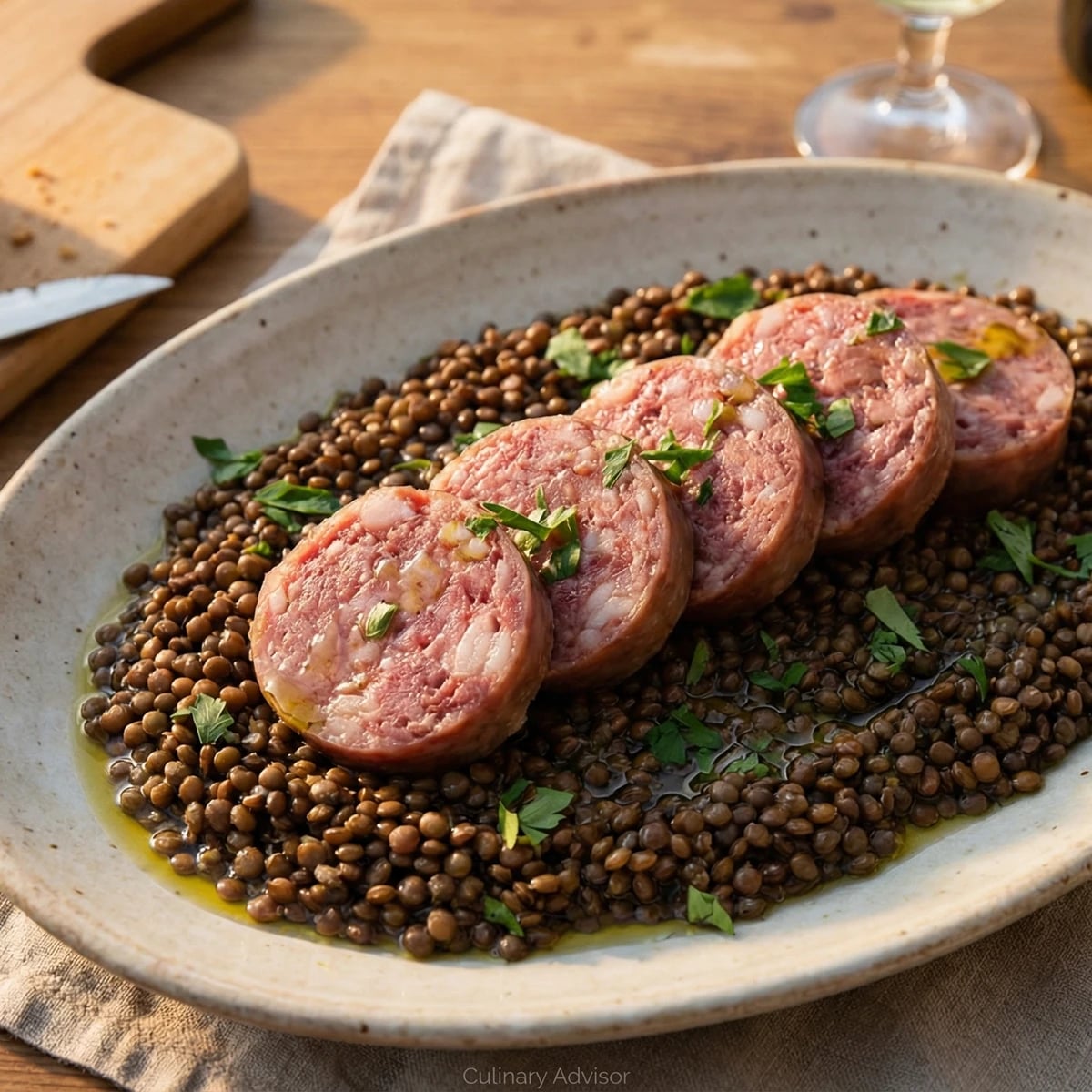
Cotechino con Lenticchie
Created by Chef Graziella
The ritual dish of Italian New Year, where a fat pork sausage from Modena meets humble lentils in a marriage of richness and restraint. The lentils bring luck. The cotechino brings joy.
On the last night of the year, in every home across Emilia-Romagna, a cotechino simmers. The kitchen fills with the smell of pork and spices, the windows fog with steam, and the family gathers knowing what awaits. This is not a dish you choose. It chooses you. It is what Italians eat on New Year's Eve because Italians have always eaten it on New Year's Eve, and to break with tradition would be to tempt fate.
The cotechino is a thing of beauty and excess: ground pork, pork fat, and pork skin bound together with nutmeg, cloves, cinnamon, and pepper, stuffed into a casing and aged just long enough to develop character. It must be simmered slowly, very slowly, until the skin becomes tender and the fat renders into the meat. Rush this, and you will have something tough and indigestible. Give it time, and you will understand why Modena guards this sausage as jealously as its balsamic vinegar.
The lentils are there because they look like small coins, and Italians are practical about their superstitions. Eat lentils at midnight, and prosperity follows. Every grandmother knows this. The lentils should be the small brown variety, cooked simply with aromatics until tender but not mushy. They must hold their shape. Coins do not collapse.
Ingredients
cotechino sausage
Quantity
1 (about 2 pounds)
small brown lentils
Quantity
1 pound
yellow onion (for cotechino)
Quantity
1 medium
halved
| Ingredient | Quantity |
|---|---|
| cotechino sausage | 1 (about 2 pounds) |
| small brown lentils | 1 pound |
| yellow onion (for cotechino)halved | 1 medium |
Where cooking meets culture.
Culinary guides, cultural storytelling, and the editorial depth that makes cooking meaningful.
Discover Culinary Explorer