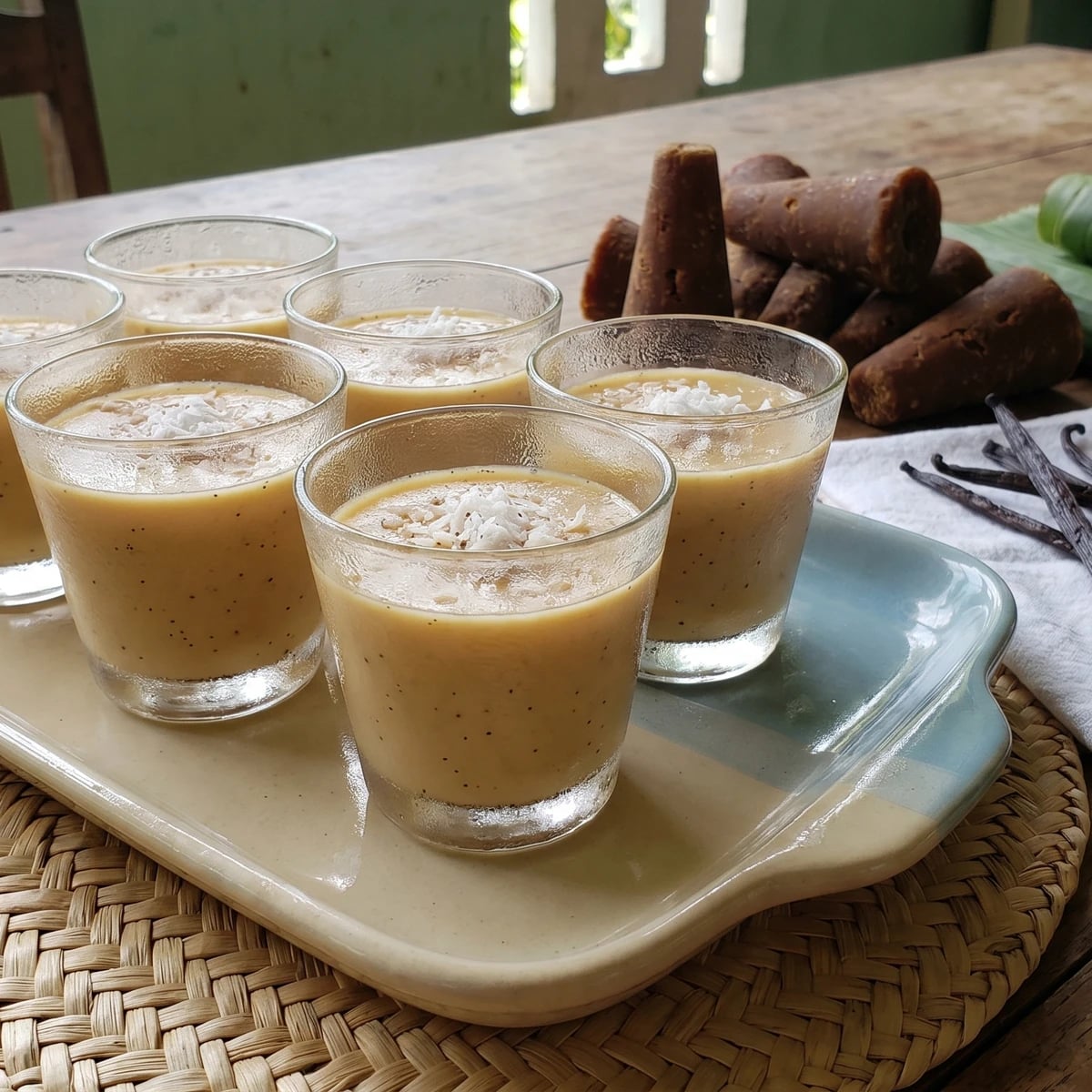
Veracruz's tropical chicozapote folded with cream, piloncillo, and real vainilla de Papantla, served cold in small copitas like a Gulf coast sobremesa should be.
Desserts
Mexican
Dinner Party
Special Occasion
25 min
Active Time
8 min cook•2 hr 33 min total
Yield6 small copitas
Veracruz, especially the humid belt between Papantla, Nautla, and the Sotavento, knows what to do with fruit. Chicozapote ripens there with brown sugar flesh, soft grain, and a perfume that doesn't need a pastry chef standing over it. This is a Gulf coast dessert: fruit, cream, piloncillo, vainilla de Papantla, small copitas on the table after a serious meal.
The chicozapote does the heavy lifting. You don't cook it into sadness. You scoop the ripe fruit, remove every black seed, mash it just enough, then fold it with cream scented by a whole vanilla pod. Extract is for people who don't know Papantla. The pod gives you those tiny black seeds and the deep floral note that belongs to Veracruz.
I learned a version like this from a woman near the Papantla market who served it in little glass cups set on a blue earthenware tray. She told me, 'If the fruit isn't soft, don't make it.' Correct. If the chicozapote is hard, it tastes like wet sawdust. Wait. The market decides, not you. Si no conoces el mercado, no conoces la cocina.
Chicozapote, Manilkara zapota, is native to Mesoamerica and was valued long before the Spanish arrived, both for its sweet fruit and for the latex called chicle that later fed the chewing gum industry. Veracruz's Totonacapan region is also one of Mexico's historic vanilla centers, especially around Papantla, where vanilla cultivation became tied to Totonac agricultural knowledge. Cream-based fruit desserts became more common after dairy expanded under Spanish colonial cattle ranching, but the fruit and vanilla remain firmly Gulf coast ingredients.
The technique, the tradition, and the story behind every dish.
ripe chicozapotessoft, peeled, seeded, and flesh scooped
4 large
grated piloncillo
1/2 cup
water
1/4 cup
whole vainilla de Papantla podsplit lengthwise
1
Mexican crema para batir or heavy creamwell chilled
1 1/2 cups
fine sea salt
1/4 teaspoon
fresh lime juice
1 tablespoon
coco fresco rallado (optional)freshly grated, for serving
2 tablespoons
Equipment Needed
•Small heavy saucepan
•Sharp paring knife
•Chilled mixing bowl and whisk or hand mixer
•Rubber spatula
•Small glass copitas or jícaras for serving
Instructions
1
Make piloncillo syrup
Put the grated piloncillo and water in a small saucepan over medium-low heat. Scrape the seeds from the vainilla de Papantla pod into the pan, then add the pod too. Simmer gently for 6 to 8 minutes, stirring until the piloncillo dissolves and the syrup smells like vanilla and dark cane sugar. Remove from the heat and cool completely. Do not pour hot syrup into cream unless you want sweet soup.
2
Prepare the fruit
Cut the chicozapotes open. Remove every shiny black seed and any hard bits near the center. Scoop the flesh into a bowl and mash it with a fork until mostly smooth, leaving a little texture. Chicozapote has a fine grain. That is normal. If the fruit is not soft enough to mash easily, it is not ready for this dessert.
3
Season the pulp
Remove the vanilla pod from the cooled syrup. Stir the syrup, sea salt, and lime juice into the mashed chicozapote. Taste it. The lime should brighten the fruit, not announce itself. This dessert is sweet and tropical, not a lime dessert wearing a disguise.
4
Whip the cream
Pour the cold cream into a chilled bowl. Whip until it holds soft peaks, thick enough to fold but not so stiff that it turns heavy. The cream should move like a clean ribbon from the whisk. Overwhipped cream makes the copitas dense. Veracruz fruit desserts should feel generous, not leaden.
If your kitchen is hot, set the mixing bowl over a larger bowl of ice. Gulf coast humidity teaches patience. The cream needs cold.
5
Fold and chill
Add one third of the whipped cream to the chicozapote mixture and stir to loosen it. Fold in the remaining cream with a spatula, turning the bowl until no white streaks remain. Spoon into small copitas or jícaras. Cover and chill for at least 2 hours, until the cream sets and the fruit flavor settles into the vanilla.
6
Serve cold
Top each copita with a small pinch of coco fresco rallado if using. Serve cold, not frozen. Set the copitas on a tray and let people take them after dinner. Recetas probadas y garantizadas, but only when the chicozapote is ripe.
Chef Tips
•Buy chicozapote by touch, not by color. It should yield like a ripe avocado and smell sweet at the stem end. Hard fruit will not ripen properly once cut. Pregúntale a las señoras del mercado.
•Use a whole vainilla de Papantla pod. If you only have extract, understand the compromise: you get sweetness and aroma, but not the same deep floral taste or the black seeds that mark the real thing.
•Piloncillo gives the cream a darker cane flavor than refined sugar. If your piloncillo is very hard, grate it on the large holes of a box grater or shave it carefully with a knife.
•Do not use dried bagged coconut. For Veracruz desserts, coconut means coco fresco rallado. If you cannot find it, leave the garnish off.
Advance Preparation
•The piloncillo and vanilla syrup can be made up to 3 days ahead and kept refrigerated with the vanilla pod inside.
•The finished copitas can be chilled up to 8 hours before serving. After that, the fruit darkens and the cream loses its clean texture.
•Do not freeze this dessert. Chicozapote becomes watery when thawed.
Frequently Asked Questions
Nutrition Information
1 serving (about 170g)
Calories
350 calories
Total Fat
23 g
Saturated Fat
15 g
Trans Fat
0 g
Unsaturated Fat
8 g
Cholesterol
70 mg
Sodium
130 mg
Total Carbohydrates
37 g
Dietary Fiber
5 g
Sugars
31 g
Protein
2 g
Where cooking meets culture.
Culinary guides, cultural storytelling, and the editorial depth that makes cooking meaningful.