Chef Lupita
Acúmara Tatemada al Comal
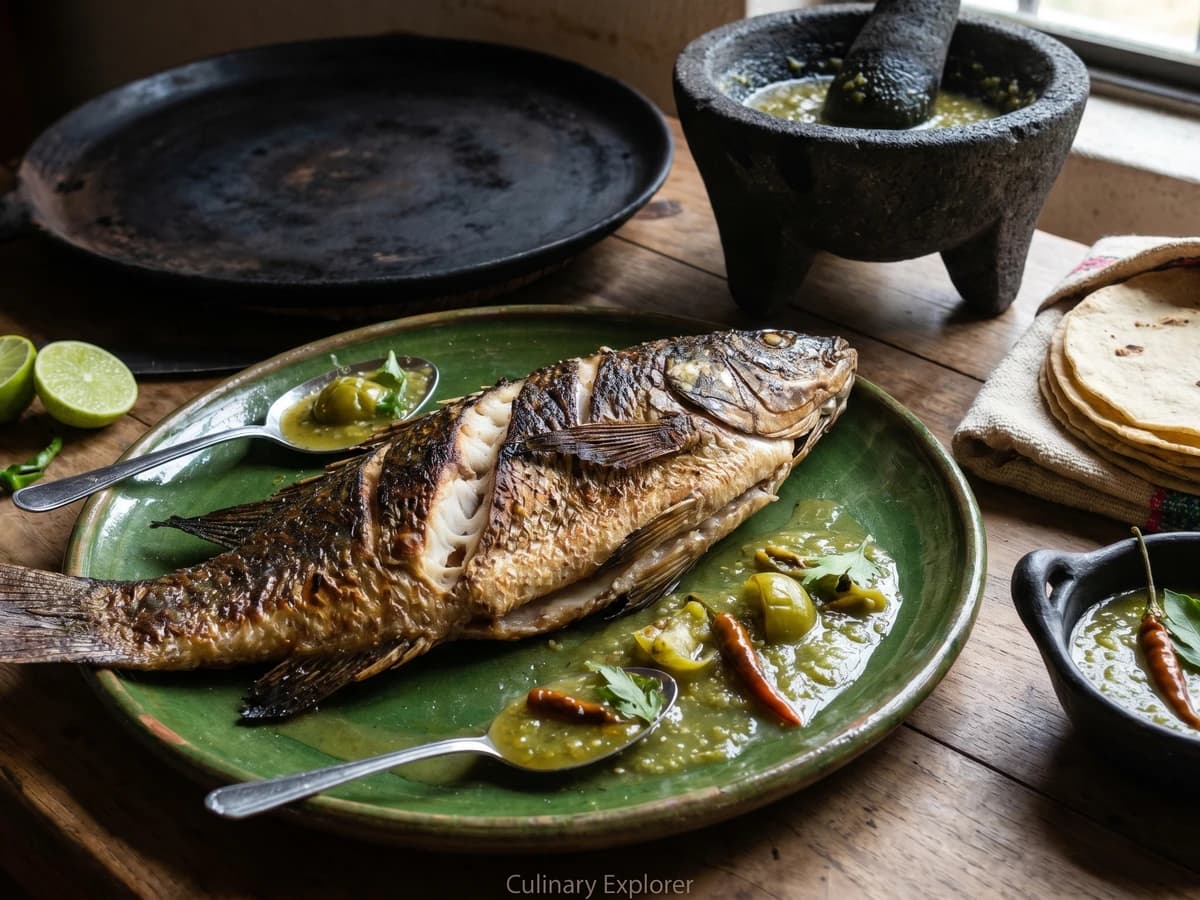
Michoacán's Lake Pátzcuaro acúmara, a whole kurucha from the lago tatemada on a comal de leña and served with chile perón atápakua, corn tortillas, and P'urhépecha discipline.
A cooking platform built around craft, culture, and the stories behind what we eat.

Created by
Estado de Mexico's slow-steamed rabbit in guajillo-ancho adobo, scented with toasted avocado leaf and wrapped in maguey skin so the meat takes the perfume of the agave country.
This is a dish from the Estado de Mexico, the maguey country that sits in the shadow of the Iztaccihuatl and Popocatepetl volcanoes. It belongs to the towns of the eastern altiplano, Texcoco, Otumba, Ixtapaluca, where the maguey grows in long rows along the fields and where rabbit has been the meat of the countryside since before there were sheep or pigs to compete with it.
The word mixiote refers to the technique, not the meat. Mixiote is the thin, papery outer skin of the maguey leaf, peeled off in sheets, dried, and used as the wrapper that gives the dish its name. The maguey skin holds the steam tight around the meat and lifts a faint vegetal perfume into the adobo as it cooks. You cannot replicate it with foil. You can approach it with parchment inside banana leaf if true mixiote is impossible to find, but understand that you are making a compromise, not an upgrade. The dish is named for the wrapper for a reason.
The adobo is built on chile guajillo and chile ancho, toasted on a comal until the oils release, then soaked, blended, and strained smooth. Avocado leaf is non-negotiable. Hoja de aguacate carries an anise perfume that defines the dishes of the central Mexican altiplano, mixiote, barbacoa, the slow-cooked frijoles de la olla, and without it you have a chile braise, not a mixiote. Toast the leaf for ten seconds over an open flame before you lay it on the meat. That is when the perfume wakes up.
My mother did not cook mixiote. She was jalisciense and the dish did not travel with her. I learned this one from a senora in San Juan Teotihuacan who steamed her bundles in a tin tamalera over a wood fire in her yard, and who told me that her grandmother used to gather mixiote from the maguey rows herself. The state has now restricted commercial mixiote harvesting because the practice was killing the maguey plants. Treat the wrapper, when you can find it, with the respect of someone who knows what it cost. Saber cocinar es saber vivir.
Mixiote as a cooking technique is pre-Columbian, predating the arrival of the Spanish by centuries; the indigenous Nahua and Otomi peoples of the central Mexican altiplano wrapped game, fish, and small mammals in the dried outer cuticle of the maguey leaf and pit-steamed them in earth ovens long before stoves or metal pots existed. The dish remained a rural specialty until the 20th century, when it migrated into the cantinas and Sunday markets of the Valle de Toluca and the eastern Estado de Mexico, where rabbit, lamb, and chicken versions became fixed favorites. In 2008, the Estado de Mexico government restricted commercial harvesting of true mixiote membrane because the practice was killing maguey plants before they could mature for pulque or mezcal production, and most modern restaurant mixiotes are now steamed in parchment paper rather than the real maguey skin the dish is named for.
Quantity
1 (about 3 pounds)
cut into 8 pieces
Quantity
8
stemmed and seeded
Quantity
4
stemmed and seeded
Quantity
2
stemmed and seeded
Quantity
1
stemmed
Quantity
5
peeled
Quantity
1/2 medium
Quantity
1 teaspoon
Quantity
6
Quantity
3
Quantity
1 inch piece
Quantity
1 teaspoon
Quantity
2 tablespoons
Quantity
2 tablespoons
melted
Quantity
1 tablespoon
Quantity
8
fresh or dried
Quantity
6
rehydrated, or 6 large pieces parchment paper plus banana leaf
Quantity
for tying
Quantity
for serving
Quantity
for serving
Quantity
for serving
| Ingredient | Quantity |
|---|---|
| whole rabbitcut into 8 pieces | 1 (about 3 pounds) |
| dried chile guajillostemmed and seeded | 8 |
| dried chile anchostemmed and seeded | 4 |
| dried chile pasillastemmed and seeded | 2 |
| dried chile de arbol (optional)stemmed | 1 |
| garlic clovespeeled | 5 |
| white onion | 1/2 medium |
| cumin seeds | 1 teaspoon |
| whole black peppercorns | 6 |
| whole cloves | 3 |
| Mexican cinnamon (canela) | 1 inch piece |
| dried Mexican oregano | 1 teaspoon |
| apple cider vinegar | 2 tablespoons |
| lard (manteca de cerdo)melted | 2 tablespoons |
| kosher salt | 1 tablespoon |
| avocado leaves (hojas de aguacate)fresh or dried | 8 |
| mixiote sheets (maguey skin)rehydrated, or 6 large pieces parchment paper plus banana leaf | 6 |
| kitchen twine or strips of palm leaf | for tying |
| hand-pressed corn tortillas (optional) | for serving |
| salsa borracha (optional) | for serving |
| pickled nopales (optional) | for serving |
Heat a dry comal or heavy skillet over medium. Toast the guajillo, ancho, pasilla, and arbol chiles separately, about 20 to 30 seconds per side. The skin should puff and the kitchen should smell like the chile vendors in Texcoco market. Do not blacken them. Burned chile turns the adobo bitter and there is no fixing it later.
Place the toasted chiles in a heatproof bowl and cover with hot tap water. Hot, not boiling. Boiling water cooks the skins and pulls bitterness into the adobo. Let them soften for 20 minutes, weighted down with a plate so they stay submerged.
In the same dry comal, toast the cumin seeds, peppercorns, cloves, and cinnamon piece together for about a minute, shaking the pan, until they smell awake. Transfer to a molcajete or spice grinder and grind to a coarse powder. Add the oregano off the heat and grind once more to combine.
Drain the chiles, reserving a cup of the soaking liquid. Transfer them to a blender with the garlic, onion, ground spices, vinegar, melted lard, salt, and half a cup of the soaking water. Blend on high until completely smooth, at least three minutes. The adobo should be the color of dark brick and thick enough to coat a spoon heavily. Strain through a fine-mesh sieve, pressing on the solids. La manteca es el sabor and the strain is what makes the adobo cling.
Place the rabbit pieces in a large bowl. Pour the strained adobo over the meat and turn each piece until it is fully coated, top to bottom. Cover and refrigerate for at least four hours, preferably overnight. The adobo needs time to penetrate the meat. Rabbit is lean and the marinade is what gives it depth.
If you have true mixiote, the dried outer skin of the maguey leaf, soak the sheets in warm water for 30 minutes until pliable. Rinse and pat them dry. If you cannot find mixiote, layer a piece of parchment paper inside a softened banana leaf. The flavor is not the same but the technique works and the steam stays where it belongs. Mexican grandmothers cook with what the mercado is selling today, not what looks good on a Pinterest board.
Lay a mixiote sheet flat on the counter. Place one or two pieces of rabbit in the center, spoon over an extra tablespoon of the adobo from the bowl, and lay an avocado leaf on top of the meat. Toast the avocado leaf for ten seconds over an open flame first, just enough to wake the anise perfume that is the signature of this dish. Gather the corners of the mixiote up and over the meat to form a small purse. Tie tightly with twine or a strip of palm leaf so no steam escapes. Repeat for all six bundles.
Set up a large tamalera or stockpot with a steamer rack. Add water to just below the rack. Bring to a rolling boil over high heat, then reduce to a steady medium simmer. Arrange the bundles on the rack with space between them. Cover the pot, place a damp cloth over the lid for a tighter seal, and steam for two and a half hours. Check the water level every 45 minutes and add boiling water from a kettle if it runs low. Never cold water. Cold water shocks the pot and stalls the cooking.
Lift the bundles out with tongs. Let them rest for ten minutes before opening. The meat should pull from the bone with no resistance and the adobo should have reduced into a glossy, lacquered sauce clinging to the rabbit. Serve the bundles closed at the table so each guest unties their own. The first breath that comes off the open mixiote, chile, avocado leaf, and maguey, is the whole point of the dish. Cada estado, su propia cocina, and this one belongs to the Estado de Mexico.
1 serving (about 250g)
Culinary guides, cultural storytelling, and the editorial depth that makes cooking meaningful.
Discover Culinary ExplorerChef Lupita
Michoacán's Lake Pátzcuaro acúmara, a whole kurucha from the lago tatemada on a comal de leña and served with chile perón atápakua, corn tortillas, and P'urhépecha discipline.

Chef Lupita
Puebla's weekday adobo of pork shoulder braised in a thick guajillo and ancho sauce sharpened with vinegar, cumin, and clove. The deep red of a market spice stall, the dish a poblana cooks without thinking.

Chef Lupita
Loreto's pit-roasted clams, planted hinge-up in beach sand and tatemadas under a fast fire of dried romerillo brush, the resinous Baja desert shrub that gives this dish its smoke.

Chef Lupita
Oaxaca's eighth mole, the silky, almond-and-cinnamon almendrado, served over poached chicken. Mild, sweet, restrained, and a quiet rebuttal to anyone who thinks Mexican food has to be hot to be Mexican.