
Chef Lupita
Agua de Alfalfa
Ciudad de México's highland market agua fresca, fresh alfalfa blended with pineapple and lime until bright green, strained clean, and poured cold from the vitrolero.
A cooking platform built around craft, culture, and the stories behind what we eat.
Created by
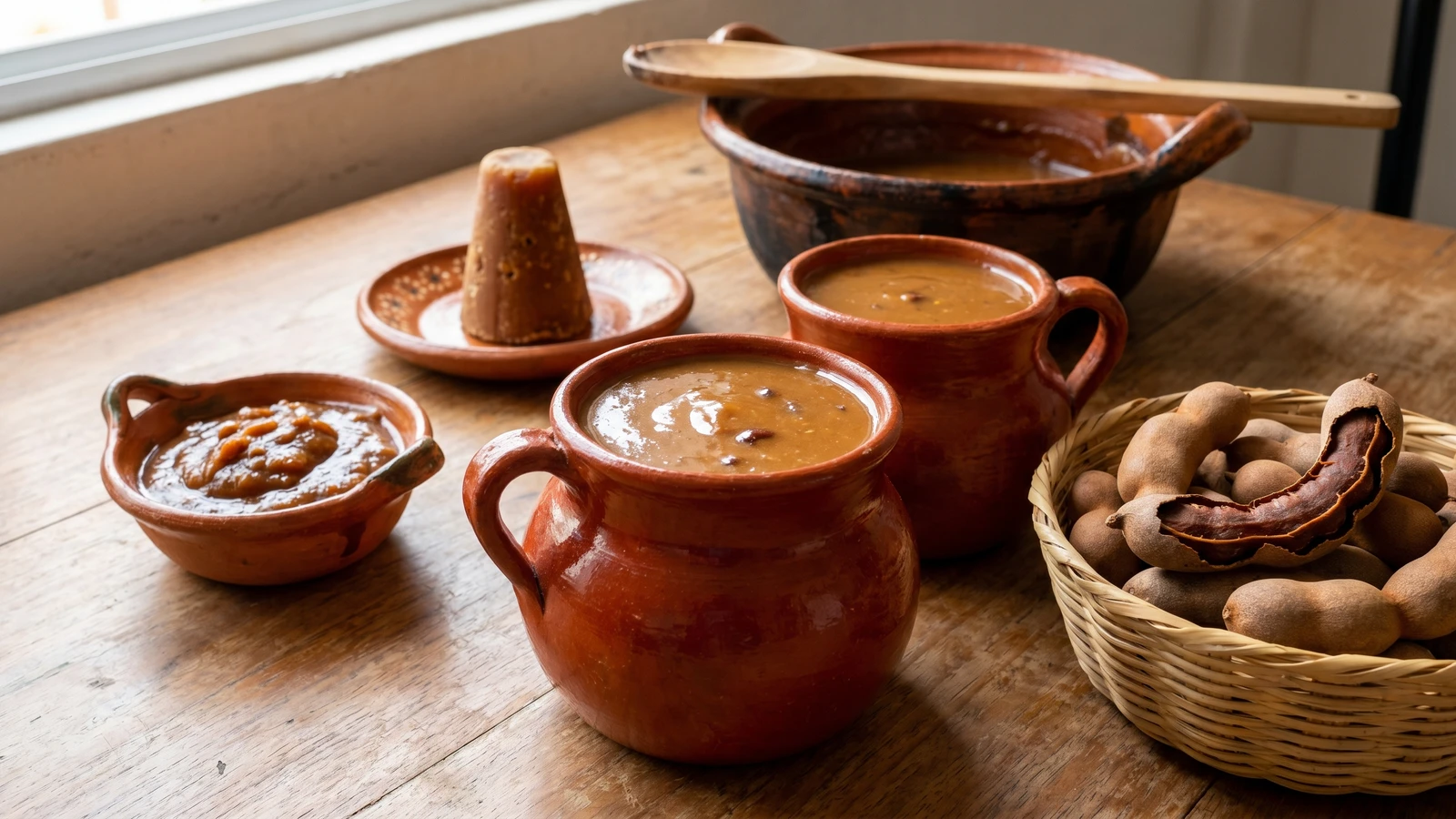
Colima's Pacific fruit atole, made with tamarind pulp, piloncillo, and masa, gives you a sweet-sour cup that belongs to the tropical market, not the chocolate pot.
Colima, on the Pacific coast between Jalisco and Michoacán, is small on the map and serious in the kitchen. Tamarind atole belongs to that hot, tropical strip where fruit trees, sugar, salt air, and corn all meet in the same market basket. In Colima city and the towns toward Tecomán, tamarind is not an exotic flavor. It is what the market is selling when the pods are heavy and the pulp is dark.
This is atole, so the base is corn. Masa gives the drink body and turns tamarind from agua fresca into something that can hold you through an evening. The balance matters: tart tamarind, dark piloncillo, canela, a little salt. No chile. Not every Mexican drink needs chile, and not every Mexican flavor is heat. This is a 32-state cuisine. Cada estado, su propia cocina.
I learned fruit atoles from women who did not measure with spoons. They measured with the thickness on the back of the wooden paddle and the look of the pulp when it came away from the seed. That is the technique here. You soften the tamarind, press it hard, sweeten it only enough, then let the masa thicken slowly. No me vengas con atajos. Bottled tamarind syrup makes a flat drink. Fresh pulp gives you the sour edge that makes Colima recognize itself.
Atole comes from the Nahuatl word atolli, a pre-Columbian corn drink made by cooking ground maize in water until thickened. Tamarind is not native to Mexico; it arrived through Spanish colonial trade routes, including the Manila galleons that connected Asia, New Spain, and the Pacific ports from the 16th century onward. The fruit adapted especially well to Mexico's western and southern tropical regions, which is why tamarind atoles and aguas are strongly associated with Pacific and lowland states such as Colima, Jalisco, Guerrero, and Oaxaca.
Quantity
8 ounces
shells and stringy veins removed
Quantity
7 cups
divided
Quantity
5 ounces
chopped, plus more to taste
Quantity
1 small
Quantity
1/2 teaspoon
Quantity
3/4 cup
or 2/3 cup masa harina mixed with 1/2 cup water
Quantity
1 cup
| Ingredient | Quantity |
|---|---|
| fresh tamarind podsshells and stringy veins removed | 8 ounces |
| waterdivided | 7 cups |
| piloncillochopped, plus more to taste | 5 ounces |
| Mexican cinnamon stick (canela) | 1 small |
| kosher salt | 1/2 teaspoon |
| fresh masa for tortillasor 2/3 cup masa harina mixed with 1/2 cup water | 3/4 cup |
| whole milk (optional) | 1 cup |
Put the peeled tamarind pulp in a saucepan with 3 cups water. Bring it to a gentle simmer and cook for 12 to 15 minutes, pressing the pods with a spoon as they soften. The pulp should loosen from the seeds and turn the water brown and sharp-smelling. Tamarind gives this atole its backbone. Do not replace it with bottled drink concentrate.
Pour the softened tamarind through a fine-mesh strainer into a bowl. Press hard with a spoon to push through as much pulp as possible. Discard the seeds and fibers. You should have about 2 cups of tart tamarind liquid. If it is very thick, loosen it with a little water. If it tastes weak, you did not press enough. Press again.
Return the tamarind liquid to the saucepan. Add 3 cups water, the piloncillo, canela, and salt. Simmer gently for 8 to 10 minutes, stirring until the piloncillo dissolves. Taste it now. It should be tart first, sweet second. Colima's fruit atoles are not candy. They still taste like fruit.
In a bowl, whisk the fresh masa with the remaining 1 cup water until smooth. If using masa harina, mix it first with 1/2 cup water to make a soft paste, then whisk in the rest. No lumps. Lumps in atole are laziness, and the señora serving this in the mercado would send you back to the pot.
Lower the heat. Whisk the masa mixture into the tamarind base in a thin stream. Cook 10 to 12 minutes, whisking often, until the atole coats the spoon and feels velvety on the tongue. Do not let it boil hard. Masa thickens with patience, not violence.
Remove the canela. Stir in the milk if you want a rounder, softer cup, but the water-based version is cleaner and more common for a bright fruit atole. Taste for piloncillo and salt. Serve hot in clay jarritos or heavy mugs. This is comfort food, not dessert decoration. Así se hace y punto.
1 serving (about 330g)
Culinary guides, cultural storytelling, and the editorial depth that makes cooking meaningful.
Discover Culinary ExplorerChef Lupita
Ciudad de México's highland market agua fresca, fresh alfalfa blended with pineapple and lime until bright green, strained clean, and poured cold from the vitrolero.

Chef Lupita
Aguascalientes' Lenten agua fresca, jewel-red from cooked beet and full of apple, banana, orange, lettuce, and ground peanuts, served cold when Holy Week meets the Feria de San Marcos.

Chef Lupita
Sonora and Sinaloa's creamy malted barley water, built on toasted cebada perla, Mexican canela, vanilla from Papantla, and evaporated milk. Pink-beige, rich, and served cold over heavy ice in a heavy glass tumbler. Liquid cookie comfort the northwest way.

Chef Lupita
Yucatán's everyday tonic of boiled chaya leaves blended with lima agria, sugar, and ice. The bright green jarra that sits on every Peninsula table from Mérida to Valladolid.