
Chef Dean
Arnold Palmer
The legendary golfer's signature refreshment: brisk black tea meets tart fresh lemonade in a drink so perfectly balanced it became an American institution, best served ice-cold on a summer afternoon.
A cooking platform built around craft, culture, and the stories behind what we eat.
Created by
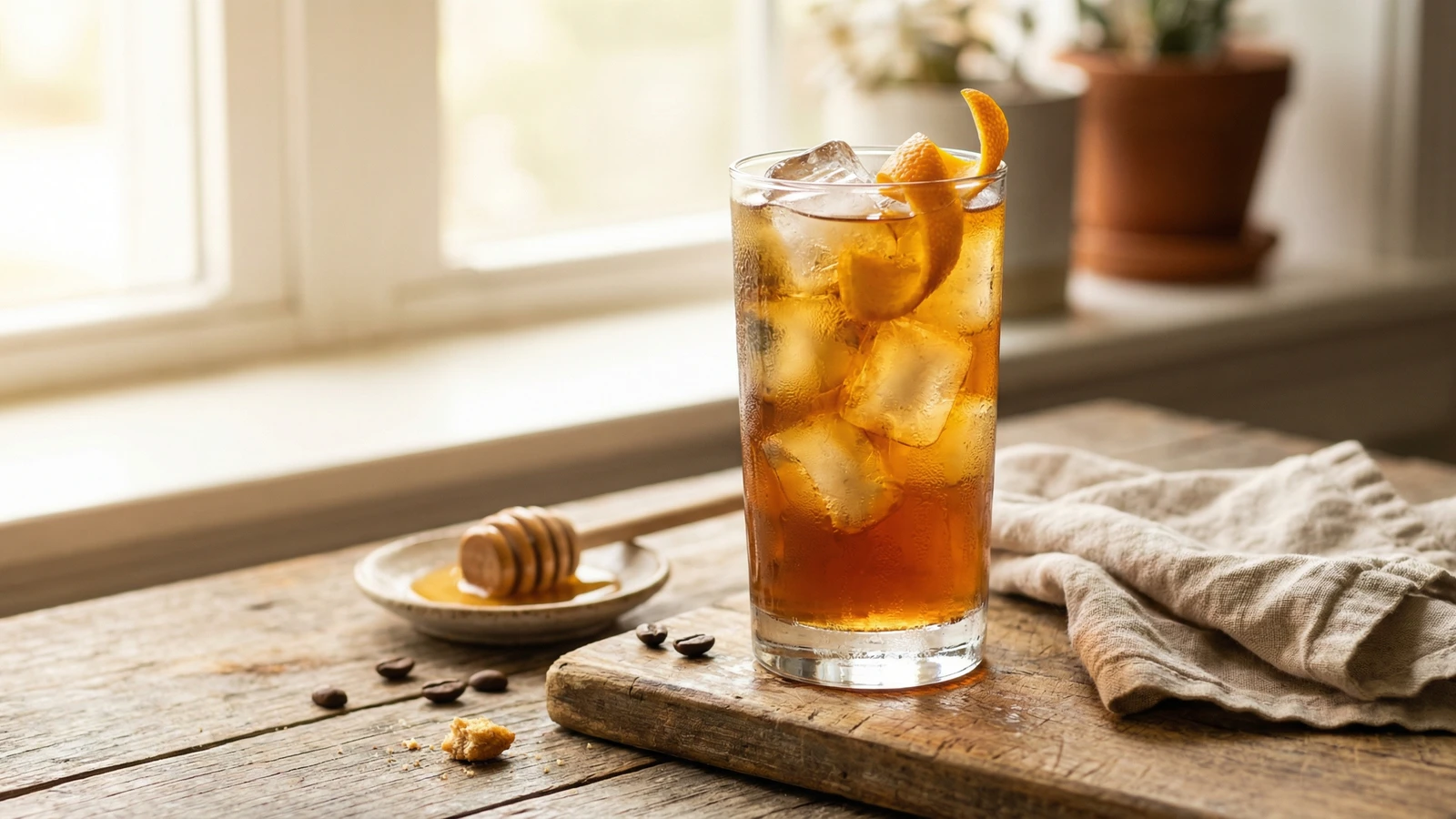
Single-origin coffee steeped overnight with ribbons of fresh orange peel, yielding a smooth, citrus-kissed cold brew that rewards patience and honors the bean.
Cold brew asks almost nothing of you except time. The coffee steeps slowly in cold water, never shocked by heat, releasing its sweetness and depth without the bitterness that quick extraction brings. Adding orange peel to the process is a small act with large rewards.
The oils in citrus skin are volatile and fragrant. During those quiet hours in the refrigerator, they migrate into the coffee, weaving a subtle brightness through every sip. This is not orange-flavored coffee. It is coffee that carries a whisper of citrus, a suggestion of something more.
Start with beans you trust. The difference between commodity coffee and single-origin from a careful roaster is the difference between a tomato in January and one warm from the August garden. Your choices shape what ends up in your glass. A few dollars more at a local roaster keeps that roaster alive and keeps your morning ritual honest.
Every meal is a meaningful choice, and so is every cup.
Quantity
1 cup (85g)
coarsely ground
Quantity
4 cups
Quantity
from 1 large orange
wide strips, no white pith
Quantity
for serving
Quantity
to taste
| Ingredient | Quantity |
|---|---|
| single-origin coffeecoarsely ground | 1 cup (85g) |
| cold filtered water | 4 cups |
| navel orange peelwide strips, no white pith | from 1 large orange |
| ice | for serving |
| local honey or simple syrup (optional) | to taste |
Start with the beans. Seek out a roaster who can tell you where they came from and when they were roasted. Single-origin coffees from Ethiopia or Central America often carry natural citrus notes that sing alongside the orange peel. Grind coarsely, like raw sugar. Too fine and the brew turns bitter and muddy.
Choose an orange that feels heavy in your hand and smells like itself when you hold it close. Using a vegetable peeler, strip four or five wide ribbons from the skin, pressing lightly to avoid the bitter white pith beneath. The oils live in that thin outer layer. You want only the perfumed surface.
Place the ground coffee in a large glass jar or pitcher. Tuck the orange peels among the grounds. Pour the cold water over everything, stirring gently to saturate the coffee. Cover loosely and set in the refrigerator. Then wait. Time does the work here, not heat.
Line a fine-mesh strainer with cheesecloth or a paper filter and set it over a clean pitcher. Pour the steeped coffee through slowly. Do not press the grounds or you will extract bitterness. Let gravity do the work. Discard the spent grounds and orange peels.
Fill a tall glass with ice. Pour the cold brew over, watching the dark liquid cascade through the cubes. The concentrate is strong by design. You can dilute with cold water or drink it as is. A drizzle of local honey softens any edges, though good coffee and good citrus may need nothing at all.
1 serving (about 240g)
Culinary guides, cultural storytelling, and the editorial depth that makes cooking meaningful.
Discover Culinary ExplorerChef Dean
The legendary golfer's signature refreshment: brisk black tea meets tart fresh lemonade in a drink so perfectly balanced it became an American institution, best served ice-cold on a summer afternoon.

Chef Ally
Sun-warmed blackberries crushed with sugar and stirred into hand-squeezed lemonade, the color of late summer twilight, best drunk on a porch with nowhere to be.

Chef Dean
All the comfort of a warm bakery muffin, transformed into a thick, cold breakfast you can drink on your way out the door. Rolled oats and cinnamon make the illusion complete.

Chef Dean
Honest hot chocolate simmered in cast iron over crackling flames, finished with marshmallows toasted to blistered perfection. This is what your campfire memories should taste like.