
Chef Lupita
Agua de Alfalfa
Ciudad de México's highland market agua fresca, fresh alfalfa blended with pineapple and lime until bright green, strained clean, and poured cold from the vitrolero.
A cooking platform built around craft, culture, and the stories behind what we eat.
Created by
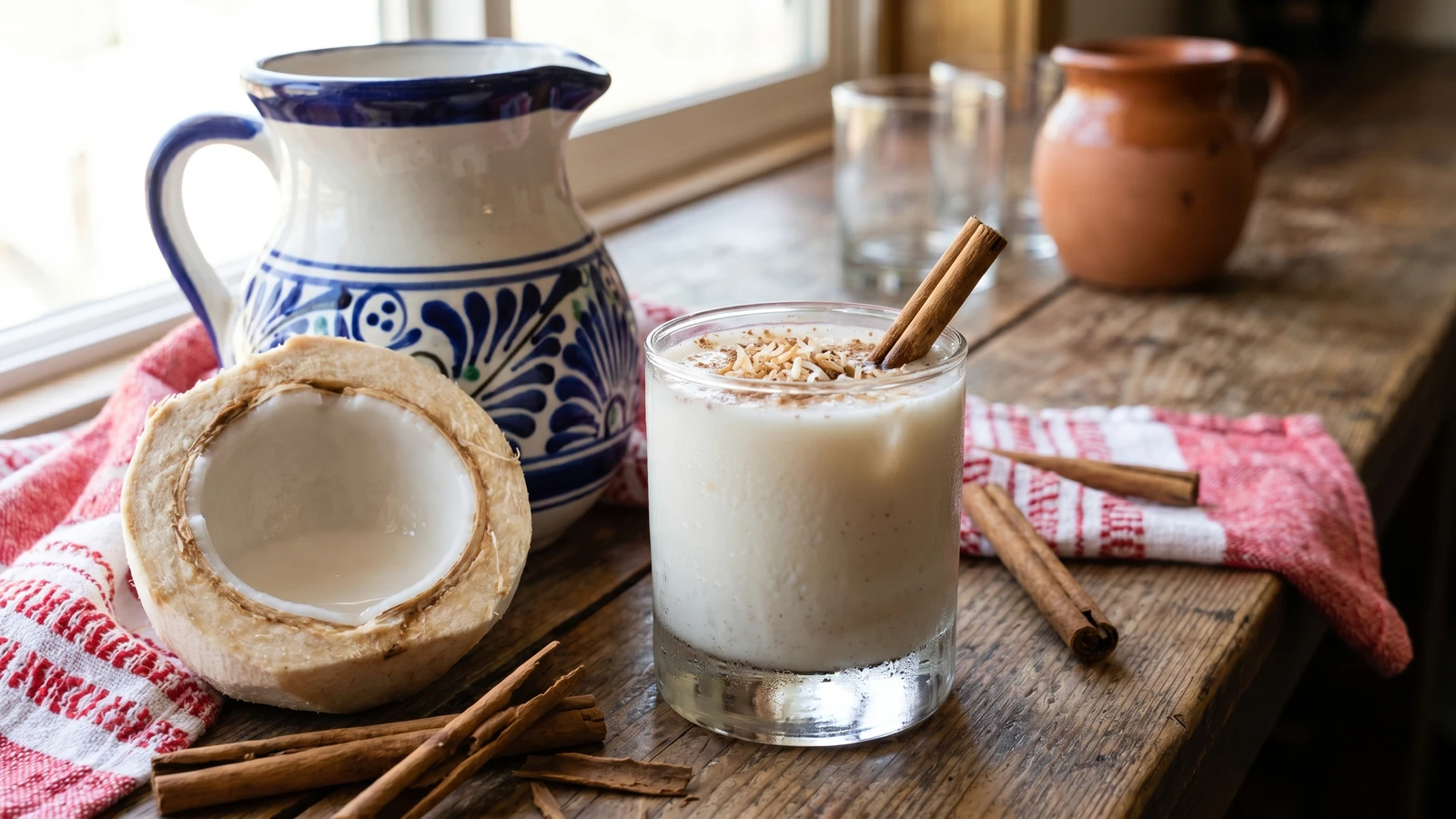
Sinaloa's coastal horchata, built on rice and canela steeped overnight in fresh coconut water and blended with mature coconut meat, evaporated milk, and Mexican vanilla. Velvet in a glass.
Cocorchata is from Sinaloa. From the Pacific coast that runs from Los Mochis down through Culiacan to Mazatlan, where the coconut palms line the beach roads and the horchata in the marisquerias does not taste like the horchata you drink in Mexico City. It tastes of coconut. That is the whole point.
The Mexico City horchata is rice, almond, cinnamon, and water. Honest and good. The Sinaloan version takes that base and rebuilds it on the coast: coconut water instead of plain water for the overnight soak, fresh coconut meat in the blender, evaporated milk for body. The result is thicker, creamier, with the cinnamon held in suspension by the coconut oil. This is what a cook from Mazatlan would set in front of you with a plate of pescado zarandeado, and she would expect you to drink it before the ice melted.
Do not bring me coconut extract. No me vengas con atajos. The whole reason this drink exists is the coconut palm growing in the backyard of the cook who first made it. If you cannot get a mature coconut and a young one for the water, wait until you can. The dish dictates the calendar, not the cook. La leche evaporada is non-negotiable, and so is Mexican canela, the soft, sweet, layered Ceylon stick, not the hard cassia bark sold as cinnamon in American supermarkets. Cassia is bitter and woody in cold drinks. Canela dissolves into the milk and disappears the way it is meant to.
My mother did not make cocorchata. She was from Jalisco and her horchata was the rice-and-canela version of the Bajio. But on a research trip to Mazatlan in my late twenties, a senora named Dona Imelda who ran a juice stand at the Mercado Pino Suarez handed me a glass of cocorchata in a tall sweating vaso jarocho and told me, "Esto es Sinaloa en un vaso." She was right. I copied the recipe into the notebook that afternoon. Saber cocinar es saber vivir.
The coconut palm is not native to Mexico but was introduced to the Pacific coast in the 16th century through the Manila Galleon trade, which connected the port of Acapulco to the Philippines and brought coconuts, mangoes, and tamarind across the Pacific. Sinaloa, with its long coastal plain and warm climate, became one of Mexico's principal coconut-growing regions, and by the 19th century the fruit had entered the daily kitchen alongside the older rice-and-cinnamon horchata tradition that the Spanish had brought from Valencia. The name cocorchata, a portmanteau of coco and horchata, is a 20th-century colloquialism specific to Sinaloa and parts of Nayarit; the drink itself predates the name by several generations and was simply called horchata de coco in the marisquerias of Mazatlan and Culiacan.
Quantity
1 cup
Quantity
2 sticks
broken into pieces
Quantity
4 cups
from 2 to 3 young coconuts
Quantity
1 1/2 cups
grated or chopped, from 1 mature coconut
Quantity
1 can (12 ounces)
Quantity
1/2 cup, plus more to taste
Quantity
2 cups
Quantity
1 tablespoon
Quantity
1/4 teaspoon
Quantity
for serving
Quantity
for dusting
Quantity
for garnish
Quantity
for garnish
| Ingredient | Quantity |
|---|---|
| long-grain white rice | 1 cup |
| Mexican canela (Ceylon cinnamon)broken into pieces | 2 sticks |
| fresh coconut waterfrom 2 to 3 young coconuts | 4 cups |
| fresh coconut meatgrated or chopped, from 1 mature coconut | 1 1/2 cups |
| evaporated milk | 1 can (12 ounces) |
| sweetened condensed milk | 1/2 cup, plus more to taste |
| cold whole milk | 2 cups |
| Mexican vanilla extract | 1 tablespoon |
| fine sea salt | 1/4 teaspoon |
| ice (optional) | for serving |
| ground Mexican canela (optional) | for dusting |
| toasted shredded coconut (optional) | for garnish |
| cinnamon stick (optional) | for garnish |
Pierce the soft eye of each young coconut and drain the water into a measuring cup. You want four cups of clean coconut water. If the water smells sour or pink, the coconut has turned and you need another one. For the mature coconut, crack the shell with the back of a heavy knife, pry out the white meat, and peel off the brown skin with a vegetable peeler. Grate or chop the meat. This is the work that no extract can replace.
Rinse the rice under cold water twice. Place the rinsed rice and the broken canela sticks in a large bowl. Pour the four cups of coconut water over the top. Cover and refrigerate overnight, at least eight hours, up to twenty-four. The rice softens and releases its starch slowly. The cinnamon perfumes the water. This is the foundation of every horchata, and the coconut water in place of plain water is what makes it Sinaloan.
Transfer the soaked rice, the cinnamon sticks, and all of the coconut water to a high-powered blender. Add the fresh coconut meat. Blend on high for two full minutes. The mixture will look gritty and pale. Do not undershoot the time. The longer the blender works, the more starch and coconut oil release into the liquid, and the velvet texture comes from that release. Asi se hace y punto.
Set a fine-mesh strainer over a large pitcher and line it with a piece of clean cheesecloth or a flour-sack cloth folded twice. Pour the blended mixture through. Gather the cloth and squeeze hard. The pulp will hold a lot of liquid and you want all of it. Discard the pulp, rinse the cloth, and strain a second time. A horchata that has only been strained once is gritty. Twice is the difference.
Whisk the evaporated milk, condensed milk, whole milk, vanilla, and salt into the strained horchata. Taste it. It should be sweet but not cloying, with the coconut leading and the cinnamon close behind. If you want more sweetness, add condensed milk a tablespoon at a time. The evaporated milk gives the body that distinguishes a Sinaloan cocorchata from the thinner Mexico City horchata. La leche evaporada es el cuerpo.
Refrigerate for at least two hours, until the cocorchata is very cold. Stir well before serving, since the coconut and the starch settle on standing. Pour over plenty of ice into heavy glass tumblers. Dust the top with ground canela and a pinch of toasted shredded coconut. Tuck a cinnamon stick into each glass. Recetas probadas y garantizadas.
1 serving (about 260g)
Culinary guides, cultural storytelling, and the editorial depth that makes cooking meaningful.
Discover Culinary ExplorerChef Lupita
Ciudad de México's highland market agua fresca, fresh alfalfa blended with pineapple and lime until bright green, strained clean, and poured cold from the vitrolero.

Chef Lupita
Aguascalientes' Lenten agua fresca, jewel-red from cooked beet and full of apple, banana, orange, lettuce, and ground peanuts, served cold when Holy Week meets the Feria de San Marcos.

Chef Lupita
Sonora and Sinaloa's creamy malted barley water, built on toasted cebada perla, Mexican canela, vanilla from Papantla, and evaporated milk. Pink-beige, rich, and served cold over heavy ice in a heavy glass tumbler. Liquid cookie comfort the northwest way.

Chef Lupita
Yucatán's everyday tonic of boiled chaya leaves blended with lima agria, sugar, and ice. The bright green jarra that sits on every Peninsula table from Mérida to Valladolid.