
Chef Lupita
Acambaritas de Acámbaro
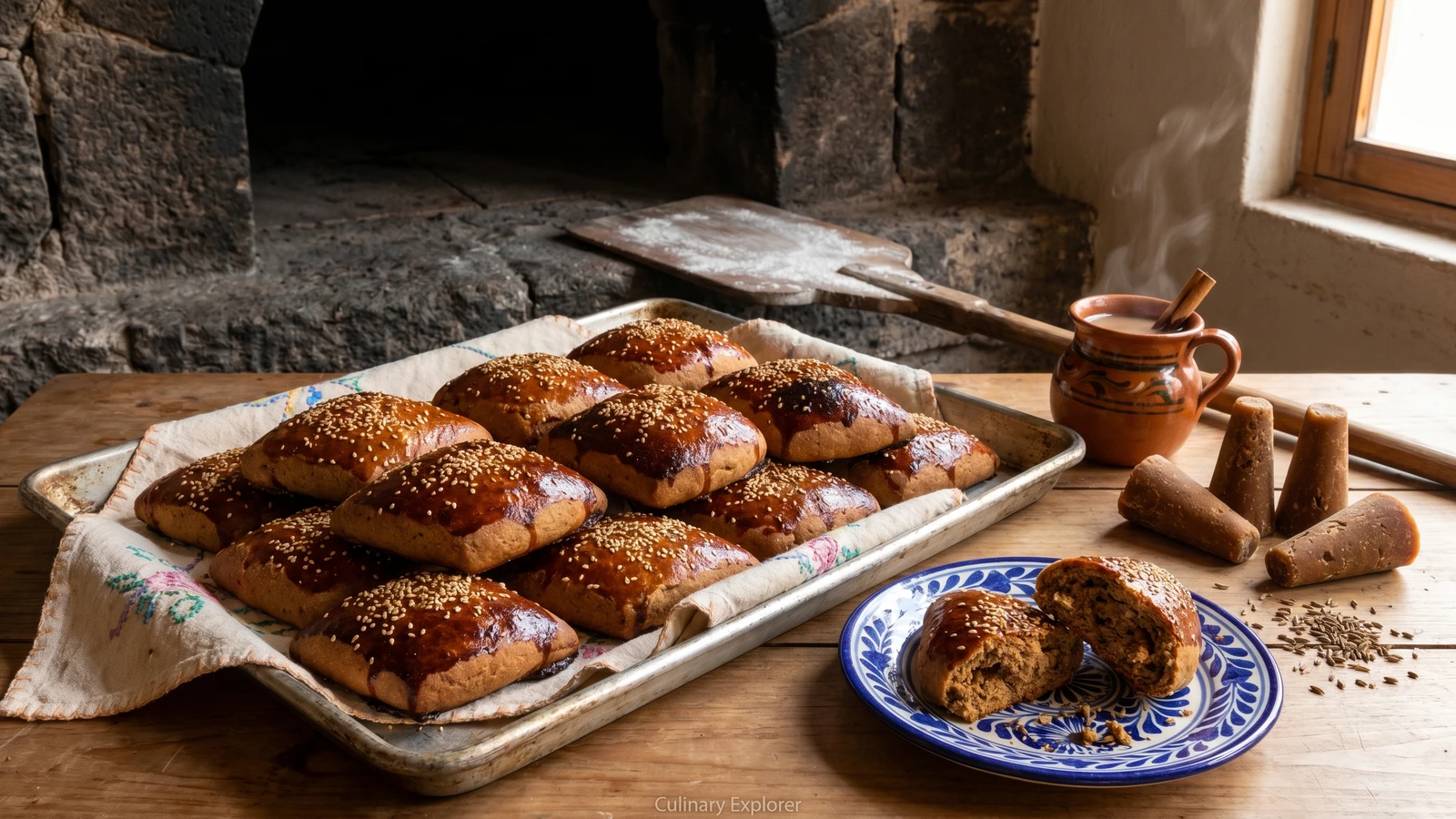
Guanajuato's daily bread from Acámbaro, a small glazed roll built on pata, enriched with manteca de cerdo, and baked until the top shines lightly for merienda.
A cooking platform built around craft, culture, and the stories behind what we eat.
Created by
Guanajuato's secular Bajío cocoles are diamond breads of piloncillo, anís, manteca de cerdo, and ajonjolí, built with living pata and baked dark enough for the cane sugar to bite back.
Guanajuato, in the Bajío, is where I place these cocoles: Acámbaro, Celaya, Salvatierra, the old wheat-and-hacienda corridor where the oven towns still understand pan as daily work, not decoration. These are rhombus-shaped breads for merienda, the kind you set on a charola lechera or a Dolores Hidalgo plate beside café de olla in a jarrito.
The flavor is piloncillo, anís, manteca de cerdo, brown sugar, and ajonjolí. No chile belongs here. That surprises people who think every Mexican recipe has to announce itself with heat. No. This is a 32-state cuisine, and the Bajío bread table speaks wheat, cane, pork fat, and wood oven. Cada estado, su propia cocina.
Secular means rancho and hacienda oven, not convento. The conventual cocol has its own claim elsewhere, with different hands and different politics. This one is heavier, darker, less perfumed, and more practical. La manteca es el sabor. The women who taught these breads kept a bit of old dough alive, worked the lard into the flour with their fingers, and shaped the pieces by eye. Machine-perfect diamonds have no business here.
My mother was from Jalisco, and in her notebook she wrote only one line about this bread: "cocoles de anís, preguntar en Acámbaro." She knew when a dish did not belong to her state. I asked in Acámbaro. The first correction came before the flour hit the bowl: the pata is masa madre, not baking powder. No me vengas con atajos.
The word cocol is commonly traced to the Nahuatl cocolli, recorded in colonial-era vocabularies for a shaped bread or cake, and the rhombus form survived as wheat baking spread through central Mexico. Guanajuato's Bajío became wheat, sugar, and pig country through the hacienda economy of the 17th and 18th centuries, supplying mining towns and market towns with flour, piloncillo, and manteca de cerdo. The secular Bajío cocol belongs to those ovens: piloncillo, anise, lard, and sesame, distinct from the convent register of finer sweet breads claimed in other regional plans.
Quantity
1/2 cup (120 grams)
Quantity
3/4 cup (90 grams)
Quantity
1/3 cup (80 grams)
Quantity
1 tablespoon
Quantity
7 ounces (200 grams)
chopped
Quantity
3/4 cup
Quantity
2 teaspoons
lightly crushed
Quantity
1 small
Quantity
4 1/2 cups (560 grams), plus more for dusting
Quantity
1/3 cup (65 grams)
Quantity
1 1/2 teaspoons
Quantity
1/2 cup (115 grams)
soft but not melted
Quantity
2
room temperature
Quantity
2 to 4 tablespoons
lukewarm, only if the dough needs it
Quantity
1 large egg beaten with 1 tablespoon whole milk
for brushing
Quantity
3 tablespoons
for topping
| Ingredient | Quantity |
|---|---|
| active wheat masa madre or Acámbaro-style pata, 100% hydration | 1/2 cup (120 grams) |
| all-purpose wheat flour for feeding the pata | 3/4 cup (90 grams) |
| warm water for feeding the pata | 1/3 cup (80 grams) |
| grated piloncillo for feeding the pata | 1 tablespoon |
| piloncillochopped | 7 ounces (200 grams) |
| water for the piloncillo syrup | 3/4 cup |
| anise seedlightly crushed | 2 teaspoons |
| Mexican canela stick | 1 small |
| all-purpose wheat flour | 4 1/2 cups (560 grams), plus more for dusting |
| dark brown sugar or azúcar mascabado | 1/3 cup (65 grams) |
| fine sea salt | 1 1/2 teaspoons |
| manteca de cerdosoft but not melted | 1/2 cup (115 grams) |
| large eggsroom temperature | 2 |
| whole milk (optional)lukewarm, only if the dough needs it | 2 to 4 tablespoons |
| egg washfor brushing | 1 large egg beaten with 1 tablespoon whole milk |
| ajonjolí, sesame seedsfor topping | 3 tablespoons |
The night before baking, mix the active masa madre or pata with the 3/4 cup flour, 1/3 cup warm water, and 1 tablespoon grated piloncillo. Cover and leave at room temperature for 6 to 8 hours, until domed, bubbly, and smelling like ripe wheat and cane sugar. This is the pata. It is old dough alive with fermentation, not chemical leavener.
Put the chopped piloncillo, 3/4 cup water, crushed anise seed, and canela stick in a small saucepan. Simmer over medium-low heat until the piloncillo dissolves completely and the syrup smells of anís and cane. Remove the canela stick and let the syrup cool until just warm. Hot syrup kills the pata. Warm syrup feeds it.
In a large bowl, whisk the 4 1/2 cups flour with the dark brown sugar and salt. Add the soft manteca de cerdo and rub it into the flour with your fingertips until the mixture looks like damp sand with small fat streaks. This is the secular register of the bread. Manteca, not butter. La manteca es el sabor.
Add all of the ripe pata, the two eggs, and the cooled piloncillo-anise syrup to the flour mixture. Mix until a rough brown dough forms. Knead by hand for 10 to 12 minutes, or in a stand mixer on low for 7 to 8 minutes, until the dough turns smooth, elastic, and slightly tacky. Add the lukewarm milk only if dry flour refuses to disappear. Sweet dough moves slowly. Do not drown it.
Shape the dough into a ball, place it in a lightly greased bowl, cover, and let it rise for 2 to 3 hours, until puffy and expanded by about half. It may not double because piloncillo, lard, and eggs slow fermentation. That is normal. The dough should feel alive under your hand, not airy like factory sandwich bread.
Turn the dough onto a lightly floured board and press it to about 3/4 inch thick. Cut it into 16 rough rhombuses, about the length of your palm, or divide and shape each piece by hand into a diamond. Keep the corners irregular. A panadera shapes with judgment, not with a ruler.
Set the cocoles on parchment-lined charolas, leaving space between them. Cover and proof for 45 to 60 minutes, until the edges look fuller and the surface springs back slowly when touched. Brush gently with the beaten egg and milk. Scatter ajonjolí over the tops and press the seeds lightly so they stay put.
Heat the oven to 375F with a baking stone, cast iron comal, or heavy sheet pan inside to mimic the floor of a horno de bóveda. Slide the charola onto the hot surface and bake 18 to 22 minutes, turning once, until the tops are deep amber, the corners are dark caramel, and the bottoms sound hollow when tapped. In a wood-fired oven, bake after the coals are swept and the floor has settled to moderate heat.
Cool the cocoles on a rack for at least 20 minutes so the crumb sets. Eat them the same day with café de olla, or split and warm them on a comal the next morning. The piloncillo should taste deep, the anís should sit in the back of the mouth, and the lard should leave the crumb tender. Recetas probadas y garantizadas.
1 serving (about 90g)
Culinary guides, cultural storytelling, and the editorial depth that makes cooking meaningful.
Discover Culinary ExplorerChef Lupita
Guanajuato's daily bread from Acámbaro, a small glazed roll built on pata, enriched with manteca de cerdo, and baked until the top shines lightly for merienda.

Chef Lupita
Michoacan's Tinguindin aguacatas are flat, leaf-scored sweet breads made with harina de trigo, piloncillo, anise, and manteca de cerdo, shaped by hand for the wood oven.

Chef Lupita
From Ajijic on Lake Chapala, Pan Tachihual is a lightly sweet wedding loaf built with harina de trigo, harina de maiz, piloncillo, manteca, anise, and the old Guadalajara pata.

Chef Lupita
Comitán's pan de yema shaped into little pigs, birds, and rabbits, a Chiapas bakery bread rich with egg yolks, manteca de cerdo, and anís, baked golden on hoja de plátano.