
Chef Thomas
A Proper Chicken Broth
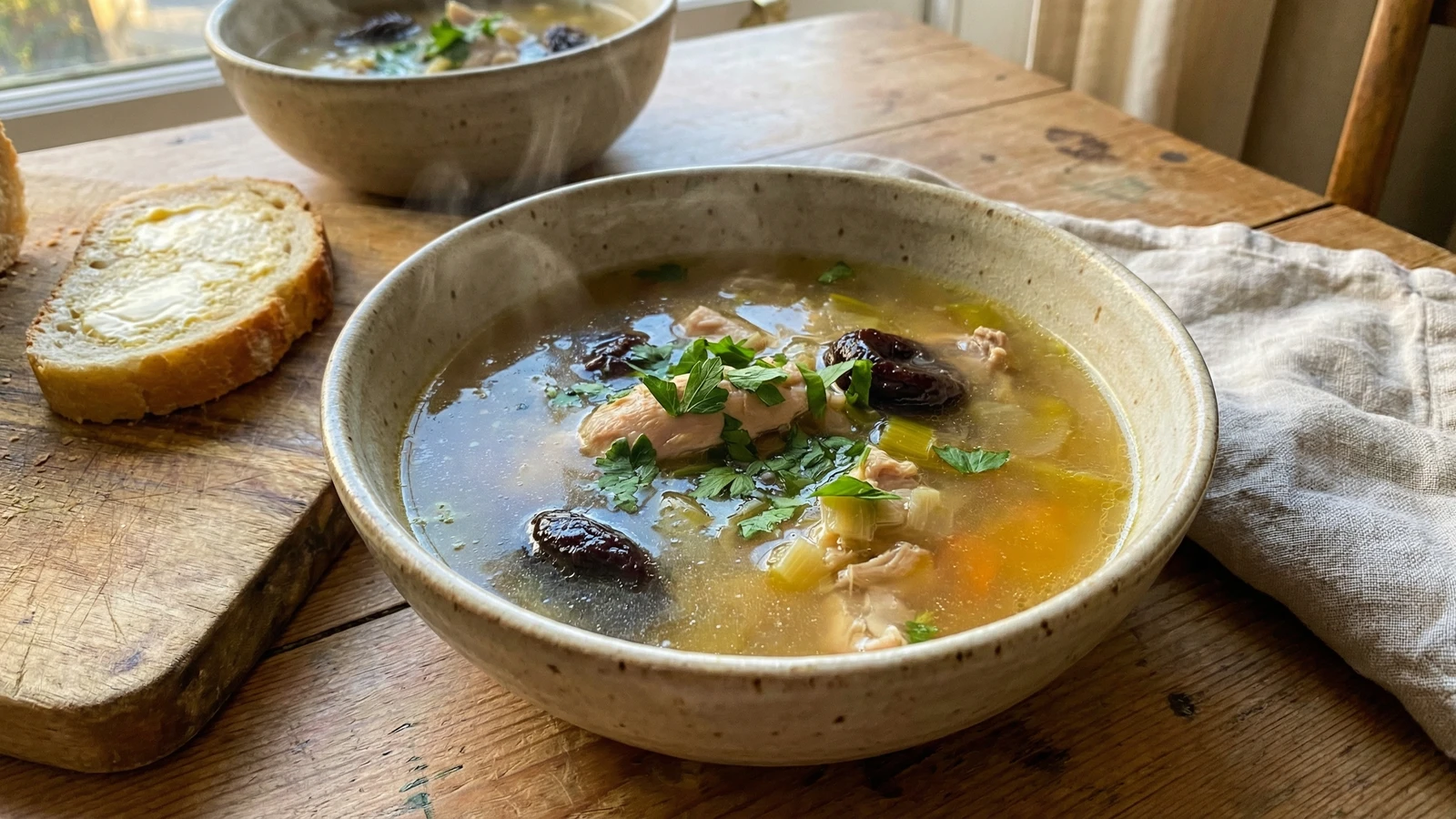
Sunday's roast chicken, simmered slowly on Monday with carrots, celery, leeks, and thyme into a bowl of clear, golden broth that smells like the kitchen is paying attention.
A cooking platform built around craft, culture, and the stories behind what we eat.
Created by Chef Thomas
Scotland's great soup: a whole chicken poached with leeks and prunes in a clear golden broth that has been warming people since the sixteenth century and shows no sign of stopping.
January. The kitchen window dark by four o'clock. Rain against the glass and the heating doing its best. This is when cock-a-leekie makes sense: a soup that takes its time, fills the house with the smell of poaching chicken and softening leeks, and rewards you with a bowl of something that feels like it has been looking after people for a very long time. Because it has.
I don't know another soup that is this simple and this complete. A chicken, a heap of leeks, some prunes. Cold water and patience. The broth builds itself while you do something else, and by the time you ladle it out, it's golden and clear and tastes like the most comforting thing you've eaten all week. The prunes are the part people argue about, and the argument is over. They belong. They've been in the pot since the sixteenth century, and the quiet sweetness they give the broth is what lifts it from good to quietly splendid.
I wrote it down in the notebook last winter: chicken, leeks, prunes, Tuesday, rain. The same rain, the same soup, the same feeling of having done something useful with the evening. There are few better feelings than putting a warm plate in front of someone on a night like that.
A recipe is a conversation, not a contract. Use a whole chicken if you want the richer broth. Use legs if you want something quicker and less ceremonial. Either way, cook it gently, season it properly, and don't skip the prunes.
Quantity
1 whole (about 1.5kg) or 4 large legs
Quantity
6 large
trimmed and sliced into thick rounds
Quantity
12
Quantity
2 litres
Quantity
2
Quantity
a few sprigs
Quantity
6
Quantity
1 tablespoon
Quantity
to taste
Quantity
a small handful
roughly chopped
| Ingredient | Quantity |
|---|---|
| whole chicken or chicken legs | 1 whole (about 1.5kg) or 4 large legs |
| leekstrimmed and sliced into thick rounds | 6 large |
| soft pitted prunes | 12 |
| cold water | 2 litres |
| bay leaves | 2 |
| thyme | a few sprigs |
| black peppercorns | 6 |
| pearl barley (optional) | 1 tablespoon |
| fine sea salt | to taste |
| flat-leaf parsleyroughly chopped | a small handful |
Put the whole chicken, or the legs, into your largest pan and cover with the cold water. Add the bay leaves, thyme, and peppercorns. Bring to a gentle simmer over a medium heat. Not a boil. A boil makes the broth cloudy and aggressive. You want it barely trembling, with a bubble rising to the surface every few seconds. Skim any scum that rises in the first ten minutes, then leave it be. Let the chicken poach for about an hour, or until the meat is falling from the bone.
While the chicken poaches, prepare your leeks. Cut them into thick rounds, about two centimetres. Don't be dainty. This is not a refined soup. It's a working soup that has fed people through Scottish winters for centuries and it should look like it. Wash the rounds thoroughly in cold water, swirling them about to shake the grit loose. Use the white and pale green parts. The dark green tops can go into the stock pot if you have one running, but they're too tough for the bowl.
Lift the chicken from the broth carefully and set it on a board to cool enough to handle. Strain the broth through a fine sieve into a clean pan. Discard the bay, thyme, and peppercorns. When the chicken is cool enough, pull the meat from the bones in rough shreds. Don't be precise about this. Some large pieces, some smaller. The skin can go. The bones go into the bin or, if you're the sort of cook I think you are, back into a fresh pot of water to make a second, lighter stock.
Bring the strained broth back to a gentle simmer. Add the leeks and the pearl barley, if using. Cook for fifteen minutes, until the leeks are soft and silky but still holding their shape. They should yield completely to a spoon but not have dissolved into nothing. The broth will turn slightly milky from the leeks. This is right.
Add the prunes and the shredded chicken to the broth. Let everything simmer together for another ten minutes. The prunes will plump and soften and lend the broth a quiet sweetness that rounds out the chicken and the pepperiness of the leeks. This is the part that surprises people. The prunes are not decoration. They are the point. Without them, it's just chicken and leek soup. With them, it's cock-a-leekie.
Season with salt. Be generous. Broth needs more seasoning than you think because the volume of liquid dilutes everything. Taste it. Then taste it again. It should taste clean and chickeny, savoury with a gentle sweetness from the prunes, the leeks soft and mild. Ladle it into warm bowls, making sure everyone gets a fair share of chicken, leeks, and prunes. Scatter a little parsley over the top. Serve with good bread and butter. That's it. We're only making dinner.
1 serving (about 550g)
Culinary guides, cultural storytelling, and the editorial depth that makes cooking meaningful.
Discover Culinary ExplorerChef Thomas
Sunday's roast chicken, simmered slowly on Monday with carrots, celery, leeks, and thyme into a bowl of clear, golden broth that smells like the kitchen is paying attention.
Chef Thomas
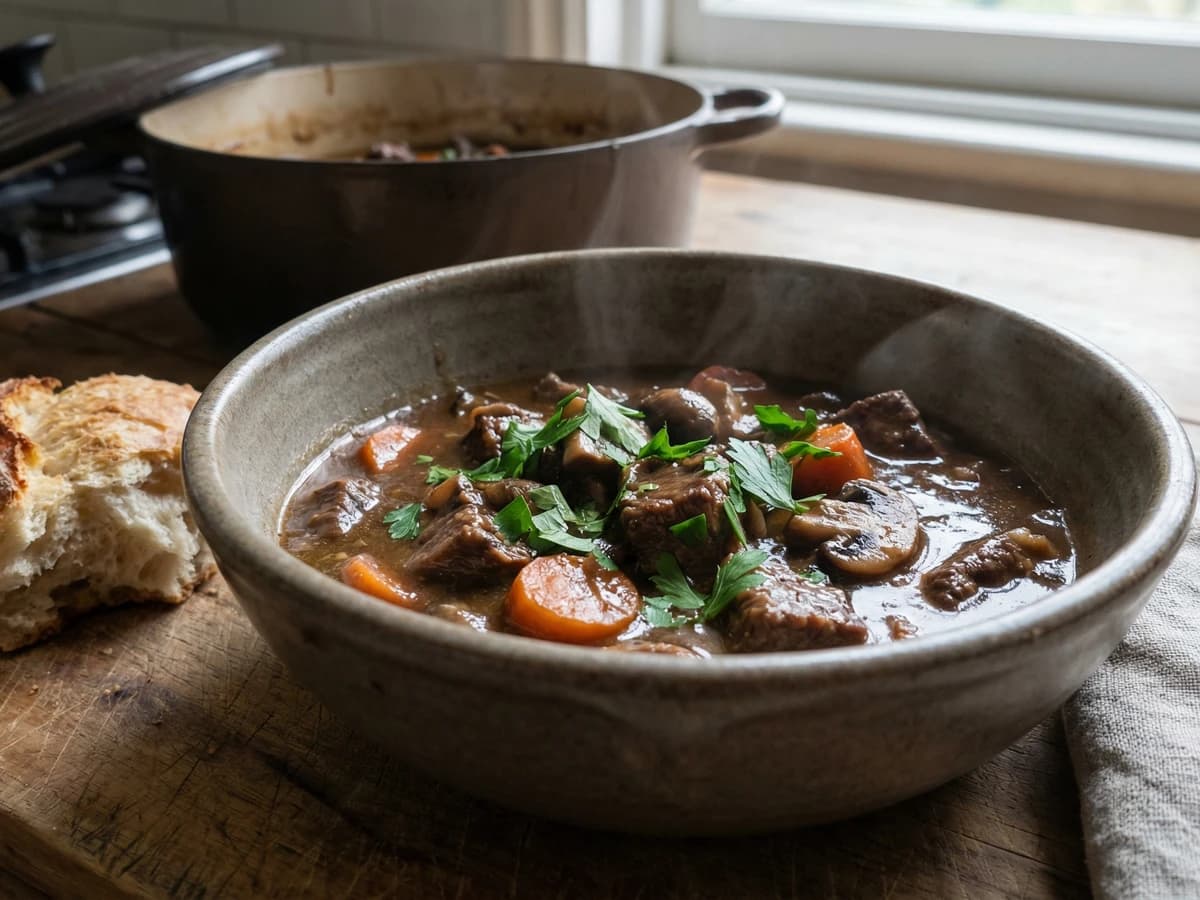
Braising steak surrendered to dark ale and slow time, with onions and mushrooms, until the gravy turns thick and malty and the kitchen smells like the kind of evening you want to stay in for.

Chef Thomas
Beef shin and pearl barley simmered low and slow with root vegetables until the meat gives way and the broth thickens into something between a soup and a stew, the kind of bowl that steadies you on a cold night.
Chef Thomas
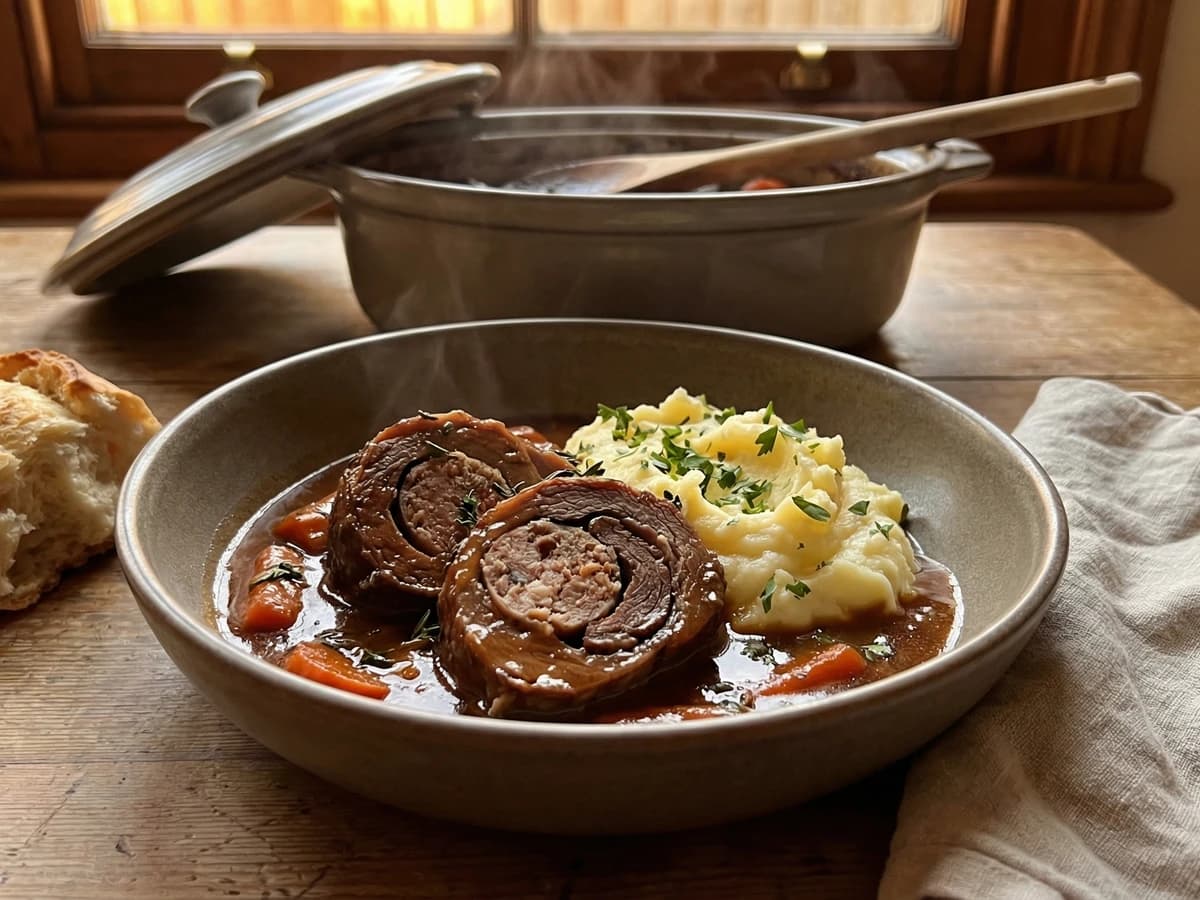
Thin slices of beef rolled around a stuffing of sausage meat and herbs, browned in butter, and braised for two patient hours until the meat yields and the gravy turns dark and rich and worth mopping up with bread.