
Chef Isabel
Aguaillo de la Sierra de Cadiz
Aguaillo is from the Sierra de Cadiz: cold water, stale bread, garlic, oil and vinegar, closer to a field drink than a bowl of soup, and sharp enough to wake you in the heat.
A cooking platform built around craft, culture, and the stories behind what we eat.
Created by
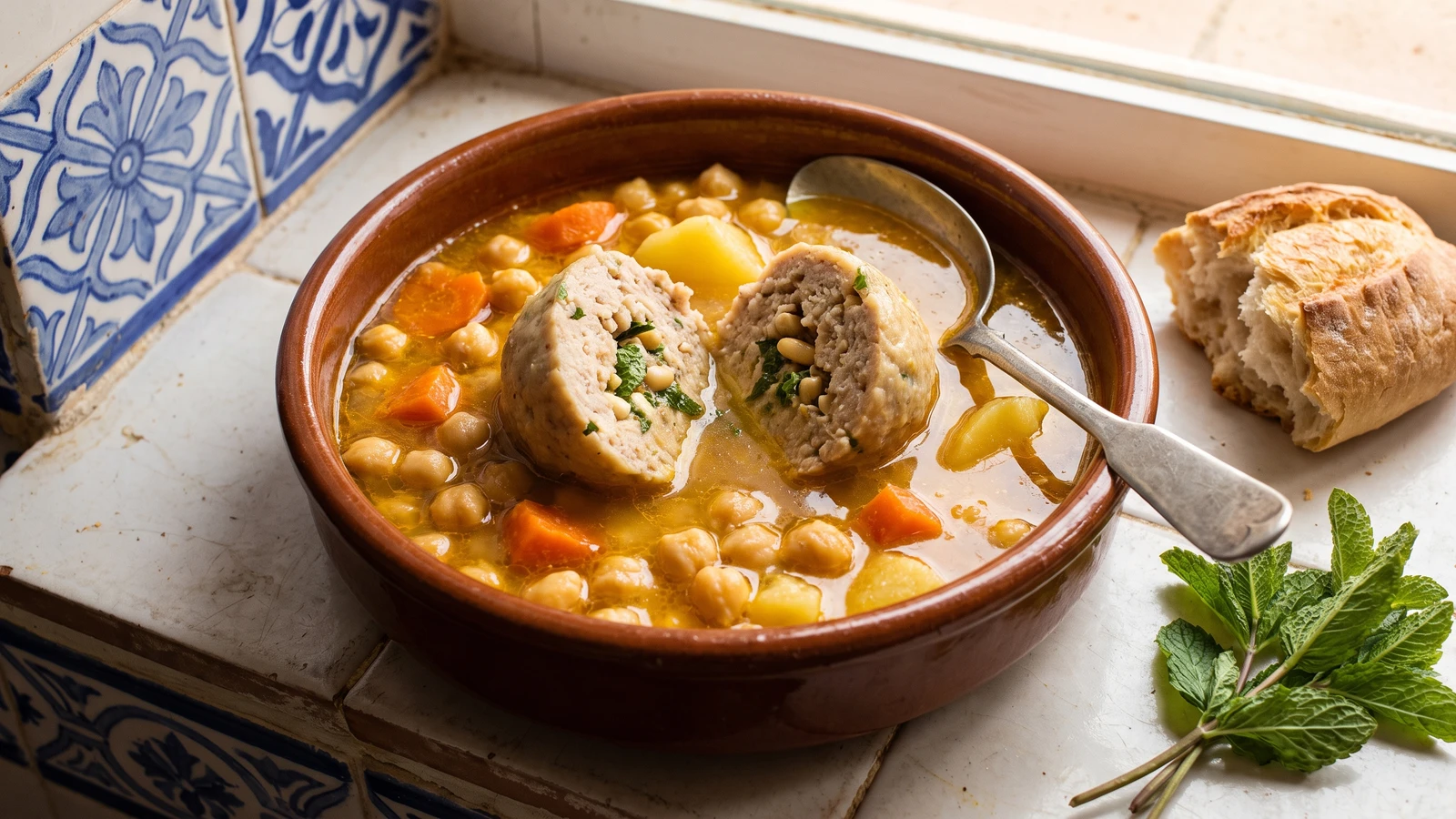
Cocido con pelotas is Murcia and the Vega Baja at Christmas: chickpeas and winter meats in a clear broth, with big mint-scented meatballs that decide the whole pot.
Cocido con pelotas is Murcian and Vega Baja Christmas cooking: a chickpea cocido where the pelota, the big seasoned meatball, is the reason the pot exists. Hen or turkey gives the broth body, pork bones give it salt and depth, but the pelota makes it this dish and not its neighbours'. It is meat, bread, egg, pine nuts, garlic, parsley, and hierbabuena, mint, mixed big and tender enough to sit in the spoon without turning to rubber.
The method that decides it is how you handle the pelotas. Soak the bread, squeeze it soft, mix only until the meat holds together, then poach them at a bare tremble in the broth. A rolling boil breaks them; hard kneading makes them tight. The broth should move lazily around them. That is all the cleverness this dish needs.
If you can't find blanco murciano or longaniza blanca where you are, use a mild fresh pork sausage with no smoke and no fennel. It won't have the same Murcian sweetness, but it gives the fat and seasoning the pelota needs. Good dried chickpeas matter too; old ones never soften properly, however kindly you speak to them. Soak them the night before and add them to the broth once it is hot.
Serve the broth first with a few fideos if your table likes the old order, then the chickpeas, meats, vegetables, and pelotas. Or put it all in deep bowls and don't make a ceremony of it. Pésalo, no lo adivines, and siempre sale, si lo sigues.
Cocido con pelotas belongs to Murcia and to Alicante's Vega Baja, the lower Segura country where Christmas Day cocido is marked by the large pelota rather than by a particular cut of meat. The meatballs draw from the household larder after the matanza: minced pork, bread, eggs, pine nuts, garlic, parsley, and hierbabuena, making a festive piece out of scraps and good seasoning. Many families serve it in vuelcos, first the broth with fideos, then chickpeas, meats, vegetables, and pelotas, though the exact meats change from house to house.
Quantity
350g
Quantity
12g
for soaking the chickpeas
Quantity
3.5L, plus more as needed
Quantity
1kg
Quantity
400g
in one piece
Quantity
250g
Quantity
1 bone or 150g ham end
Quantity
120g
in one piece
Quantity
1
split and washed
Quantity
2
peeled
Quantity
2
Quantity
1 small
peeled
Quantity
1
Quantity
6 threads
Quantity
2 medium
peeled and cut into large chunks
Quantity
300g
drained
Quantity
250g
peeled and cut into large chunks
Quantity
80g
for the broth course
Quantity
350g
Quantity
250g
Quantity
120g
casing removed
Quantity
120g
crust removed
Quantity
150ml
for soaking the bread
Quantity
2
Quantity
3
finely grated
Quantity
15g
finely chopped
Quantity
8g
finely chopped
Quantity
25g
Quantity
zest of 1 small lemon
finely grated
Quantity
1/2 teaspoon
Quantity
8g
for the pelotas
Quantity
30g
only if needed
Quantity
to taste
for the broth
| Ingredient | Quantity |
|---|---|
| dried chickpeas | 350g |
| coarse saltfor soaking the chickpeas | 12g |
| cold water | 3.5L, plus more as needed |
| bone-in old hen, chicken, or turkey thigh pieces | 1kg |
| beef shinin one piece | 400g |
| unsmoked pork ribs or pork spine bones | 250g |
| serrano ham bone or serrano ham end | 1 bone or 150g ham end |
| tocino or unsmoked pancetain one piece | 120g |
| leeksplit and washed | 1 |
| carrotspeeled | 2 |
| celery stalks with leaves | 2 |
| turnippeeled | 1 small |
| bay leaf | 1 |
| saffron threads (optional) | 6 threads |
| potatoespeeled and cut into large chunks | 2 medium |
| cooked cardoon stalks, or celery heart or Swiss chard stemsdrained | 300g |
| pumpkin or butternut squashpeeled and cut into large chunks | 250g |
| fine fideos (optional)for the broth course | 80g |
| minced pork shoulder | 350g |
| minced turkey or chicken thigh | 250g |
| blanco murciano or longaniza blanca, or mild fresh unsmoked pork sausagecasing removed | 120g |
| day-old country bread crumbcrust removed | 120g |
| hot broth from the pot or whole milkfor soaking the bread | 150ml |
| large eggs | 2 |
| garlic clovesfinely grated | 3 |
| flat-leaf parsleyfinely chopped | 15g |
| fresh hierbabuena or mint leavesfinely chopped | 8g |
| pine nuts | 25g |
| lemon zestfinely grated | zest of 1 small lemon |
| freshly ground black pepper | 1/2 teaspoon |
| fine saltfor the pelotas | 8g |
| fine breadcrumbs (optional)only if needed | 30g |
| saltfor the broth | to taste |
The night before, put the chickpeas in a large bowl with warm water to cover by at least 8cm and stir in the 12g coarse salt. Leave them 10 to 12 hours, then drain. Chickpeas are not fabes; they go into hot broth after soaking, not cold water, or they cook unevenly and keep a chalky heart.
Put the hen or turkey, beef shin, pork bones, ham bone, and tocino in an 8 to 10 litre olla or heavy pot with 3.5L cold water. Bring it up slowly, then skim the grey foam for 15 minutes until the surface looks clean. Add the leek, carrots, celery, turnip, bay leaf, and saffron if using. Keep it at a quiet simmer, not a boil; a clean broth starts with calm heat.
Once the broth is hot and settled, add the drained chickpeas, in a mesh bag if you have one. Simmer gently for 1 hour 30 minutes to 2 hours, until they are nearly tender but not collapsing. Top up with hot water if the chickpeas are exposed, and do not salt the broth yet; the ham and tocino are still speaking.
Pour the hot broth or milk over the bread crumb and leave it 5 minutes, then squeeze it soft, not dry. In a wide bowl, mix the pork, turkey or chicken, blanco murciano or longaniza blanca, soaked bread, eggs, garlic, parsley, hierbabuena, pine nuts, lemon zest, pepper, and 8g fine salt. Mix with your fingers only until it holds together. Pésalo, no lo adivines: the bread and salt are what keep the pelota tender without falling apart.
Poach a teaspoon of the mixture in the simmering broth for 2 minutes and taste it. If the mixture frays, add fine breadcrumbs 10g at a time, only enough to hold. With wet hands, shape 10 to 12 large oval pelotas, about 75 to 85g each. Do not pack them hard; they should feel held together, not clenched.
When the chickpeas are nearly tender, add the potatoes, cardoon, and pumpkin to the pot. Slide in the pelotas one by one, leaving space between them. The broth must only tremble. A rolling boil breaks the meatballs; hard kneading makes them tight. Cook 30 to 35 minutes, without stirring, until the pelotas are firm and cooked through at the centre. Shake the pot gently by the handles if you need to move anything.
Lift the large meats and bones to a tray. Remove bones and cut the meat into serving pieces. Skim excess fat from the broth if you like, then taste and salt only now. Return the meat to the pot and let everything rest off the heat for 15 minutes. The broth settles, the pelotas drink a little of it, and the whole pot tastes rounder.
For the old order, ladle about 1.2L broth into a small pan, bring it to a simmer, and cook the fideos for 4 to 5 minutes. Serve that broth first. Then serve the chickpeas, vegetables, meats, and pelotas, with more broth spooned over. If your table wants one deep bowl, do that and don't apologize. No hace falta haber pisado España. Siempre sale, si lo sigues.
1 serving (about 820g)
Culinary guides, cultural storytelling, and the editorial depth that makes cooking meaningful.
Discover Culinary ExplorerChef Isabel
Aguaillo is from the Sierra de Cadiz: cold water, stale bread, garlic, oil and vinegar, closer to a field drink than a bowl of soup, and sharp enough to wake you in the heat.

Chef Isabel
Ajilimojili is Jaen's tomato-free cold soup: potato, roasted red pepper, garlic, olive oil, and vinegar pounded into a cool, silky spoonful.

Chef Isabel
Ajo carretero is Soriano, from the pine country of Soria: lamb cooked in a plain garlicky broth, then served the old way, meat first and bread-soaked soup after.

Chef Isabel
Ajoblanco Extremeño is the poor-kitchen cold soup of Extremadura: bread, garlic, oil, egg yolk, vinegar, and icy water, with no almonds. Whisk it slowly and serve it bien fresquito.