Chef Lupita
Acúmara Tatemada al Comal
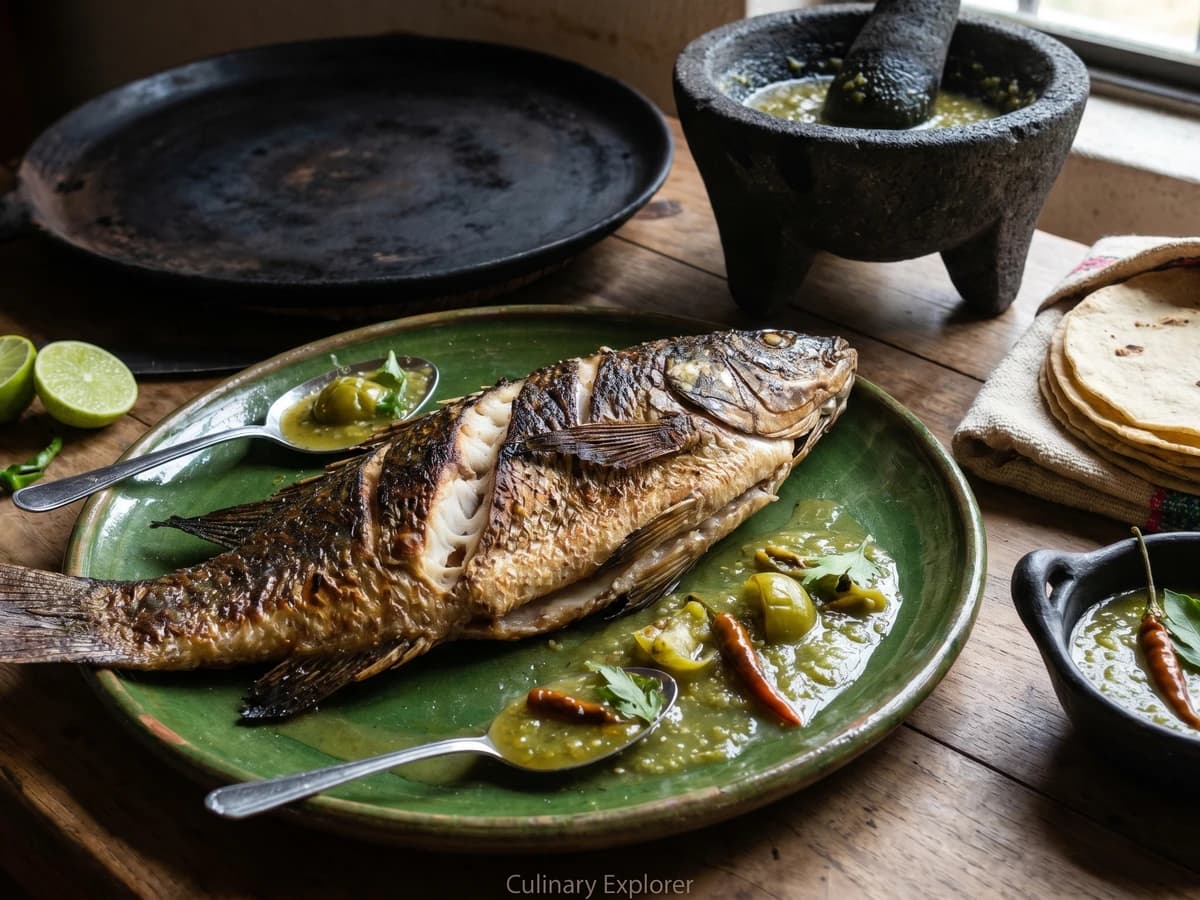
Michoacán's Lake Pátzcuaro acúmara, a whole kurucha from the lago tatemada on a comal de leña and served with chile perón atápakua, corn tortillas, and P'urhépecha discipline.
A cooking platform built around craft, culture, and the stories behind what we eat.
Created by
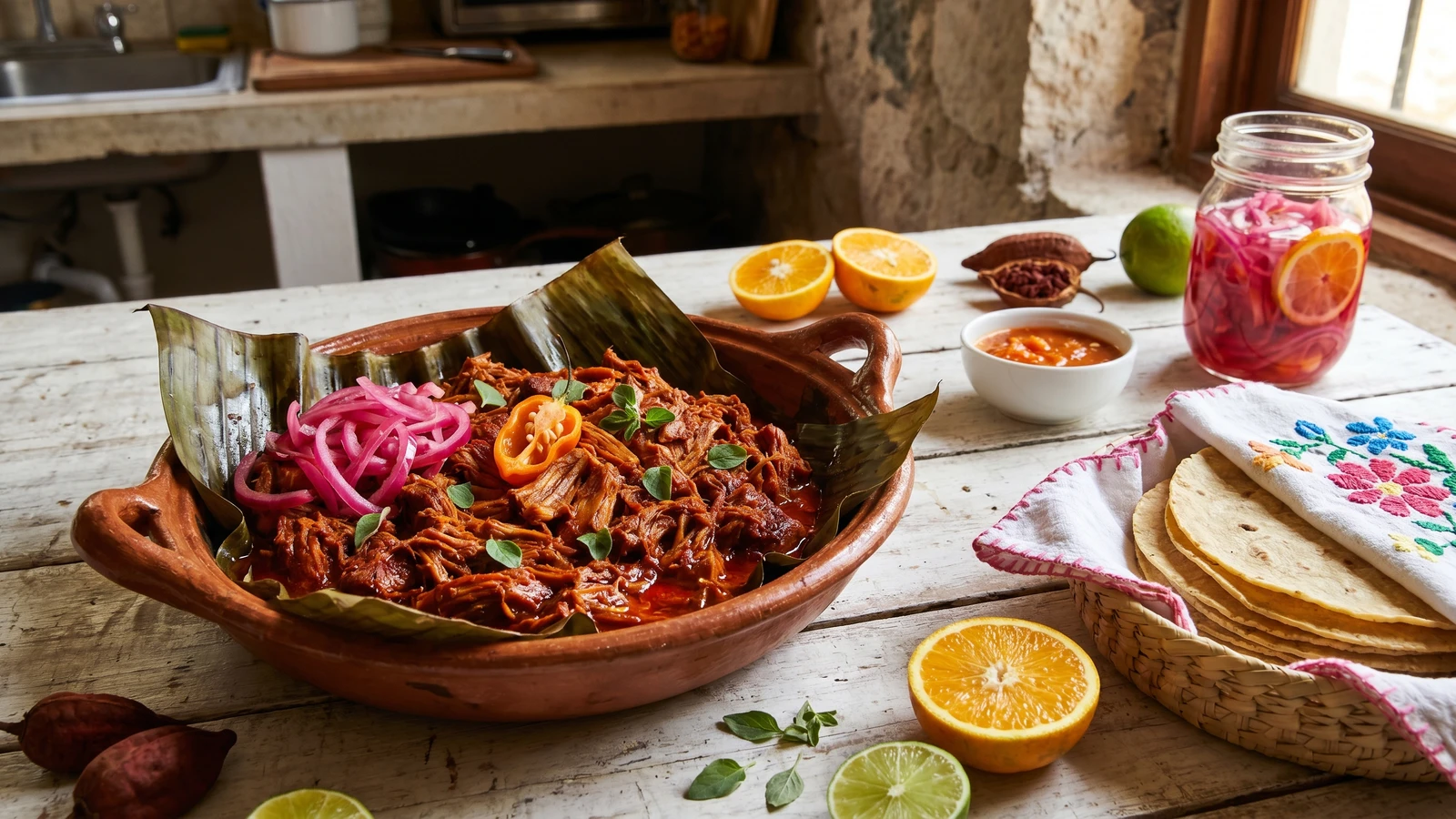
Yucatán's slow-roasted achiote pork, marinated overnight in recado rojo and sour orange, wrapped in banana leaves, and pulled from the oven shredding under its own weight. Sunday food in Mérida, served with pickled red onions and a habanero salsa that does not apologize.
Cochinita pibil is from Yucatán. Not from Mexico in general, from Yucatán specifically. The peninsula has its own cuisine, its own language, its own ceramics, its own pace, and this dish is its calling card. If you order cochinita pibil outside the peninsula, you will get an approximation. In Mérida, in Valladolid, in Izamal, you get the real thing on a Sunday morning before the rest of the city wakes up.
The word 'pibil' comes from the Mayan 'pib,' the earthen pit oven dug into the ground, lined with stones heated by wood fire, where the wrapped meat was buried and cooked for hours. The technique is pre-Hispanic. The pig is Spanish. The achiote is from the lowland forests of southern Mexico. The sour orange came with the Spanish from the Mediterranean, where it had come from Asia. This is a dish that holds five hundred years of history in one banana-leaf package, and the cooks of Yucatán hold all of it without apology.
The recado rojo is the dish. Achiote paste, sour orange, garlic, the toasted spice mix that every cook adjusts to her own family's measure. The naranja agria, the bitter Seville-type orange, is non-negotiable in spirit even if you have to fake it with a mix of orange, lime, and vinegar when you cannot find the real fruit. The banana leaf is non-negotiable in fact. No banana leaf, no pibil. You have made achiote pork. That is not the same thing.
And this is not Tex-Mex pulled pork. No barbecue sauce. No brown sugar. No vinegar-based slaw. The pickled red onions on top, the cebollas encurtidas with habanero and sour orange, are the only acid the dish needs. They are bright magenta and they will sting your mouth in the best way. My notebook has a recipe for these onions from a señora at the Mercado Lucas de Galvez in Mérida who told me, very seriously, that without the onions the dish is incomplete. She was right. Así se hace y punto.
The pib, the earthen pit oven from which cochinita pibil takes its name, is a pre-Columbian Mayan cooking technique that long predates the arrival of pork to the peninsula; the Maya cooked turkey, deer, and peccary in stone-lined pits sealed with earth and leaves for centuries before Spanish contact. The introduction of the pig in the 16th century, along with the bitter Seville orange the Spanish had themselves received from Arab traders, gave the dish its modern form, while the achiote (annatto) that defines its color and earthy flavor is native to the tropical lowlands of southern Mexico and Central America and was already in heavy Mayan ritual and culinary use at the time of conquest. Cochinita pibil is traditionally associated with Hanal Pixán, the Yucatecan Day of the Dead observance held from October 31 through November 2, when families prepare large quantities to offer to returning ancestors and to share at the family table.
Quantity
4 pounds
cut into 3-inch chunks
Quantity
1 pound
cut into 2-inch chunks
Quantity
3.5 ounces
one full block
Quantity
1 cup
or 2/3 cup orange juice + 1/3 cup lime juice + 2 tablespoons white vinegar
Quantity
8
peeled
Quantity
1 tablespoon
Quantity
1 teaspoon
Quantity
1 teaspoon
Quantity
4
Quantity
1
broken
Quantity
2 tablespoons
Quantity
2 tablespoons
Quantity
1/4 cup
melted
Quantity
1 large package
thawed if frozen
Quantity
2 large
sliced thinly into half-moons
Quantity
1 cup
Quantity
2
stemmed
Quantity
1 teaspoon
Quantity
1 teaspoon
Quantity
for serving
warmed
Quantity
for serving
| Ingredient | Quantity |
|---|---|
| bone-in pork shouldercut into 3-inch chunks | 4 pounds |
| pork belly with skincut into 2-inch chunks | 1 pound |
| achiote paste (recado rojo)one full block | 3.5 ounces |
| fresh sour orange juice (naranja agria)or 2/3 cup orange juice + 1/3 cup lime juice + 2 tablespoons white vinegar | 1 cup |
| garlic clovespeeled | 8 |
| whole black peppercorns | 1 tablespoon |
| whole allspice berries | 1 teaspoon |
| whole cumin seeds | 1 teaspoon |
| whole cloves | 4 |
| Mexican cinnamon stick (canela)broken | 1 |
| dried Mexican oregano (preferably Yucatecan) | 2 tablespoons |
| kosher salt | 2 tablespoons |
| manteca de cerdo (pork lard)melted | 1/4 cup |
| banana leavesthawed if frozen | 1 large package |
| red onionssliced thinly into half-moons | 2 large |
| fresh sour orange juice (for pickled onions) | 1 cup |
| fresh chile habanerostemmed | 2 |
| kosher salt (for the onions) | 1 teaspoon |
| dried Mexican oregano (for the onions) | 1 teaspoon |
| hand-pressed corn tortillas (optional)warmed | for serving |
| salsa de chile habanero (xnipec) (optional) | for serving |
Heat a dry comal over medium. Toast the peppercorns, allspice, cumin, cloves, and cinnamon for about a minute, until fragrant. Tip them into a molcajete or spice grinder and grind to a fine powder. The recado rojo you buy already contains spices, but Yucatecan cooks layer their own on top. This is the first sign that you take the dish seriously.
Break the achiote paste into a blender. Add the sour orange juice, the freshly ground spice mix, the garlic cloves, the oregano, the salt, and the melted lard. Blend on high until completely smooth and the color is uniform: deep brick red, almost rust. The marinade should be thick enough to coat the back of a spoon. If your sour orange is in short supply, the substitute mix of orange, lime, and vinegar gets you close. Real naranja agria is better. Pregúntale a las señoras del mercado where to find it before you settle for the substitute.
Place the pork shoulder and pork belly in a large non-reactive bowl or a heavy zip-top bag. Pour the recado over the meat. Massage it into every surface with your hands. The marinade will stain your fingers orange and they will stay that way for a day. That is the achiote at work. Cover and refrigerate for at least 12 hours, ideally 24. La manteca es el sabor, but the achiote is the soul. Both need time.
Pass each banana leaf briefly over an open flame or a hot comal, two or three seconds per side. They will turn from matte to glossy and become pliable. This is not optional. Cold banana leaves crack when you fold them and they will not seal. The pibil is not pibil without the banana leaf. Wipe each leaf with a damp cloth to remove any white residue.
Heat the oven to 325F. Line a heavy Dutch oven or a deep clay cazuela with overlapping banana leaves, leaving enough overhang on all sides to fold over the top later. The leaves should completely cover the inside of the pot and hang over the rim by several inches. Tip the marinated pork and all the recado into the lined pot. Press it down into an even layer. Fold the overhanging leaves up and over the meat, sealing it completely. The package should look like a green parcel inside the pot.
Cover the pot tightly with the lid, or with heavy foil pressed against the rim if no lid fits over the leaves. Place in the oven and cook for 4 hours. Do not open the pot before three and a half hours. The steam and the achiote-stained juices need to stay sealed inside. The meat is ready when it falls apart at the touch of a spoon and the pork belly has surrendered into the sauce.
While the pibil roasts, place the sliced red onions in a heatproof bowl. Pour boiling water over them and let them sit for 30 seconds, then drain. This blanching takes the harsh bite out without cooking them. Return them to the bowl. Add the sour orange juice, the whole habaneros (left whole if you want perfume without much heat, halved if you want bite), the salt, and the oregano. Stir. Let sit at room temperature for at least an hour. The onions will turn a vivid magenta. This is not a garnish. This is half the dish.
Pull the pot from the oven. Open the banana leaves carefully, the steam trapped underneath is fierce. Discard the bones. Shred the meat directly in the cazuela with two forks, mixing it into the deep red juices and the rendered pork-belly fat. The shredded pibil should be wet, glossy, and stained orange-red. Serve straight from the pot at the table with the pickled onions piled on top, warm corn tortillas in a basket, and salsa de chile habanero on the side. This is Sunday food in Mérida. Cada estado, su propia cocina.
1 serving (about 290g)
Culinary guides, cultural storytelling, and the editorial depth that makes cooking meaningful.
Discover Culinary ExplorerChef Lupita
Michoacán's Lake Pátzcuaro acúmara, a whole kurucha from the lago tatemada on a comal de leña and served with chile perón atápakua, corn tortillas, and P'urhépecha discipline.

Chef Lupita
Puebla's weekday adobo of pork shoulder braised in a thick guajillo and ancho sauce sharpened with vinegar, cumin, and clove. The deep red of a market spice stall, the dish a poblana cooks without thinking.

Chef Lupita
Loreto's pit-roasted clams, planted hinge-up in beach sand and tatemadas under a fast fire of dried romerillo brush, the resinous Baja desert shrub that gives this dish its smoke.

Chef Lupita
Oaxaca's eighth mole, the silky, almond-and-cinnamon almendrado, served over poached chicken. Mild, sweet, restrained, and a quiet rebuttal to anyone who thinks Mexican food has to be hot to be Mexican.