
Chef Lupita
Acitrón de Cidra Conventual
Puebla's convent-style acitrón, made from cidra peel instead of endangered biznaga, built through repeated syrup soakings until the cubes turn firm, translucent, and ready for rosca or chiles en nogada.
A cooking platform built around craft, culture, and the stories behind what we eat.
Created by
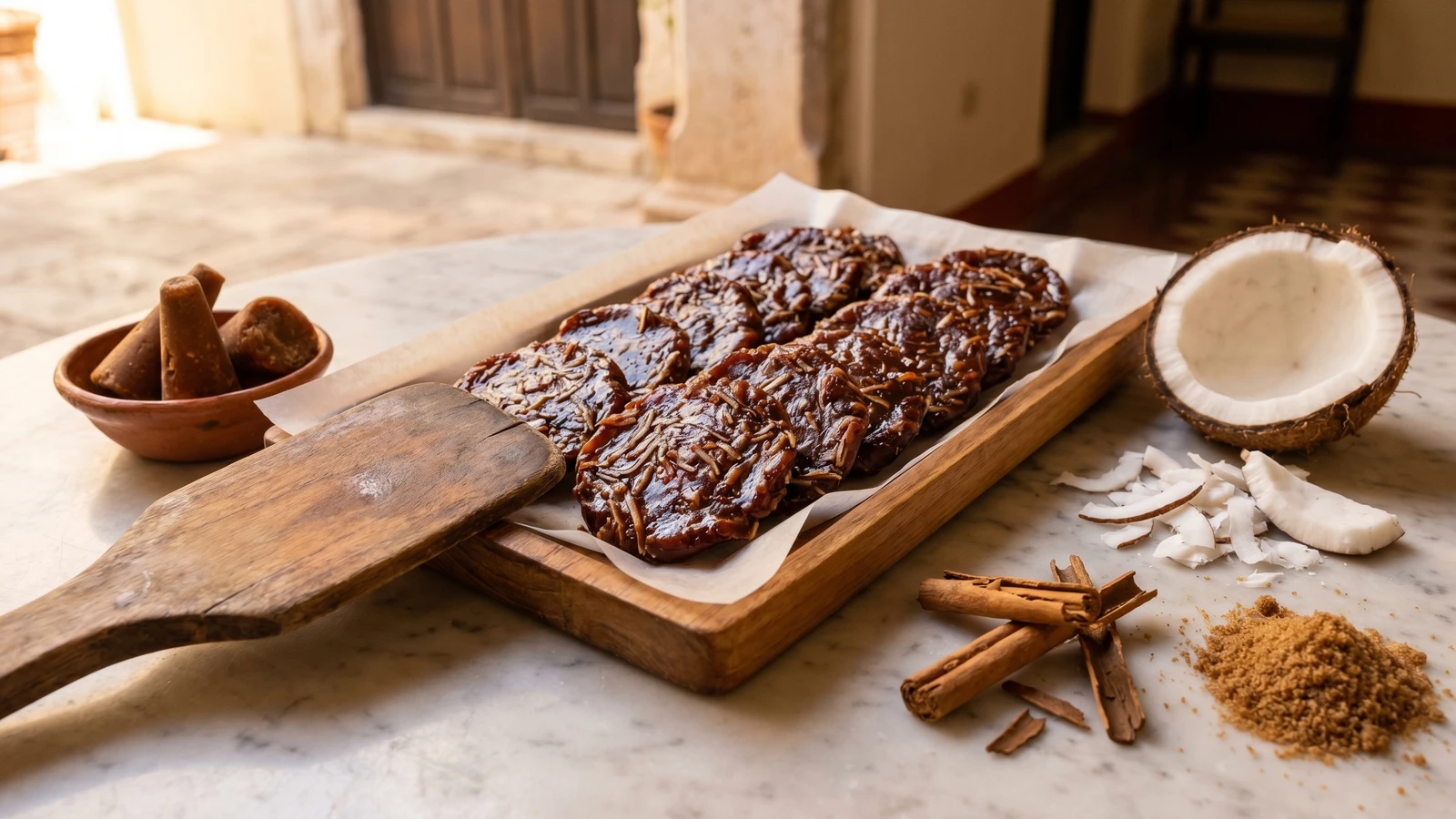
Yucatán's coconut palanqueta, fresh coco grated by hand into caramelized azúcar mascabado, flattened with a wooden pala onto papel encerado. The candy the merengueros sell from bandejas in the parks of Mérida.
This is a Yucatecan candy. Specifically from the coast, where the coconut palms grow heavy along the road between Mérida and Progreso, and where the merengueros, the candy vendors, have walked the parks and plazas for generations with their wooden bandejas balanced on one shoulder.
The palanqueta de coco is not the cocada you may have eaten elsewhere in Mexico. It is not the oven-baked little mound with the toasted top from central Mexico. The Yucatecan version is darker, chewier, sweeter at the back of the throat from the azúcar mascabado and the piloncillo. The coconut is grated by hand, skin and all, so the candy comes flecked with brown. That is not a flaw. That is how you know nobody took a shortcut.
The technique is older than written recipes here. You cook the unrefined sugar with water and canela until it reaches soft-ball stage, you add the fresh coco and a squeeze of lime to keep the syrup from seizing, and you flatten the candy with a wooden pala onto papel encerado. The pala leaves its mark. That mark is the signature of a merenguero's hand and a Yucatecan kitchen.
My mother did not make cocada. She was from Jalisco and the candies of her childhood were jamoncillo de leche and ate de membrillo. I learned this one in Mérida from a woman named Doña Esperanza who sold palanquetas outside the church of Santa Ana every Sunday for forty years. She would not give me her exact proportions, no señora ever does, so I cooked alongside her three Sundays in a row and wrote down what I saw. This is that recipe. Saber cocinar es saber vivir.
The coconut arrived in the Yucatán peninsula via Spanish galleons in the 16th century, brought from the Philippines through the Manila-Acapulco trade route, and it took to the limestone coastal soil so well that by the 18th century coconut palms defined the landscape from Celestún to Río Lagartos. The cocada was originally a colonial-era convent candy, made in the kitchens of Mérida's religious houses where nuns cooked sugar from the surrounding henequen-region haciendas with imported coconut, but by the 19th century the recipe had migrated from the convents to the merengueros, the street vendors who became, and remain, the principal carriers of the tradition. The word palanqueta itself comes from the Spanish for a small lever or bar, a reference to the flattened brick shape the candy takes under the wooden pala.
Quantity
1 large (about 1 1/2 pounds of meat once cracked)
Quantity
2 cups
Quantity
1/2 cup (about 4 ounces)
chopped or grated
Quantity
1 cup
Quantity
1 stick (about 3 inches)
Quantity
1 teaspoon
Quantity
1/4 teaspoon
Quantity
1 tablespoon
for greasing the pala and the papel
| Ingredient | Quantity |
|---|---|
| fresh mature coconut | 1 large (about 1 1/2 pounds of meat once cracked) |
| azúcar mascabado (Mexican dark unrefined cane sugar) | 2 cups |
| piloncillochopped or grated | 1/2 cup (about 4 ounces) |
| water | 1 cup |
| canela (Mexican cinnamon) | 1 stick (about 3 inches) |
| fresh lime juice | 1 teaspoon |
| fine sea salt | 1/4 teaspoon |
| unsalted butterfor greasing the pala and the papel | 1 tablespoon |
Pierce the three eyes of the coconut with a clean nail and drain the water into a glass. Drink the water or save it for an agua fresca, it does not go in the candy. Wrap the coconut in a kitchen towel and crack it open with a heavy hammer on the floor or against a stone. Pry the meat away from the shell with the tip of a sturdy knife. You do not need to peel off the brown skin. In Yucatán the skin stays, the fleck of dark in the candy is part of how a real cocada looks.
Grate the coconut on the medium holes of a box grater. You want strands, not powder. A food processor pulses the meat into wet pulp and the candy goes gummy. Hand grating gives you the fine threads that hold the caramel and give the palanqueta its signature texture. You should have about three packed cups.
Combine the azúcar mascabado, the chopped piloncillo, the water, and the stick of canela in a heavy 4-quart copper or stainless pot. Set it over medium heat and stir with a wooden pala until the sugars dissolve completely. Stop stirring once you see it come to a simmer. From here you only swirl the pot. Stirring crystallizes the sugar against the walls and your caramel goes grainy.
Let the syrup bubble at medium heat for about 12 to 15 minutes. It will deepen from brown to mahogany and the bubbles will go from wide and lazy to tight and shiny. You are taking it to soft-ball stage, around 235 to 240 degrees Fahrenheit. If you do not have a thermometer, drop a half teaspoon of syrup into a cup of cold water. It should form a soft pliable ball you can roll between your fingers. The señoras of the Lucas de Gálvez market do not own thermometers and neither did my mother. The cold-water test is older than any candy gauge and it is reliable.
Pull the canela stick out and discard it. Add the grated coconut, the lime juice, and the salt to the hot syrup all at once. Now you stir. Use the wooden pala and work the coconut through the caramel for 8 to 10 minutes over medium-low heat. The mixture will look wet and loose at first and then start to pull away from the sides of the pot. The lime juice is not for flavor, it is to keep the sugar from seizing. That is a Yucatecan trick the merengueros learned from the women who came before them.
Drop a spoonful onto a cold plate. It should hold its shape and feel tacky but not wet. If it spreads into a puddle, keep cooking another two minutes. If it sets up hard and snaps, you went too far and the palanquetas will be brittle instead of chewy. You want the texture between, dense and yielding, the cocada you bite into at a Mérida park bench from a merenguero's bandeja.
Tear sheets of papel encerado and lay them across a wooden board or a clean countertop. Rub the wooden pala lightly with butter. Drop heaping tablespoons of the coconut mixture onto the papel, spacing them apart. Flatten each one with the buttered pala into a rough disc about three inches across and a quarter inch thick. The shape is not meant to be perfect. A merenguero's palanqueta has the marks of the pala on it. That is the proof a human hand made it, not a machine.
Let the palanquetas cool completely on the papel encerado, at least 30 minutes. They will firm up as they sit. Once they are fully set, peel them off the papel. Stack them between fresh sheets of papel in a tin or a clay olla with a lid. They keep at room temperature for two weeks. Recetas probadas y garantizadas.
1 serving (about 60g)
Culinary guides, cultural storytelling, and the editorial depth that makes cooking meaningful.
Discover Culinary ExplorerChef Lupita
Puebla's convent-style acitrón, made from cidra peel instead of endangered biznaga, built through repeated syrup soakings until the cubes turn firm, translucent, and ready for rosca or chiles en nogada.

Chef Lupita
Ciudad de México's Tulyehualco alegría is popped huautli folded into piloncillo honey, pressed with peanuts, pepitas, and raisins, then cut into the rectangular bars that built a pueblo's identity.

Chef Lupita
Oaxaca's pre-Columbian amaranth bar, popped on a hot comal and bound with piloncillo, honey, and the sacred Zapotec grain that the Spanish tried, and failed, to outlaw.

Chef Lupita
Querétaro's mercado candy of popped amaranto pressed with dark piloncillo syrup, pepitas, pecans, and cacahuate, a Bajío sweet that respects the seed before it decorates the table.