
Chef Thomas
A Proper Ploughman's Board
A board of good cheddar, thick ham, proper pickle, hard-boiled eggs, and crusty bread. Not cooking so much as assembling with conviction, and one of the finest lunches the English kitchen has ever produced.
A cooking platform built around craft, culture, and the stories behind what we eat.
Created by Chef Thomas
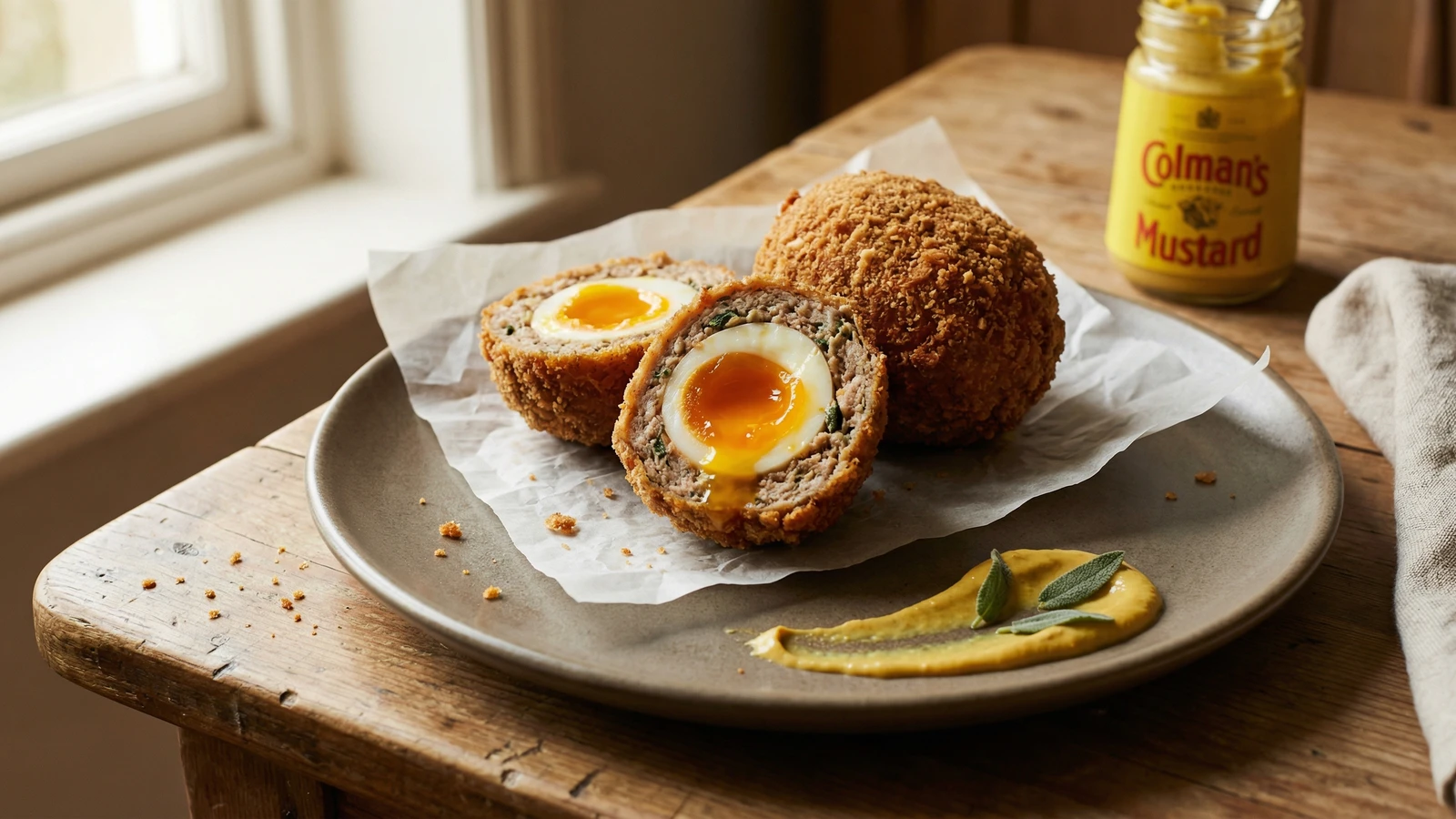
Soft-yolked eggs in seasoned pork and sage, coated in breadcrumbs and fried to a deep, shattering gold. The kind of thing you wrap in greaseproof paper and eat on a blanket, or cut in half at the kitchen counter because you couldn't wait.
The smell of sage in sausage meat is one of those kitchen smells that takes you somewhere. For me it's a Saturday morning, hands cold and slightly damp, wrapping meat around eggs at the counter while the radio mumbles in the background. Scotch eggs are not difficult. They're just fiddly enough to feel like you've made something.
I don't know when I started making these, but I know why I keep making them. A good scotch egg, cut in half to show the soft yolk running into the seasoned meat, the breadcrumb shell shattering under your teeth, is one of the more satisfying things you can put on a table. It travels well. It feeds a crowd without fuss. It is, in the best sense, proper food.
The secret, if there is one, is the yolk. Six and a half minutes in boiling water. Not a minute more. You want it set enough to handle but still soft at the centre, so that when you cut through the finished egg the gold spills out into the meat. Get the yolk right and everything else follows. The sausage meat wants sage and a scrape of nutmeg, a smear of English mustard for heat. Good pork, simply seasoned. We're only making dinner.
These are best eaten at room temperature, which makes them ideal for a picnic, for a lunch that has to travel, for the kind of afternoon where people gather in the garden and help themselves. Wrap them in greaseproof paper. Take a jar of mustard. A few leaves wouldn't go amiss. That's it.
Quantity
7
6 for wrapping, 1 for egg wash
Quantity
500g
Quantity
1 teaspoon
Quantity
small handful
finely chopped
Quantity
generous grating
Quantity
to taste
Quantity
to taste
Quantity
75g
seasoned with salt and pepper
Quantity
100g
Quantity
enough for deep frying
| Ingredient | Quantity |
|---|---|
| large eggs6 for wrapping, 1 for egg wash | 7 |
| pork sausage meat | 500g |
| English mustard | 1 teaspoon |
| fresh sage leavesfinely chopped | small handful |
| nutmeg | generous grating |
| fine sea salt | to taste |
| black pepper | to taste |
| plain flourseasoned with salt and pepper | 75g |
| fresh white breadcrumbs | 100g |
| vegetable or sunflower oil | enough for deep frying |
Bring a pan of water to a rolling boil. Lower six eggs in gently with a spoon and cook for exactly six and a half minutes. Not seven. Not six. You want the white fully set and the yolk still soft, with a heart of deep gold that yields when you cut through it later. Transfer the eggs immediately to a bowl of iced water and leave them there for at least ten minutes. Cold eggs peel cleanly. Warm eggs fight you. Peel them with care. Any nick in the white will show through the sausage meat.
Put the sausage meat in a bowl with the mustard, chopped sage, nutmeg, and a good grinding of pepper. Mix it with your hands until everything is evenly distributed. Don't overwork it or the meat turns dense and rubbery. You want it well combined, not kneaded. Fry a small pinch of the mixture in a pan, taste it, and adjust the seasoning. This is the moment that matters. Once the meat is wrapped around the egg, there's no going back.
Divide the sausage meat into six equal portions. Wet your hands. Take one portion and flatten it into an oval on your palm, thin enough to see the colour of your skin through it in places. Dust a peeled egg lightly in the seasoned flour, then set it in the centre of the meat. Bring the edges up and around, pressing gently to seal, smoothing with your thumbs until the egg is completely and evenly covered. No thin spots, no gaps. The flour helps the meat grip. Repeat with the rest.
Set up three shallow dishes: seasoned flour in the first, the remaining egg beaten in the second, breadcrumbs in the third. Roll each wrapped egg in the flour, shaking off the excess. Through the beaten egg, letting the surplus drip away. Then into the breadcrumbs, pressing them on with your fingers so the coating is even and complete. Set them on a plate. If you have time, put them in the fridge for twenty minutes. A rest in the cold helps everything firm up and hold its shape in the hot oil.
Fill a deep, heavy pan with oil to a depth of at least eight centimetres. Heat it to 170C. If you don't have a thermometer, drop a breadcrumb in. It should sink, then rise almost immediately and sizzle steadily, turning golden in about thirty seconds. Fry the scotch eggs two or three at a time, turning them occasionally, for seven to eight minutes. The coating should be a deep, even gold, properly crunchy, with no pale patches. Lift them out with a slotted spoon and drain on kitchen paper. Let them rest for a few minutes before cutting. The yolk needs to settle.
1 serving (about 175g)
Culinary guides, cultural storytelling, and the editorial depth that makes cooking meaningful.
Discover Culinary ExplorerChef Thomas
A board of good cheddar, thick ham, proper pickle, hard-boiled eggs, and crusty bread. Not cooking so much as assembling with conviction, and one of the finest lunches the English kitchen has ever produced.

Chef Thomas
Puff pastry twisted with anchovy and Parmesan, baked until golden and shattering and salty, the kind of thing you put out with drinks that disappears before anyone sits down.

Chef Thomas
Fresh oysters wrapped in crisp streaky bacon and grilled until the salt of the sea meets the smoke of the cure, served on hot buttered toast the way the Victorians intended, only simpler and at home.

Chef Thomas
Boiled eggs wrapped in a dark, spiced coat of sausage meat and crumbled black pudding, fried to a deep gold. The kind of thing you eat standing up in the kitchen, still warm, with mustard on your thumb.