Chef Juliette
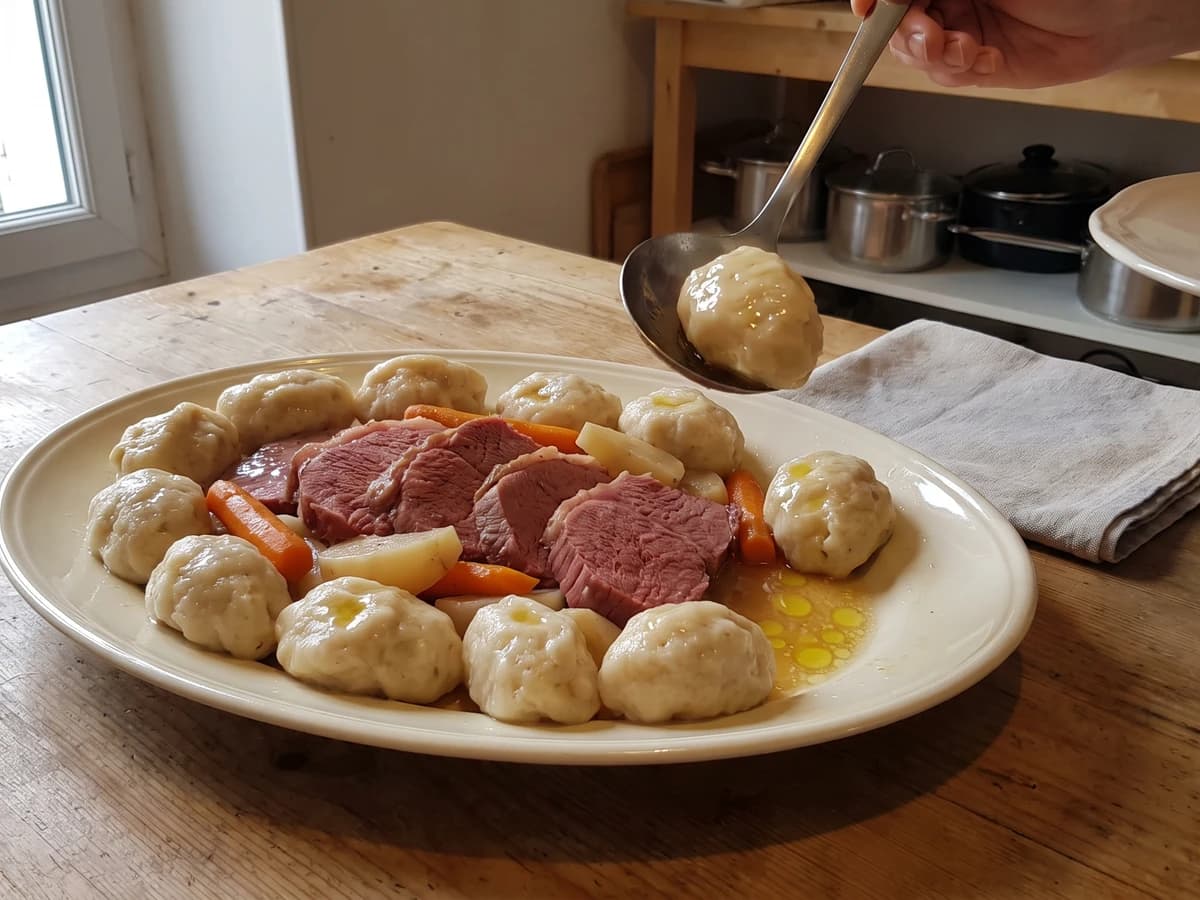
Suet Dumpling
Boulettes au suif, poached beside salt beef, turn equal weights of flour and finely chopped suet into tender, rich dumplings. Keep the beef liquor at a bare tremble and the old garnish works beautifully at home.
A cooking platform built around craft, culture, and the stories behind what we eat.

Created by
Tender potato-and-cheese dumplings wrapped in silky sour cream dough, boiled until pillowy then pan-fried in butter with sweet caramelized onions. The same recipe Polish grandmothers brought to church basements from Pittsburgh to Chicago.
In the Great Lakes cities where Polish immigrants settled, pierogi-making was a communal act. Women gathered around long tables in church basements, rolling dough and filling dumplings by the hundreds for festivals that drew crowds from miles around. This was not cooking as solitary craft. This was cooking as congregation.
The genius of the pierogi lies in its dual cooking method. Boiling sets the dough and heats the filling through. Pan-frying in butter transforms the exterior, creating crisp golden patches against the tender dumpling. The contrast matters. Skip the frying step and you have something pleasant but forgettable. Commit to it and you have something people drive across state lines to taste.
I learned to make pierogies from a woman in Cleveland who measured nothing and talked constantly while her hands worked with fifty years of muscle memory. She crimped edges without looking, filled each dumpling with the same tablespoon of filling, and rejected any pierogi that failed to meet her standards. 'Too thin, it will tear. Too thick, it's doughy. Feel the dough.' That's the lesson: good pierogies require attention, not complexity. You'll develop the feel after your first batch.
Quantity
3 cups (375g)
plus more for dusting
Quantity
1 teaspoon
Quantity
1
at room temperature
Quantity
1/2 cup (120ml)
at room temperature
Quantity
1/2 cup (120ml)
Quantity
2 pounds (900g)
peeled and quartered
Quantity
4 tablespoons
divided
Quantity
1 medium
finely diced
Quantity
8 ounces (225g)
Quantity
4 ounces (115g)
shredded
Quantity
1 teaspoon, plus more to taste
Quantity
1/2 teaspoon
freshly ground
Quantity
2 large
thinly sliced
Quantity
6 tablespoons
Quantity
for serving
Quantity
for garnish
snipped
| Ingredient | Quantity |
|---|---|
| all-purpose flourplus more for dusting | 3 cups (375g) |
| fine sea salt (for dough) | 1 teaspoon |
| large eggat room temperature | 1 |
| sour cream (for dough)at room temperature | 1/2 cup (120ml) |
| warm water | 1/2 cup (120ml) |
| Yukon Gold potatoespeeled and quartered | 2 pounds (900g) |
| unsalted butter (for filling)divided | 4 tablespoons |
| yellow onion (for filling)finely diced | 1 medium |
| farmer's cheese or dry curd cottage cheese | 8 ounces (225g) |
| sharp white cheddarshredded | 4 ounces (115g) |
| kosher salt (for filling) | 1 teaspoon, plus more to taste |
| black pepperfreshly ground | 1/2 teaspoon |
| yellow onions (for frying)thinly sliced | 2 large |
| unsalted butter (for frying) | 6 tablespoons |
| sour cream | for serving |
| fresh chives (optional)snipped | for garnish |
Whisk together the flour and salt in a large bowl. Create a well in the center and add the egg, sour cream, and warm water. Stir with a wooden spoon until a shaggy dough forms, then turn out onto a lightly floured surface. Knead for five to seven minutes until smooth and supple, like a baby's cheek. The dough should spring back gently when pressed. Wrap tightly in plastic and rest at room temperature for thirty minutes. This rest relaxes the gluten and makes rolling effortless.
Place quartered potatoes in a large pot and cover with cold water by two inches. Add a generous pinch of salt. Bring to a boil over high heat, then reduce to a steady simmer. Cook until completely tender when pierced with a knife, about twenty minutes. The potatoes should offer no resistance whatsoever. Drain thoroughly and return to the warm pot, shaking over low heat for one minute to drive off excess moisture. Wet potatoes make gummy filling.
While potatoes simmer, melt two tablespoons of butter in a skillet over medium heat. Add the finely diced onion and cook, stirring occasionally, until soft and golden, about eight minutes. The onion should smell sweet, not sharp. Pass the warm potatoes through a ricer into a large bowl, or mash until completely smooth. Fold in the sautéed onions, farmer's cheese, shredded cheddar, remaining two tablespoons of soft butter, salt, and pepper. Taste and adjust seasoning. The filling should be assertively flavored; it will mellow when wrapped in dough.
Divide rested dough into four portions. Work with one portion at a time, keeping the rest covered to prevent drying. Roll the dough on a lightly floured surface to about one-eighth inch thickness, thin enough to see your hand shadow through it but sturdy enough to hold filling. Cut rounds using a three-inch biscuit cutter or the rim of a drinking glass. Gather scraps, press together, and re-roll once. Each portion should yield about twelve rounds.
Place a heaping tablespoon of filling in the center of each round. Fold the dough over to create a half-moon, pressing edges firmly to seal. Start from the center and work outward, pushing any air pockets toward the edge as you go. Crimp the sealed edge with fork tines or pinch with your fingers to create the traditional rope pattern. The seal must be complete. Any gap will open during boiling and spill your filling into the water.
Bring a large pot of well-salted water to a rolling boil. Working in batches of eight to ten, drop pierogies into the water. They will sink, then float within two to three minutes. Once floating, cook for an additional two minutes. The dough should look slightly translucent and tender. Remove with a slotted spoon to a sheet pan brushed with butter. Do not stack them while hot or they will fuse together.
While boiling in batches, melt four tablespoons of butter in your largest skillet over medium heat. Add sliced onions and a pinch of salt. Cook slowly, stirring occasionally, until deeply golden and sweet, about twenty-five minutes. Do not rush this step. Properly caramelized onions are the crown of the dish. Transfer to a bowl and wipe the skillet clean.
Add two tablespoons of butter to the skillet over medium-high heat. When the foam subsides and butter smells nutty, add boiled pierogies in a single layer, working in batches to avoid crowding. Fry undisturbed for two to three minutes until the bottoms develop golden-brown spots, then flip and fry the second side. The exterior should be crisp and buttery while the interior stays pillowy. Transfer to a warm platter as each batch finishes.
Arrange the golden pierogies on your serving platter, scattering the caramelized onions generously over the top. Dollop sour cream alongside or drizzle it across the pierogies. Finish with a shower of fresh chives. Serve immediately while the butter still glistens and the edges still crackle. These do not improve with waiting.
1 serving (about 115g, 6 pierogies)
Culinary guides, cultural storytelling, and the editorial depth that makes cooking meaningful.
Discover Culinary ExplorerChef Juliette
Boulettes au suif, poached beside salt beef, turn equal weights of flour and finely chopped suet into tender, rich dumplings. Keep the beef liquor at a bare tremble and the old garnish works beautifully at home.

Chef Juliette
Bread, flour, frangipane, and rice become four cool, supple panades for binding forcemeats, each changing body and flavor while preserving tenderness. The finest Mousselines need none, and knowing that distinction is the lesson.

Chef Juliette
Panade au pain is bread, milk, salt, heat, and attention: stir until the paste releases cleanly, butter it against a skin, and you have the quiet binder behind tender French farces.

Chef Juliette
Panade de farine teaches the drying stroke behind pâte à choux: flour meets boiling buttered water, then stays over the fire until the paste gathers, smooths, and quits the pan cleanly.