
Chef Dean
American Goulash
A Midwestern one-pot supper of seasoned ground beef, tender elbow macaroni, and tomatoes simmered into a thick, soul-satisfying stew. This is the dish that fed factory workers and farm families alike.
A cooking platform built around craft, culture, and the stories behind what we eat.
Created by
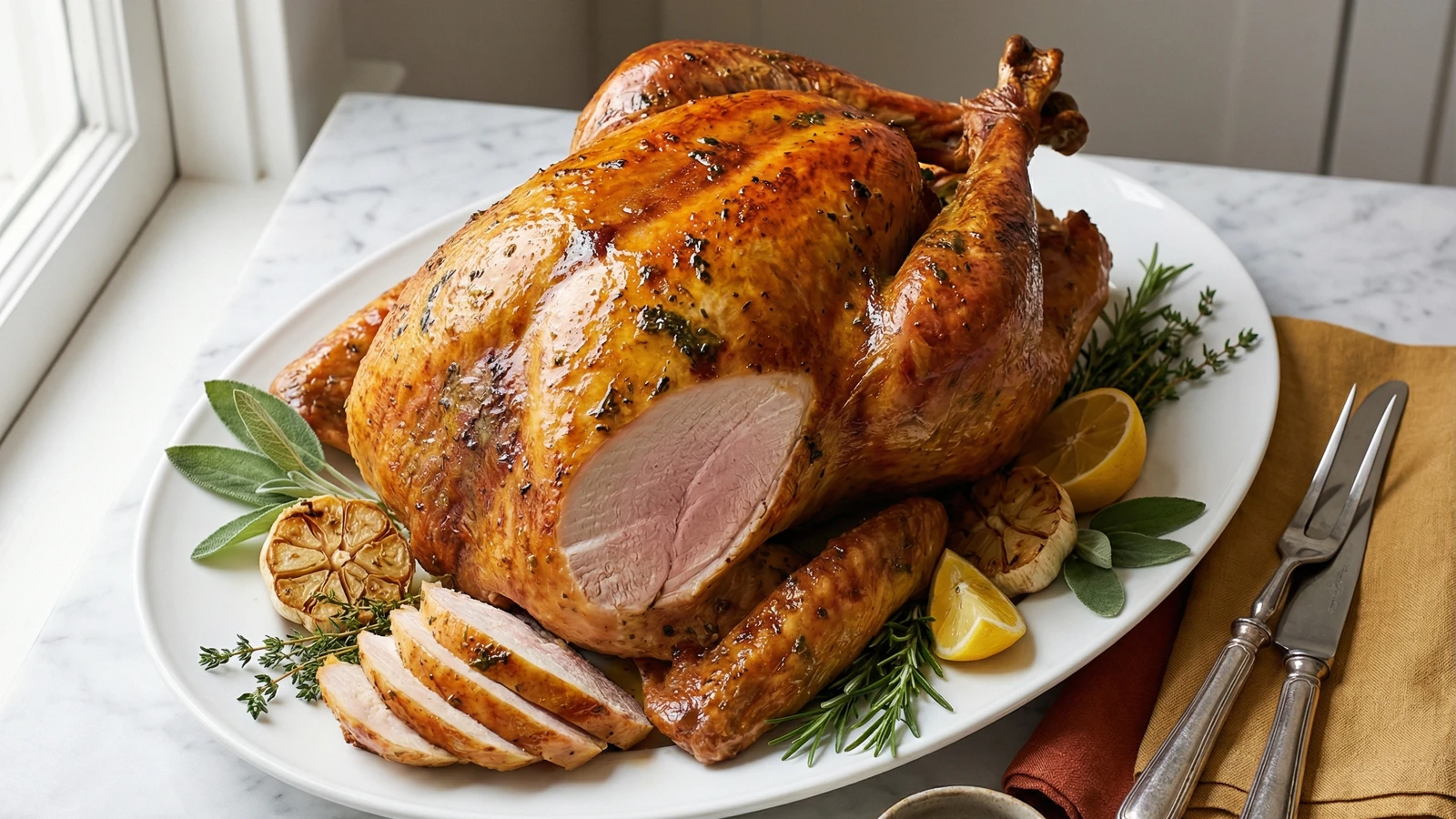
A magnificent bird with golden, crackling skin and herb butter melting beneath the surface, releasing fragrant juices that make your kitchen smell like a reason for gratitude.
This is the dish that built American tradition. Long before turkey became synonymous with Thanksgiving, the wild birds of North America fed indigenous peoples and later colonists who had never tasted anything quite like them. That we gather around this bird each November connects us to four centuries of American tables. The turkey deserves your respect.
The technique I'm giving you here solves the eternal problem: how do you roast a bird with white meat that dries out at 165 degrees and dark meat that needs 175 to become tender? The answer is compound butter worked beneath the skin. It bastes the breast from within while the skin crisps above. Simple physics. Profound results.
I've taught this method to nervous home cooks who swore they couldn't manage a whole turkey. They all can. You will too. The bird does most of the work. Your job is temperature control, a good thermometer, and the discipline to let it rest before carving. That last part is where most people fail. Don't be most people.
Start your preparations the day before. A dry bird roasts better than a wet one. Season it, let it sit uncovered in your refrigerator overnight, and wake up to skin that's ready to turn golden and honest in your oven.
Quantity
1 (12-14 pounds)
Quantity
1 cup (2 sticks)
Quantity
3 tablespoons
finely chopped
Quantity
2 tablespoons
Quantity
2 tablespoons
finely chopped
Quantity
1 tablespoon
finely chopped
Quantity
6 cloves
minced
Quantity
2 teaspoons, plus more for seasoning
Quantity
1 teaspoon, plus more for seasoning
Quantity
1
halved
Quantity
1 large
quartered
Quantity
4
cut into 3-inch pieces
Quantity
1
halved crosswise
Quantity
8
Quantity
4
Quantity
2 cups
Quantity
for trussing
| Ingredient | Quantity |
|---|---|
| whole turkey, giblets and neck removed | 1 (12-14 pounds) |
| unsalted butter, softened | 1 cup (2 sticks) |
| fresh sagefinely chopped | 3 tablespoons |
| fresh thyme leaves | 2 tablespoons |
| fresh rosemaryfinely chopped | 2 tablespoons |
| fresh flat-leaf parsleyfinely chopped | 1 tablespoon |
| garlicminced | 6 cloves |
| kosher salt | 2 teaspoons, plus more for seasoning |
| freshly ground black pepper | 1 teaspoon, plus more for seasoning |
| lemonhalved | 1 |
| yellow onionquartered | 1 large |
| celery stalkscut into 3-inch pieces | 4 |
| head of garlichalved crosswise | 1 |
| fresh thyme sprigs | 8 |
| fresh rosemary sprigs | 4 |
| low-sodium chicken stock | 2 cups |
| kitchen twine | for trussing |
Remove the turkey from its packaging and pull out any giblets or neck from the cavity. Pat the entire bird dry with paper towels, inside and out. Be thorough. Season the cavity generously with kosher salt and pepper. Season the exterior skin with about 2 teaspoons of salt, rubbing it evenly over the breast, thighs, and back. Place the turkey on a rimmed baking sheet fitted with a wire rack and refrigerate uncovered for 12 to 24 hours. The skin will become visibly drier and slightly tacky to the touch.
In a medium bowl, combine the softened butter with the chopped sage, thyme leaves, rosemary, parsley, and minced garlic. Add 2 teaspoons of salt and 1 teaspoon of pepper. Mash and stir with a fork until the herbs are evenly distributed throughout the butter. The mixture should smell intensely fragrant, like an herb garden in summer. This can be made up to three days ahead and refrigerated, but bring it to room temperature before using so it spreads easily.
Remove the turkey from the refrigerator 1 hour before roasting. Starting at the cavity end of the breast, carefully slide your fingers between the skin and the meat to create a pocket. Work slowly. The membrane connecting them will separate with gentle pressure. Extend the pocket over each breast half and down toward the thighs as far as you can reach without tearing the skin. Take about two-thirds of the herb butter and push it into the pockets, distributing it evenly over the breast meat in a layer about a quarter-inch thick. Massage the skin from the outside to spread the butter evenly. You should see the green herbs through the skin.
Rub the remaining herb butter over the exterior of the turkey, coating the breast and legs. Season the outside with additional salt and pepper. Squeeze the lemon halves over the bird and drop them into the cavity. Add the quartered onion, celery pieces, halved garlic head, and the thyme and rosemary sprigs to the cavity. Don't pack it tightly; air needs to circulate. The aromatics will perfume the meat from within as the turkey roasts.
Tuck the wing tips behind the turkey's back to prevent them from burning. Cross the legs at the ankles and tie them together with kitchen twine. This is not about aesthetics. It's about even cooking. A compact bird roasts more uniformly than one splayed out. Place the turkey breast-side up on a roasting rack set inside a roasting pan. Pour the chicken stock into the bottom of the pan; this creates steam in the early stages and provides liquid for basting.
Position a rack in the lower third of your oven and preheat to 425 degrees Fahrenheit. Roast the turkey at this high temperature for 30 minutes. The skin will begin to brown and the fat will start rendering. Your kitchen will fill with the smell of roasting herbs and poultry. This is when Thanksgiving begins.
After 30 minutes, reduce the oven temperature to 325 degrees Fahrenheit. Continue roasting, basting every 45 minutes with the pan juices, until the turkey is done. For a 12 to 14 pound bird, this takes approximately 2.5 to 3 additional hours. The skin should become deeply golden and lacquered. If the breast browns too quickly before the thighs are done, tent that area loosely with aluminum foil.
Insert an instant-read thermometer into the thickest part of the thigh, avoiding bone. The turkey is done when the thigh registers 165 degrees Fahrenheit and the juices run clear, not pink. Check the thickest part of the breast as well; it should read 160 degrees (it will rise during resting). If your thighs are done but the breast is lagging, tent the breast with foil and continue roasting until it catches up.
This step separates good turkey from great turkey. Transfer the bird to a carving board and tent loosely with foil. Let it rest for a minimum of 30 minutes, up to 45. This is not idle time. The juices, which have been driven toward the surface by the oven's heat, are now redistributing through the meat. Cut too soon and they'll flood your cutting board instead of staying where they belong. Use this time to make your gravy from the pan drippings.
Remove the twine and discard the cavity aromatics. Using a sharp carving knife, remove each leg by cutting through the joint where it meets the body. Separate the drumsticks from the thighs. Carve the breast meat by slicing downward along the breastbone, then cutting horizontal slices against the grain. Arrange the carved meat on a warmed platter, with the crispy skin pieces visible. Spoon some of the pan juices over the sliced breast to keep it glistening. Bring the bird to the table with pride. You've earned it.
1 serving (about 255g)
Culinary guides, cultural storytelling, and the editorial depth that makes cooking meaningful.
Discover Culinary ExplorerChef Dean
A Midwestern one-pot supper of seasoned ground beef, tender elbow macaroni, and tomatoes simmered into a thick, soul-satisfying stew. This is the dish that fed factory workers and farm families alike.

Chef Dean
A golden-crusted casserole of tender elbow macaroni swaddled in velvety cheese sauce, this is the macaroni and cheese that defines American comfort cooking. No boxed shortcuts. No apologies.

Chef Dean
Silky strips of seared beef and earthy mushrooms draped in a tangy sour cream sauce, ladled generously over buttery egg noodles. This is the dish that warmed a thousand American kitchens.

Chef Dean
A magnificent whole-roasted tenderloin crowned with a glossy red wine reduction, the kind of centerpiece that makes guests fall silent when it arrives at the table. This is holiday cooking at its honest best.