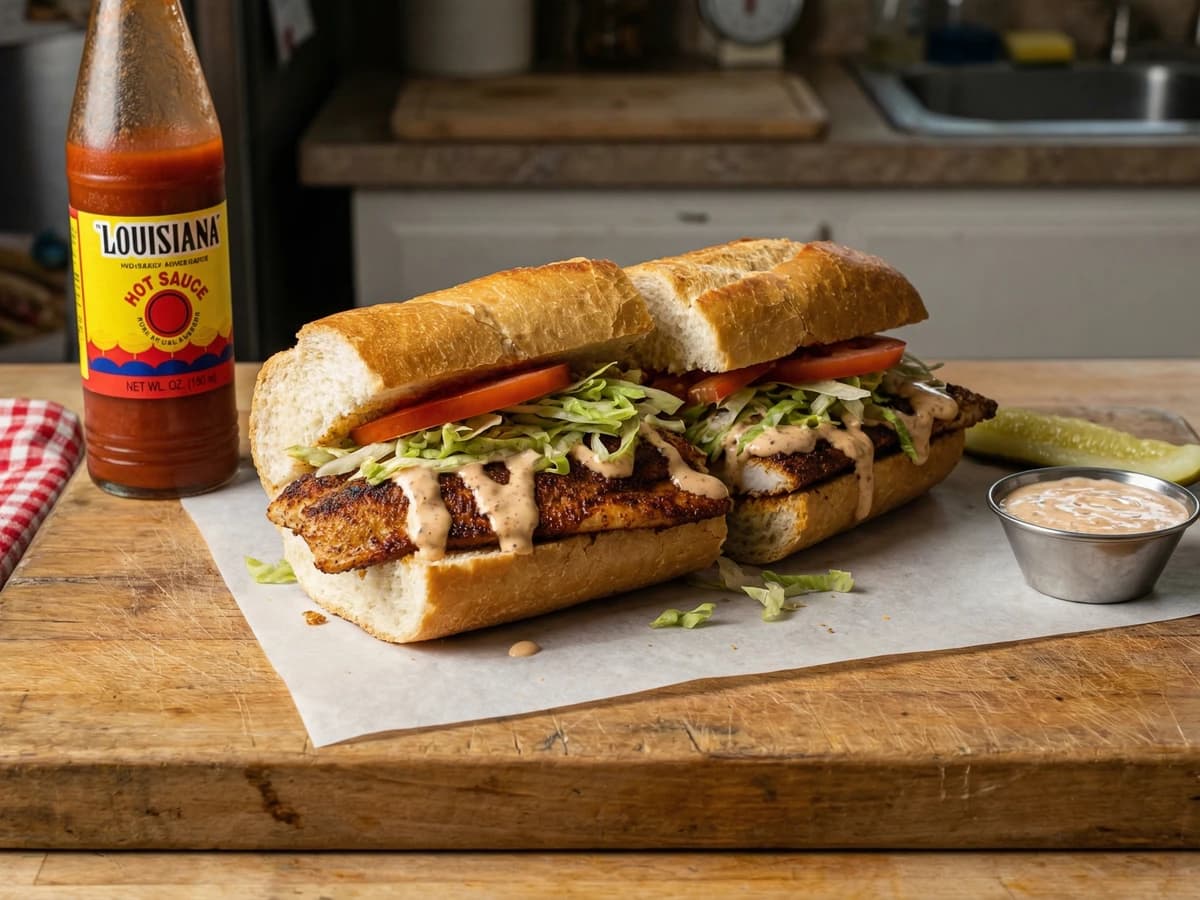
Sweet Gulf shrimp in a shattering cornmeal crust, piled high on toasted French bread with crisp lettuce, ripe tomatoes, and a remoulade that bites back, the kind of sandwich that built New Orleans one lunch counter at a time.
Sandwiches & Wraps
Cajun
Comfort Food
Quick Meal
Weeknight
30 min
Active Time
15 min cook•45 min total
Yield4 sandwiches
The po' boy is New Orleans in sandwich form. Born in the late 1920s when the Martin brothers started feeding striking streetcar workers for free, these sandwiches became synonymous with the city itself. They called the strikers "poor boys," and the name stuck to the food that fed them.
At Lagniappe, we've served thousands of these sandwiches over the years. The secret isn't complicated, but it demands respect for every element. Your shrimp must be Gulf shrimp, sweet and briny. Your bread must have that impossible combination of shatteringly crisp crust and cloud-soft interior. Your remoulade needs enough personality to stand up to the fried shrimp without overwhelming them.
I season at every step. The buttermilk soak gets hot sauce. The coating gets Cajun spices, garlic, and cayenne. The hot shrimp get another hit of seasoning the moment they leave the oil. By the time you take a bite, you're tasting four generations of Louisiana cooking wisdom layered into one glorious sandwich. That's the bayou way.
Don't let anyone tell you this is just a fried shrimp sandwich. This is history. This is culture. This is lunch the way it ought to be.
The technique, the tradition, and the story behind every dish.
large Gulf shrimp (21-25 count)peeled and deveined
1 1/2 pounds
buttermilk
2 cups
hot sauce (Crystal or Louisiana brand)
1 tablespoon
all-purpose flour
1 cup
fine yellow cornmeal
1 cup
Cajun seasoning
2 teaspoons, plus more for finishing
garlic powder
1 teaspoon
onion powder
1 teaspoon
cayenne pepper
1/2 teaspoon
kosher salt
1 teaspoon
black pepperfreshly ground
1/2 teaspoon
vegetable or peanut oilfor frying
about 3 cups
New Orleans-style French breadsplit lengthwise
4 lengths (about 8 inches each)
unsalted buttersoftened
4 tablespoons
mayonnaise
1 cup
Creole mustard
2 tablespoons
prepared horseradish
1 tablespoon
hot sauce (for remoulade)
1 tablespoon
capersminced
2 teaspoons
green onionminced
1
garlicminced
1 clove
paprika
1 teaspoon
Worcestershire sauce
1/2 teaspoon
cayenne (for remoulade)
pinch
iceberg lettuceshredded
2 cups
tomatoessliced thin
2 medium
dill pickle slices (optional)
for serving
Equipment Needed
•12-inch cast iron skillet or Dutch oven
•Deep-fry or candy thermometer
•Spider strainer or slotted spoon
•Wire cooling rack
Instructions
1
Season and soak the shrimp
Combine the buttermilk and one tablespoon of hot sauce in a large bowl. Add the shrimp and let them swim in that tangy bath for at least twenty minutes, up to an hour. The buttermilk tenderizes the shrimp and gives the coating something to grip. This is the first layer of flavor, and you don't want to skip it.
Gulf shrimp are worth seeking out. The flavor is sweeter, cleaner, and more honest than imported shrimp. Ask your fishmonger where they came from.
2
Build the remoulade
Whisk together the mayonnaise, Creole mustard, horseradish, hot sauce, capers, green onion, garlic, paprika, Worcestershire, and a pinch of cayenne in a bowl. Taste it. The remoulade should have a kick that wakes you up, tangy and bold. Adjust the heat to your liking. Set it in the refrigerator while you fry. The flavors marry and mellow as it sits.
Remoulade made the night before is even better. The sharp edges soften and everything comes together.
3
Mix the seasoned coating
Combine the flour and cornmeal in a shallow dish or pie plate. Add the Cajun seasoning, garlic powder, onion powder, cayenne, salt, and black pepper. Whisk it all together until the spices are evenly distributed. This coating is where the crunch and the heat live. Taste a pinch of the dry mixture. It should be assertively seasoned because the shrimp inside will temper that boldness.
4
Heat the oil
Pour oil into a large cast iron skillet or Dutch oven to a depth of about one inch. Heat over medium-high until the oil reaches 360 to 375 degrees. If you don't have a thermometer, drop a pinch of the flour mixture into the oil. It should sizzle immediately and dance on the surface. That's your signal.
Peanut oil gives the cleanest, crispest fry. Vegetable oil works fine, but stay away from olive oil here.
5
Bread the shrimp
Pull the shrimp from the buttermilk one at a time, letting the excess drip off for just a second. Dredge each shrimp in the seasoned flour mixture, pressing the coating onto all sides. Shake off the excess gently. The coating should look like a thin, even jacket, not a heavy blanket. Set the breaded shrimp on a wire rack while you work through the rest.
6
Fry until golden
Slip the shrimp into the hot oil in batches of six or eight. Don't crowd the pan or your oil temperature drops and you get soggy shrimp. Fry for two to three minutes, turning once halfway through, until the coating is deep golden and the shrimp curl into a loose C shape. Listen to the sound: a steady, confident sizzle means you're doing it right. When they float and look gorgeous, pull them out with a spider or slotted spoon.
If your shrimp curl into a tight circle, they're overcooked. A loose C shape means tender, juicy shrimp inside that crunchy shell.
7
Season immediately
Transfer the fried shrimp to a paper towel-lined plate. Hit them with a light dusting of Cajun seasoning while they're still glistening with oil. This is the final layer. The seasoning sticks to the hot surface and perfumes the coating. Work quickly between batches, keeping the finished shrimp warm in a low oven if needed.
8
Toast the bread
Butter the cut sides of your French bread generously. Toast them on a hot griddle or under the broiler until golden brown at the edges but still soft and yielding in the center. The bread for a po' boy must be crispy outside and pillowy inside. This contrast is what makes the sandwich. If you can't find proper New Orleans French bread, a good French baguette will do, but know you're making a compromise.
9
Assemble the po' boy
Spread a generous layer of remoulade on both cut sides of the bread. Don't be shy. Pile the shredded lettuce on the bottom half, then the sliced tomatoes, then as many fried shrimp as you can fit, which should be seven or eight per sandwich. Add pickle slices if you like. Close the sandwich gently but don't press down hard. You want to preserve that beautiful architecture. Slice on the diagonal if you must, but I prefer to hand it over whole and watch someone's eyes light up.
A proper po' boy is dressed: lettuce, tomato, mayo, and pickles. If you want it undressed, say so, but you're missing half the experience.
Chef Tips
•The bread makes or breaks your po' boy. Leidenheimer Baking Company in New Orleans ships their French bread nationwide if you want the real thing. Otherwise, look for a baguette with a thin, shattering crust and soft interior.
•Frying temperature matters more than anything. Too hot and the coating burns before the shrimp cook through. Too cool and the coating absorbs oil and turns soggy. Keep a thermometer in the oil and watch it between batches.
•Crystal hot sauce is traditional for Louisiana cooking. It brings heat and vinegar without overwhelming. If you can't find it, Louisiana brand or Frank's will work. Tabasco is too sharp for this application.
•At Lagniappe, we always serve po' boys with a side of extra remoulade for dipping. Some folks like to dip the shrimp that fall out of the sandwich. I won't judge.
Advance Preparation
•Remoulade improves overnight. Make it up to three days ahead and store it covered in the refrigerator.
•Shrimp can soak in the buttermilk for up to two hours in the refrigerator. Longer than that and they start to get mushy.
•The seasoned flour mixture can be prepared a day ahead and stored in an airtight container at room temperature.
•Fried shrimp are best eaten within minutes of frying. This is not a make-ahead dish. The crust loses its magic as it sits.
Frequently Asked Questions
Nutrition Information
1 serving (about 430g)
Calories
1220 calories
Total Fat
69 g
Saturated Fat
15 g
Trans Fat
0 g
Unsaturated Fat
52 g
Cholesterol
375 mg
Sodium
1900 mg
Total Carbohydrates
88 g
Dietary Fiber
4 g
Sugars
5 g
Protein
55 g
Where cooking meets culture.
Culinary guides, cultural storytelling, and the editorial depth that makes cooking meaningful.