Culinary Explorer

A cooking platform built around craft, culture, and the stories behind what we eat.
Discover Culinary Explorer
Classic Flan

Classic Flan

Created by

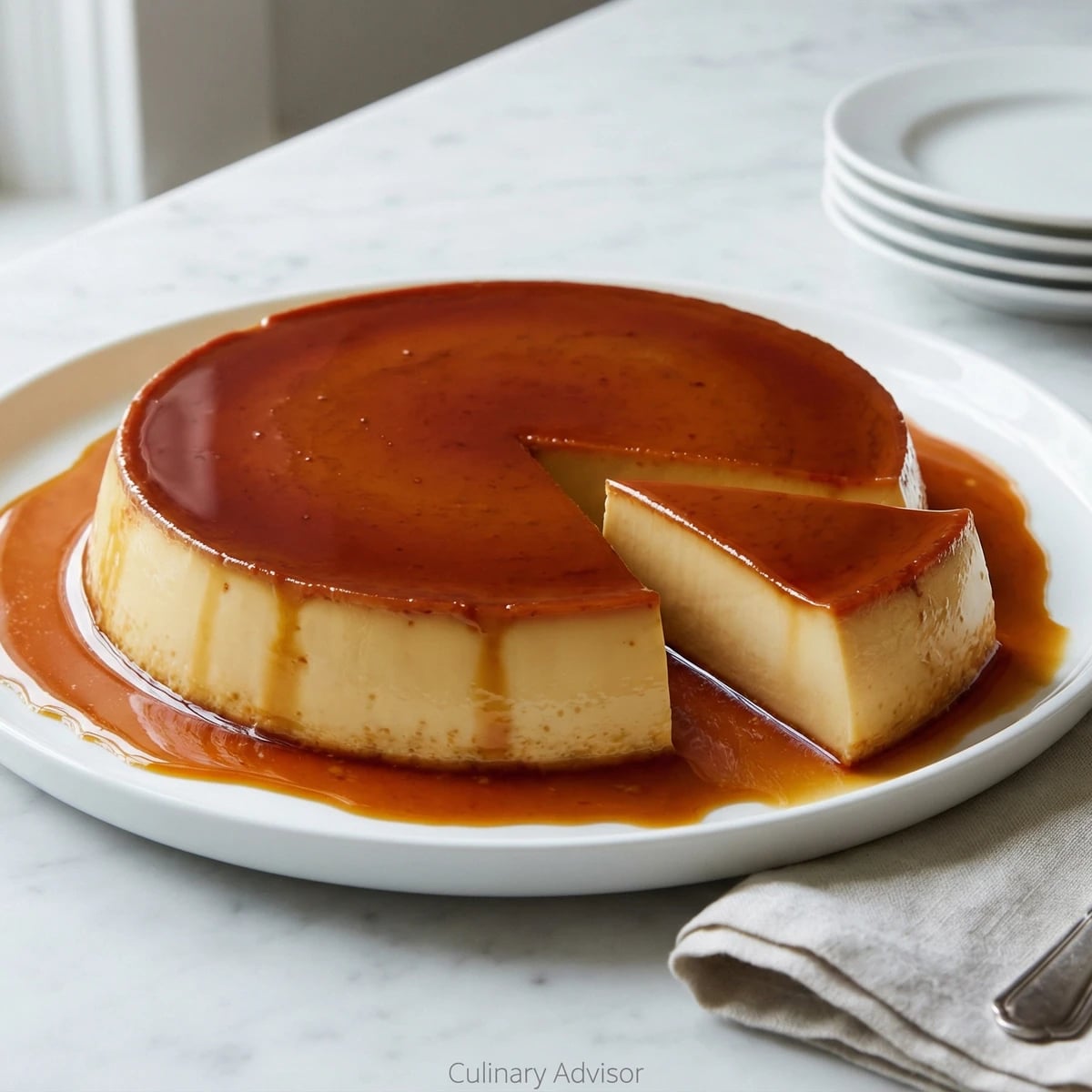
Impossibly silky caramel custard that unmolds into a pool of burnished amber sauce, requiring just six ingredients and the patience to let it chill overnight. This is the dessert that ends dinner parties with sighs of contentment.

Desserts
Spanish
Dinner Party
Make Ahead
Special Occasion
25 min
Active Time
55 min cook6 hr total
Yield8 servings

Flan arrived in Spain from the Romans, who sweetened their egg custards with honey before cane sugar reached European shores. When Spanish colonizers brought it to the Americas, local cooks transformed it with the addition of sweetened condensed milk, creating the impossibly silky version that graces tables from Mexico City to Buenos Aires.

The technique is forgiving once you understand two principles. First, the caramel: you're cooking sugar past its melting point until it turns amber and develops complex, bittersweet notes that balance the sweet custard. Second, the water bath: surrounding your baking dish with hot water insulates the delicate eggs from direct heat, preventing the curdled texture that ruins lesser custards.

I've taught this dessert to nervous bakers who swore they couldn't make caramel. Every one of them succeeded. The trick is patience and attention. Watch your sugar, trust your senses, and resist the urge to stir. Your reward is a dessert so elegant it silences a room when you unmold it at the table.

The technique, the tradition, and the story behind every dish.

Discover Culinary Explorer

Ingredients

granulated sugar

Quantity

1 cup (200g)

for caramel

water

Quantity

1/4 cup

sweetened condensed milk

Quantity

1 can (14 oz/397g)

evaporated milk

Quantity

1 can (12 oz/354ml)

large eggs

Quantity

4

at room temperature

large egg yolks

Quantity

2

at room temperature

pure vanilla extract

Quantity

2 teaspoons

fine sea salt

Quantity

1/4 teaspoon

Equipment Needed

  • 9-inch round cake pan or 9x5-inch loaf pan
  • Heavy-bottomed saucepan or skillet
  • Roasting pan large enough to hold the flan dish
  • Fine-mesh strainer
  • Blender or whisk
  • Kettle for boiling water

Instructions

  1. 1

    Prepare your equipment

    Position a rack in the center of your oven and preheat to 325°F. Set a 9-inch round cake pan or a 9x5-inch loaf pan near your stovetop. Boil a full kettle of water for the water bath. Have everything within arm's reach before you begin the caramel because once it starts moving, it moves fast.

  2. 2

    Make the caramel

    Combine the sugar and water in a heavy-bottomed saucepan or skillet over medium heat. Swirl the pan gently to dissolve the sugar, but do not stir with a spoon. Stirring introduces air and causes crystallization. Once the sugar dissolves and the liquid turns clear, stop swirling and let it cook undisturbed. Watch it closely. The edges will begin to color first, turning pale gold, then deeper amber. When the caramel reaches a rich mahogany color and smells of toasted sugar with just a hint of smoke, immediately pour it into your baking pan.

    Caramel goes from perfect to burnt in seconds. Pull it from the heat when it's slightly lighter than your target color because it continues cooking in the pan.
  3. 3

    Coat the pan

    Working quickly with oven mitts, tilt the pan to coat the bottom evenly with caramel. If it begins to harden before you finish, that's fine. The bottom is what matters since that becomes the top when you unmold. Set the coated pan inside a larger roasting pan and let the caramel harden while you make the custard, about five minutes.

  4. 4

    Blend the custard

    In a blender, combine the sweetened condensed milk, evaporated milk, whole eggs, egg yolks, vanilla, and salt. Blend on low speed for thirty seconds until completely smooth. You want no streaks of egg visible. Alternatively, whisk vigorously by hand in a large bowl until homogeneous.

    A blender produces the silkiest flan, but over-blending incorporates air bubbles. Thirty seconds is enough.
  5. 5

    Strain and pour

    Pour the custard through a fine-mesh strainer into the caramel-lined pan. The strainer catches any chalazae from the eggs and ensures a perfectly smooth texture. Straining takes thirty seconds and makes a noticeable difference. Use a spoon to gently pop any surface bubbles.

  6. 6

    Create the water bath

    Place the roasting pan with the flan on the oven rack, then carefully pour the boiling water into the outer pan until it reaches halfway up the sides of the flan dish. This water bath, called a bain-marie, creates gentle, even heat that cooks the custard without curdling the eggs.

    Pour the water after the pan is on the rack to avoid sloshing and burning yourself.
  7. 7

    Bake until just set

    Bake for 50 to 60 minutes. The flan is done when the edges are set but the center still jiggles like gelatin when you gently shake the pan. A knife inserted one inch from the center should come out clean, but the very center will seem underdone. Trust this. It sets as it cools. Overbaking produces a porous, watery custard instead of silken richness.

  8. 8

    Cool completely

    Carefully remove the roasting pan from the oven. Let the flan cool in the water bath for thirty minutes, then remove the flan dish and let it cool to room temperature on a wire rack, about one hour. The custard firms significantly during this time.

  9. 9

    Chill overnight

    Cover the pan tightly with plastic wrap and refrigerate for at least four hours, preferably overnight. The cold firms the custard to its proper texture and allows the caramel to liquefy into the sauce that will cascade down the sides when you unmold it. Patience here is not optional.

    Flan improves over two to three days. The flavors meld and the caramel sauce becomes more generous. Make it ahead without guilt.
  10. 10

    Unmold with confidence

    Run a thin knife around the edge of the flan, pressing the blade against the pan rather than the custard. Place your serving plate upside down over the pan. In one decisive motion, flip both together. Hold them there for a moment while gravity does its work. Lift the pan away and watch the caramel sauce pool around the custard like liquid amber. If some caramel stays in the pan, scrape it out with a spoon and drizzle it over the top. Slice into wedges and serve cold, with a generous spoonful of the sauce over each portion.

Chef Tips

  • Room temperature eggs are essential. Cold eggs can cause the custard to cook unevenly and may curdle when combined with the other ingredients. Set them out an hour before you begin, or submerge them in warm water for five minutes.
  • If your caramel seizes or crystallizes, don't panic. Add two tablespoons of water, return to heat, and swirl until smooth. The water evaporates and you're back on track.
  • For individual flans, divide the caramel and custard among six to eight ramekins. Reduce baking time to 35 to 45 minutes, checking for that signature jiggle.
  • The slight bitterness of properly made caramel balances the sweetness of the custard. If your flan tastes one-dimensional, your caramel needed another thirty seconds of cooking.

Advance Preparation

  • Flan must be made at least 4 hours ahead and refrigerated, but it's even better after 24 to 48 hours. Plan accordingly.
  • The custard can be blended and refrigerated up to 24 hours before baking. Let it come to room temperature for 30 minutes before pouring over the caramel.
  • Unmolded flan keeps refrigerated for up to 5 days, though the caramel sauce thins progressively. Slice only what you need and keep the rest intact.

Frequently Asked Questions

Nutrition Information

1 serving (about 175g)

Calories
390 calories
Total Fat
13 g
Saturated Fat
6 g
Trans Fat
0 g
Unsaturated Fat
7 g
Cholesterol
210 mg
Sodium
145 mg
Total Carbohydrates
57 g
Dietary Fiber
0 g
Sugars
57 g
Protein
12 g

Note: Chef personas and recipes are created with AI assistance. Cook with care: follow safe food-handling practices, check doneness with a thermometer when needed, and adapt for allergies and your kitchen.

Where cooking meets culture.

Culinary guides, cultural storytelling, and the editorial depth that makes cooking meaningful.

Discover Culinary Explorer

More from Delicious Desserts

Browse the full collection