Chef Thomas
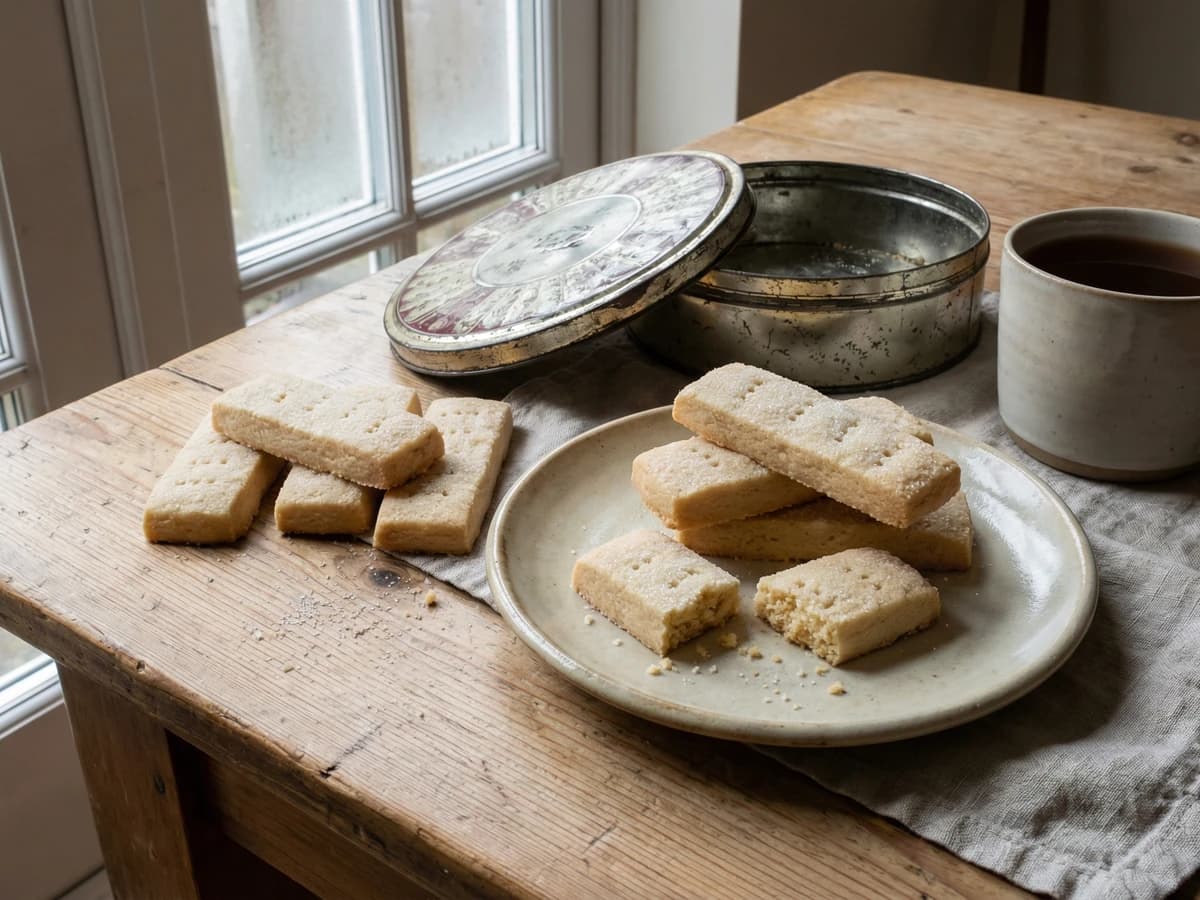
All-Butter Shortbread Fingers
The plainest biscuit in the tin and the hardest one to stop eating, three ingredients and a slow oven turning good butter into something quietly perfect with a cup of tea.
A cooking platform built around craft, culture, and the stories behind what we eat.

Created by Chef Thomas
Tender, lightly sweetened English scones, split warm and piled with clotted cream and jam, the kind of small bake that turns an ordinary afternoon into something worth sitting down for.
There's a particular kind of afternoon that calls for scones. Grey light at the window, the kettle on, somebody coming round in an hour. You've got nothing planned and nothing in the cupboard except flour and butter and a bit of milk. That's all you need.
Scones are the most forgiving thing I know how to bake. Fifteen minutes from start to finish, give or take, and the kitchen smells like a bakery while you're making the tea. The trick, if there is one, is to handle the dough as little as possible. Quick fingers, cold butter, a light hand. Overworked dough makes heavy scones, and a heavy scone is a small disappointment that nobody quite knows how to mention politely.
I make these the way I was taught: rubbed in by hand, brought together with a knife, patted out rather than rolled. The lemon in the milk is a small thing I picked up somewhere along the way and never let go of. It gives the crumb a softness that feels almost like cake. We're only making dinner, or in this case, tea. But there are few better feelings than putting a warm scone in front of someone with a pot of jam and a spoon of clotted cream and watching them stop talking for a minute.
I wrote it down in the notebook once: scones, jam, cream, Sunday rain. That was the whole entry. It didn't need more.
Quantity
350g
plus extra for dusting
Quantity
1 teaspoon
Quantity
pinch
Quantity
85g
cubed
Quantity
3 tablespoons
Quantity
175ml
plus a splash for brushing
Quantity
1 teaspoon
Quantity
squeeze
Quantity
to serve
Quantity
to serve
| Ingredient | Quantity |
|---|---|
| self-raising flourplus extra for dusting | 350g |
| baking powder | 1 teaspoon |
| fine sea salt | pinch |
| cold unsalted buttercubed | 85g |
| caster sugar | 3 tablespoons |
| whole milkplus a splash for brushing | 175ml |
| vanilla extract | 1 teaspoon |
| lemon juice | squeeze |
| clotted cream | to serve |
| strawberry or raspberry jam | to serve |
Set the oven to 220C/200C fan and put a baking tray inside to heat up. A hot tray gives the scones a bit of help from underneath, which is the kind of small thing that makes the difference between a scone and a good scone. Line a second tray with baking parchment, ready for later.
Pour the milk into a jug, add the vanilla and a squeeze of lemon juice, and leave it to sit while you get on with the flour. The lemon thickens the milk slightly and gives the scones a soft, tender crumb. It's a small trick I picked up years ago and never abandoned.
Tip the flour, baking powder and salt into a wide bowl. Add the cold butter and rub it in with your fingertips, lifting the mixture as you go to keep things light. You're after the texture of coarse breadcrumbs, with a few larger flecks of butter still showing. Don't overdo it. Warm hands turn butter to paste and paste makes heavy scones.
Stir the sugar through the flour, then make a well in the middle and pour in most of the milk, holding back a tablespoon or so in case you don't need it all. Use a table knife to bring the dough together with quick, light strokes. It should come together in a soft, slightly shaggy mass. If it feels dry, add the rest of the milk. If it feels sticky, that's fine. Sticky is better than dry.
Tip the dough onto a lightly floured surface and give it the gentlest possible knead, just two or three folds to bring it into a round. Pat it out to about 3cm thick. Don't roll it. A rolling pin compresses the dough and you want all that lift you can get. Cut out rounds with a 5cm cutter, pressing straight down without twisting. Twisting seals the edges and stops the rise. Press the scraps gently together and cut more until the dough is used up.
Lift the scones onto the lined tray and brush the tops with a little milk. Slide the tray onto the hot tray already in the oven and bake for twelve to fifteen minutes. They're ready when they've risen tall, the tops are deep golden, and the bottoms sound hollow when you tap them. Trust your nose. When the kitchen smells like a bakery, you're nearly there.
Lift the scones onto a wire rack and let them cool for just a few minutes. You want them warm, not hot. Split them with your hands rather than a knife, the rough tear catches the cream and jam better than a clean cut. Pile on the clotted cream. Spoon over the jam. Or the other way round, depending on which side of the country you grew up on. Eat them while they're still warm.
1 serving (about 80g)
Culinary guides, cultural storytelling, and the editorial depth that makes cooking meaningful.
Discover Culinary ExplorerChef Thomas
The plainest biscuit in the tin and the hardest one to stop eating, three ingredients and a slow oven turning good butter into something quietly perfect with a cup of tea.
Chef Thomas
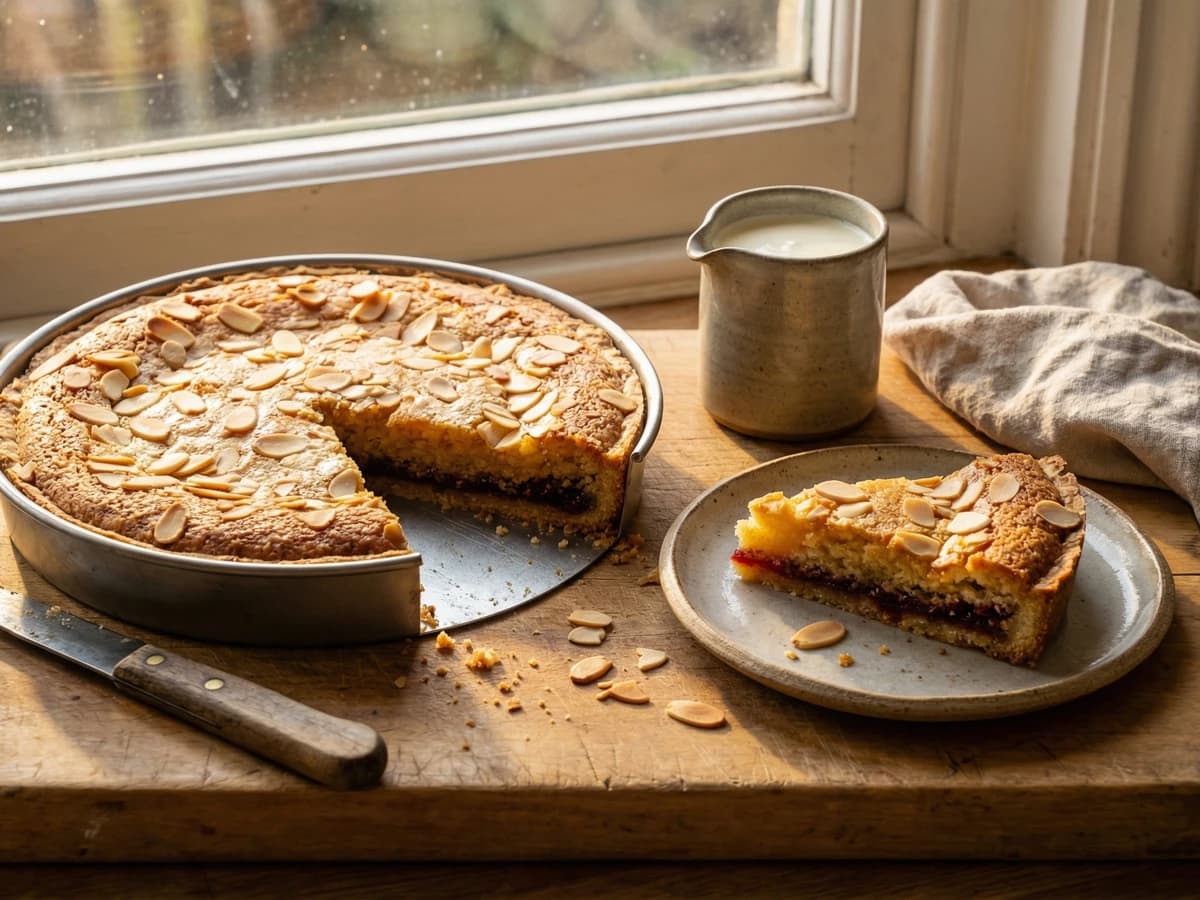
A proper Bakewell tart with buttery shortcrust, a thick layer of raspberry jam, and almond frangipane baked golden under a scattering of flaked almonds. No icing. No nonsense.

Chef Thomas
Oval pastries filled with rum-soaked currants and spice, baked until the tops crackle with sugar. The kind of thing to make on a wet Sunday afternoon when you want the kitchen to smell of something.
Chef Thomas
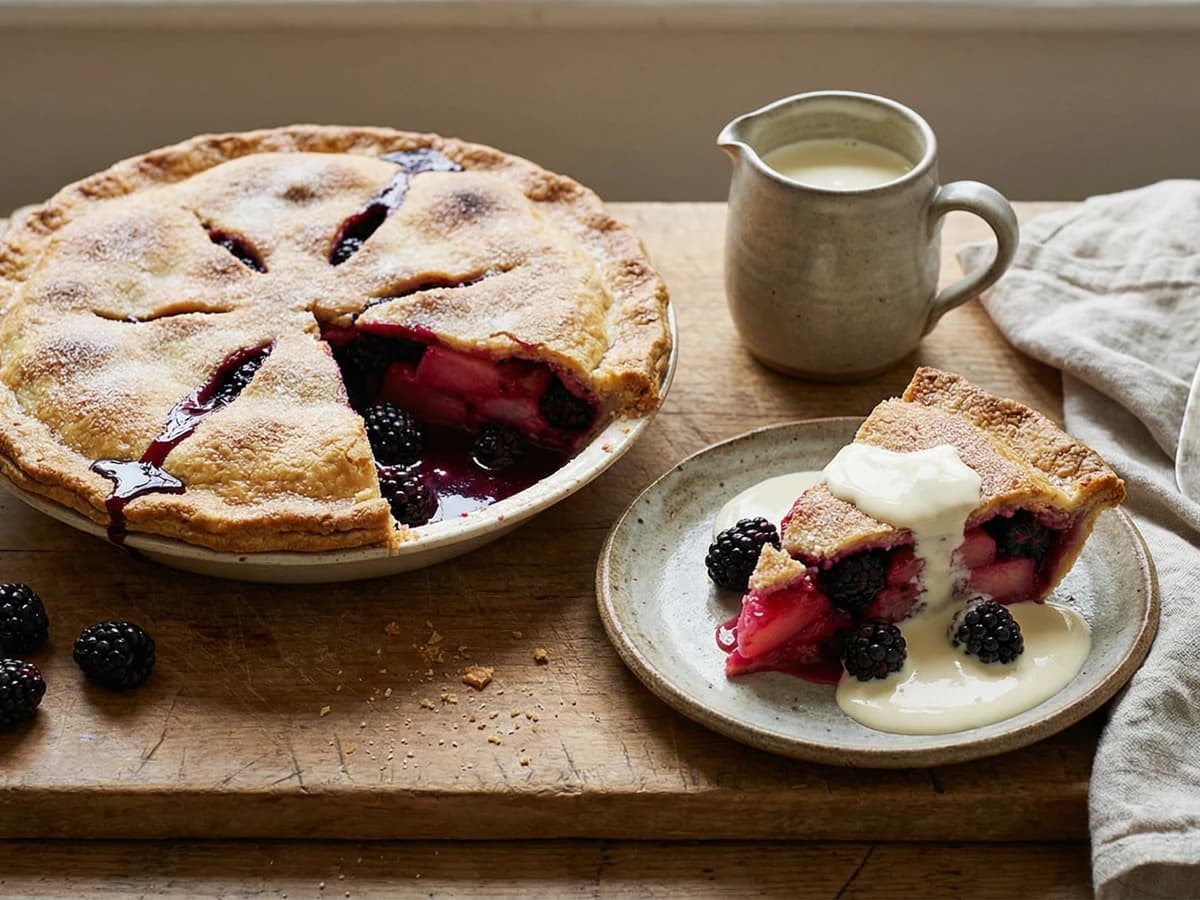
A proper hedgerow pie of Bramley apples and blackberries under a sugar-crusted pastry lid, the kind of pudding that turns a Sunday in September into something you'll remember.