
Chef Thomas
Apple Charlotte
Buttered bread baked to a deep mahogany around a filling of spiced Bramley apples, turned out at the table in a small moment of drama, cold cream poured from a jug alongside.
A cooking platform built around craft, culture, and the stories behind what we eat.
Created by Chef Thomas
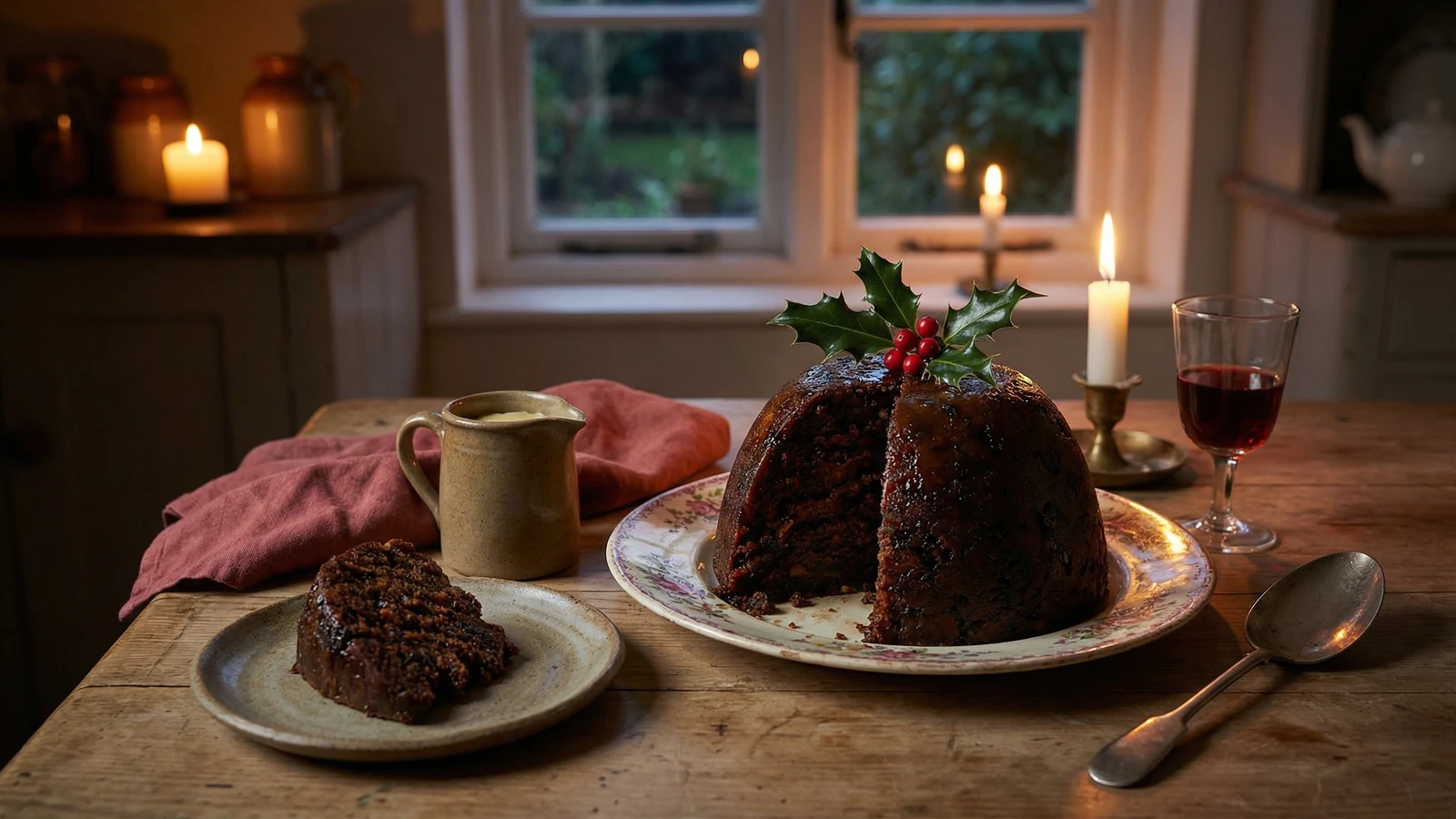
A dark, dense fruit pudding soaked in stout and brandy, stirred on Stir-up Sunday, fed quietly through the long run-up to Christmas, and set alight at the table on the day itself.
The last Sunday before Advent. The afternoons have gone properly dark by four, the kitchen is the warmest room in the house, and there's a big bowl on the table full of fruit that has been sitting in stout and brandy since yesterday. It has gone soft and plump and dark, and the whole bowl smells of Christmas already. This is Stir-up Sunday. The one day in the cooking calendar that has a name.
There are recipes I make because they're useful and recipes I make because they're lovely, and then there's this one, which I make because the year wouldn't feel right without it. Everyone in the house takes a turn with the wooden spoon, stirring from east to west in honour of a tradition nobody can quite explain, making a wish that nobody ever says out loud. The mixture is so dense by the end that you have to put your shoulder into it. That's part of the point.
Then it steams for most of a day, quietly, while the house fills up with the smell of cloves and orange peel and something richer underneath. You wrap it up, tuck it into a cupboard, and mostly forget about it. Except you don't, not really, because every week or so you unwrap the top, prick it with a skewer, and spoon a little brandy into it. Feeding the pudding. It's a silly phrase and I love it.
On Christmas Day you steam it again, turn it out onto a warm plate, stick a sprig of holly in the top, and set it alight with warm brandy at the table. The flame is pale blue and brief and entirely theatrical, and for about thirty seconds everyone stops talking. Then it's just pudding: dense, dark, spicy, sticky, entirely itself. Serve it with brandy butter or cold cream, and don't ask anyone to take a small portion, because nobody will.
Quantity
200g
Quantity
200g
Quantity
200g
Quantity
100g
chopped
Quantity
75g
halved
Quantity
150ml
Guinness or similar
Quantity
75ml, plus extra for feeding and flaming
Quantity
100g
Quantity
100g
beef or vegetarian
Quantity
100g
Quantity
50g
Quantity
50g
roughly chopped
Quantity
1 teaspoon
Quantity
1/2 teaspoon
Quantity
1/2 teaspoon
freshly grated
Quantity
pinch
Quantity
from 1 orange
Quantity
from 1 lemon
Quantity
from 1 orange
Quantity
1 small
grated, skin and all
Quantity
2
lightly beaten
Quantity
for greasing the basin
Quantity
1
to serve
Quantity
to serve
| Ingredient | Quantity |
|---|---|
| raisins | 200g |
| sultanas | 200g |
| currants | 200g |
| mixed candied peelchopped | 100g |
| glacé cherries (optional)halved | 75g |
| stoutGuinness or similar | 150ml |
| brandy | 75ml, plus extra for feeding and flaming |
| dark muscovado sugar | 100g |
| shredded suetbeef or vegetarian | 100g |
| fresh white breadcrumbs | 100g |
| plain flour | 50g |
| blanched almondsroughly chopped | 50g |
| mixed spice | 1 teaspoon |
| ground cinnamon | 1/2 teaspoon |
| nutmegfreshly grated | 1/2 teaspoon |
| fine sea salt | pinch |
| orange zest | from 1 orange |
| lemon zest | from 1 lemon |
| orange juice | from 1 orange |
| cooking applegrated, skin and all | 1 small |
| large eggslightly beaten | 2 |
| butter | for greasing the basin |
| holly sprig (optional)to serve | 1 |
| brandy butter or double cream | to serve |
The night before you plan to make the pudding, tip all the dried fruit, the candied peel, and the cherries if you're using them into your largest mixing bowl. Pour over the stout and the brandy, give it a good stir, and cover with a clean cloth. Leave it on the kitchen counter overnight. By morning the fruit will have drunk most of it up, gone plump and glossy and fat, and the kitchen will smell faintly of Christmas already. This is the most important step and the easiest.
On Stir-up Sunday, or whenever you've decided is yours, add the muscovado sugar, suet, breadcrumbs, flour, chopped almonds, mixed spice, cinnamon, nutmeg, and salt to a very large bowl. Rub it all together with your hands to break up the sugar and distribute the spices. It should feel dry and sandy and smell of Christmas cake in the making.
Tip the soaked fruit and any liquid left in the bowl into the dry mixture. Grate in the apple, skin and all, avoiding the core. Add the orange and lemon zest, the orange juice, and the beaten eggs. Now stir. Properly. From east to west if you're feeling traditional, and make a wish if you must. The mixture will be heavy and sticky and dark, and you'll need a sturdy wooden spoon and some weight behind it. Everyone in the house should take a turn. It should be loose enough to drop reluctantly from the spoon when you lift it. If it feels too stiff, add another splash of stout.
Butter a 1.2-litre pudding basin generously. Spoon the mixture in, pressing down firmly as you go to get rid of any air pockets. Mound the top slightly. Cut a round of baking parchment and a round of foil, each one big enough to overhang the basin by a few inches. Lay them together and pleat them down the middle: this gives the pudding room to rise. Place them pleated-side up over the basin and tie them down tightly with kitchen string just under the rim. Loop a second length of string across the top as a handle. You'll need it to lift the thing in and out of the pan.
Sit a small upturned saucer or a trivet in the base of a large, deep saucepan. Lower the pudding basin onto it. Pour in boiling water from the kettle to come halfway up the sides of the basin. Bring everything to a gentle simmer, cover with a lid, and leave it to steam for six to eight hours. Check every hour or so and top up with boiling water as needed. The kitchen will slowly fill with the smell of cloves and orange peel and something darker and richer underneath, and by the end of the day the whole house will smell of Christmas. The one thing that can ruin you here is letting the pan boil dry. Don't.
Lift the pudding out and let it cool completely on the counter. Remove the steaming parchment and foil, replace them with fresh layers, and store somewhere cool and dark for at least three weeks. Every week or so, unwrap the top, prick the pudding in a few places with a skewer, and spoon a tablespoon of brandy over it. Rewrap and put it back. This is feeding the pudding. It's a silly phrase and I love it. The longer it sits, the better it gets.
On Christmas Day, steam the pudding again in exactly the same way for two to three hours. It's already cooked: this is just warming it through and giving the fruit one last surge. Keep the water topped up as before. While it steams, make the brandy butter if you haven't already, and find a plate worth bringing to the table.
Lift the pudding from the pan and let it rest for a few minutes. Run a palette knife around the inside of the basin, invert it onto a warm serving plate, and give it a firm shake. It should slide out without argument into a dark, glossy dome. Tuck a sprig of holly into the top. Warm three or four tablespoons of brandy gently in a small pan or a ladle over a flame, just until it's warm to the touch and the vapour catches. Pour it over the pudding and set it alight at the table. The flame will be pale blue and brief. For about thirty seconds, everyone stops talking. Then it's just pudding. Serve it in thick slices with brandy butter or cold double cream, and don't let anyone tell you they only want a small piece.
1 serving (about 190g)
Culinary guides, cultural storytelling, and the editorial depth that makes cooking meaningful.
Discover Culinary ExplorerChef Thomas
Buttered bread baked to a deep mahogany around a filling of spiced Bramley apples, turned out at the table in a small moment of drama, cold cream poured from a jug alongside.

Chef Thomas
Whole Bramley apples cored and stuffed with butter, brown sugar and plump dried fruit, baked until they collapse and the kitchen fills with the smell of autumn getting on with itself.

Chef Thomas
A proper baked rice pudding, slow-cooked in whole milk with butter and nutmeg until the top sets into a freckled golden skin. The kind of pudding that makes January feel like less of a long haul.

Chef Thomas
Wild blackberries and Bramley apples collapsed together under a thick, sandy crumble, the pudding that makes September feel like it's worth staying in for.