Culinary Explorer

A cooking platform built around craft, culture, and the stories behind what we eat.
Discover Culinary Explorer
Chorizo Verde Tlaxcalteca con Huevo

Chorizo Verde Tlaxcalteca con Huevo

Created by

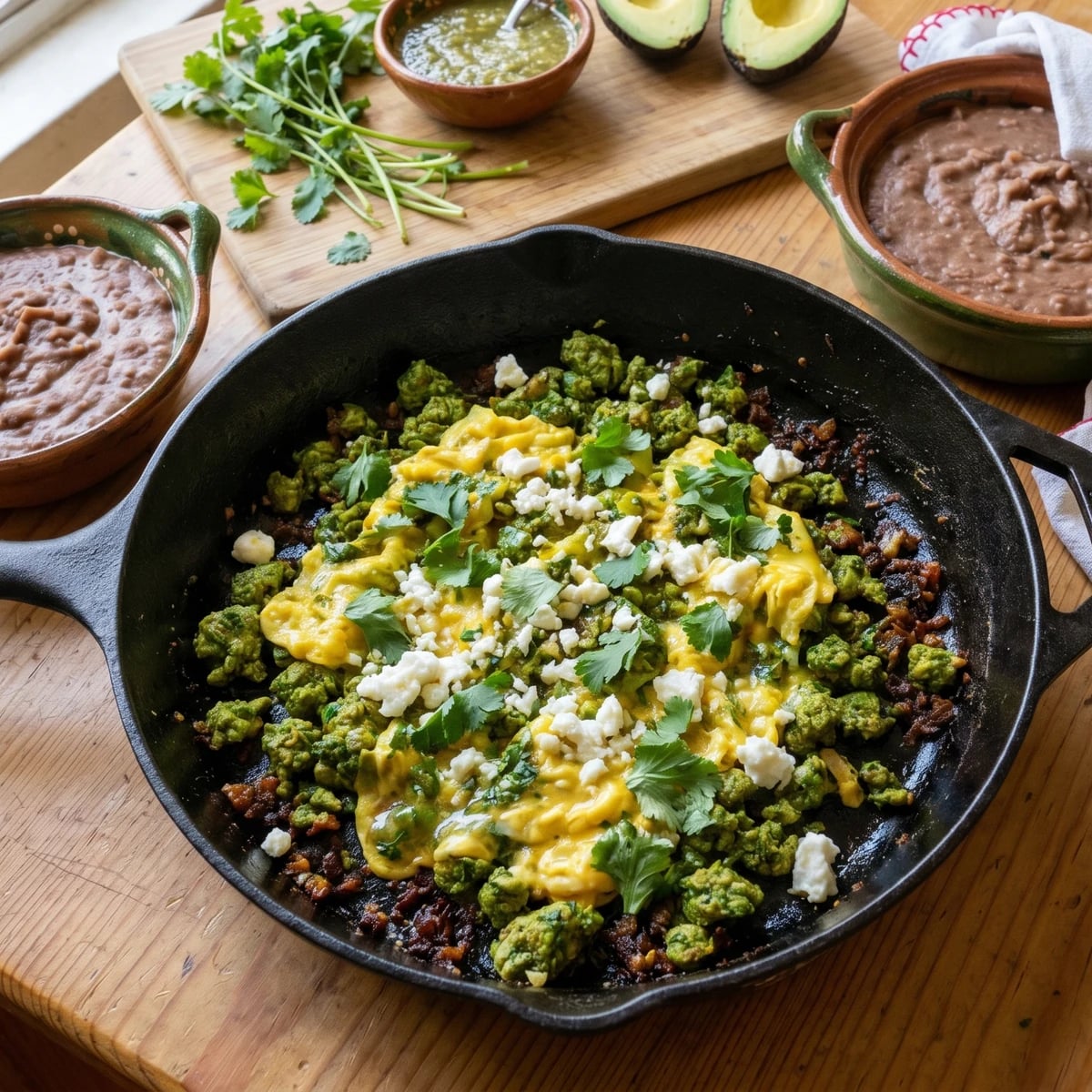
Tlaxcala's electric-green chorizo, pork cured with cilantro, perejil, poblano, and pepita, fried crisp in lard and folded into soft scrambled eggs. The breakfast that announces what state you are in.

Breakfast & Brunch
Mexican
Weeknight
Special Occasion
Comfort Food
30 min
Active Time
20 min cook50 min total
Yield6 servings

This is Tlaxcala. Specifically the highland towns around Huamantla, San Pablo del Monte, and the central valley villages where the green chorizo has been made for generations and where it shows up on the breakfast table the way red chorizo shows up everywhere else in Mexico.

What makes it green is not food coloring. It is a thick paste of cilantro, perejil, spinach, hierba santa, chile poblano, chile serrano, and toasted pepitas, blended tight and worked into ground pork until the meat turns an almost shocking color. The first time I saw it being made, in a kitchen in Huamantla in 2009, I thought the woman had spilled something. Then she handed me a taco and I understood. This is not red chorizo with herbs added. This is a separate animal entirely. Cada estado, su propia cocina.

The pepita is the detail that tells you this is Tlaxcala and not Puebla or Mexico state. Pre-Hispanic central highlands cooks ground pepitas into nearly everything, and the Tlaxcalan chorizo carries that lineage straight through the colonial pork into the modern skillet. Toast the pepitas. Do not skip them. They thicken the paste, they cling to the meat, and they bring the dish back to its real origin.

My mother did not make this. She was from Jalisco and Jalisco does not make green chorizo. But I found a recipe in her notebook copied from a Tlaxcalan friend, in pencil, with a single note in the margin: 'reposar mínimo una noche.' Rest it at least one night. She underlined it twice. She was right. Saber cocinar es saber vivir.

Chorizo verde is a culinary signature of Tlaxcala, Mexico's smallest state, and its origins reflect the central highlands' long tradition of grinding green herbs and pepitas (squash seeds) into sauces and meat preparations, a technique that predates Spanish contact by centuries. The dish in its modern form emerged in the post-colonial period when Spanish-introduced pork was wedded to indigenous pipian-style green seasoning bases, with the towns of Tetla and San Bernardino Contla often cited as the technique's seventeenth-century stronghold. Unlike red chorizo, which carries Iberian smoked-paprika DNA, Tlaxcalan green chorizo is one of the few sausages in the Americas whose primary flavor architecture is almost entirely pre-Hispanic, smoked paprika does not appear at all, and the color comes exclusively from fresh herbs and chile poblano.

The technique, the tradition, and the story behind every dish.

Discover Culinary Explorer

Ingredients

ground pork shoulder

Quantity

1 1/2 pounds

with at least 25 percent fat

fresh cilantro

Quantity

1 bunch (about 1 packed cup)

leaves and tender stems

fresh perejil (flat-leaf parsley)

Quantity

1 bunch (about 3/4 packed cup)

leaves only

fresh spinach leaves

Quantity

1 packed cup

fresh hierba santa (optional)

Quantity

4 to 5 leaves

center rib removed

fresh chile poblano

Quantity

1

charred, peeled, stemmed, and seeded

fresh chile serrano

Quantity

2

stemmed

raw pepitas (hulled pumpkin seeds)

Quantity

1/3 cup

toasted on a comal

garlic cloves

Quantity

5

white onion

Quantity

1/2 small

roughly chopped

white vinegar

Quantity

2 tablespoons

kosher salt

Quantity

1 1/2 teaspoons

dried Mexican oregano

Quantity

1 teaspoon

ground cumin

Quantity

1/2 teaspoon

ground black pepper

Quantity

1/2 teaspoon

whole cloves

Quantity

2

tomatillo

Quantity

1 small

husked and rinsed

manteca de cerdo (pork lard)

Quantity

2 tablespoons

large eggs

Quantity

12

lightly beaten with a pinch of salt

refried frijoles bayos (optional)

Quantity

for serving

hand-pressed corn tortillas (optional)

Quantity

for serving

warmed

queso fresco (optional)

Quantity

for serving

crumbled

salsa verde cruda (optional)

Quantity

for serving

sliced avocado (optional)

Quantity

for serving

Equipment Needed

  • Heavy cast iron or steel comal for charring the poblano and toasting the pepitas
  • High-powered blender for the green paste
  • Wide cast iron skillet, 12 inches
  • Wooden spoon or pala for scrambling

Instructions

  1. 1

    Char the poblano

    Set the chile poblano directly over an open flame on the stove or on a hot comal. Turn with tongs until the skin is blistered and blackened on all sides, about six to eight minutes. Drop it into a bowl and cover with a plate for ten minutes. The trapped warmth loosens the skin. Rub the blackened skin off with your fingers, do not rinse it under water. Water washes away the smoke flavor you just worked for. Pull out the stem and seeds.

    If a few black flecks of skin cling to the flesh, leave them. They belong in the chorizo. Perfectly clean poblano is a restaurant habit, not a Tlaxcala one.
  2. 2

    Toast the pepitas

    Heat a dry comal over medium. Add the pepitas in a single layer. Shake the pan often. They will puff and pop and turn pale gold in about three minutes. Pull them off the heat the moment they start to color. Burned pepitas taste like burned pepitas and there is no hiding that in a green chorizo.

  3. 3

    Build the green paste

    Combine the cilantro, perejil, spinach, hierba santa, charred poblano, serranos, toasted pepitas, garlic, white onion, vinegar, salt, oregano, cumin, pepper, cloves, and the raw tomatillo in a blender. Blend on high until you have a thick, vivid green paste. No water. The herbs and the tomatillo release their own moisture. You want this paste tight, not soupy. If your blender struggles, push it down with a wooden spoon and pulse, but do not thin it out. This is the soul of the chorizo. Tlaxcala has been making this paste for generations and they do not water it down.

  4. 4

    Season the pork

    Place the ground pork in a wide bowl. Pour the green paste over it. With clean hands, mix it together thoroughly, working the paste into every part of the meat. The pork will turn an electric green, almost shocking to look at. That is the color the women of Tlaxcala have been chasing for over a century. Cover the bowl and refrigerate for at least four hours, preferably overnight. The chorizo needs time to cure. The herbs marry the fat. Skip this rest and you will taste the difference. No me vengas con atajos.

    Twenty-four hours in the refrigerator is better than four. The flavor deepens, the color settles, and the vinegar does its quiet work on the meat. If you can plan ahead, plan ahead.
  5. 5

    Fry the chorizo

    Heat the manteca in a wide heavy skillet, cast iron is best, over medium heat. When the lard shimmers, crumble in the cured chorizo, breaking it into small uneven pieces with a wooden spoon. Cook for eight to ten minutes, stirring often. The chorizo will release liquid first, then the liquid will cook off, then the fat will start to fry the meat. You want crisp edges and dark green pockets where the herb paste has caramelized against the pan. The kitchen should smell like cilantro, garlic, and rendered pork all at once.

  6. 6

    Scramble in the eggs

    When the chorizo is fully cooked and the edges are crisp, lower the heat to medium-low. Pour in the beaten eggs all at once. Wait ten seconds, then start dragging the eggs across the pan with the wooden spoon, pulling cooked curds to the center and letting the raw egg flow to the edges. Cook for two to three minutes, until the eggs are just set but still glossy. Do not overcook them. Dry eggs ruin chorizo con huevo. The eggs should hold the chorizo together, not absorb it.

  7. 7

    Serve at the table

    Pull the skillet straight to the table on a wooden trivet. Set out warm corn tortillas in a basket lined with a cotton servilleta, a clay cazuelita of refried frijoles bayos, crumbled queso fresco, sliced avocado, and a bowl of salsa verde cruda. Each person builds their own taco at the table. This is a Tlaxcala breakfast, generous, green, and unapologetically pork. Recetas probadas y garantizadas.

Chef Tips

  • Use pork shoulder with the fat left on, ground at the butcher counter or at home. Lean ground pork makes a sad, dry chorizo. La manteca es el sabor. If your pork looks pink and clean, ask the butcher for a fattier grind or add a quarter pound of pork back fat to the mix.
  • Hierba santa is what makes this taste truly Tlaxcalan. If you cannot find it, leave it out, do not substitute. A bad substitution is a compromise, not an upgrade. The chorizo will still be excellent, just less specifically of place. Look for it at Mexican mercados in the herb section, sometimes labeled hoja santa or acuyo.
  • Cure the chorizo overnight if you can. The flavor at four hours is good. The flavor at twenty-four hours is what you tasted in Tlaxcala. Pregúntale a las señoras del mercado, they will tell you the same thing.
  • Salsa verde cruda is the right partner, raw tomatillo blended with serrano, cilantro, garlic, and salt. Red salsa fights the green chorizo. Let the dish stay in its own register.

Advance Preparation

  • The green paste can be blended one day ahead and refrigerated in a sealed jar. The color stays bright for about 24 hours before it starts to dull.
  • The cured chorizo improves with at least one overnight rest and can be made up to three days ahead. Keep it tightly covered in the refrigerator. The vinegar and salt keep the pork stable.
  • Cooked chorizo verde keeps for three days refrigerated and reheats well in a hot skillet with a little lard. Do not scramble the eggs into it until you are ready to serve.

Frequently Asked Questions

Nutrition Information

1 serving (about 480g)

Calories
920 calories
Total Fat
58 g
Saturated Fat
18 g
Trans Fat
0 g
Unsaturated Fat
36 g
Cholesterol
475 mg
Sodium
1050 mg
Total Carbohydrates
60 g
Dietary Fiber
12 g
Sugars
5 g
Protein
48 g

Note: Chef personas and recipes are created with AI assistance. Cook with care: follow safe food-handling practices, check doneness with a thermometer when needed, and adapt for allergies and your kitchen.

Where cooking meets culture.

Culinary guides, cultural storytelling, and the editorial depth that makes cooking meaningful.

Discover Culinary Explorer

More from Central Mexican Breakfast & Almuerzo

Browse the full collection