
Chef Zohra
Adss (عدس)
Brown lentils cooked down with tomato, garlic, cumin, and paprika until spoon-thick, then finished with olive oil and coriander. This is weekday Moroccan comfort, made for bread and one more bowl.
A cooking platform built around craft, culture, and the stories behind what we eat.
Created by
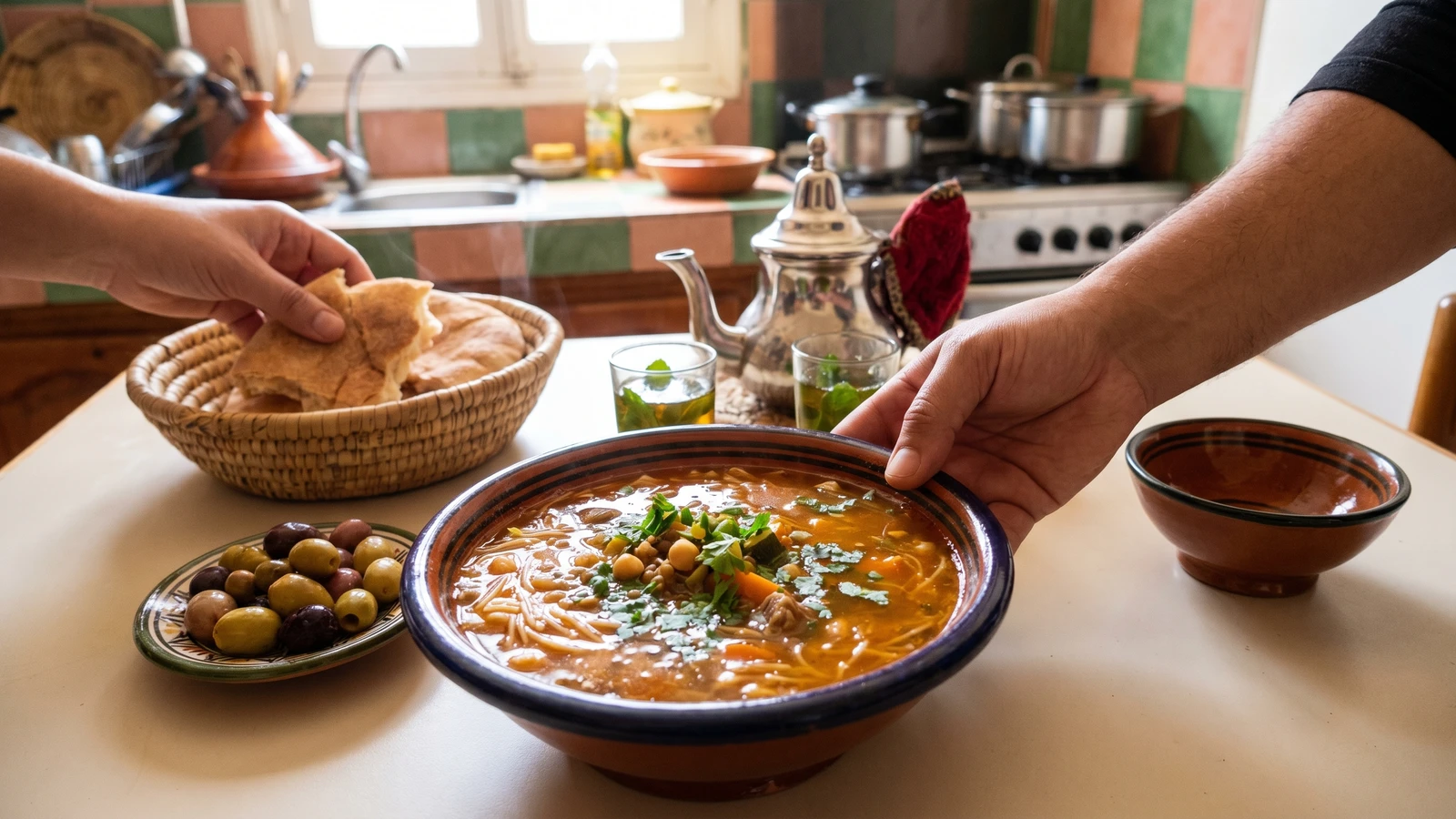
A brothy Moroccan soup for small tables and tired evenings, with fine vermicelli, tomato, herbs, vegetables, and just enough meat to make the pot generous.
This is the soup you make when the house is quiet and still someone may knock. Chorba is not harira dressed for Ramadan, it is lighter, quicker, and more brothy, the kind of pot that feeds a weeknight without ceremony. A little meat gives the broth its back. The vegetables do the daily work.
The gesture that matters is the vermicelli. Add it only near the end, when the broth is already seasoned and the carrots are tender, because fine pasta takes what it needs fast and then begins to thicken everything. Chorba should stay loose enough to sip from the spoon, with herbs floating green and the tomato turning the broth amber-red.
Use what the market gives honestly: a firm carrot, a good tomato or a spoon of tomato paste when tomatoes are tired, celery if you have it, coriander and parsley for life at the end. This is la cuisine du lien, the cooking of connection, in its weekday clothes. Make enough for one more bowl. Une table, c'est une porte qu'on laisse ouverte (a table is a door you leave open).
Chorba, from the Arabic word for soup or broth, runs across North Africa and the Ottoman-influenced Mediterranean, but Moroccan versions are shaped by local herbs, tomato, small pasta, and the lighter evening soups of towns and frontier regions such as Oujda. In Morocco it sits beside harira rather than replacing it: harira is often thickened with flour and tied strongly to Ramadan, while chorba is usually looser, everyday, and regional in its vegetables and grain or pasta. Exact dating is hard to prove, because soups like this lived in household practice before they lived in books.
Quantity
250g
cut into small pieces
Quantity
2 tbsp
Quantity
1 medium
finely chopped
Quantity
1
finely chopped
Quantity
2
diced small
Quantity
1 small
diced small
Quantity
2
grated
Quantity
2 tbsp
use when tomatoes are out of season
Quantity
1 tsp
Quantity
1 tsp
Quantity
1/2 tsp
Quantity
1/2 tsp
Quantity
to taste
Quantity
1.5 liters
Quantity
50g
broken if long
Quantity
1 small bunch
chopped
Quantity
1 small bunch
chopped
Quantity
1 tbsp
to finish
| Ingredient | Quantity |
|---|---|
| lamb shoulder, beef shin, or chicken thighcut into small pieces | 250g |
| olive oil | 2 tbsp |
| onionfinely chopped | 1 medium |
| celery stalk with leavesfinely chopped | 1 |
| carrotsdiced small | 2 |
| zucchinidiced small | 1 small |
| ripe tomatoesgrated | 2 |
| tomato paste (optional)use when tomatoes are out of season | 2 tbsp |
| ground ginger | 1 tsp |
| sweet paprika | 1 tsp |
| ground turmeric | 1/2 tsp |
| freshly ground black pepper | 1/2 tsp |
| salt | to taste |
| water or light meat broth | 1.5 liters |
| fine vermicellibroken if long | 50g |
| fresh corianderchopped | 1 small bunch |
| flat-leaf parsleychopped | 1 small bunch |
| lemon juice (optional)to finish | 1 tbsp |
Warm the olive oil in a heavy soup pot over medium heat. Add the meat, onion, celery, ginger, paprika, turmeric, black pepper, and a good pinch of salt. Stir until the onion softens, the meat loses its raw color, and the spices smell warm, about 6 to 8 minutes. Don't brown hard here; you want a clean broth, not a scorched bottom.
Stir in the grated tomatoes, or the tomato paste if tomatoes are pale and out of season. Cook until the tomato darkens slightly and clings to the meat and onion, about 5 minutes. This little frying of the tomato removes the raw edge and gives the broth its color.
Add the water or light broth and bring it to a lively simmer. Lower the heat, cover partly, and cook until the meat is tender enough to press with a spoon, about 30 minutes for chicken and 40 to 45 minutes for small pieces of lamb or beef. Skim only if the surface looks heavy; a few golden drops of fat are welcome.
Add the carrots and cook for 8 minutes, then add the zucchini and cook until both are tender but still holding their shape. Taste the broth now. The scale is in the eyes, la balance est dans les yeux, but the tongue must answer too: salt, pepper, and tomato should be balanced before the vermicelli goes in.
Scatter in the fine vermicelli while stirring so it doesn't clump. Simmer uncovered for 4 to 6 minutes, just until the strands are tender. Stop there. The vermicelli keeps swelling in the hot broth, and if you cook it too long the soup turns heavy instead of staying clear and spoonable.
Stir in most of the chopped coriander and parsley, keeping a little for the bowls. Add lemon juice if the broth tastes like it wants brightness. Ladle into deep bowls, finish with the remaining herbs, and set it down with bread close by, because a Moroccan soup without khobz beside it feels unfinished.
1 serving (about 350g)
Culinary guides, cultural storytelling, and the editorial depth that makes cooking meaningful.
Discover Culinary ExplorerChef Zohra
Brown lentils cooked down with tomato, garlic, cumin, and paprika until spoon-thick, then finished with olive oil and coriander. This is weekday Moroccan comfort, made for bread and one more bowl.

Chef Zohra
Brown lentils cooked down until thick and glossy, with garlic, tomato, cumin, paprika, and good olive oil. This is weeknight Moroccan comfort, made for bread and one more bowl.

Chef Zohra
Berkoukes is Oujda's feast bowl for Mawlid and winter evenings: hand-rolled semolina pearls, bigger than couscous, swelling in a tomato-red broth with lamb, chickpeas, saffron, and ras el hanout.

Chef Zohra
My frontier's Mawlid bowl: large hand-rolled semolina pearls swelling in a tomato-lamb broth, scented with saffron and ras el hanout, made to feed one more guest.