
Chef Lupita
Agua de Alfalfa
Ciudad de México's highland market agua fresca, fresh alfalfa blended with pineapple and lime until bright green, strained clean, and poured cold from the vitrolero.
A cooking platform built around craft, culture, and the stories behind what we eat.
Created by
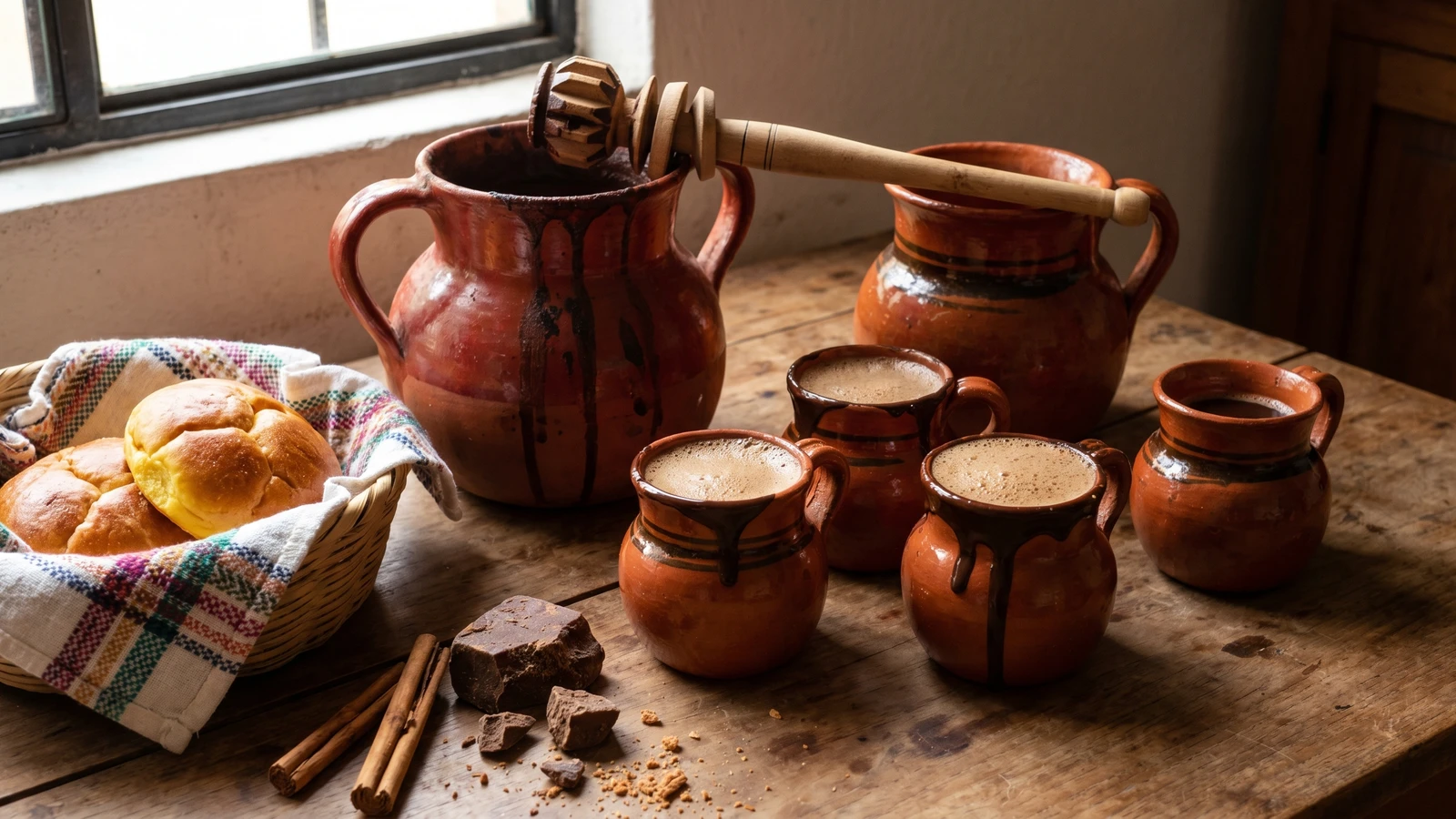
Oaxaca's market chocolate de agua, made with cacao, canela, sugar, and water, then beaten hard with a molinillo until the foam rises thick on top.
Oaxaca, Valles Centrales. This is where chocolate de agua belongs, in the breakfast stalls of Oaxaca de Juárez, beside pan de yema, clay mugs, and women who know exactly how long to beat the pot before the foam behaves.
This is not cocoa powder stirred into milk. No. Chocolate de agua is Mexican table chocolate dissolved in water, then worked with a molinillo until the surface turns light and foamy. Water gives you a cleaner cacao flavor. Milk softens it. Both exist in Oaxaca, but chocolate de agua is the one that tells you what the cacao and canela are doing.
At Mercado 20 de Noviembre, I watched a woman beat chocolate in a red clay jarro with the patience of someone who has done it every morning for forty years. She didn't measure the foam. She listened to it. The molinillo knocks against the clay, the chocolate darkens, the sugar dissolves, and the top rises. La cocina no es decoración, es trabajo.
Use real Mexican chocolate made with cacao, sugar, and canela. If the tablet tastes like wax and perfume, your drink will taste like wax and perfume. Si no conoces el mercado, no conoces la cocina.
Cacao drinks were prepared in Mesoamerica long before the Spanish conquest, often with water, chile, flowers, maize, or honey, and they carried ritual and social importance among Maya and Nahua peoples. The molinillo, the turned wooden whisk used to foam chocolate, developed in colonial New Spain after Spanish carpentry techniques met Indigenous cacao-drinking traditions. Oaxaca's chocolate de agua remains tied to market breakfasts and ceremonial hospitality, especially in the Valles Centrales, where it is commonly served with pan de yema.
Quantity
4 cups
Quantity
6 ounces
roughly chopped
Quantity
1 small stick
Quantity
1 tablespoon
only if your chocolate is not sweet enough
Quantity
pinch
| Ingredient | Quantity |
|---|---|
| water | 4 cups |
| Mexican table chocolate with cacao, sugar, and canelaroughly chopped | 6 ounces |
| Ceylon cinnamon or Mexican canela | 1 small stick |
| piloncillo or sugar (optional)only if your chocolate is not sweet enough | 1 tablespoon |
| kosher salt | pinch |
Pour the water into a small clay pot, saucepan, or chocolatera. Add the canela and bring it just to a simmer over medium heat. Do not boil it hard. You want the canela to perfume the water without turning harsh.
Lower the heat. Add the chopped Mexican chocolate and the pinch of salt. Stir with a wooden spoon until the chocolate melts completely and the drink turns dark brown and glossy. Taste it now. If the cacao is strong and the sugar is shy, add the piloncillo or sugar. If your chocolate is already sweet, leave it alone.
Remove the canela stick. Place the molinillo between your palms and roll it quickly back and forth, lifting slightly as you beat so air works into the chocolate. The surface should change from flat and dark to lighter, thick, and foamy. This is the work. A spoon will not do the same job.
Pour into clay mugs or jarritos, dividing the foam across all four cups. Serve with pan de yema if you have it. The foam falls as it sits, so do not make people wait while you arrange the table like a magazine. Serve it hot and drink it while the cacao is alive. Así se hace y punto.
1 serving (about 270g)
Culinary guides, cultural storytelling, and the editorial depth that makes cooking meaningful.
Discover Culinary ExplorerChef Lupita
Ciudad de México's highland market agua fresca, fresh alfalfa blended with pineapple and lime until bright green, strained clean, and poured cold from the vitrolero.

Chef Lupita
Aguascalientes' Lenten agua fresca, jewel-red from cooked beet and full of apple, banana, orange, lettuce, and ground peanuts, served cold when Holy Week meets the Feria de San Marcos.

Chef Lupita
Sonora and Sinaloa's creamy malted barley water, built on toasted cebada perla, Mexican canela, vanilla from Papantla, and evaporated milk. Pink-beige, rich, and served cold over heavy ice in a heavy glass tumbler. Liquid cookie comfort the northwest way.

Chef Lupita
Yucatán's everyday tonic of boiled chaya leaves blended with lima agria, sugar, and ice. The bright green jarra that sits on every Peninsula table from Mérida to Valladolid.