Culinary Explorer

A cooking platform built around craft, culture, and the stories behind what we eat.
Discover Culinary Explorer
Chilorio para Untar de Mocorito

Chilorio para Untar de Mocorito

Created by

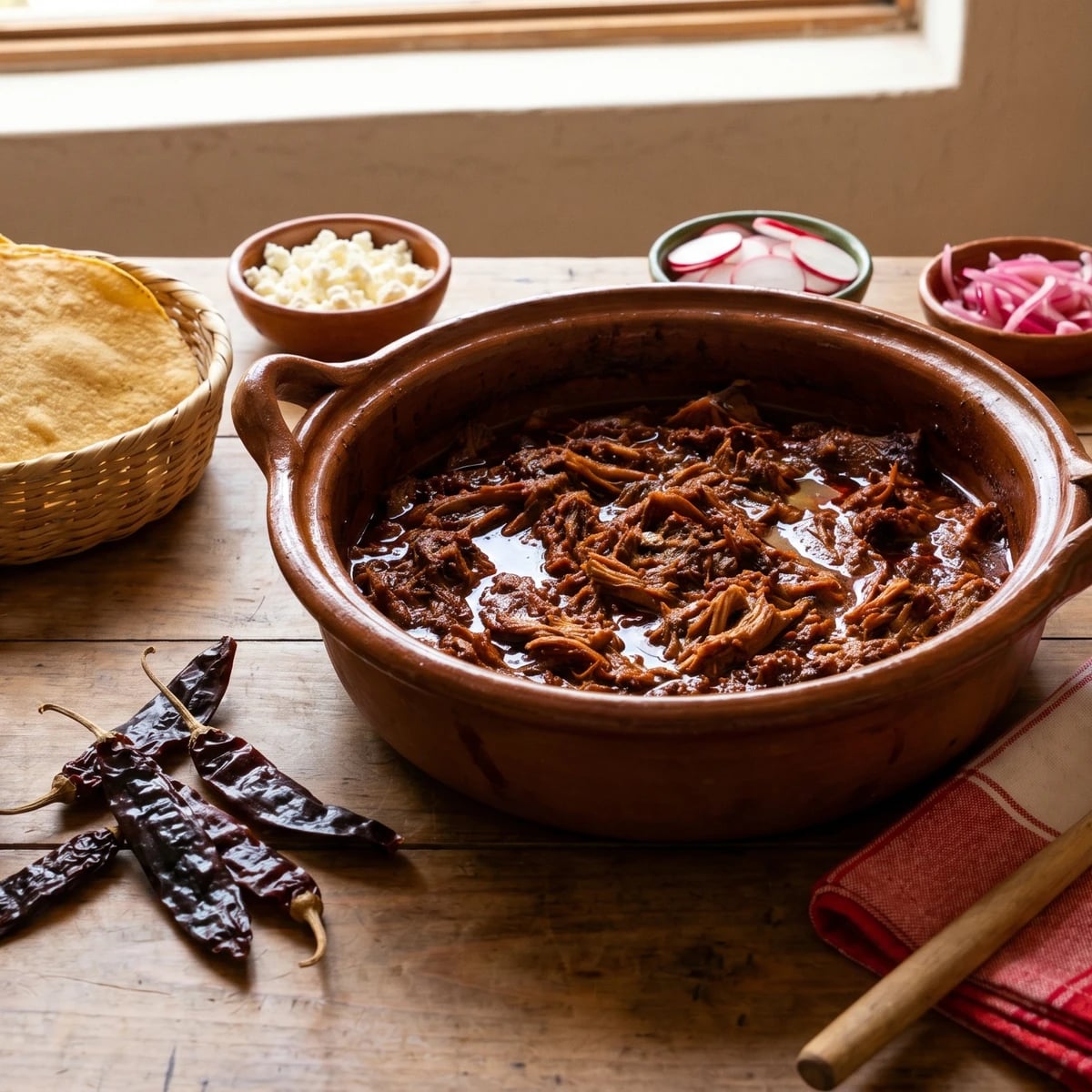
Mocorito's three-century pork conserva: shoulder confited in lard, shredded, then fried with chile pasilla and vinegar until it spreads thick on a tostada like the cured memory of a Sinaloa kitchen.

Appetizers & Snacks
Mexican
Make Ahead
Comfort Food
Potluck
30 min
Active Time
3 hr cook3 hr 30 min total
Yield10 to 12 servings as a spread

Chilorio is from Mocorito, Sinaloa. Not from anywhere else. Mocorito is a small pueblo magico in the foothills of the Sierra Madre, and chilorio is what they invented there in the 18th century when there was no refrigeration and a slaughtered pig had to last a family for weeks. The lard preserved the meat. The vinegar held off spoilage. The chile pasilla gave it a flavor worth waiting for. Three hundred years later, the recipe has not had to change.

The chile here is pasilla. Not ancho doing the heavy lifting, not guajillo. Pasilla is the chile that gives chilorio its color and its character: dark, slightly bitter, with the smell of raisins and dried tobacco. The ancho is there for body and a little sweetness, nothing more. If your market sells you a chile labeled pasilla that looks like a wide reddish ancho, you are in California and what you have is actually chile negro mislabeled. The Mexican pasilla is long, thin, wrinkled, and almost black. Get the right one or wait until you can.

This is a conserva, which means it was built to be made ahead. The pork is slow-cooked in its own lard until it surrenders, then shredded and fried into a chile paste sharp with vinegar until the whole thing tightens into something you can spread thick on a tostada. The senoras of Mocorito have been making it this way since their great-great-grandmothers were teaching their daughters. My mother had a jar of chilorio in the refrigerator most of the time, sent up from a friend in Los Mochis, and we ate it on flour tortillas for breakfast. Saber cocinar es saber vivir, and saber conservar is the older sister of that same lesson.

Chilorio originated in the 18th century in the town of Mocorito, in northern Sinaloa, as a method of preserving pork in the era before refrigeration. The combination of cooking the meat in its own rendered lard, then frying it again with vinegar and chile pasilla, allowed families to keep cooked pork edible for weeks at room temperature, a technique that paralleled European confit traditions but emerged independently from the practical needs of rural Sinaloa households. Mocorito received its formal designation as a Pueblo Magico in 2015 in part because of its unbroken culinary heritage, and chilorio is recognized in Mexican gastronomic literature as the defining dish of Sinaloense home cooking, distinct from the coastal seafood traditions of Mazatlan and the cattle-driven cuisine of the Sierra.

The technique, the tradition, and the story behind every dish.

Discover Culinary Explorer

Ingredients

boneless pork shoulder

Quantity

3 pounds

cut into 2-inch chunks

pork lard (manteca de cerdo)

Quantity

1 pound

divided

kosher salt

Quantity

1 tablespoon, plus more to taste

head of garlic

Quantity

1

halved crosswise, plus 6 cloves reserved for the paste

dried chile pasilla

Quantity

10

stemmed and seeded

dried chile ancho

Quantity

3

stemmed and seeded

apple cider vinegar

Quantity

1/3 cup

dried Mexican oregano

Quantity

1 teaspoon

ground cumin

Quantity

1 teaspoon

whole cloves

Quantity

4

black peppercorns

Quantity

1/2 teaspoon

white onion

Quantity

1 small

quartered

tostadas or hand-pressed corn tortillas (optional)

Quantity

for serving

refried pinto beans (optional)

Quantity

for serving

crumbled queso fresco (optional)

Quantity

for serving

sliced radishes (optional)

Quantity

for serving

pickled red onion (optional)

Quantity

for serving

Equipment Needed

  • Heavy 6-quart Dutch oven or copper cazo
  • Cast iron comal or heavy skillet for toasting chiles
  • High-powered blender
  • Fine-mesh strainer for the rendered lard
  • Wooden spoon with a flat edge for pressing the meat into the paste

Instructions

  1. 1

    Confit the pork

    In a heavy 6-quart Dutch oven or wide cazuela, melt 12 ounces of the lard over medium-low heat. Add the pork shoulder, the halved head of garlic, the quartered onion, and the salt. The lard should come at least halfway up the meat. If it does not, add more. La manteca es el sabor and the chilorio depends on the meat surrendering completely in the fat.

    In Mocorito they use the cazo de cobre over wood fire. A heavy Dutch oven gets you close. What you cannot use is a thin pot. The lard will scorch and the meat will fry instead of confit.
  2. 2

    Cook low and slow

    Bring the lard to a lazy bubble and cook uncovered for two hours. Stir every 20 minutes so nothing sticks to the bottom. The meat is ready when it pulls apart with no resistance and the lard around it has turned a faint golden color from the rendered juices. Do not rush this. The whole point of chilorio is meat cooked until it gives up its structure entirely.

  3. 3

    Toast the chiles

    While the pork finishes, heat a dry comal or heavy skillet over medium. Toast the pasilla and ancho chiles separately, 20 to 30 seconds per side. Pasilla is thin and burns fast. Watch it. The skin should puff and the kitchen should smell deep and slightly sweet, like raisins and tobacco. That smell is the oils releasing and it is what gives chilorio its character.

    Pasilla is the chile that defines this dish. Not ancho, not guajillo. The pasilla brings the dark color and the slightly bitter, raisin-like depth that says chilorio. If your vendor sells you anything else and calls it pasilla, find a different vendor.
  4. 4

    Soak and blend the chile paste

    Place the toasted chiles in a heatproof bowl and cover with hot tap water. Hot, not boiling. Boiling water cooks the skin and turns the paste bitter. Soak for 20 minutes until soft. Drain and transfer to a blender with the 6 reserved garlic cloves, the apple cider vinegar, oregano, cumin, cloves, peppercorns, and a teaspoon of salt. Add 1/2 cup of the soaking liquid. Blend until completely smooth and thick, the consistency of a loose paste. This is the soul of chilorio. The vinegar is not optional. It is what preserved this dish for 300 years before refrigeration.

  5. 5

    Shred the meat

    Using a slotted spoon, lift the pork out of the lard and onto a wide cutting board or sheet pan. Discard the spent garlic and onion. Strain the lard through a fine-mesh sieve into a heatproof container. Save it. You will use some now and you will use the rest for refried beans for the next month. Shred the pork by hand or with two forks into rough threads. Not a paste. The texture should still tell you it was once meat.

  6. 6

    Fry the chilorio

    Wipe out the cazuela and return it to medium heat with 4 tablespoons of the strained lard. When the lard shimmers, add the chile paste. It will sputter aggressively. Stand back. Cook the paste for 5 to 7 minutes, stirring constantly with a wooden spoon, until it darkens from brick red to a deep mahogany and the fat begins to separate at the edges. This step is the difference between chilorio and a sad bowl of stewed pork. Skip it and you have nothing.

  7. 7

    Marry the meat and the paste

    Add the shredded pork to the chile paste. Stir to coat every thread. Lower the heat and cook for 15 to 20 more minutes, stirring often, pressing the meat into the paste with the back of the spoon as it goes. The mixture should reduce until it holds its shape on the spoon and the lard pools faintly at the edges of the cazuela. The texture you want is spreadable, dense, almost like a coarse rillette. Taste for salt. Adjust with another splash of vinegar if it needs brightness. Asi se hace y punto.

  8. 8

    Rest and serve

    Pull the cazuela off the heat and let the chilorio rest for 15 minutes. The flavor settles and the texture firms up. Serve warm or at room temperature, spread thick on tostadas with refried beans underneath, crumbled queso fresco on top, sliced radish, and pickled red onion. Or fold it into hot flour tortillas the way they do at breakfast in Culiacan. Either way, it is a dish that asks nothing of you at the table except hunger.

Chef Tips

  • The pasilla is non-negotiable. Real pasilla, the long, wrinkled, near-black dried chilaca from central Mexico, is what makes chilorio chilorio. If you only have access to what California stores call pasilla (actually chile negro or mulato), you will get a respectable result but not the right one. A substitution is a compromise, not an upgrade.
  • Use real lard rendered from pork. Not vegetable shortening, not coconut oil, not olive oil. The pork fat is half of what gives chilorio its preservative quality and the depth of flavor that the dish was built around. Render your own from pork fatback if you cannot find good manteca at a Mexican carniceria.
  • Chilorio is better the second day and better still the third. Make it on a Saturday and serve it on a Sunday. The vinegar and chile keep working their way into the meat overnight. This is a make-ahead dish by design.
  • If you want chilorio para untar (the spreadable kind), cook it longer at the end until it is dense. If you want it for tacos and burritos, pull it off the heat earlier when it is still loose. Both are correct. Both come out of Mocorito kitchens.

Advance Preparation

  • Chilorio keeps refrigerated in a sealed glass jar, covered with a thin layer of its own lard, for up to two weeks. The flavor deepens for the first four to five days.
  • The dish freezes well for up to three months. Pack it into glass jars with a finger of lard on top to seal it from the air.
  • The strained lard from the initial confit step is gold. Refrigerate it in a clean jar and use it for refried beans, frying eggs, or starting the next pot of chilorio.

Frequently Asked Questions

Nutrition Information

1 serving (about 100g)

Calories
400 calories
Total Fat
33 g
Saturated Fat
12 g
Trans Fat
0 g
Unsaturated Fat
19 g
Cholesterol
80 mg
Sodium
470 mg
Total Carbohydrates
5 g
Dietary Fiber
2 g
Sugars
1 g
Protein
22 g

Note: Chef personas and recipes are created with AI assistance. Cook with care: follow safe food-handling practices, check doneness with a thermometer when needed, and adapt for allergies and your kitchen.

Where cooking meets culture.

Culinary guides, cultural storytelling, and the editorial depth that makes cooking meaningful.

Discover Culinary Explorer

More from Noroeste Appetizers & Snacks

Browse the full collection