
Chef Lupita
Aceite de Chiltepin Bajacaliforniano
Baja California's wild chiltepin steeped in olive oil with garlic, orejon, and lime peel, until the oil turns ruby-amber and carries the slow, sneaky burn of the desert coast.
A cooking platform built around craft, culture, and the stories behind what we eat.

Created by
Yucatán's pale-yellow chile xcatic, blistered in lard and steeped warm in a vinegar brine of charred garlic, toasted allspice, and Yucatecan oregano. The chile that sits beside the pavo on every Mérida table that knows what it's doing.
This is from Yucatán. Not from a generic 'Mexico.' From the peninsula, where the cuisine speaks Mayan as much as it speaks Spanish, and where the pickling tradition was shaped by trade winds, Spanish vinegar, and Maya cooks who had been preserving food with charred spices for centuries before the galleons arrived.
The chile is xcatic. Pale yellow, slender, the color of old ivory. It has a clean, slightly grassy heat, milder than habanero but not shy. In the markets of Mérida and Valladolid, you find it piled next to the habanero and the morrón, and any cook from the peninsula can tell you which one belongs in escabeche and which one belongs in salsa. If your market does not have xcatic, the Hungarian wax chile is the closest cousin in shape and heat. It is a compromise. Say it out loud so you remember what you are missing.
The second non-negotiable is the allspice. Pimienta gorda. This is the Yucatán's spice, native to the peninsula, used by the Maya long before the Spanish brought black pepper. Allspice is not interchangeable with anything. It carries clove, cinnamon, and pepper in one berry, and it is what makes a Yucatecan escabeche taste Yucatecan and not Italian.
My mother had no Yucatecan recipes in her notebook. Jalisco does not pickle this way. I learned this dish from a señora named Doña Aurora at the Mercado Lucas de Gálvez in Mérida, who watched me try to write down her measurements and finally took the pencil out of my hand to draw a picture of the jar she used. Cada estado, su propia cocina. The peninsula keeps its own.
Escabeche arrived in the Yucatán through Spanish colonial trade routes that connected the peninsula to Havana, Cádiz, and ultimately the Persian-by-way-of-Andalusia sikbāj tradition of acid-preserved meats and vegetables, the linguistic root of the word escabeche itself. Maya cooks absorbed the technique and rebuilt it around native ingredients, swapping Mediterranean herbs for Yucatecan oregano, using local allspice (pimienta gorda, native to the peninsula and cultivated since pre-Columbian times), and folding in naranja agria, the bitter Seville orange that arrived with the Spanish but found its true home in Yucatecan acid cookery. The pairing of pickled xcatic chiles with pavo en escabeche, the celebrated turkey dish of Valladolid, dates to at least the 19th century and remains the standard at weddings, baptisms, and the Día de los Muertos meals across the peninsula.
Quantity
12
left whole with stems on
Quantity
3 tablespoons
Quantity
1
cloves separated and left unpeeled
Quantity
2 medium
sliced into 1/4-inch rings
Quantity
1 1/2 cups
Quantity
1/2 cup
or substitute 1/4 cup orange juice + 3 tablespoons lime juice + 1 tablespoon grapefruit juice
Quantity
1/2 cup
Quantity
2 tablespoons
lightly toasted
Quantity
12
lightly toasted
Quantity
8
Quantity
4
Quantity
4
preferably Mexican bay
Quantity
1 small
broken in half
Quantity
1 1/2 teaspoons, plus more to taste
Quantity
1 teaspoon
grated (or light brown sugar)
| Ingredient | Quantity |
|---|---|
| fresh chile xcatic (pale-yellow Yucatecan chiles)left whole with stems on | 12 |
| pork lard (manteca de cerdo) | 3 tablespoons |
| large head of garliccloves separated and left unpeeled | 1 |
| red onionssliced into 1/4-inch rings | 2 medium |
| apple cider vinegar | 1 1/2 cups |
| naranja agria (sour orange juice)or substitute 1/4 cup orange juice + 3 tablespoons lime juice + 1 tablespoon grapefruit juice | 1/2 cup |
| water | 1/2 cup |
| Yucatecan oregano (oregano yucateco)lightly toasted | 2 tablespoons |
| whole allspice berries (pimienta gorda)lightly toasted | 12 |
| whole black peppercorns | 8 |
| whole cloves | 4 |
| bay leavespreferably Mexican bay | 4 |
| cinnamon stickbroken in half | 1 small |
| kosher salt | 1 1/2 teaspoons, plus more to taste |
| piloncillograted (or light brown sugar) | 1 teaspoon |
Heat a dry comal or heavy cast iron skillet over medium-high until it smells warm and dry. Lay the unpeeled garlic cloves directly on the surface. Let them blacken in spots, turning every minute or so, for about 8 to 10 minutes. The skin should darken and the cloves should soften inside. This char is the foundation of every recado in the Yucatán. Raw garlic will give you a pickle that tastes flat. Charred garlic gives it the smoky depth that says peninsula.
On the same comal, lower the heat to medium. Toast the allspice berries and the oregano yucateco separately for about 30 to 45 seconds each, just until they smell awake. The allspice is the soul of Yucatecan pickling. Pimienta gorda is not nutmeg, not clove, not black pepper. It is its own thing and the Maya have been cooking with it since before the Spanish arrived. Set the toasted spices aside with the peppercorns, cloves, bay, and cinnamon.
Melt the lard in a wide, heavy skillet or cazuela over medium-high heat. When the lard shimmers, lay the whole xcatic chiles in a single layer. Let them blister, turning with tongs every minute or two, for about 6 to 8 minutes total. The pale-yellow skin should char in patches and the flesh should soften slightly. You are not cooking them through. You are blistering the skin so the vinegar can get inside. La manteca es el sabor. Do this in vegetable oil and you have lost the dish.
Lift the blistered chiles out of the lard with tongs and set them aside on a plate. Add the red onion rings to the same hot lard. Cook for 2 to 3 minutes, stirring once or twice, just until they soften at the edges but still hold their shape and most of their color. They should not brown. You want them tender, not sweet.
Pour the apple cider vinegar, the naranja agria, and the water into the skillet with the onions. Add the charred garlic cloves, the toasted allspice and oregano, the peppercorns, cloves, bay leaves, cinnamon, salt, and piloncillo. Bring to a simmer over medium heat. Let it bubble for 4 to 5 minutes so the spices release into the brine. Taste. It should be sharp, salty, and softly perfumed by the allspice. If it tastes thin, add another pinch of salt. The brine carries everything, so it needs to be assertive.
Slide the blistered chiles back into the simmering escabeche. Press them gently under the surface with a spoon. Cook for 2 minutes more, no longer. Pull the pan off the heat. Cover and let everything steep in the warm brine for at least 30 minutes before serving. The chiles will drink in the vinegar and the spices as they cool. The flavor settles, the heat opens up, the kitchen starts to smell like a Mérida market on a Sunday morning.
Transfer everything, chiles, onions, garlic, brine, whole spices, to a clean glass jar or a talavera bowl. Serve warm beside pavo en escabeche, cochinita pibil, or panuchos. The traditional way is warm, not cold. The chile is meant to sit next to the meat, and the diner tears off a piece with their fingers between bites. If storing, seal and refrigerate. The pickle keeps for two weeks and the flavor only deepens. Bring back to room temperature or warm gently before serving. Así se hace y punto.
1 serving (about 145g)
Culinary guides, cultural storytelling, and the editorial depth that makes cooking meaningful.
Discover Culinary ExplorerChef Lupita
Baja California's wild chiltepin steeped in olive oil with garlic, orejon, and lime peel, until the oil turns ruby-amber and carries the slow, sneaky burn of the desert coast.

Chef Lupita
Puebla's Lenten convent adobo, a brick-red vinegar chile paste of ancho, guajillo, garlic, oregano, and comino made to dress fish for the meatless calendar.
Chef Lupita
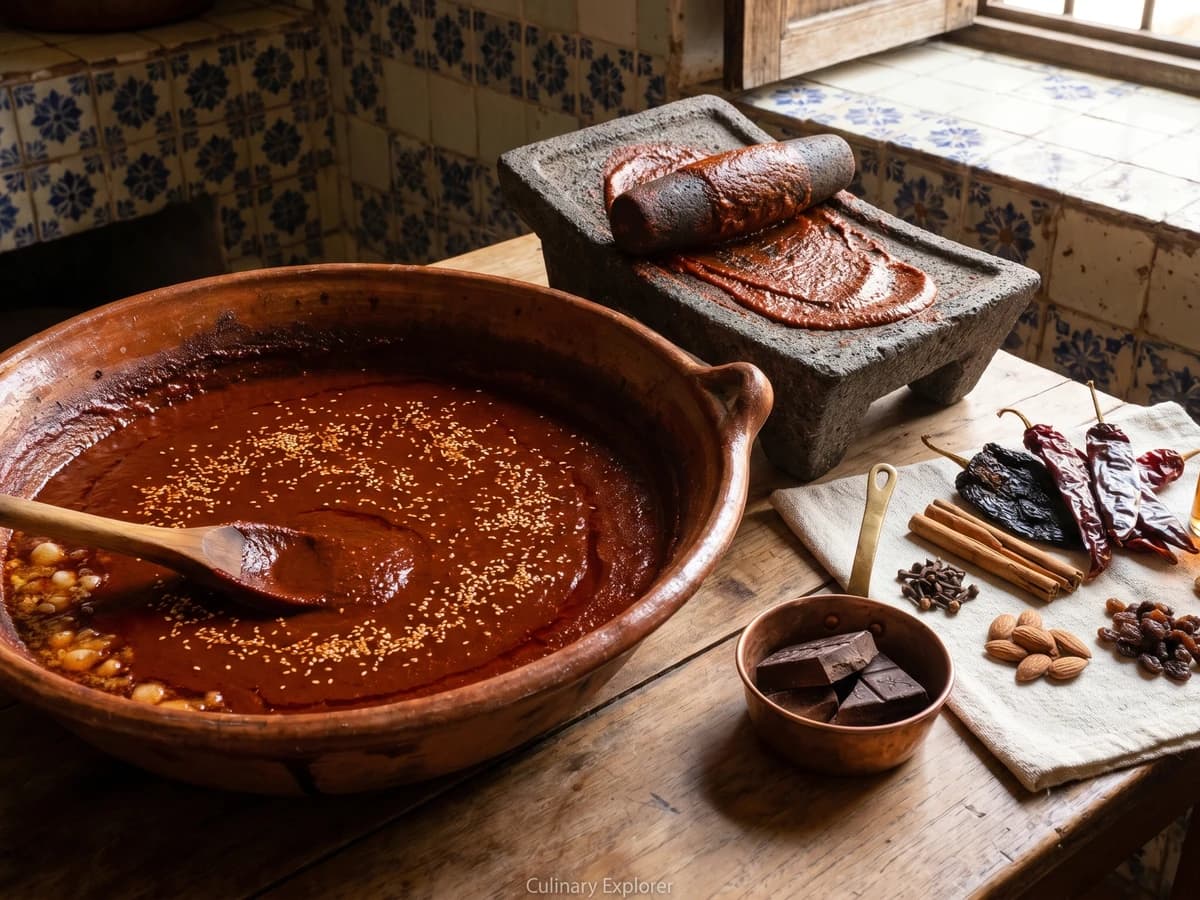
Zacatecas' wedding-table adobo, built from toasted guajillo and ancho, piloncillo, sour orange, chocolate, canela, clavo, almonds, sesame, and lard.

Chef Lupita
Puebla's convent kitchens built this adobo with ancho, guajillo, jerez, almonds, raisins, clove, and lard, a baroque marinade that stains pork loin and finishes as the sauce.