
Chef Lupita
Arroz a la Oaxaqueña
Oaxaca's red rice, stained with tomato and fried in lard, steamed with carrots, ejotes, black beans, and epazote. The side that anchors a Oaxacan family meal and earns its place beside the main.
A cooking platform built around craft, culture, and the stories behind what we eat.
Created by
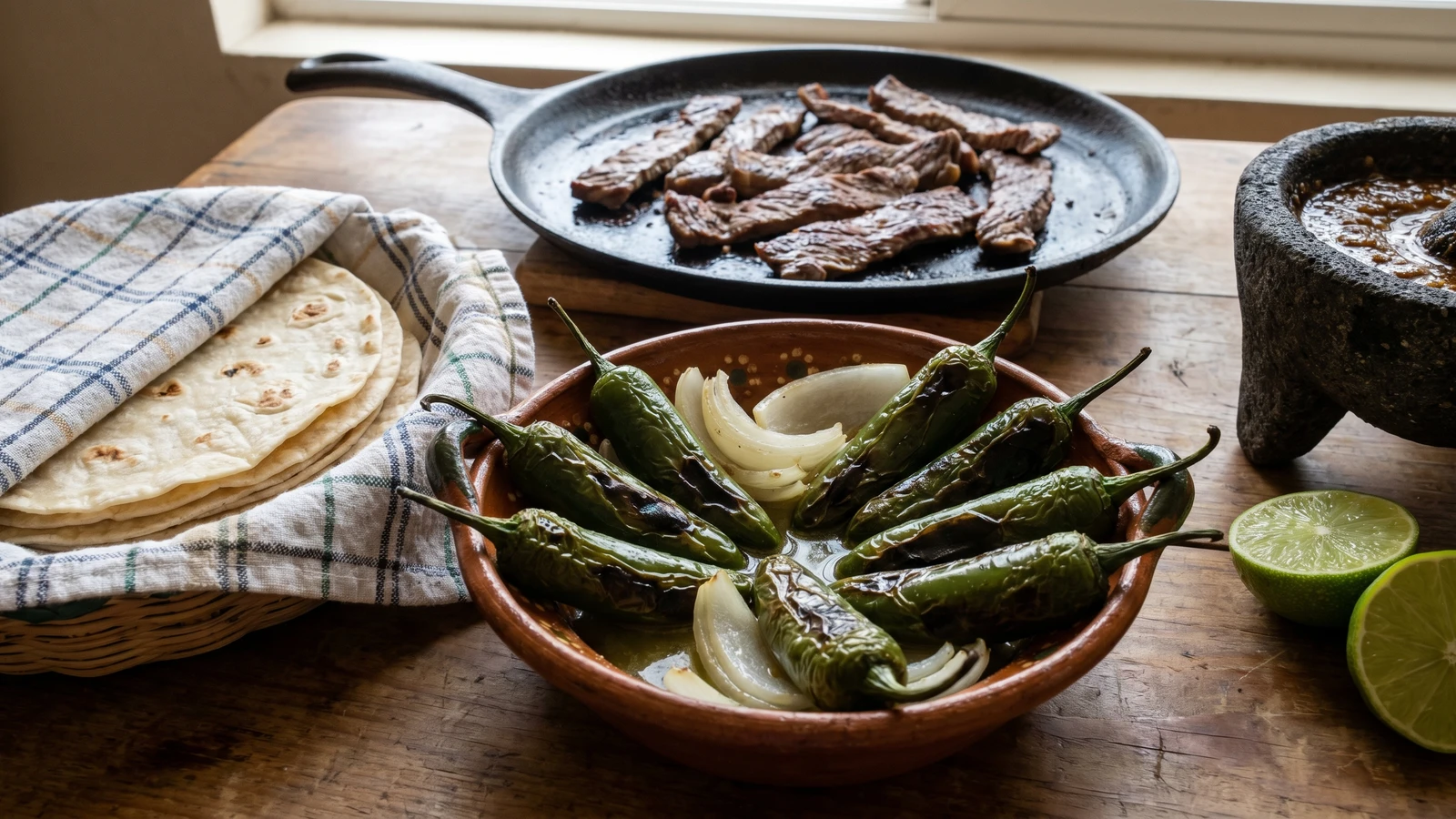
Sonora's taqueria and carne asada side: whole chile serrano blistered until wrinkled, tossed with white onion and lime, and served in a clay cazuelita beside grilled meat.
Sonora puts chiles toreados beside carne asada the way Jalisco puts lime beside pozole: not as decoration, as part of the meal. This is northern grill country, from Hermosillo to Ciudad Obregón, where beef hits the parrilla and a small cazuelita of blistered serranos waits on the table.
The chile matters. Use fresh chile serrano, firm and glossy, not old chiles turning soft in the refrigerator drawer. Some cooks use jalapeño when that is what the market has, but serrano gives the sharper bite I learned to expect from taquerías and carne asada tables in the north. The onion is white onion. The acid is lime. The fat is a little neutral oil or manteca de cerdo if the pan is already carrying meat flavor. No me vengas con atajos. The chiles need direct heat until the skin blisters and wrinkles.
Torear means to work the chile in the pan, pushing it around until it chars in spots and softens without collapsing. The women who perfected this did not need a recipe. They watched the skin, listened to the sputter, and knew when the chile had stopped tasting raw. That is the lesson here. You are not just frying a pepper. You are waking it up.
Chiles toreados are a taquería and carne asada side associated strongly with northern and central Mexico, especially states where grilled meat culture shapes the table, including Sonora, Nuevo León, and Jalisco. The name comes from the verb 'torear,' to fight or maneuver like a bullfighter, a reference to the way the cook moves the chiles around the hot pan until they blister. Soy sauce and Maggi became common 20th-century additions in urban taquerías, but the older household version can be as direct as chile serrano, onion, salt, lime, and hot fat.
Quantity
12
rinsed, dried well, stems left on
Quantity
1
sliced into 1/4-inch thick half-moons
Quantity
2 tablespoons
Quantity
1 teaspoon, plus more to taste
Quantity
2 tablespoons
Quantity
1 teaspoon
optional, taquería style
Quantity
for serving
| Ingredient | Quantity |
|---|---|
| fresh chile serranorinsed, dried well, stems left on | 12 |
| small white onionsliced into 1/4-inch thick half-moons | 1 |
| neutral oil or pork lard (manteca de cerdo) | 2 tablespoons |
| kosher salt | 1 teaspoon, plus more to taste |
| fresh lime juice | 2 tablespoons |
| Jugo Maggi or soy sauce (optional)optional, taquería style | 1 teaspoon |
| warm corn tortillas or Sonoran flour tortillas (optional) | for serving |
Rinse the serranos and dry them completely. Leave the stems on so people can pick them up from the cazuelita. If water clings to the skin, the oil will spit at you. Cooking is work, but it does not need to be punishment.
Set a cast iron comal or heavy skillet over medium-high heat. Add the oil or manteca de cerdo. When the fat shimmers, it is ready. If you are making carne asada, use the same pan after the meat has left its flavor behind. La manteca es el sabor, but beef drippings know their job too.
Add the serranos in a single layer. Let them sit until one side blisters dark, then roll them with tongs. Keep moving them for 6 to 8 minutes, until the skins are wrinkled, charred in spots, and the chiles have softened but still hold their shape. This is the torear. You are not burning them. You are blistering the skin and softening the flesh.
Add the white onion to the same skillet and sprinkle with salt. Toss it with the chiles for 2 to 3 minutes, just until the onion bends and picks up browned edges. Do not cook it into sweetness. The onion should still have bite.
Turn off the heat. Add the lime juice and the Jugo Maggi or soy sauce if using. Toss once or twice as the pan sizzles. Taste the onion, not the chile unless you are ready for the lesson. Add more salt if needed. Serve immediately in a small clay cazuelita beside grilled meat, beans, and tortillas.
1 serving (about 100g)
Culinary guides, cultural storytelling, and the editorial depth that makes cooking meaningful.
Discover Culinary ExplorerChef Lupita
Oaxaca's red rice, stained with tomato and fried in lard, steamed with carrots, ejotes, black beans, and epazote. The side that anchors a Oaxacan family meal and earns its place beside the main.
Chef Lupita
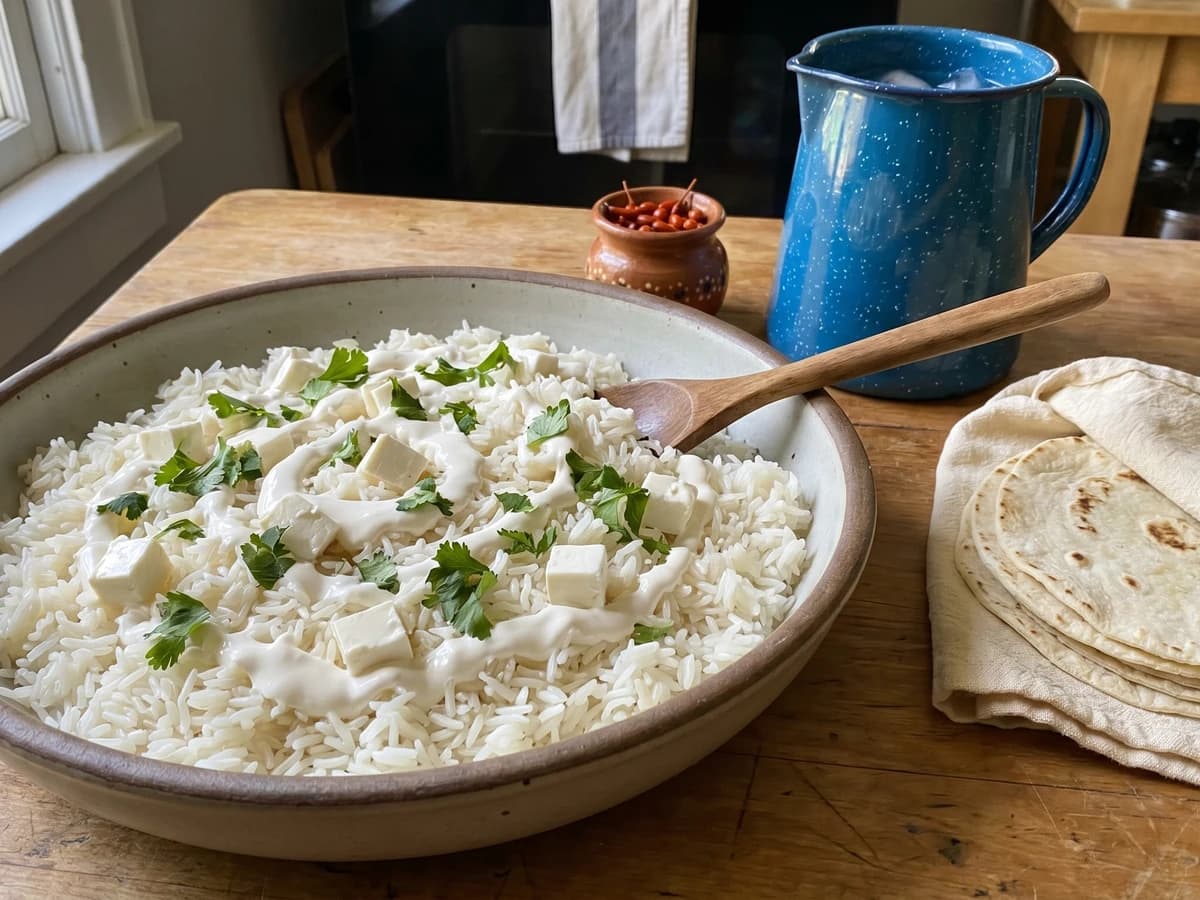
Sinaloa's home-cook white rice topped with cold cubes of cream cheese that soften into the warm grain, finished with crema and a sprinkle of chiltepin at the table. The trick that makes a side dish feel like a small luxury.
Chef Lupita
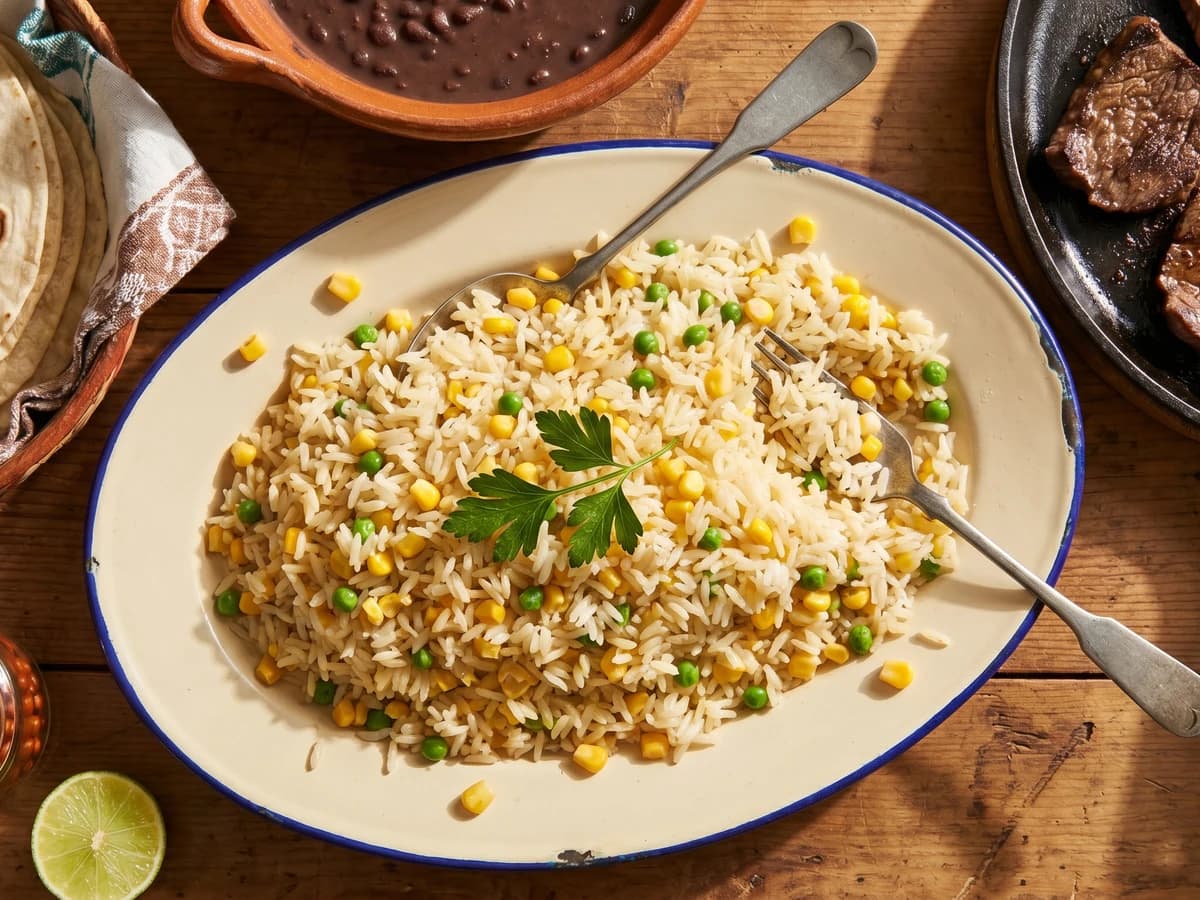
Sonora's white rice, toasted in butter and steamed with sweet corn and tender peas. The clean, quiet partner to a plate of carne asada, not the red rice of central Mexico.

Chef Lupita
Yucatán's white rice with sweet corn kernels, toasted in lard with garlic and onion. The quiet base that holds up against the peninsula's bold achiote-stained stews.