
Chef Lupita
Aguascalientes Beef Tongue Pozole (Pozole de Lengua)
Aguascalientes' Bajio pozole de lengua, built with cacahuazintle hominy, tender beef tongue, chile ancho and guajillo, with xoconostle brightness and table garnishes.
A cooking platform built around craft, culture, and the stories behind what we eat.
Created by
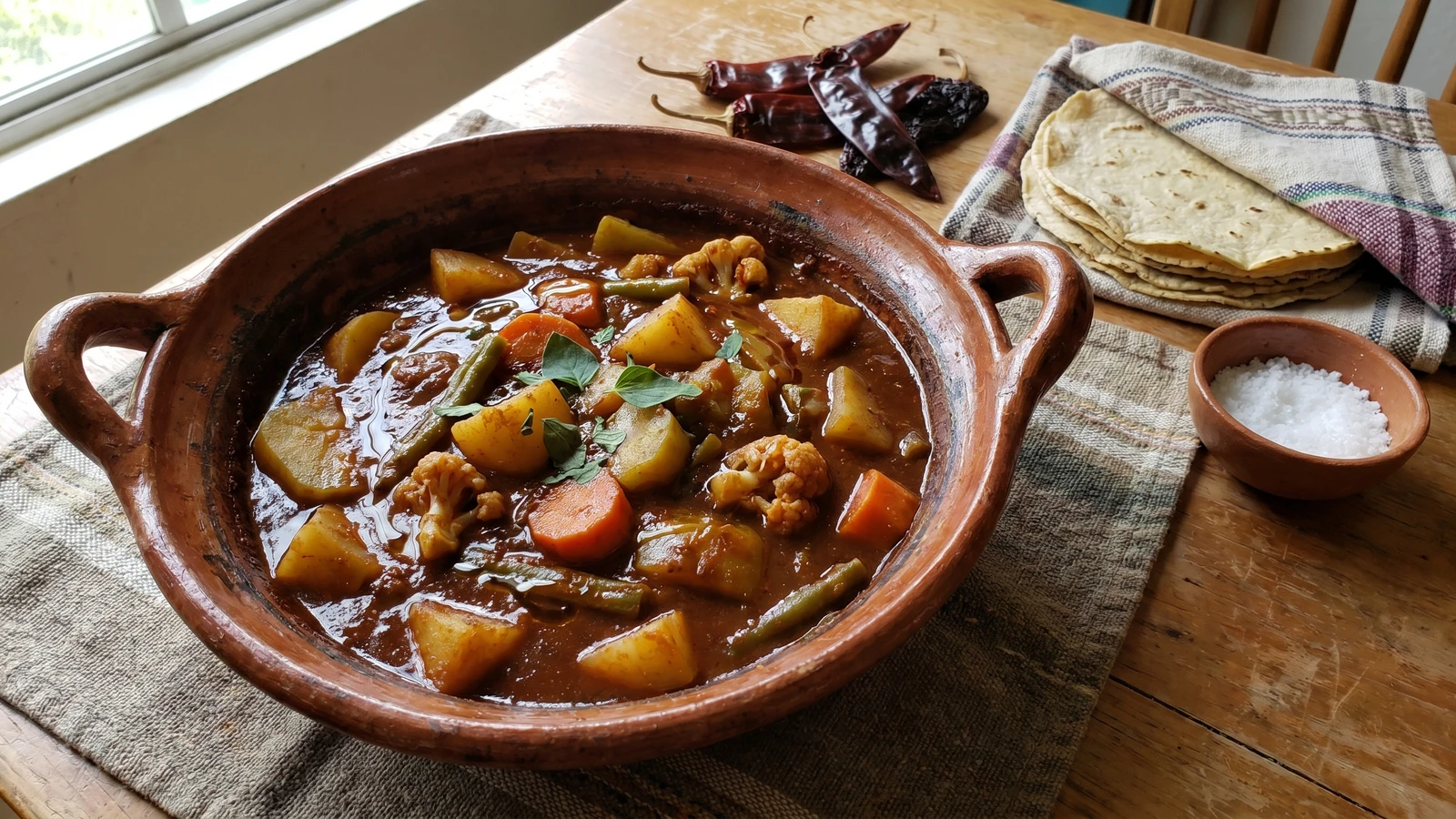
The Mixteca's Lenten pot of vegetables stewed in a guajillo-ancho sauce dark with garlic and sharpened with pineapple vinegar, the dish Oaxacan grandmothers build when meat leaves the kitchen and the chiles have to do the heavy lifting alone.
This is from the Mixteca region of Oaxaca. Not the Valles Centrales, not the Isthmus, not the coast. The Mixteca. Huajuapan de Leon, Tlaxiaco, Juxtlahuaca. High, dry country where the cooking is built on dried chiles, garlic, and vinegar, and where Lent still means something in the kitchen.
The name tells you everything. Chile. Ajo. Chile and garlic. That's the foundation. Most Oaxacan stews layer complexity through 20 or 30 ingredients, but chileajo is blunt. It hits you with guajillo and ancho, then it hits you again with garlic, more garlic than most cooks outside the Mixteca would dare. Two full heads. Not two cloves. Two heads. If you think that sounds like too much, you haven't eaten chileajo. The garlic softens as it toasts on the comal, turns sweet and deep, and when it blends with the chiles and the pineapple vinegar, it becomes something entirely different from raw garlic. It becomes the dish.
During Cuaresma, the meat comes out and the vegetables go in. Potato, carrot, ejotes, cauliflower, chayote. Each one cut to the right size so it finishes at the right time in the same pot. The sauce does the work. It coats everything in that deep red-brown color that tells a Mixteca cook the chileajo is right.My mother didn't make this dish, she was jalisciense, but I learned it from a senora in Huajuapan who served it to me on a Wednesday in March with a stack of tortillas and a look that said: this is what we eat. No apology, no explanation. Saber cocinar es saber vivir.
The vinegar matters. Pineapple vinegar, vinagre de pina, is what they use in the Mixteca. It gives the sauce a brightness that balances the weight of the garlic and the earthiness of the chiles. White distilled vinegar is not the same. If you can't find pineapple vinegar, apple cider vinegar is a closer compromise. But find the pineapple vinegar. Preguntale a las senoras del mercado.
Chileajo's roots trace to pre-Columbian chile-grinding traditions in the Mixteca Alta, where dried chiles and garlic (introduced post-conquest) replaced the indigenous practice of grinding chiles with wild herbs and seeds on a metate. The Mixteca's arid climate made dried chiles and vinegar-based preservation central to the regional diet, distinguishing its cooking from the wetter Valles Centrales and the tropical Isthmus. Lenten cooking in rural Oaxaca remained strictly observed well into the 21st century, and vegetable chileajo became one of a cycle of meatless dishes, alongside empanadas de amarillo, tamales de rajas, and caldo de habas, that defined the 40-day period between Ash Wednesday and Easter Sunday across Mixtec and Zapotec communities.
Quantity
8
stemmed and seeded
Quantity
4
stemmed and seeded
Quantity
2
cloves separated and peeled
Quantity
1 medium
roughly chopped
Quantity
1 teaspoon
Quantity
6
Quantity
3
Quantity
1 tablespoon
Quantity
1/4 cup
Quantity
3 tablespoons
Quantity
2 medium
peeled and cut into 1-inch cubes
Quantity
3 medium
peeled and cut into 1/2-inch rounds
Quantity
1/2 pound
trimmed and cut into 2-inch pieces
Quantity
1 small head
broken into bite-sized florets
Quantity
2
peeled, pitted, and cut into 1-inch cubes
Quantity
1 tablespoon, plus more to taste
Quantity
3 cups
Quantity
for serving
warmed
| Ingredient | Quantity |
|---|---|
| dried chile guajillostemmed and seeded | 8 |
| dried chile anchostemmed and seeded | 4 |
| heads of garliccloves separated and peeled | 2 |
| white onionroughly chopped | 1 medium |
| cumin seeds | 1 teaspoon |
| black peppercorns | 6 |
| whole cloves | 3 |
| dried Mexican oregano | 1 tablespoon |
| pineapple vinegar (vinagre de pina) | 1/4 cup |
| vegetable oil | 3 tablespoons |
| waxy potatoespeeled and cut into 1-inch cubes | 2 medium |
| carrotspeeled and cut into 1/2-inch rounds | 3 medium |
| ejotes (green beans)trimmed and cut into 2-inch pieces | 1/2 pound |
| cauliflowerbroken into bite-sized florets | 1 small head |
| chayotespeeled, pitted, and cut into 1-inch cubes | 2 |
| kosher salt | 1 tablespoon, plus more to taste |
| water or light vegetable broth | 3 cups |
| hand-pressed corn tortillas (optional)warmed | for serving |
Heat a dry comal or heavy skillet over medium heat. Toast the guajillo and ancho chiles one or two at a time, pressing them flat against the hot surface with a spatula for about 20 to 30 seconds per side. They should puff, blister lightly, and fill the kitchen with a warm, earthy smell. Do not let them blacken. A burned chile turns bitter and there is no coming back from it. Transfer the toasted chiles to a heatproof bowl.
Pour hot tap water over the toasted chiles, enough to submerge them completely. Hot water, not boiling. Boiling water cooks the skin and gives the sauce a harsh, rubbery bitterness. Let them soften for 20 minutes. They should be pliable enough to tear easily with your fingers. Drain and reserve about a cup of the soaking liquid in case your blender needs help.
While the chiles soak, place all the peeled garlic cloves on the same dry comal over medium heat. Toast them slowly, turning occasionally, for about 8 to 10 minutes. You want dark spots on the outside and a soft, sweet interior. The smell will shift from sharp to something almost nutty. On the same comal, toast the cumin seeds, peppercorns, and cloves for one to two minutes until fragrant. Do not burn the spices. They go from toasted to ruined in five seconds.
Transfer the drained chiles, toasted garlic, toasted spices, chopped onion, dried oregano, pineapple vinegar, and one cup of the water or broth to a blender. Blend on high until you have a smooth, thick paste the color of dark clay. If the blender struggles, add soaking liquid one tablespoon at a time, just enough to keep the blades moving. You want a paste, not a soup. Taste it now. It should be assertive: sharp from the vinegar, deep from the chiles, warm from the garlic. If it tastes flat, add half a teaspoon more salt and blend again.
Heat the vegetable oil in a heavy cazuela, Dutch oven, or deep skillet over medium heat. When the oil shimmers, pour in the chile paste all at once. It will sputter and pop. Stir constantly. Cook for 7 to 8 minutes, until the paste darkens by a shade, the oil starts to separate at the edges, and the raw vinegar smell cooks off into something rounder and deeper. This step is what separates a stew that tastes cooked from a stew that tastes blended. Do not skip it. No me vengas con atajos.
Stir the remaining two cups of water or broth into the fried chile paste. Add the salt. Bring to a simmer. Add the potatoes and carrots first, they take the longest. Let them simmer for 10 minutes. Then add the chayote cubes. Five minutes later, add the cauliflower florets and the ejotes. Each vegetable needs its own time in the pot. If you dump them all in at once, the ejotes will be mush before the potatoes are cooked through. Stir gently so the florets don't break apart.
Reduce the heat to medium-low. Cover the pot partially and let everything simmer for 15 to 20 more minutes, until the potatoes yield easily to a fork and the carrots are tender but not falling apart. The sauce should coat the vegetables in a thick, dark red-brown layer. It should not be soupy. If it looks thin, remove the lid and let it reduce for a few more minutes. If it looks too thick, add a splash of water. Taste for salt one final time. The vinegar may have shifted the balance as it cooked.
Take the pot off the heat and let it sit, covered, for 10 minutes. Like most chile-based stews, chileajo improves as it rests. The sauce tightens around the vegetables and the flavors settle. Serve directly from the cazuela at the table with a stack of warm corn tortillas. Each person takes what they want from the pot. That's how it's done in the Mixteca. Recetas probadas y garantizadas.
1 serving (about 315g)
Culinary guides, cultural storytelling, and the editorial depth that makes cooking meaningful.
Discover Culinary ExplorerChef Lupita
Aguascalientes' Bajio pozole de lengua, built with cacahuazintle hominy, tender beef tongue, chile ancho and guajillo, with xoconostle brightness and table garnishes.

Chef Lupita
Veracruz's Gulf coast rice from Alvarado, built with seafood stock, tomato, chile chipotle, epazote, shrimp, fish, jaiba, and pulpo, served loose and brothy in a clay cazuela.

Chef Lupita
Costa Chica's wet salt-beef stew, built from chile costeño, guajillo, tomato, manteca, yuca, plantain, and masa dumplings, the ranching pot of Cuajinicuilapa and Pinotepa.

Chef Lupita
Michoacán's P'urhépecha atápakua is a masa-thickened sauce and stew at once, built with pork, chile guajillo, and hierbabuena added only at the end.