
Chef Lupita
Aporreadillo Michoacano con Huevo
Michoacán's Tierra Caliente almuerzo, where salted beef is softened, pounded, fried in lard, folded with egg and chile perón salsa, then served beside morisqueta like a proper working table.
A cooking platform built around craft, culture, and the stories behind what we eat.
Created by
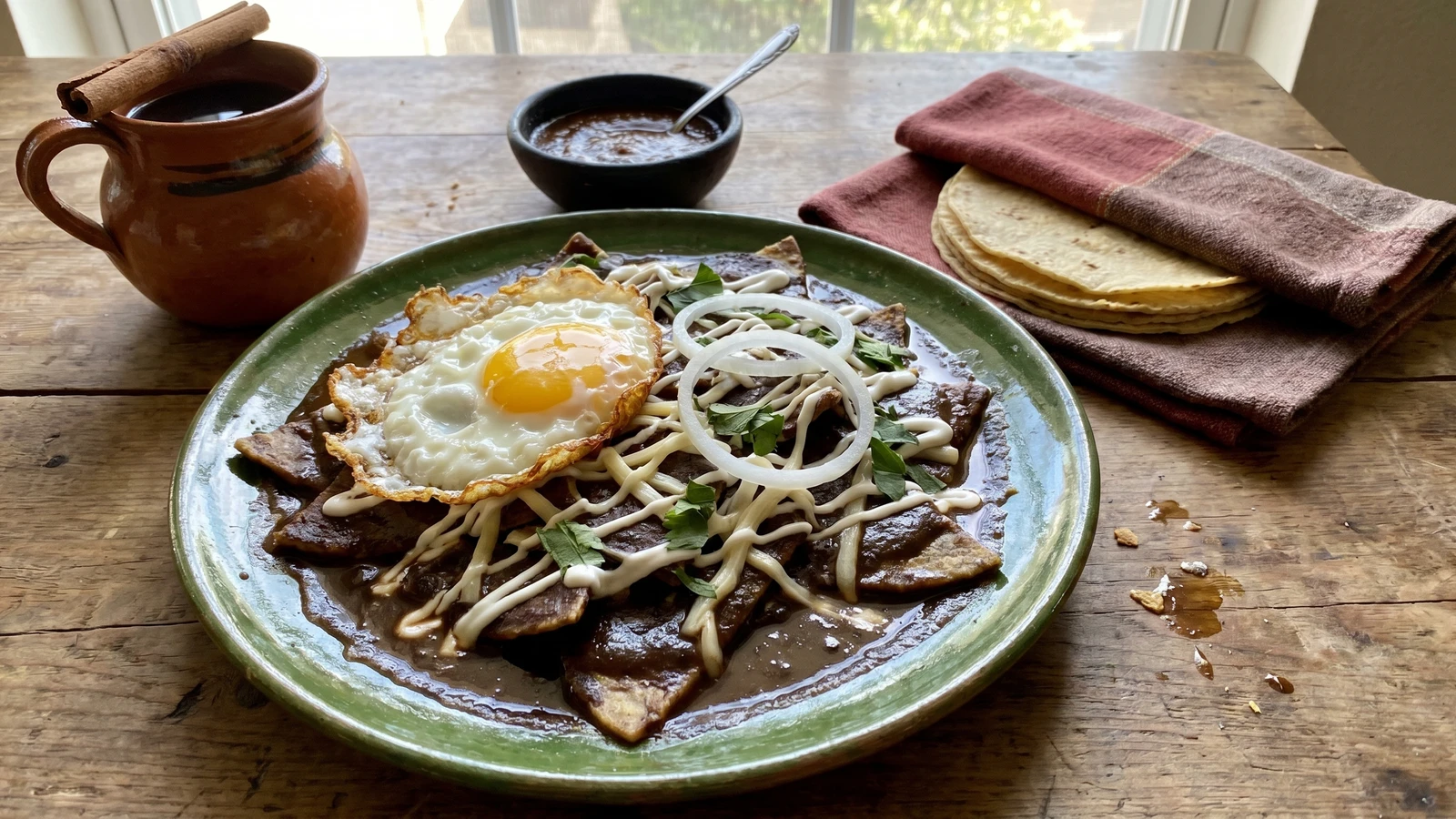
Oaxaca's morning chilaquiles built on pureed black beans fried in asiento with epazote and avocado leaf, topped with a fried egg, threads of quesillo, and crema. The breakfast that proves beans are a complete cuisine.
This is an Oaxacan breakfast. Not the red chilaquiles you find all over Mexico City, not the green ones from Puebla. In Oaxaca, the sauce is black bean. Frijol negro pureed with its own broth, fried in asiento until it darkens and thickens into something that coats the back of a wooden spoon and holds a fried tortilla without drowning it. That's the dish. That's the whole argument.
Asiento is what sets this apart from any chilaquiles you've had outside the state. It's the dark, concentrated sediment that settles at the bottom of the pot when manteca de cerdo is rendered, sold by weight at the mercados in Oaxaca de Juarez, scooped into plastic bags by women who know exactly what it's worth. Because it is worth knowing. Asiento carries a deeper, more roasted pork flavor than clean lard. It's the foundation of tlayudas, memelas, and these chilaquiles. If you can't find asiento, use manteca de cerdo. It's a compromise, but an honest one.
The beans themselves tell you where you are on the map. Oaxacan black beans are cooked with hoja de aguacate, the anise-scented leaf of the native criollo avocado tree, and with fresh epazote. Those two herbs in the pot are what make Oaxacan frijol negro taste like Oaxaca and not like any other state's black beans. Cada estado, su propia cocina, and this kitchen smells like avocado leaf and epazote before the sun is fully up.
I learned this version from a senora named Dona Celia at a comedor near the Central de Abastos in Oaxaca. She made chilaquiles every morning starting at six. The tortillas were always from the day before, cut by hand, fried in asiento until they crackled. The bean sauce was already on the stove when she arrived, made from the pot of frijoles she'd cooked the night before. She topped each plate with a fried egg, a fistful of quesillo pulled into threads, a drizzle of crema, and raw white onion sliced thin. No lettuce. No sour cream. No cheddar. Chilaquiles are breakfast, not nachos. Asi se hace y punto.
The word 'chilaquiles' derives from the Nahuatl 'chilaquilitl,' combining 'chilli' (chile) and 'aquilitl' (greens or herbs in a broth), indicating that the original preparation was a practical method of using stale tortillas in a sauced, herbed dish rather than a fixed recipe. Black bean-sauced chilaquiles are particular to Oaxaca and parts of southern Mexico, where frijol negro has been the dominant cultivated bean variety since pre-Columbian agriculture along the Sierra Madre del Sur. The use of asiento as a cooking fat, the dark pork-lard sediment rendered from manteca, is a distinctly Oaxacan market product that emerged after the Spanish introduction of pigs in the 16th century and became so central to the state's daily cooking that it is sold separately from clean lard, priced differently, and considered by Oaxacan cooks to be the more valuable of the two.
Quantity
3 cups beans plus 1 cup broth
Quantity
3 tablespoons, divided
Quantity
1/2
roughly chopped
Quantity
2
peeled
Quantity
1
Quantity
2 sprigs
Quantity
to taste
Quantity
12
cut into sixths
Quantity
1/2 cup
for frying tortillas
Quantity
4
Quantity
6 ounces
pulled into thin threads
Quantity
1/4 cup
Quantity
1/2
sliced into thin rings
Quantity
for garnish
| Ingredient | Quantity |
|---|---|
| cooked black beans with their cooking broth | 3 cups beans plus 1 cup broth |
| asiento (Oaxacan pork lard sediment) | 3 tablespoons, divided |
| white onion (for bean sauce)roughly chopped | 1/2 |
| garlic clovespeeled | 2 |
| dried avocado leaf (hoja de aguacate) | 1 |
| fresh epazote | 2 sprigs |
| kosher salt | to taste |
| day-old corn tortillascut into sixths | 12 |
| vegetable oilfor frying tortillas | 1/2 cup |
| large eggs | 4 |
| quesillo (Oaxacan string cheese)pulled into thin threads | 6 ounces |
| crema mexicana | 1/4 cup |
| white onion (for topping)sliced into thin rings | 1/2 |
| fresh epazote leaves (optional) | for garnish |
Line a sheet pan with paper towels. Heat the vegetable oil in a heavy skillet over medium-high until it shimmers. Fry the tortilla pieces in batches, spreading them in a single layer. Do not crowd the pan. They need about two minutes per side, until golden and rigid. Lift them out with a slotted spoon and drain on the paper towels. They should snap when you break one, not bend. If they bend, they are not ready. Day-old tortillas fry better than fresh ones because the surface moisture is gone. This is not a flaw in stale tortillas. It is their purpose.
Add the cooked black beans, one cup of their broth, the roughly chopped onion, and the garlic to a blender. Blend until smooth. It should pour like thick cream, not like paste. If it's too thick, add broth a tablespoon at a time. If you cooked your beans well, with enough water and enough time, the broth will be dark and silky and that flavor goes straight into the sauce. Don't discard it. The broth is half the recipe.
Heat two tablespoons of asiento in a wide, deep skillet or clay cazuela over medium heat. When the fat is hot, drop in the dried avocado leaf and let it sizzle for ten seconds. You will smell anise. That smell is Oaxaca. Pour in the blended bean puree all at once. It will sputter, so stand back. Add the two sprigs of epazote and stir. Cook for eight to ten minutes, stirring often, until the sauce thickens and darkens and the fat begins to separate at the edges. You want a sauce that holds its shape on a spoon for a second before it slides off. Season with salt now. The beans need more salt than you think. Taste it twice.
Remove the epazote sprigs and the avocado leaf from the sauce. Add the fried tortilla pieces to the cazuela and fold them gently into the bean sauce using a wide spoon. Do not stir aggressively or they will break into crumbs. Every piece should be coated. Let them sit in the sauce over low heat for two to three minutes. They should soften on the outside where the sauce touches them but keep structure at the center. That contrast between the yielding surface and the remaining crunch underneath is the whole point of chilaquiles. If you leave them too long, you have bean soup with tortilla mush. Pull them off the heat before you think they are ready.
In a separate skillet, heat the remaining tablespoon of asiento over medium-high heat. Crack in the eggs one at a time. The asiento will make the edges crisp and lacy and give the whites a faint pork richness you cannot get from vegetable oil. Fry until the whites are fully set and the edges are golden brown, but leave the yolks runny. About three minutes. The yolk breaks over the chilaquiles at the table and becomes part of the sauce. That is the design.
Spoon the bean-coated chilaquiles onto plates. Set a fried egg on top of each serving. Scatter the quesillo threads generously over everything. Drizzle the crema in thin lines across the plate. Lay the raw white onion rings on top and tear a few fresh epazote leaves over the dish if you have them. Serve the moment it's plated. Chilaquiles do not wait. They do not reheat. They are built to be eaten now, standing at the counter or sitting at the table with a cup of cafe de olla beside them. Recetas probadas y garantizadas.
1 serving (about 400g)
Culinary guides, cultural storytelling, and the editorial depth that makes cooking meaningful.
Discover Culinary ExplorerChef Lupita
Michoacán's Tierra Caliente almuerzo, where salted beef is softened, pounded, fried in lard, folded with egg and chile perón salsa, then served beside morisqueta like a proper working table.

Chef Lupita
Guerrero's Costa Grande aporreado is salted cecina pounded soft, scrambled with egg, and finished in a red guajillo and chile de árbol salsa loud with garlic and cilantro.

Chef Lupita
Los Altos de Chiapas turns two-night fermented white corn into a tart-sweet atole, cooked with canela and piloncillo, then poured hot into jícaras for desayuno.

Chef Lupita
Oaxaca's Mixteca region ferments nixtamalized masa for days until it turns tart and alive, then simmers it with piloncillo and canela into a thick, warm atole served at first light in clay.