
Chef Ally
Blackened Fish Tacos
Wild-caught fish rubbed with smoky spices and seared until the crust crackles, then piled into warm corn tortillas with bright slaw and cool lime crema. Tuesday dinner that tastes like a vacation.
A cooking platform built around craft, culture, and the stories behind what we eat.
Created by
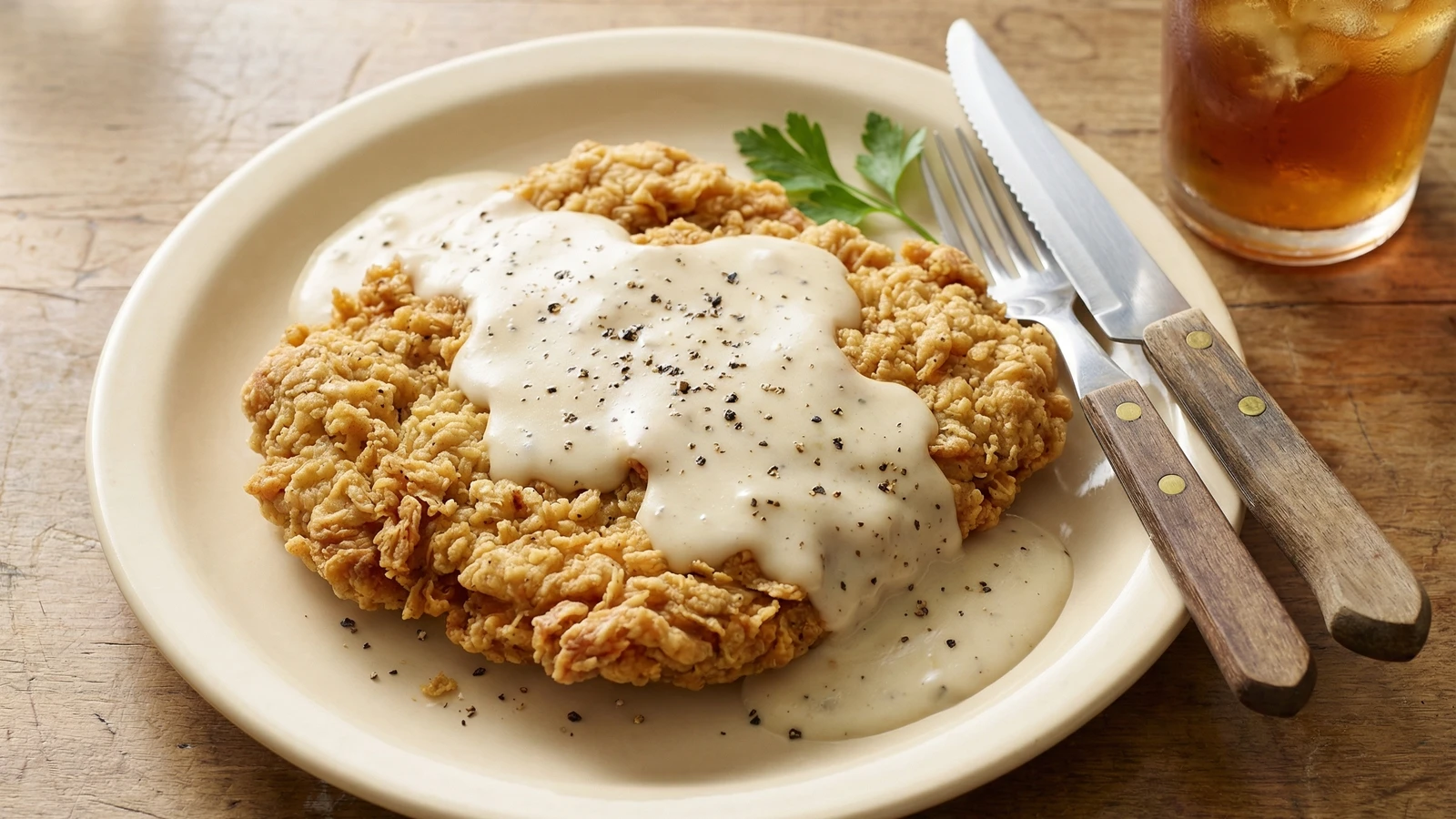
Pounded beef cutlets sheathed in a shattering golden crust, blanketed with peppery cream gravy that clings to every craggy surface. This is the dish that built Texas roadside diners and Sunday supper traditions.
German and Austrian immigrants brought schnitzel to the Texas Hill Country in the mid-1800s. Without veal, they used beef. Without breadcrumbs, they used flour. What emerged was something entirely new: chicken fried steak, a dish that belongs wholly to America. The name confuses visitors who expect poultry. But any Texan knows. This is beef, treated with the same loving technique as Southern fried chicken. Pounded thin. Double-dredged. Fried in a shimmering pool of oil until the crust crackles when you press it with a fork.
The gravy is non-negotiable. Made in the same skillet, enriched with the fond and flour left behind, it transforms from a simple white sauce into something with depth and memory. Black pepper should be generous, almost aggressive. The gravy should coat your spoon and drape over the steak like a velvet blanket.
I've eaten this dish in diners across the Lone Star State, from tiny roadside joints with plastic tablecloths to upscale Dallas steakhouses charging thirty dollars a plate. The best versions share one quality: they respect the technique. They don't rush the tenderizing. They maintain their oil temperature. They whisk their gravy until no lumps remain. Do those three things, and you'll produce a chicken fried steak worthy of any Texas grandmother's table.
Quantity
4 (about 6 oz each)
pounded to 1/4-inch thick if using round
Quantity
2 cups
Quantity
1 tablespoon, plus more for seasoning
Quantity
2 teaspoons, plus more for gravy
Quantity
1 teaspoon
Quantity
1 teaspoon
Quantity
1/2 teaspoon
Quantity
1 1/2 cups
Quantity
2
Quantity
1 teaspoon
Quantity
about 1 1/2 cups
for frying
Quantity
2 1/2 cups
for gravy
| Ingredient | Quantity |
|---|---|
| cube steaks or beef roundpounded to 1/4-inch thick if using round | 4 (about 6 oz each) |
| all-purpose flour | 2 cups |
| kosher salt | 1 tablespoon, plus more for seasoning |
| freshly ground black pepper | 2 teaspoons, plus more for gravy |
| garlic powder | 1 teaspoon |
| onion powder | 1 teaspoon |
| cayenne pepper | 1/2 teaspoon |
| buttermilk | 1 1/2 cups |
| large eggs | 2 |
| hot sauce | 1 teaspoon |
| vegetable oil or lardfor frying | about 1 1/2 cups |
| whole milkfor gravy | 2 1/2 cups |
If using cube steaks, they've already been mechanically tenderized. If using round steak, place each piece between sheets of plastic wrap and pound with a meat mallet until 1/4-inch thick. Work from the center outward. You want even thickness so the steak cooks uniformly. The meat should yield when you press it but not tear.
Season both sides of each steak generously with kosher salt and black pepper. Let them sit at room temperature for 15 minutes. This draws moisture to the surface, which helps the breading adhere, and brings the meat closer to room temperature for more even cooking.
In a wide shallow dish, combine the flour, 1 tablespoon kosher salt, 2 teaspoons black pepper, garlic powder, onion powder, and cayenne. Whisk until uniform. In another shallow dish, beat together the buttermilk, eggs, and hot sauce until smooth. The buttermilk's acidity tenderizes and the eggs help the coating cling.
Working one at a time: dredge the steak in seasoned flour, shaking off excess. Submerge completely in buttermilk mixture, letting excess drip off. Return to the flour and press firmly, turning to coat all surfaces. The second flour coating should look shaggy and uneven. Those craggy bits become the crispy peaks. Set breaded steaks on a wire rack while you heat the oil.
Pour oil into a 12-inch cast iron skillet to a depth of about 1/2 inch. Heat over medium-high until it reaches 350°F on a deep-fry thermometer. The oil should shimmer and a pinch of flour dropped in should sizzle immediately and brown within seconds. This takes longer than you expect. Be patient. Rushing produces greasy, pale steaks.
Carefully lower two steaks into the hot oil, laying them away from you to prevent splashing. Fry undisturbed for 3 to 4 minutes until the bottom is deeply golden and the edges show browning creeping up. Flip once. Cook another 3 to 4 minutes until the second side matches. The crust should sound hollow when tapped gently with your tongs. Transfer to a wire rack set over a sheet pan. Season immediately with a pinch of salt. Repeat with remaining steaks, adjusting heat to maintain temperature.
Pour off all but 1/4 cup of the frying oil, leaving the browned bits in the pan. Return skillet to medium heat. Sprinkle 1/4 cup of the leftover seasoned flour into the drippings. Whisk constantly for 2 minutes until the raw flour smell disappears and the mixture turns the color of peanut butter. This is your roux. It will smell nutty and toasted.
Slowly pour in the whole milk, whisking vigorously as you go. Add in stages: about a cup at first, whisking until smooth before adding more. This prevents lumps. Increase heat to medium-high and bring to a gentle simmer, whisking frequently. The gravy will thicken as it approaches a boil. Cook for 3 to 4 minutes until it coats the back of a spoon and holds a line when you drag your finger through.
Remove from heat. Season aggressively with black pepper (at least 1 teaspoon, more if you like heat) and salt to taste. The gravy should have visible pepper flecks throughout. Taste it. It should be savory, rich, and slightly assertive. Timid gravy has no place on a plate of chicken fried steak.
Place each steak on a warm plate. Ladle a generous amount of cream gravy over the top, allowing it to pool around the edges. Serve immediately with mashed potatoes, collard greens, or biscuits. This is not a dish that benefits from waiting. Eat it while the crust still crackles and the gravy steams.
1 serving (about 420g)
Culinary guides, cultural storytelling, and the editorial depth that makes cooking meaningful.
Discover Culinary ExplorerChef Ally
Wild-caught fish rubbed with smoky spices and seared until the crust crackles, then piled into warm corn tortillas with bright slaw and cool lime crema. Tuesday dinner that tastes like a vacation.
Chef Dean
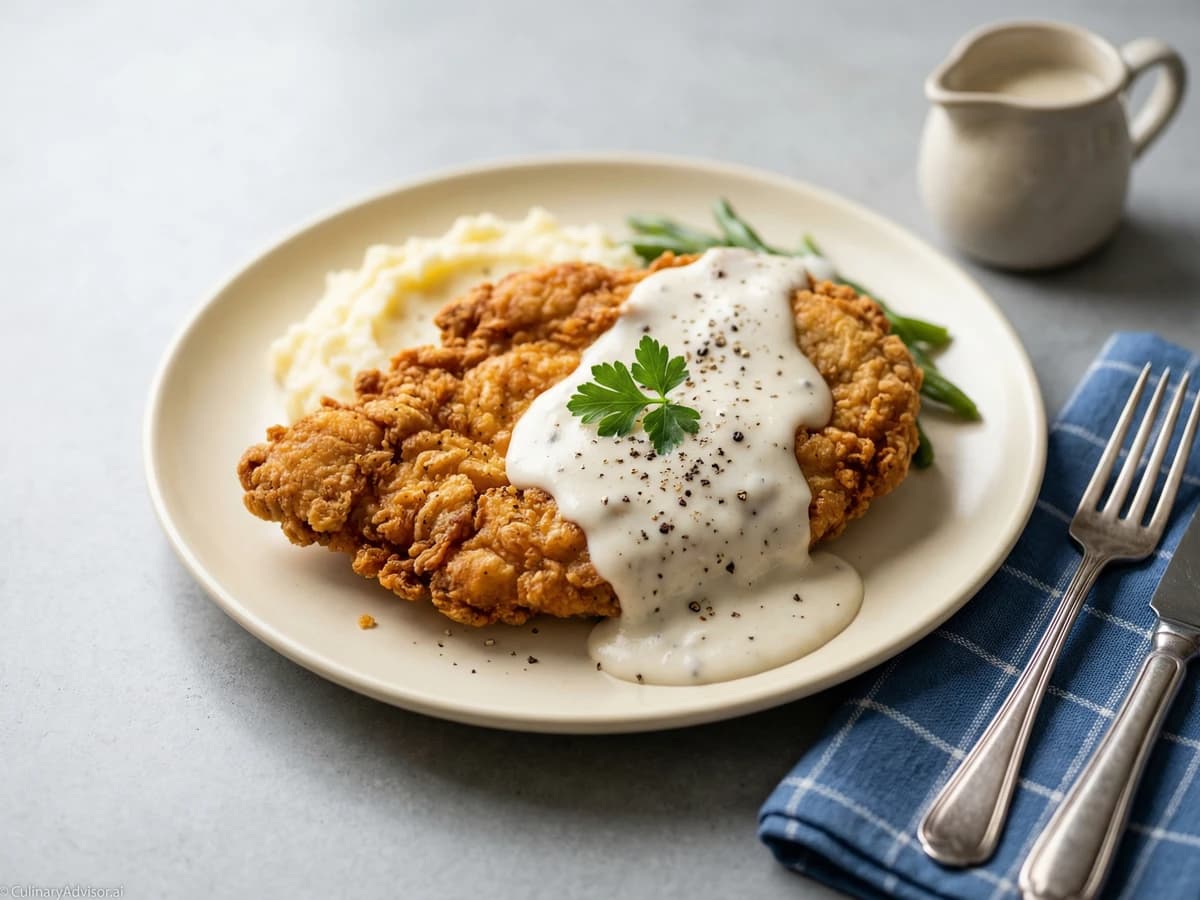
Tender chicken cutlets sheathed in a shattering golden crust, blanketed with peppery cream gravy built from honest pan drippings. This is the dish Texas built its reputation on.

Chef Dean
A bubbling casserole of fire-roasted Hatch chiles, tender shredded chicken, and corn tortillas layered with tangy tomatillo cream sauce and pools of melted Monterey Jack. This is Southwest comfort food at its most generous and unapologetic.
Chef Dean
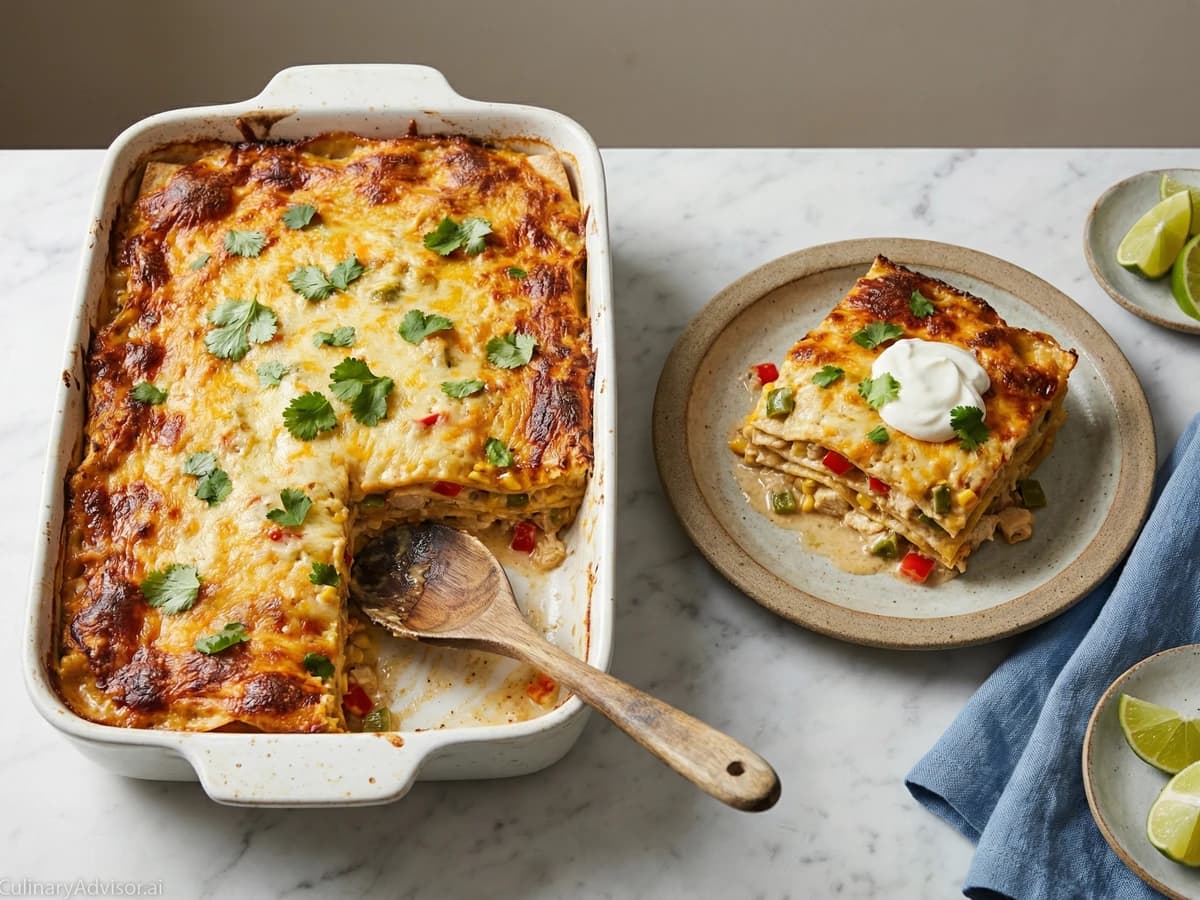
Layers of tender chicken and corn tortillas bound by a spiced cream sauce with tomatoes and chiles, baked until the cheese bubbles and browns at the edges. This is Texas comfort food at its most satisfying.