Chef Juliette
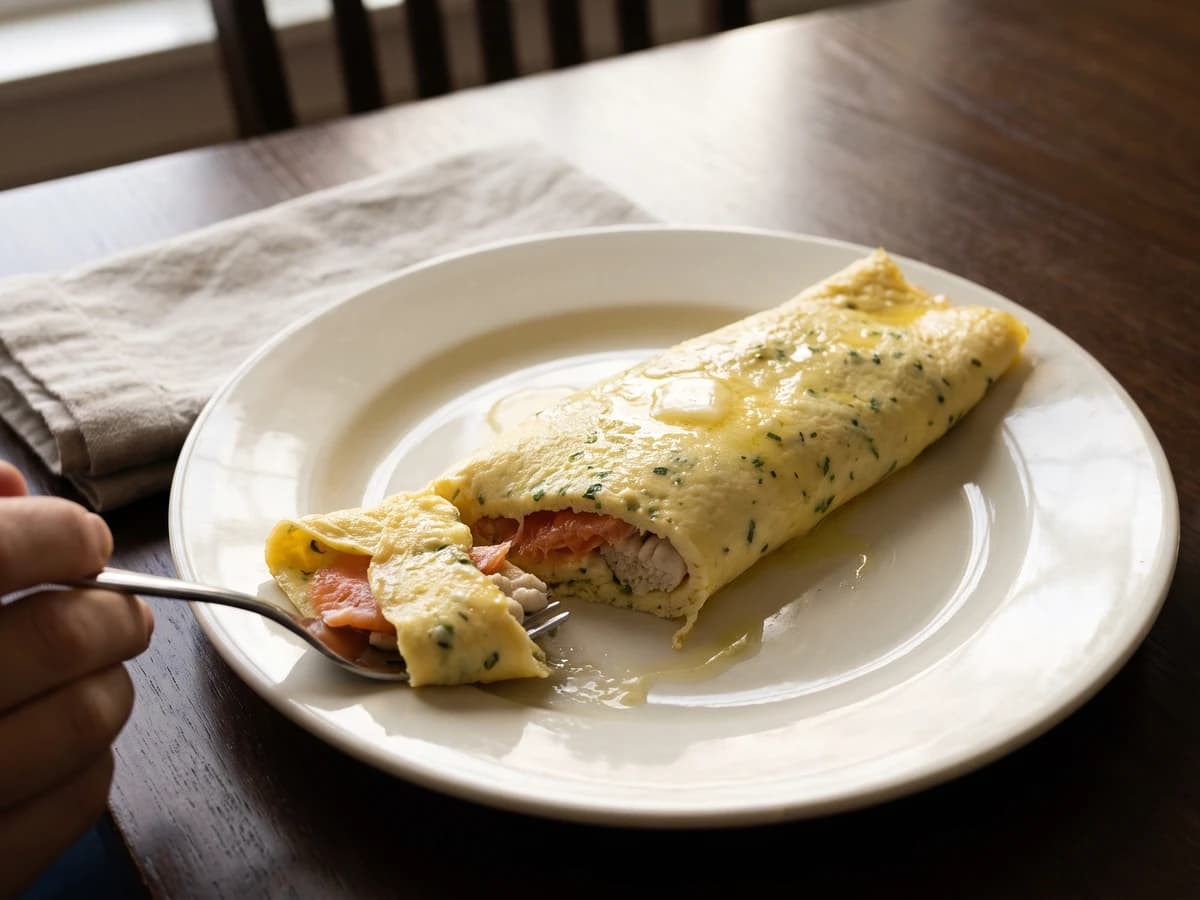
Omelette à l’Écossaise
A creamy omelette aux fines herbes closes around smoked-salmon-wrapped herring milts, gently poached in butter. Have the filling ready, then roll the eggs while they still shine.
A cooking platform built around craft, culture, and the stories behind what we eat.
Created by
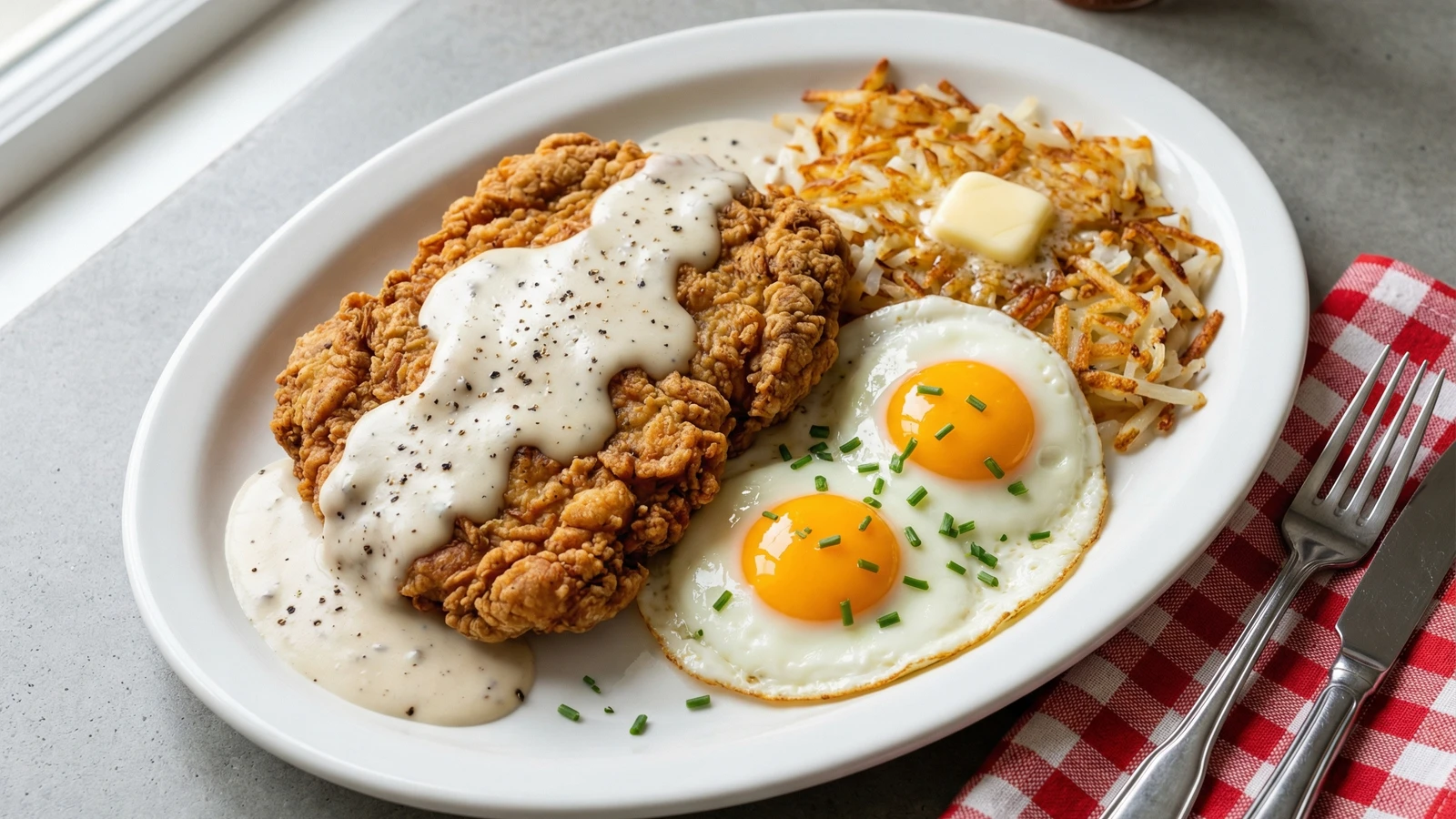
Tenderized cube steak double-dipped in seasoned flour, fried to a shattering golden crust, and blanketed in peppery cream gravy. Served with runny-yolked eggs and crispy hashbrowns, this is Texas on a plate.
German and Austrian immigrants brought schnitzel to Texas in the mid-1800s. What they found when they arrived was cheap beef, plenty of it, and cooks willing to adapt Old World technique to New World ingredients. Chicken fried steak was born from this collision. Despite the name, there's no chicken involved. The method is borrowed from Southern fried chicken: seasoned flour, an egg wash, more flour, then into hot fat until golden and honest.
This breakfast version represents Texas diner culture at its finest. You'll find it from Amarillo to Brownsville, served on oval platters with eggs cooked to order and hashbrowns that crackle when your fork breaks through. The cream gravy is non-negotiable. It's made in the same skillet, building on the fond and rendered fat from frying. Peppery, rich, and poured with abandon.
I've watched line cooks in roadside cafes turn out dozens of these plates before sunrise. Their secret isn't complicated: properly tenderized meat, well-seasoned breading, and oil hot enough to set the crust before it absorbs fat. You can master this in your own kitchen. The technique rewards attention, not expertise. By your third attempt, you'll be plating breakfast that would make a Texan proud.
Quantity
4 (about 5 oz each)
Quantity
2 cups
Quantity
1 tablespoon, plus more for seasoning
Quantity
2 teaspoons, plus more for gravy
Quantity
1 teaspoon
Quantity
1 teaspoon
Quantity
1/2 teaspoon
Quantity
1 teaspoon
Quantity
3
for breading
Quantity
1/2 cup
Quantity
1 cup
for frying
Quantity
1/4 cup
for gravy
Quantity
2 1/2 cups
Quantity
1 lb
peeled and shredded
Quantity
4 tablespoons, divided
Quantity
8
for serving
Quantity
for garnish
| Ingredient | Quantity |
|---|---|
| cube steaks, tenderized | 4 (about 5 oz each) |
| all-purpose flour | 2 cups |
| kosher salt | 1 tablespoon, plus more for seasoning |
| freshly ground black pepper | 2 teaspoons, plus more for gravy |
| garlic powder | 1 teaspoon |
| onion powder | 1 teaspoon |
| cayenne pepper | 1/2 teaspoon |
| paprika | 1 teaspoon |
| large eggsfor breading | 3 |
| buttermilk | 1/2 cup |
| vegetable oil or lardfor frying | 1 cup |
| all-purpose flourfor gravy | 1/4 cup |
| whole milk | 2 1/2 cups |
| russet potatoespeeled and shredded | 1 lb |
| butter | 4 tablespoons, divided |
| large eggsfor serving | 8 |
| fresh chives (optional) | for garnish |
If your cube steaks haven't been mechanically tenderized, place them between sheets of plastic wrap and pound with a meat mallet until about 1/4-inch thick. The goal is to break down tough fibers so the finished steak yields to a fork. Season both sides generously with salt and pepper. Let them rest at room temperature while you prepare your breading station.
Combine flour, salt, pepper, garlic powder, onion powder, cayenne, and paprika in a shallow dish. Whisk until the spices are evenly distributed. In a second shallow dish, beat together the eggs and buttermilk until smooth. The buttermilk adds tang and helps the coating adhere. Arrange your station: steaks, seasoned flour, egg wash, then another pile of seasoned flour. You'll move through this line twice for each steak.
Dredge each steak in flour, pressing firmly so the coating adheres. Shake off excess. Dip into egg wash, letting the excess drip back into the bowl. Return to flour and press again, building a thick, shaggy coating. The second layer is what creates that distinctive craggy crust. Set breaded steaks on a wire rack and let them rest for 10 minutes. This sets the coating and prevents it from sliding off in the oil.
While the coating sets, squeeze excess moisture from your shredded potatoes using a clean kitchen towel. This step is critical. Wet potatoes steam instead of crisp. Heat 2 tablespoons butter in a 12-inch nonstick or cast iron skillet over medium-high heat. Add potatoes in an even layer, pressing down firmly with a spatula. Season with salt and pepper. Cook without disturbing for 5 to 6 minutes until the bottom turns deep golden. Flip in sections, add remaining butter, and cook another 5 minutes. Keep warm in a 200°F oven while you fry the steaks.
Pour oil into a large cast iron skillet to a depth of about 1/4 inch. Heat over medium-high until it reaches 350°F on an instant-read thermometer. Carefully lower two steaks into the oil. They should sizzle immediately and aggressively. Fry for 3 to 4 minutes per side until the crust is deep golden brown and the internal temperature reaches 145°F. The coating should sound hollow when you tap it with tongs. Transfer to a wire rack set over a sheet pan. Repeat with remaining steaks, adjusting heat to maintain temperature.
Pour off all but 1/4 cup of the frying oil, keeping the browned bits in the pan. Place over medium heat and whisk in 1/4 cup flour. This is a roux. Cook, stirring constantly, for 2 minutes until it smells nutty and turns light blonde. Pour in cold milk gradually, whisking vigorously to prevent lumps. The gravy will seize up at first, then smooth out as you add more liquid. Continue whisking until it comes to a gentle simmer. Season aggressively with black pepper and salt to taste. The gravy should be thick enough to coat a spoon but still pourable. If it gets too thick, add more milk by the tablespoon.
Wipe out a nonstick skillet and set over medium-low heat. Add a tablespoon of butter. Crack eggs into the pan, working in batches of four. Season with salt and pepper. For over-easy eggs, cook until the whites are set but the yolks are still completely liquid, about 3 minutes. Carefully flip and cook for just 15 seconds more. The yolk should remain runny so it mingles with the gravy on the plate. For sunny-side up, cover the pan and cook without flipping until the whites are opaque.
Place a chicken fried steak on each plate. Ladle cream gravy generously over the top, letting it pool around the edges. Position two eggs alongside. Add a mound of crispy hashbrowns. Scatter fresh chives over everything if you like. Serve immediately with hot sauce on the table for those who want it. This breakfast waits for no one.
1 serving (about 485g)
Culinary guides, cultural storytelling, and the editorial depth that makes cooking meaningful.
Discover Culinary ExplorerChef Juliette
A creamy omelette aux fines herbes closes around smoked-salmon-wrapped herring milts, gently poached in butter. Have the filling ready, then roll the eggs while they still shine.
Chef Juliette
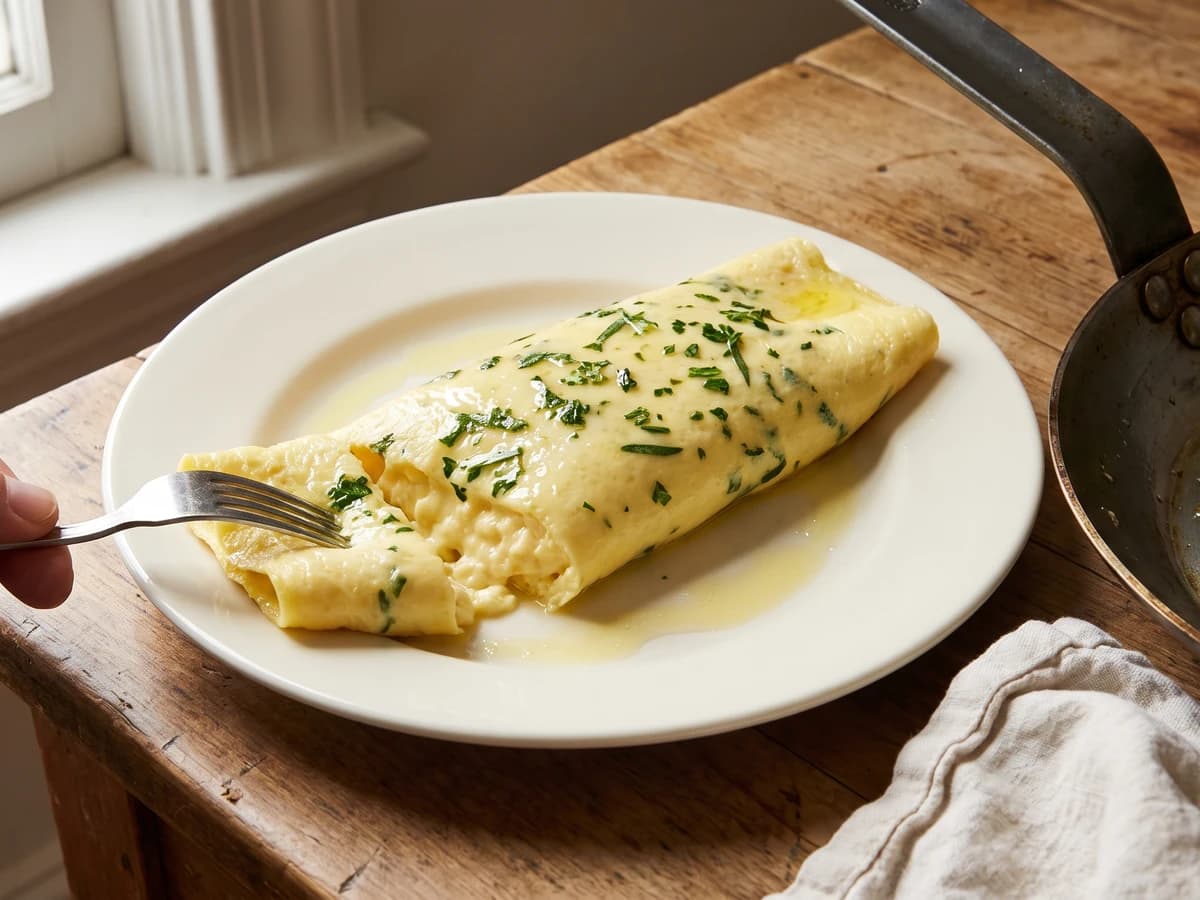
Four tender herbs, hot butter, and two eggs per pan: this rolled omelette teaches the quick hand and good judgment that keep the outside pale and the center creamy.
Chef Juliette
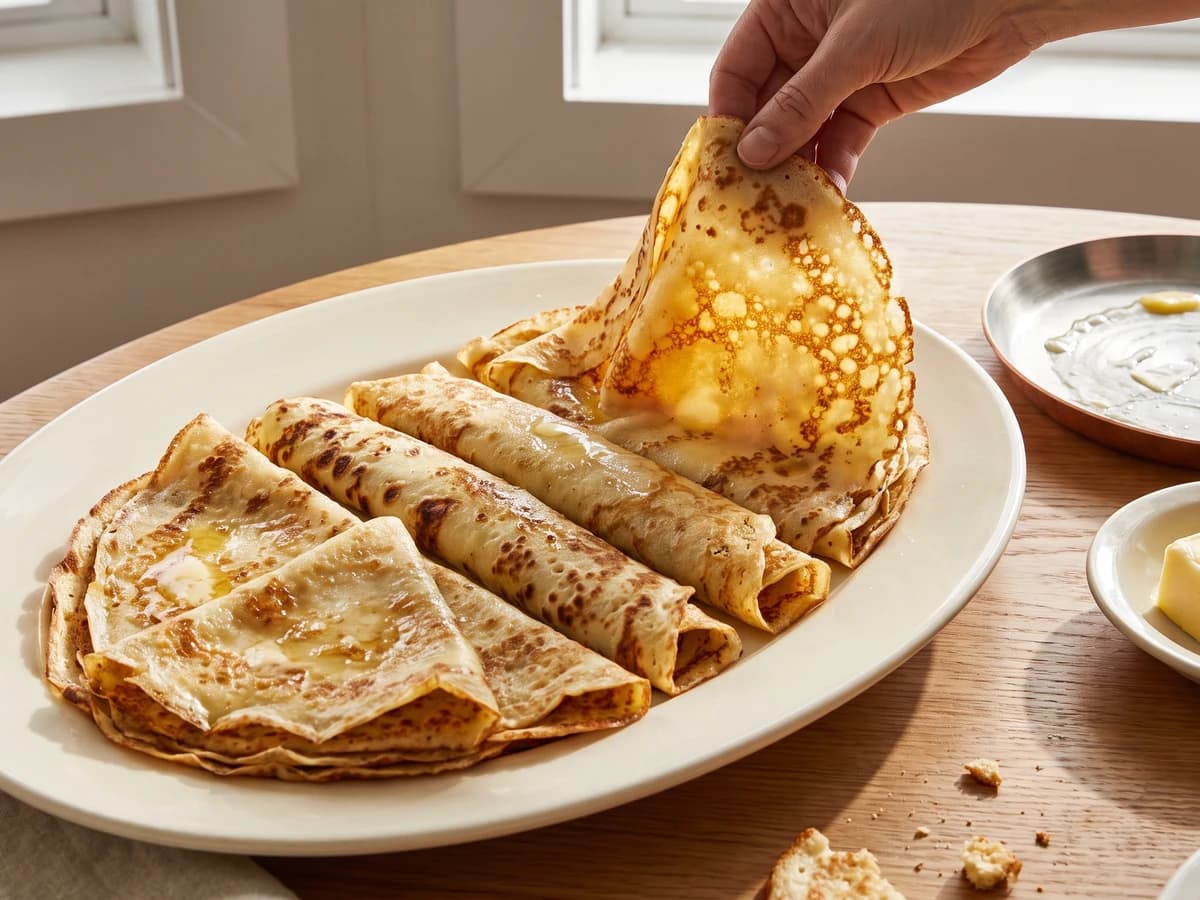
Four batters, one lesson: let the flour drink deeply before cooking, then spread the batter thinly in butter for crêpes and pannequets that bend without becoming tough.
Chef Juliette
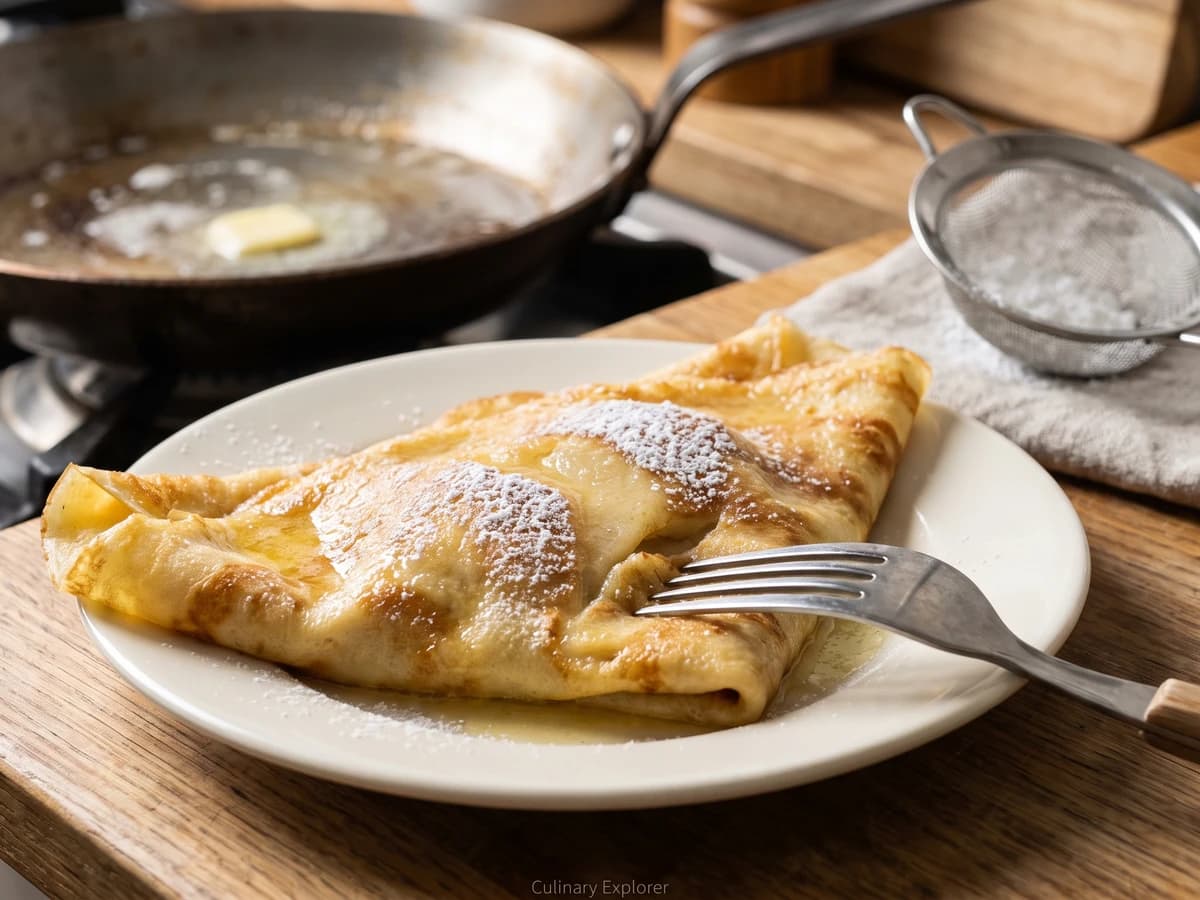
Crêpes au Couvent trap ripe Williams pear dice between two thin pours of sweet batter, then turn in one clean toss and reach the table butter-gold, powdered, and burning hot.