Culinary Explorer
A cooking platform built around craft, culture, and the stories behind what we eat.
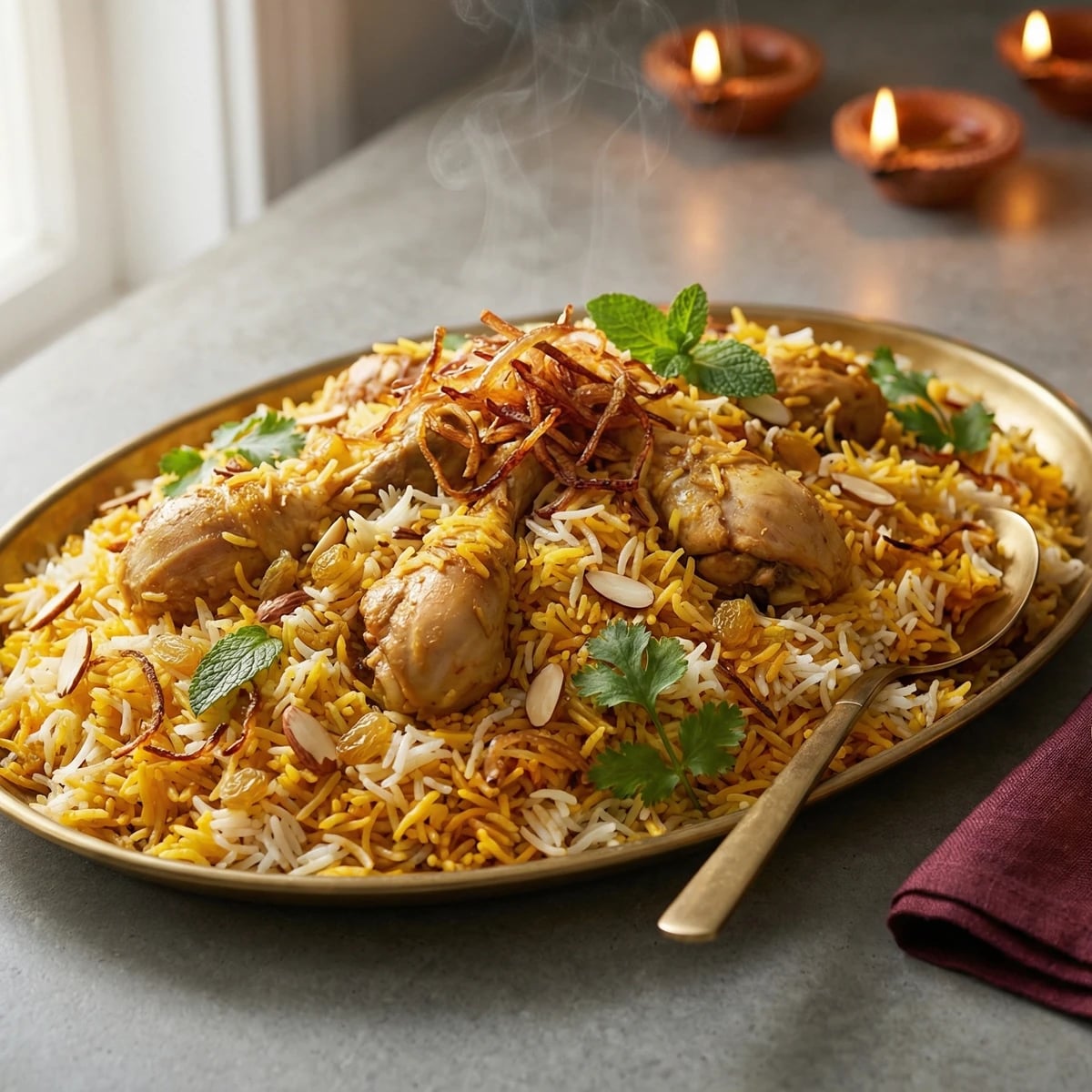
Chicken Biryani
Created by Chef Dean
Layers of aromatic basmati rice and tender spiced chicken, sealed and steamed in the ancient dum tradition. Golden saffron streaks through each forkful, while crispy fried onions crown this magnificent celebration of Indian cooking.
Biryani is one of the world's great rice dishes. It arrived in India with the Mughals, who brought Persian techniques and married them to the subcontinent's extraordinary spice tradition. The result is a dish that has inspired fierce regional pride for five centuries. Hyderabadi cooks will argue with Lucknowi cooks until the end of time about whose version reigns supreme. Both are right.
What makes biryani different from pilaf or pulao is the layering. You don't simply cook rice and meat together. You build the dish in strata, each layer contributing its own character: marinated chicken releasing its spiced juices upward, parboiled rice absorbing those flavors downward, saffron milk painting golden rivers through the white grains. The pot is sealed and the whole assembly steams together in what Indian cooks call dum, a slow trapped heat that melds everything into something greater than its parts.
I've served this at Diwali gatherings where the unveiling of the biryani pot became the evening's main event. The seal breaks. Steam billows. The room fills with cardamom, saffron, and caramelized onion. This is food as theater, and you're the director.
Don't let the length of this recipe intimidate you. The technique is straightforward once you understand the logic. Marinate. Fry onions. Parboil rice. Layer. Seal. Steam. That's the whole method. Everything else is detail, and detail is what separates memorable cooking from forgettable meals.
Ingredients
bone-in chicken thighs and drumsticks
Quantity
2 pounds
plain whole-milk yogurt
Quantity
1 cup
ginger-garlic paste
Quantity
2 tablespoons
| Ingredient | Quantity |
|---|---|
| bone-in chicken thighs and drumsticks | 2 pounds |
| plain whole-milk yogurt | 1 cup |
| ginger-garlic paste | 2 tablespoons |
Where cooking meets culture.
Culinary guides, cultural storytelling, and the editorial depth that makes cooking meaningful.
Discover Culinary Explorer