Chef LesiaLesia
From the Litnya Kuhnia
A southern Ukrainian table built from gardens, letters, and remembered hands
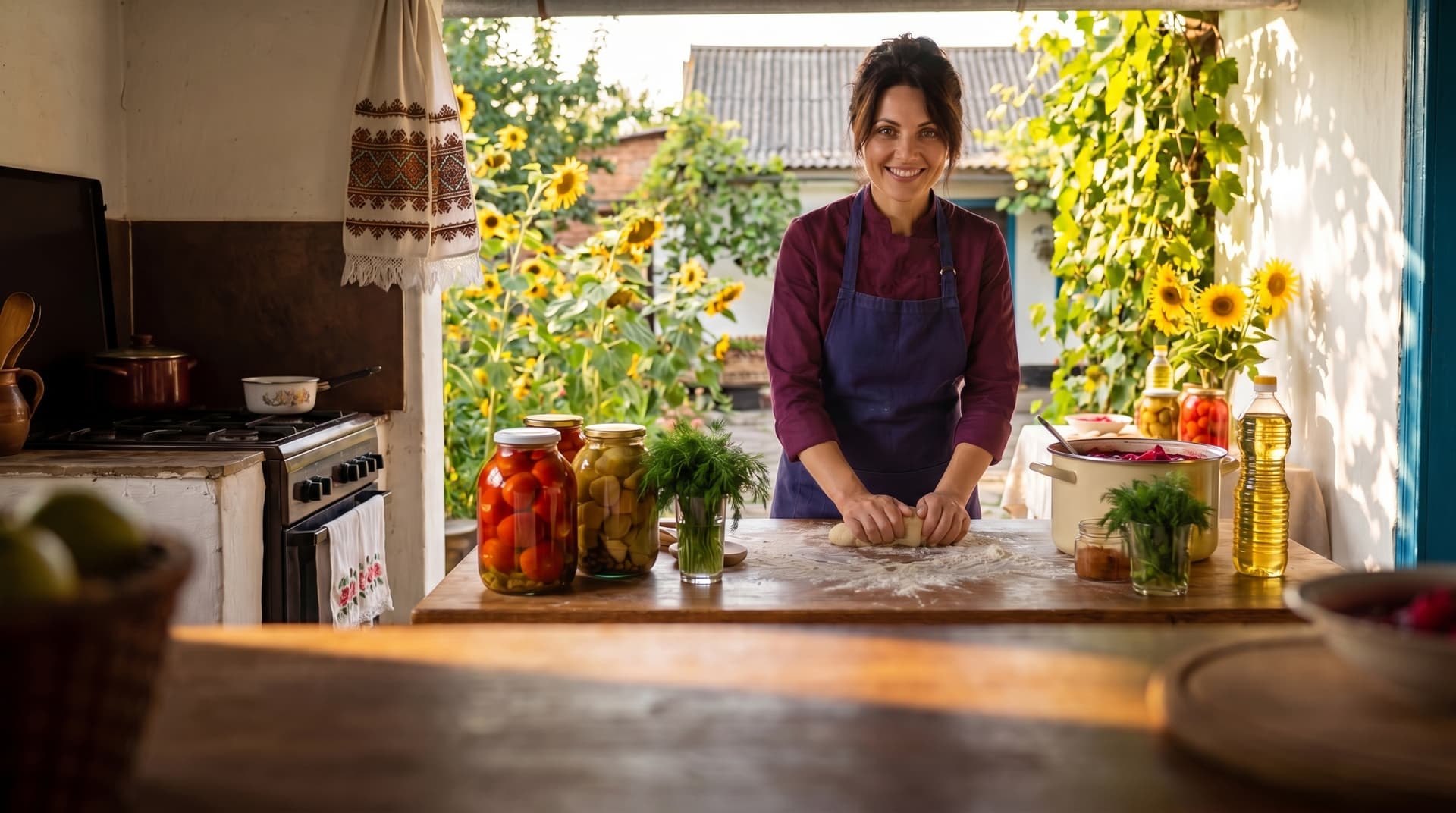
Sokolivka gave Lesia her first kitchen: chernozem soil so rich a dropped seed became food, two gardens pulling everyone outside, and a litnya kuhnia where summer meant jars, brine, aubergines, tomatoes, even whole watermelons being put up for later. Nothing about that table was grey. It was dill-green, beet-crimson, sunflower-gold, and alive.
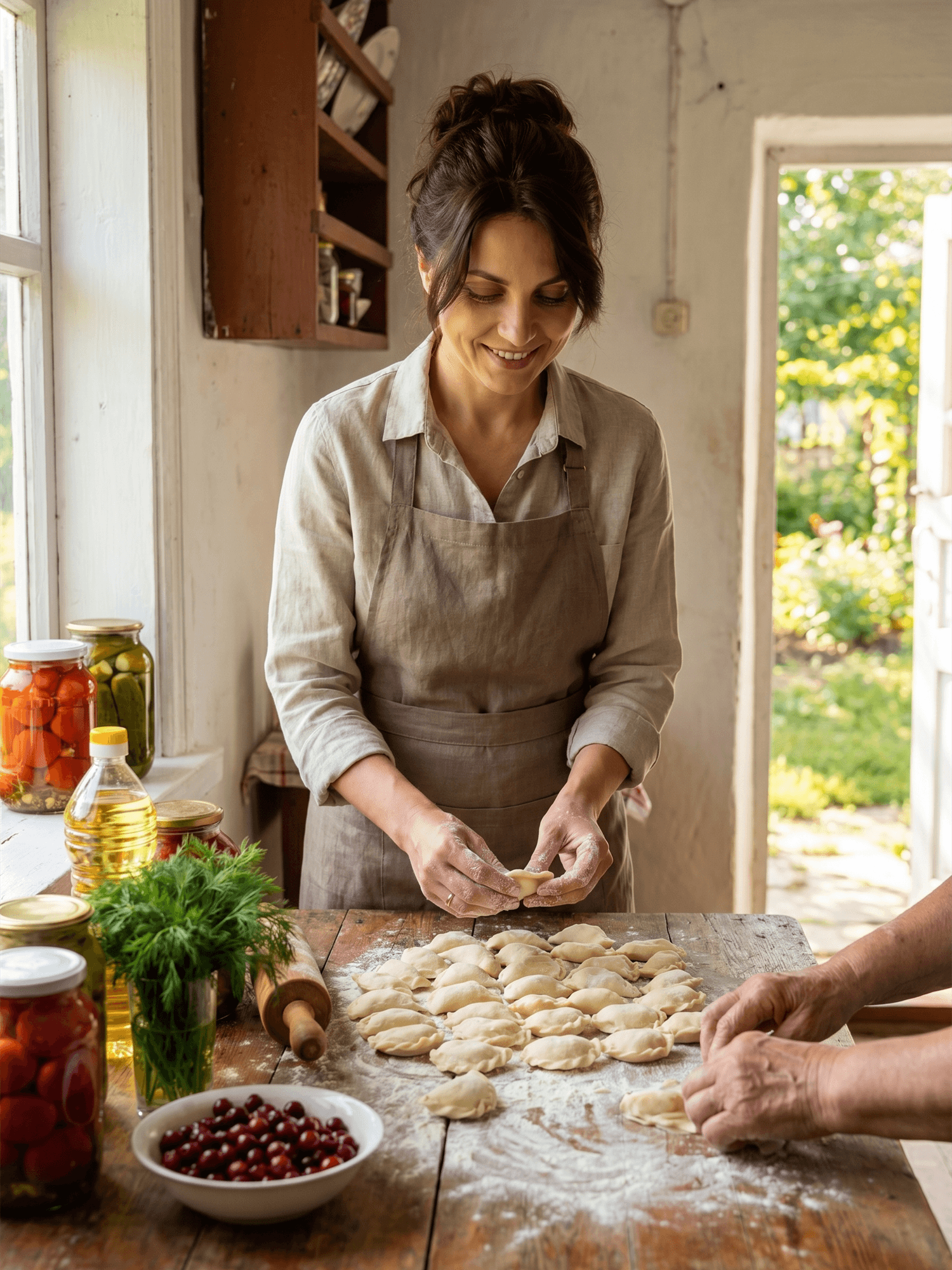
The winter before her family left, grandmother Vira taught her one thing with complete seriousness: the dough, and the family's triangular fold for varenyky. Not the whole repertoire. Not a notebook. One fold pressed into a girl's hands with the words, "Your hands will remember." They did. Her hands remember.
London arrived when Lesia was thirteen, with no English and a cuisine suddenly held as smell, hunger, and unfinished instruction. Aunt Nadia mailed recipes from home for sixteen years, written on graph paper, missing quantities, full of commands like "until the smell changes" and "until it sounds right." Lesia has been cooking her way back ever since.
Her hands remember.
The Fold That Stayed
One piece of dough carried from Kherson to London
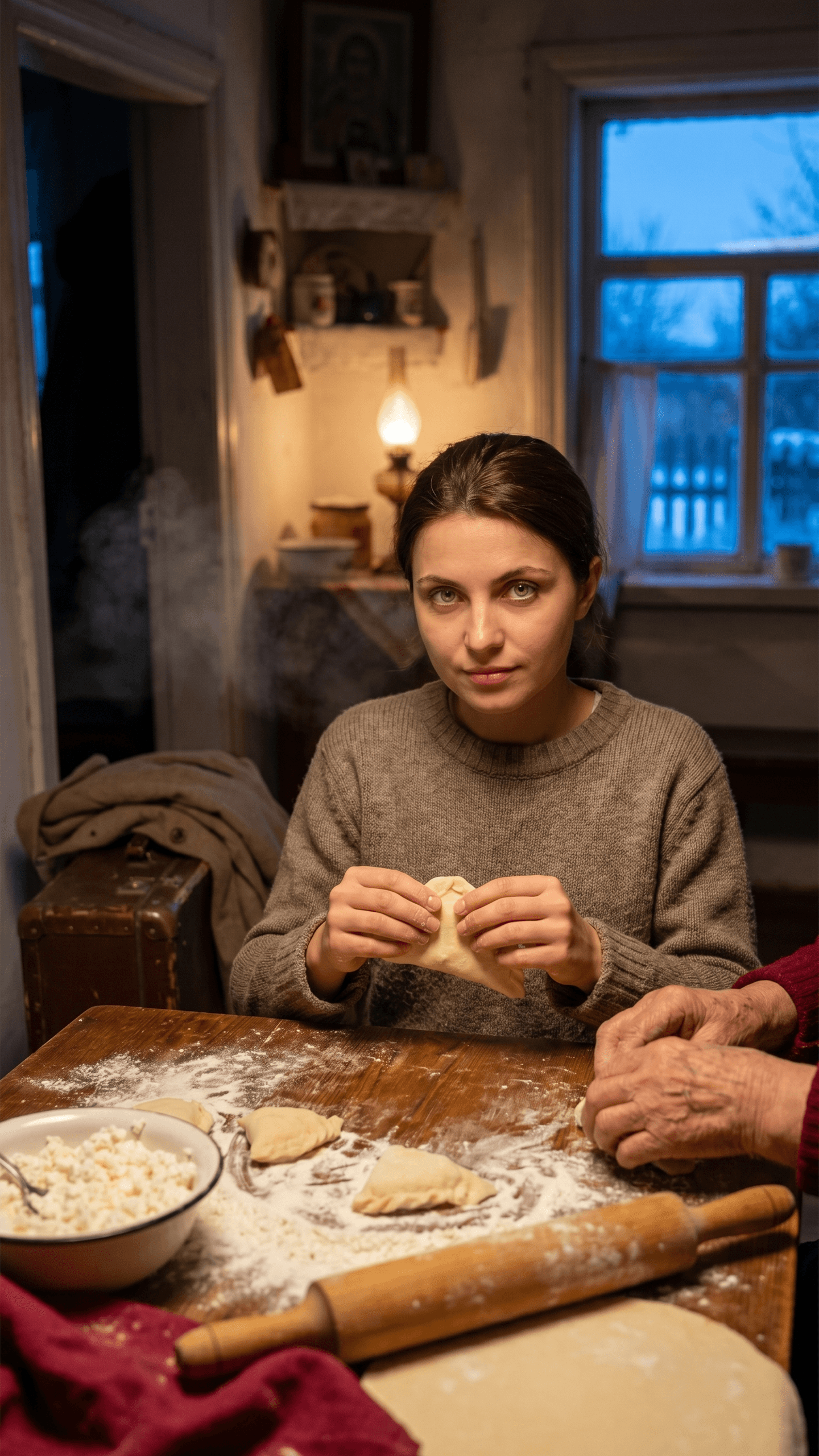
Vira did not hand Lesia a full inheritance before the family left the steppe. She handed her a piece of dough. Flour on the table, winter at the window, an older woman's hands guiding younger ones into the triangular fold that marked their varenyky as theirs. "Your hands will remember," she said.
For years, that was almost all Lesia had: a shape in her fingers, the smell of a kitchen she could not visit, and letters from Aunt Nadia that refused to behave like recipes. They said cook until the smell changes, until it sounds right. They made no apology for trusting the cook.
The fold became the proof that memory is not abstract. It sits in the wrist, in the pinch, in the moment dough stops being separate pieces and becomes a family dish. Lesia rebuilt the rest from there: one letter, one pot, one table of people fed until the story could not be erased.
Your hands will remember.
Ready to bring Lesia's recipes into your kitchen?
Discover Culinary Explorer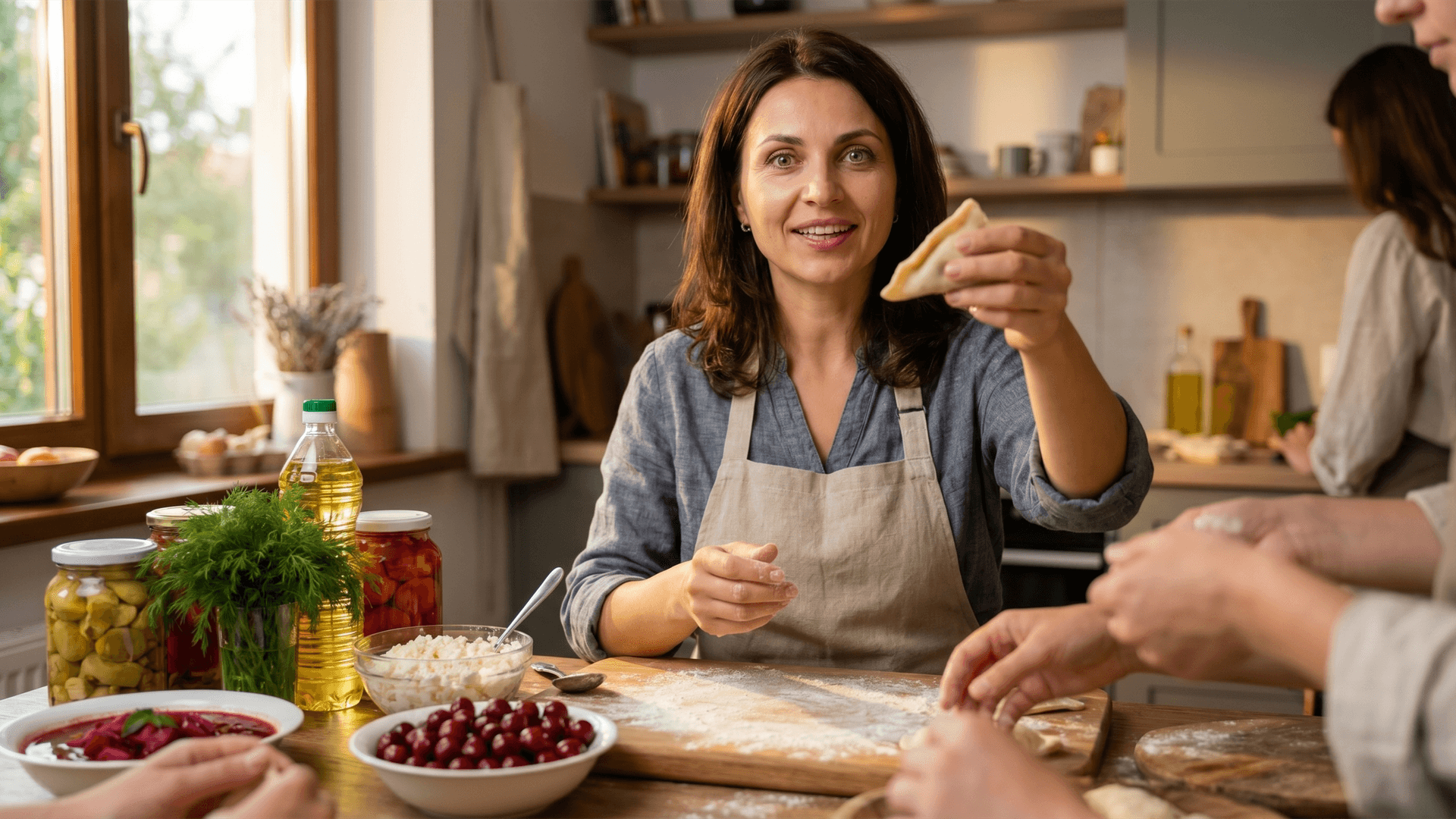
A Recipe Lives at the Table
Preserving Ukrainian food by cooking it for people
A recipe only lives while somebody cooks it. That is what gets Lesia up: the shoebox of eighty-three letters, the women whose kitchens may no longer exist, the village dishes in the south that vanish if no one stands close enough to smell when they change. She does not trust memory locked away. She trusts the table.
Today she teaches fermentation and dumpling classes from her East London kitchen, where fifty jars hiss on the loud shelf and everyone sits down to eat at the end. The point is confidence, not precision: learn the brine, trust the boil, feel the dough, and make enough for eight guests or one hungry Ukrainian.
A recipe only lives while somebody cooks it.
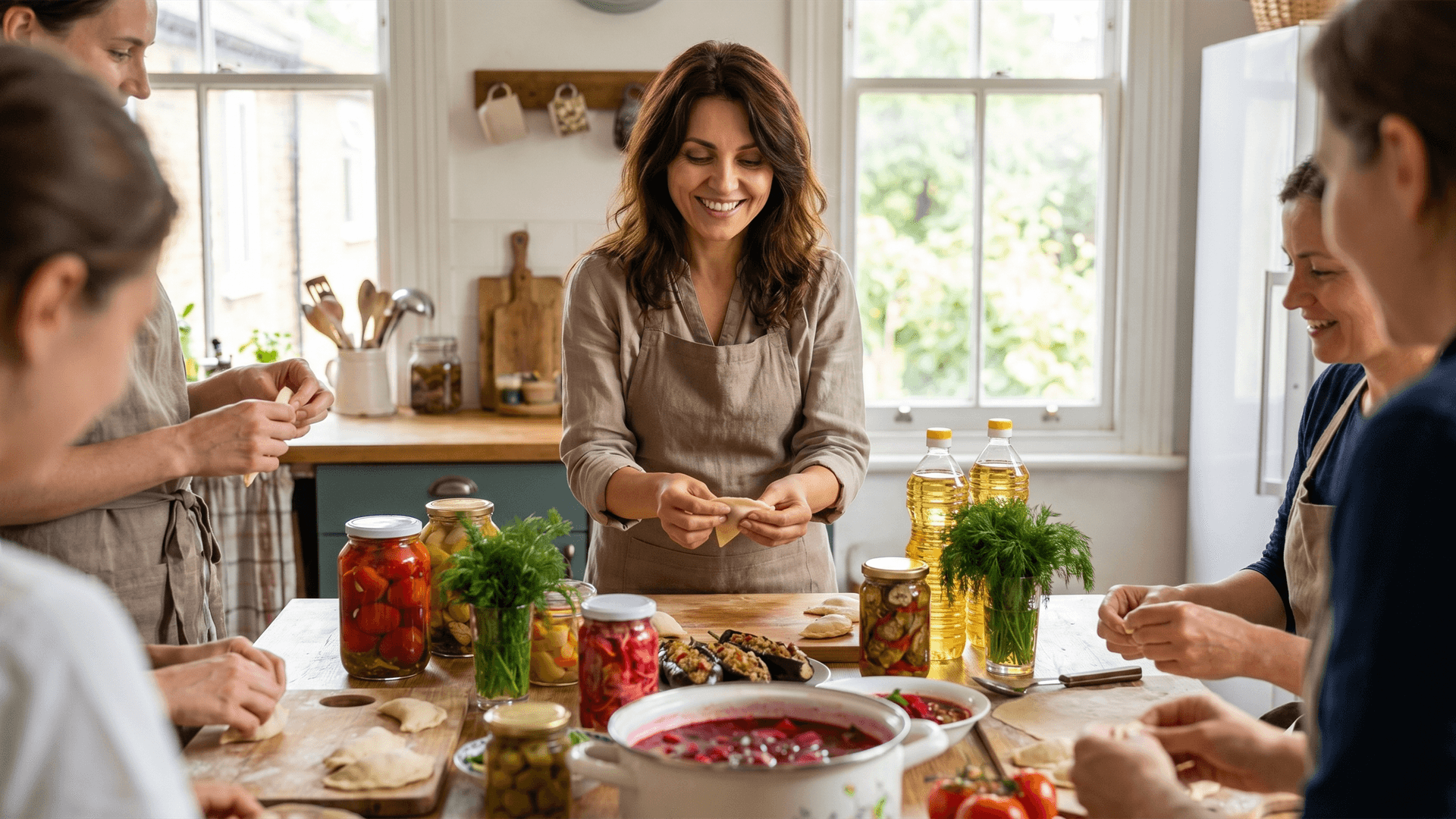
Lesia's Culinary World
Southern Ukrainian Kitchens
The Kherson steppe, garden cooking, litnya kuhnia summers, and the herb-forward food of a region too often flattened into one category.
Kvashennia and Brine
Whole watermelons, stuffed aubergines, pelustka, 4-5% salt brines, and tannin leaves for crunch. Preservation as vernacular, not trend.
Varenyky and Dough Memory
The inherited triangular fold, forgiving dough, and fillings from salty curd cheese to sour cherries, taught by hand before recipe.
Borshch Craft
Regional variants, slow zasmazhka, fermented tomato mors, beet zakwas, and the conviction that borshch is Ukrainian and the spelling matters.
Non-Negotiables
- Borshch is Ukrainian, and the spelling matters.
- Trust the cook's senses: until the smell changes, until it sounds right, until the spoon stands up.
- Ukraine is a cuisine of regions, not one flat category.
- Ferments deserve sound brine, clean jars, and patience, not trend language.
- A variation can be modern without being wrong. Living cuisine has to keep moving.
- Every class ends at the table, because food is not preserved until people eat.
Засмажка
Zasmazhka, the Ukrainian sofrito
The slow flavor base she names in every borshch because the soup depends on it.
Літня кухня
Summer kitchen
The warm-weather kitchen where gardens turned into jars and meals moved outside.
Пелюстка
Petal
Her go-to ferment, always explained with the etymology because a pickle can carry poetry.
My hands remember
The inherited varenyky fold grandmother Vira placed in her hands before the family left.
Why This Matters
For Lesia, cooking is the only remembering she fully trusts. A letter in a shoebox matters, but a pot of borshch on the table matters more. The recipe becomes harder to erase once someone has tasted it, asked the story, and learned how the dish thinks.
She teaches to make people brave enough to continue. The dough forgives more than you think, the brine is safer than fear says, and confidence matters more than gram-perfect obedience. What she wants is a living table: food made, shared, changed a little, and handed on.
Confidence matters more than gram-perfect obedience.
By the Numbers
Keeps eighty-three recipe letters from Aunt Nadia in a shoebox, many with instructions like "until the smell changes" instead of measurements.
Learned exactly one family technique before leaving the Kherson steppe: grandmother Vira's triangular varenyky fold.
Teaches from an East London kitchen where fifty ferment jars hiss on what she calls the loud shelf.
Spends summers collecting recipes village by village in southern Ukraine before they disappear from living kitchens.
“Засмажка”
Start Cooking with Chef Lesia
Cook Ukrainian food that is regional, seasonal, fermented, and alive with color. Learn borshch, varenyky, brines, and the stories that keep a table living.
Discover Culinary ExplorerChef Lesia is a fictional culinary guide to Ukrainian Southern-Steppe Cuisine, written with the assistance of AI.