
Chef Lupita
Arroz a la Oaxaqueña
Oaxaca's red rice, stained with tomato and fried in lard, steamed with carrots, ejotes, black beans, and epazote. The side that anchors a Oaxacan family meal and earns its place beside the main.
A cooking platform built around craft, culture, and the stories behind what we eat.
Created by
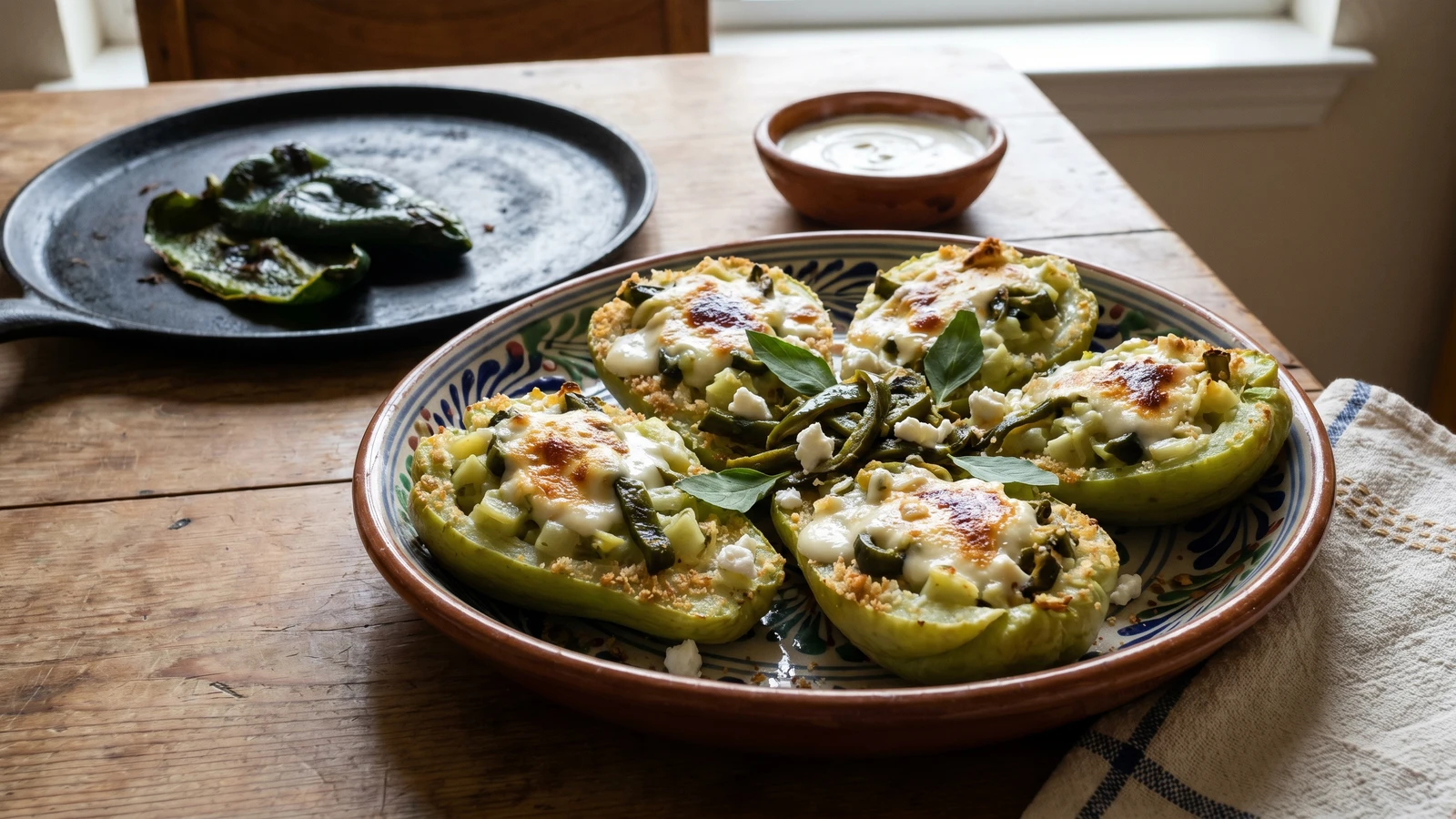
Puebla's convent-style chayotes, scooped and filled with their own tender pulp, rajas de chile poblano, crema espesa, and cheese until the top turns golden.
Puebla, the Angelópolis and its central highlands, is where this dish belongs. Not every poblano dish is mole poblano or chiles en nogada. Some of the best cooking from Puebla lives in the quieter side dishes, the ones that appear beside roast chicken, a clay cazuela of rice, or a holiday table where every aunt brings something baked and covered in cheese.
The chayote is the point. It grows on vines in patios and milpas across central and southern Mexico, but in Puebla's home kitchens it becomes a small piece of architecture: boiled until tender, split, scooped, mixed with its own flesh, rajas de chile poblano, onion softened in manteca de cerdo, crema espesa, and cheese. Then it goes back into its shell. Nothing wasted. My mother used to say that a cook who throws away flavor has not been paying attention.
This is not a fiery dish. The chile poblano gives green depth, not punishment. The gratin is not French showing off either. It is convent logic: dairy, vegetable, heat, patience, a top that browns at the edges and tells you it is ready. Use talavera on the table if you have it. Puebla earned that ceramic, and the food looks right against blue and white glaze.
Do not overcook the chayotes until they collapse. They need to hold their shape. Do not drown the filling in crema. You want richness, not soup. Recetas probadas y garantizadas, but only if you respect the vegetable.
Chayote is native to Mesoamerica and was cultivated long before the Spanish conquest; its Nahuatl name, chayohtli, passed into Mexican Spanish almost unchanged. Puebla's convent kitchens, especially from the 17th through 19th centuries, became known for combining Indigenous vegetables with Spanish-introduced dairy, sugar, wheat, and baking techniques. Gratin-style vegetable dishes in central Mexico reflect that convent and household exchange: not French restaurant cooking, but Mexican domestic baking shaped by clay dishes, local vegetables, and the arrival of cheese and cream after the conquest.
Quantity
6
washed
Quantity
1 tablespoon, plus more to taste
Quantity
2
roasted, peeled, seeded, and cut into thin rajas
Quantity
2 tablespoons
Quantity
1/2 medium
finely chopped
Quantity
2
finely minced
Quantity
1 tablespoon
finely chopped
Quantity
1/2 cup
Quantity
3/4 cup
crumbled
Quantity
1/2 cup
shredded
Quantity
1/4 cup
finely grated
Quantity
1/4 teaspoon
Quantity
1/8 teaspoon
Quantity
2 tablespoons
Quantity
1 tablespoon
cut into small pieces, for the baking dish
| Ingredient | Quantity |
|---|---|
| medium chayoteswashed | 6 |
| kosher salt | 1 tablespoon, plus more to taste |
| fresh chile poblanoroasted, peeled, seeded, and cut into thin rajas | 2 |
| manteca de cerdo | 2 tablespoons |
| white onionfinely chopped | 1/2 medium |
| garlic clovesfinely minced | 2 |
| fresh epazotefinely chopped | 1 tablespoon |
| crema espesa mexicana | 1/2 cup |
| queso frescocrumbled | 3/4 cup |
| queso de hebra or Oaxaca cheeseshredded | 1/2 cup |
| queso añejofinely grated | 1/4 cup |
| freshly ground black pepper | 1/4 teaspoon |
| freshly grated nutmeg | 1/8 teaspoon |
| plain dry bread crumbs | 2 tablespoons |
| unsalted buttercut into small pieces, for the baking dish | 1 tablespoon |
Put the whole chayotes in a large pot and cover with water by one inch. Add 1 tablespoon salt. Bring to a steady simmer and cook 25 to 35 minutes, depending on size, until a knife enters the thickest part with some resistance. They should be tender, not falling apart. A collapsed chayote cannot be filled. Así se hace y punto.
While the chayotes cook, roast the chile poblano directly over a gas flame or on a hot comal, turning until the skin blisters and blackens in patches. Put them in a covered bowl for 10 minutes, then peel, seed, and slice into thin rajas. Do not rinse them under water. That washes away the roasted flavor you just worked for.
Drain the chayotes and let them cool until you can handle them. Cut each one in half lengthwise. Remove the pale center seed and set it aside if tender; many cooks chop it into the filling. Scoop out the flesh with a spoon, leaving a shell about 1/4 inch thick. Chop the flesh finely and press it lightly in a clean towel if it seems watery.
Melt the manteca de cerdo in a wide skillet over medium heat. Add the white onion and cook until translucent, about 5 minutes. Add the garlic and cook 30 seconds, just until fragrant. Stir in the chopped chayote flesh and cook 5 to 7 minutes, until extra moisture has evaporated and the mixture smells sweet and green. La manteca es el sabor, even in a vegetable dish.
Add the poblano rajas, epazote, black pepper, nutmeg, and a careful pinch of salt. Cook 2 minutes. Pull the pan off the heat and fold in the crema espesa, queso fresco, and half of the queso de hebra. The filling should be moist and spoonable, not loose. If it runs across the pan, put it back on the heat for another minute.
Heat the oven to 375F. Butter a clay cazuela or ceramic baking dish. Arrange the chayote shells cut side up. Spoon the filling generously into each shell, mounding it slightly. Sprinkle with the remaining queso de hebra, the queso añejo, and the bread crumbs. The queso añejo gives salt and sharpness; the bread crumbs help the top brown instead of merely melt.
Bake 18 to 22 minutes, until the filling is hot through and the tops are golden at the high points. If you want deeper color, run the dish under the broiler for 1 to 2 minutes, watching closely. Cheese goes from golden to burned while you are answering the door. Let the chayotes rest 8 minutes before serving so the filling settles.
Serve the chayotes warm from the baking dish, two halves for a main vegetable course or one half as a side. Put them on the table in the cazuela, not on individual white plates pretending to be precious. La cocina no es decoración, es trabajo.
1 serving (about 250g)
Culinary guides, cultural storytelling, and the editorial depth that makes cooking meaningful.
Discover Culinary ExplorerChef Lupita
Oaxaca's red rice, stained with tomato and fried in lard, steamed with carrots, ejotes, black beans, and epazote. The side that anchors a Oaxacan family meal and earns its place beside the main.
Chef Lupita
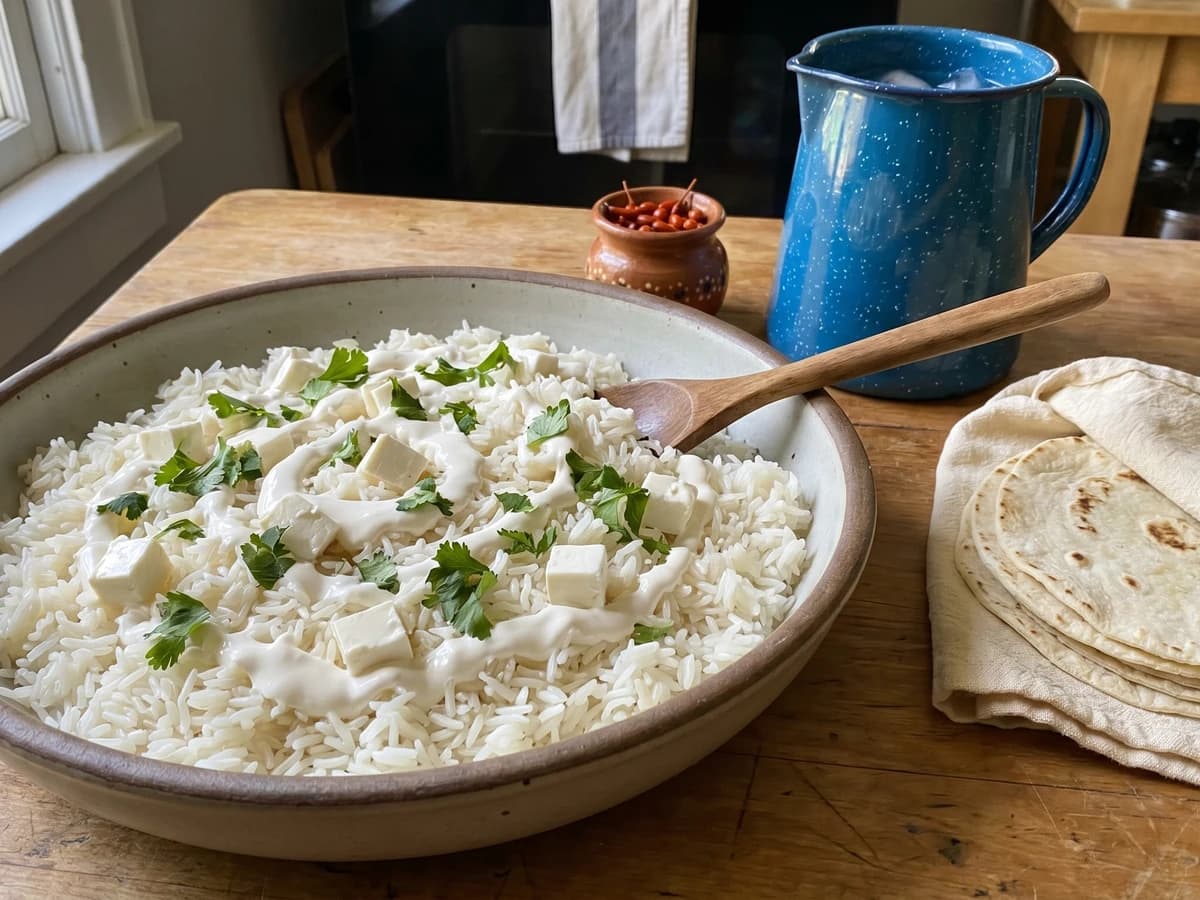
Sinaloa's home-cook white rice topped with cold cubes of cream cheese that soften into the warm grain, finished with crema and a sprinkle of chiltepin at the table. The trick that makes a side dish feel like a small luxury.
Chef Lupita
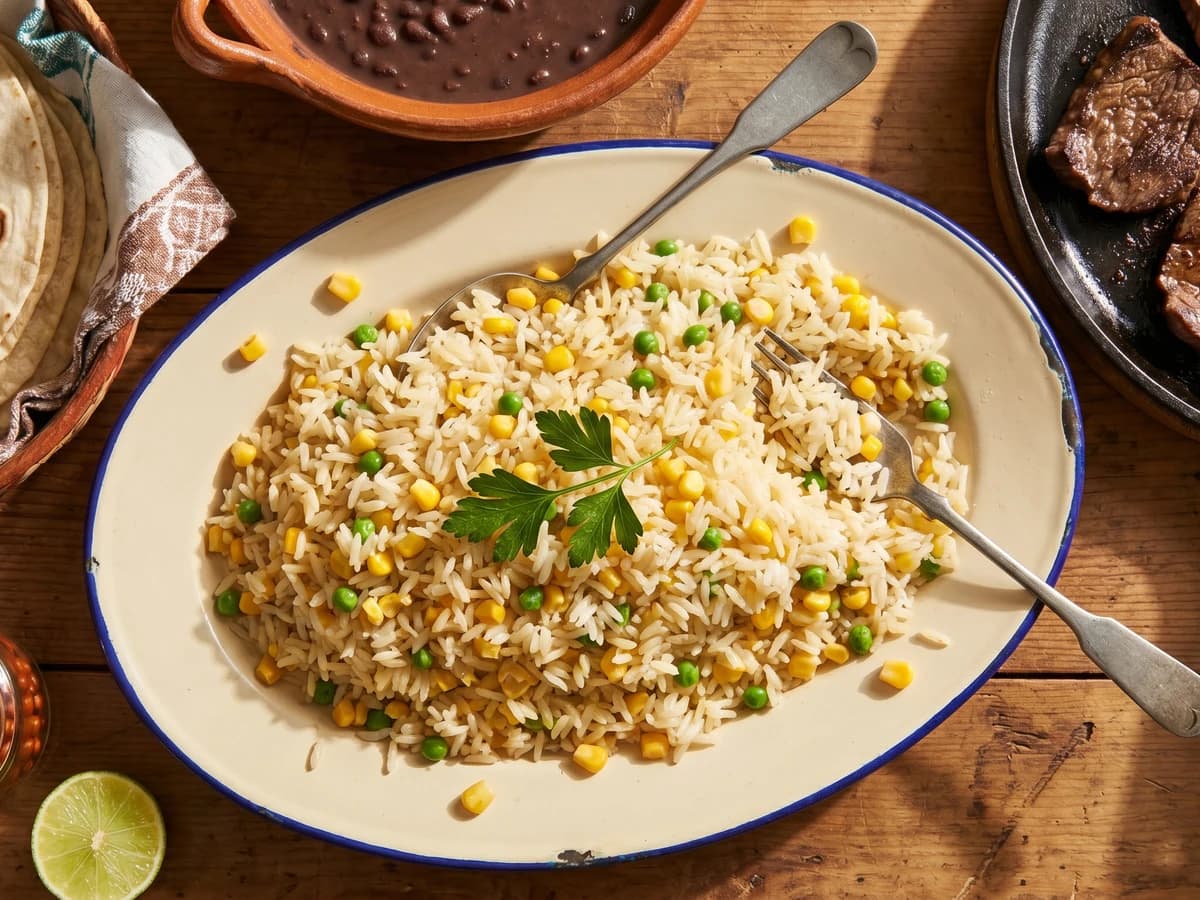
Sonora's white rice, toasted in butter and steamed with sweet corn and tender peas. The clean, quiet partner to a plate of carne asada, not the red rice of central Mexico.

Chef Lupita
Yucatán's white rice with sweet corn kernels, toasted in lard with garlic and onion. The quiet base that holds up against the peninsula's bold achiote-stained stews.