
Chef Lupita
Arroz a la Oaxaqueña
Oaxaca's red rice, stained with tomato and fried in lard, steamed with carrots, ejotes, black beans, and epazote. The side that anchors a Oaxacan family meal and earns its place beside the main.
A cooking platform built around craft, culture, and the stories behind what we eat.

Created by
Yucatán's baked stuffed chayotes, filled with a recado-stained picadillo of raisins, capers, and toasted almonds, crowned with grated queso de bola until the top browns in patches.
This is from Yucatán. Not from a generic Mexican kitchen. From the Yucatán peninsula, where the cooking carries the weight of Maya tradition, Spanish convent kitchens, Lebanese migration, and the Dutch cheese that arrived through the port of Progreso and never left.
The filling is a Yucatecan picadillo, which means it leans sweet-savory in a way the rest of Mexico does not. Raisins, capers, almonds, recado rojo, canela. The Spanish brought this picadillo template centuries ago and the cooks of Mérida and Valladolid bent it toward their own pantry: achiote instead of paprika, sour orange instead of vinegar, manteca de cerdo as the only fat that makes sense. The queso de bola on top is aged Edam, the red-waxed ball you see piled in every Mérida mercado. It melts into a sharp, tangy crust that no fresh cheese can replicate. This is not a substitution question. This is the dish.
Chayote is humble and the Yucatecans treat it with the same seriousness they bring to relleno negro or cochinita pibil. Boiled tender, hollowed out, stuffed, baked, gratined. The vegetable becomes a vessel for everything Yucatán's pantry knows how to do. I collected this version from a señora in Tixkokob who made it every Christmas Eve for thirty-seven years and could tell you within five minutes of meeting you whether her daughter-in-law was doing it right. She wasn't. Cada estado, su propia cocina.
The chayote (Sechium edule) is a pre-Columbian cucurbit domesticated in Mesoamerica thousands of years before contact, and its Nahuatl name 'chayotli' traveled with the vegetable into Spanish kitchens worldwide. Picadillo as a stuffing technique arrived with Spanish colonizers in the 16th century, and Yucatán's particular sweet-savory expression, with raisins, capers, almonds, and warm spices, reflects the influence of Sephardic and Moorish-Andalusian cooks who carried these flavor combinations across the Atlantic. The use of queso de bola (aged Edam) on Yucatecan dishes such as queso relleno and chayotes rellenos dates to the 19th century, when Dutch trading ships used the wax-coated cheese as ballast and unloaded it at the port of Progreso, where it was absorbed into the regional cuisine so thoroughly that Yucatecans now consider it indigenous to their table.
Quantity
6 medium
firm and unblemished
Quantity
1 tablespoon
Quantity
1 pound
Quantity
3 tablespoons
Quantity
1 medium
finely diced
Quantity
4
finely minced
Quantity
2 ripe
finely diced
Quantity
1 tablespoon
dissolved in 2 tablespoons sour orange juice
Quantity
1/2 teaspoon
Quantity
1/4 teaspoon
Quantity
1/4 teaspoon
Quantity
1/3 cup
Quantity
1/4 cup
drained and roughly chopped
Quantity
1/3 cup
toasted and roughly chopped
Quantity
2 tablespoons
finely chopped
Quantity
1 teaspoon, plus more to taste
Quantity
1/3 cup
Quantity
2
lightly beaten
Quantity
8 ounces
finely grated
Quantity
2 tablespoons
cut into small pieces
Quantity
for serving
Quantity
for serving
| Ingredient | Quantity |
|---|---|
| chayotesfirm and unblemished | 6 medium |
| kosher salt for the cooking water | 1 tablespoon |
| ground pork (or half pork, half beef) | 1 pound |
| manteca de cerdo (pork lard) | 3 tablespoons |
| white onionfinely diced | 1 medium |
| garlic clovesfinely minced | 4 |
| Roma tomatoesfinely diced | 2 ripe |
| recado rojo (achiote paste)dissolved in 2 tablespoons sour orange juice | 1 tablespoon |
| ground canela (Mexican cinnamon) | 1/2 teaspoon |
| ground clove | 1/4 teaspoon |
| freshly ground black pepper | 1/4 teaspoon |
| raisins | 1/3 cup |
| capersdrained and roughly chopped | 1/4 cup |
| whole almondstoasted and roughly chopped | 1/3 cup |
| fresh flat-leaf parsleyfinely chopped | 2 tablespoons |
| kosher salt | 1 teaspoon, plus more to taste |
| dry breadcrumbs (pan molido) | 1/3 cup |
| large eggslightly beaten | 2 |
| queso de bola (aged Edam)finely grated | 8 ounces |
| unsalted buttercut into small pieces | 2 tablespoons |
| pickled red onion with habanero (optional) | for serving |
| warm corn tortillas (optional) | for serving |
Place the whole chayotes in a large pot and cover with cold water by two inches. Add the tablespoon of salt. Bring to a boil and cook for 25 to 30 minutes, until a paring knife slides into the flesh with light resistance. You want them tender but not collapsing. Chayote turns to mush if you walk away from the pot. Drain and let them sit on a kitchen towel until cool enough to handle.
Slice each chayote in half lengthwise. Remove the soft flat seed in the center. The seed is edible and good. Chop it and set it aside with the flesh. Scoop the pulp from each half with a spoon, leaving a wall about a quarter inch thick. Arrange the empty halves cut-side up in a large baking dish or two clay cazuelas. Chop the scooped pulp and reserve it for the picadillo. Nothing gets thrown out. La cocina no es decoración, es trabajo.
Heat the manteca in a wide skillet or cazuela over medium heat. Add the diced onion with a pinch of salt and cook for five minutes, until translucent and just starting to turn gold at the edges. Add the garlic and cook one minute more. The kitchen should smell like the start of every good Yucatecan stew.
Raise the heat to medium-high. Add the ground pork and break it apart with a wooden spoon. Cook for six to eight minutes, until the meat has lost its pink and the rendered fat starts to fry the edges. Stir in the dissolved recado rojo, canela, clove, and black pepper. The mixture will turn a deep brick red. That color is the dish. Recado rojo is not optional. Without it, you have made a generic picadillo, not a Yucatecan one.
Add the diced tomato and cook for three minutes, until it breaks down into the meat. Stir in the chopped chayote pulp and cook for five more minutes, until the pulp loses its raw look and gives up its water. Off the heat, fold in the raisins, capers, chopped almonds, and parsley. Taste for salt. The picadillo should hit sweet, briny, warm-spiced, and savory in the same bite. That balance is the Yucatán signature, inherited from the Spanish picadillo tradition and Maya cooks who made it their own.
Let the picadillo cool for five minutes. Stir in the breadcrumbs and the beaten eggs. The breadcrumbs absorb the rendered fat and the eggs bind everything together so the filling holds its shape when you bake it. Without this binding, the picadillo crumbles out of the chayote and the dish falls apart on the plate.
Heat the oven to 375°F (190°C). Mound the picadillo generously into each chayote half, packing it lightly with the back of a spoon. Pile it higher than the rim. The filling will settle as it bakes. Arrange the stuffed halves snug in the baking dish so they hold each other upright.
Cover each chayote with a generous blanket of grated queso de bola. Dot with the butter. Bake uncovered for 25 to 30 minutes, until the cheese has melted, browned in patches, and pulled away slightly from the edges of the chayote. The queso de bola gives a sharp, tangy crust that no other cheese delivers. This is the Dutch inheritance Yucatán absorbed through the port of Progreso, and it stayed. Así se hace y punto.
Let the chayotes rest for five minutes before serving. The filling needs that time to set so it does not slide out when you cut in. Serve in the cazuela they were baked in, two halves per person, with pickled red onion with habanero and warm corn tortillas on the side. Recetas probadas y garantizadas.
1 serving (about 385g)
Culinary guides, cultural storytelling, and the editorial depth that makes cooking meaningful.
Discover Culinary ExplorerChef Lupita
Oaxaca's red rice, stained with tomato and fried in lard, steamed with carrots, ejotes, black beans, and epazote. The side that anchors a Oaxacan family meal and earns its place beside the main.
Chef Lupita
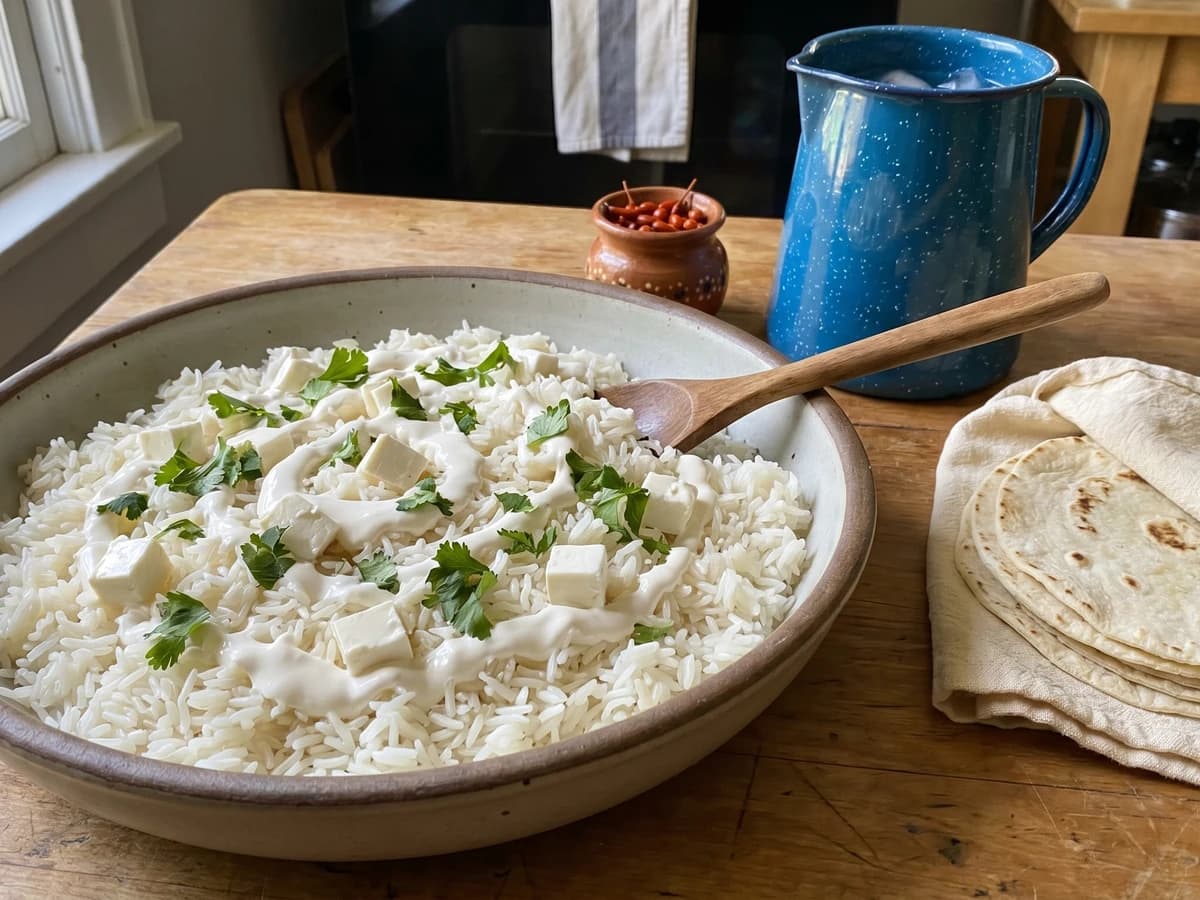
Sinaloa's home-cook white rice topped with cold cubes of cream cheese that soften into the warm grain, finished with crema and a sprinkle of chiltepin at the table. The trick that makes a side dish feel like a small luxury.
Chef Lupita
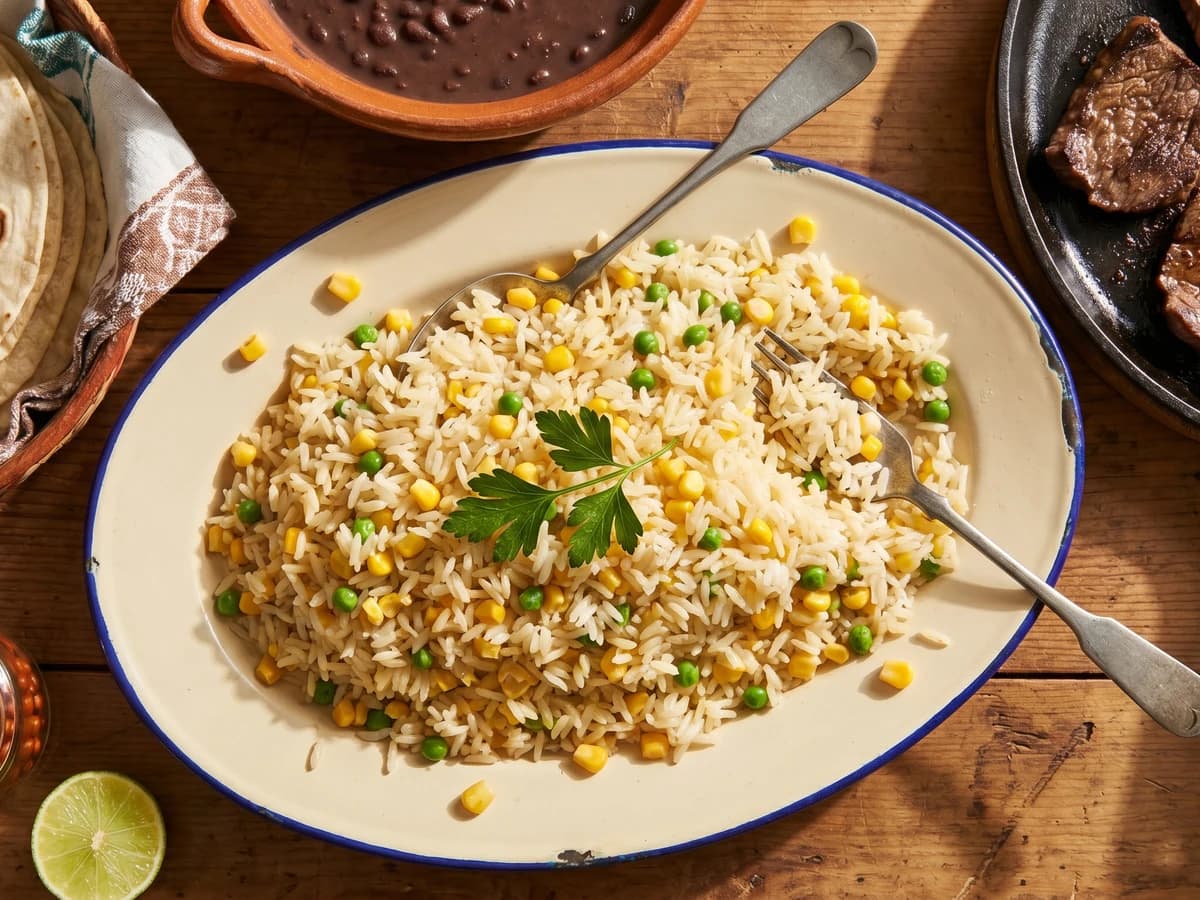
Sonora's white rice, toasted in butter and steamed with sweet corn and tender peas. The clean, quiet partner to a plate of carne asada, not the red rice of central Mexico.

Chef Lupita
Yucatán's white rice with sweet corn kernels, toasted in lard with garlic and onion. The quiet base that holds up against the peninsula's bold achiote-stained stews.