
Chef Lupita
Agua de Alfalfa
Ciudad de México's highland market agua fresca, fresh alfalfa blended with pineapple and lime until bright green, strained clean, and poured cold from the vitrolero.
A cooking platform built around craft, culture, and the stories behind what we eat.
Created by
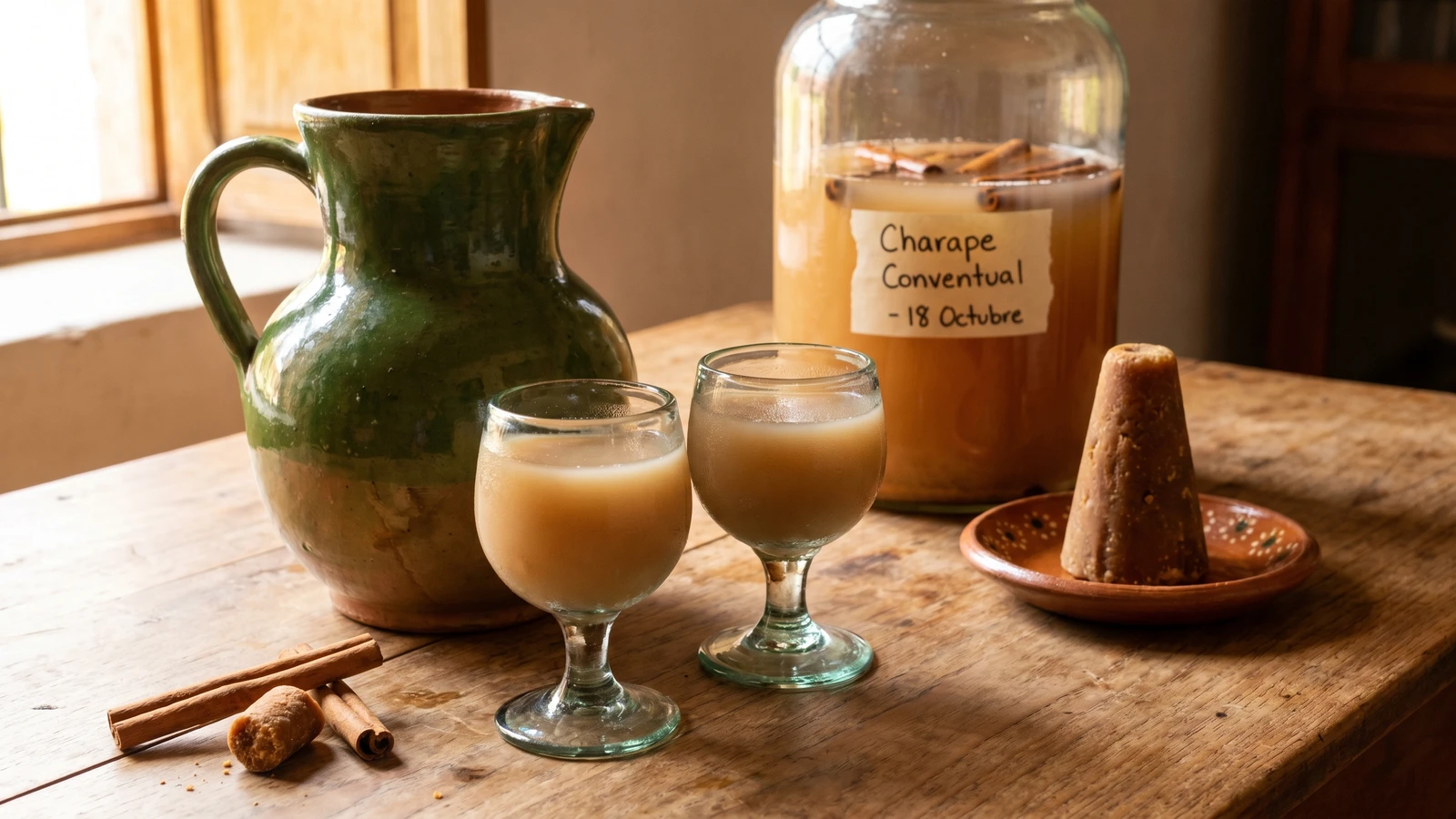
Michoacan's Patzcuaro charape is real pulque fermented with piloncillo, canela, clavo, and a little masa, a sweet-sour celebration drink tied to Purepecha kitchens and Augustinian convent houses.
Michoacan, especially the lake region around Patzcuaro and Tzintzuntzan, is where this charape belongs. This is not a bar cocktail wearing Mexican clothes. It is pulque, piloncillo, canela, clavo, and time, worked into a drink that tastes sweet first, then sour, then earthy from the maguey.
Charape is associated with the Purepecha lake region of Michoacan and with the Augustinian houses of Patzcuaro and Tzintzuntzan, where Indigenous fermented drinks met convent sweetening and spice work during the colonial period. Pulque predates the Spanish conquest by centuries, but piloncillo, canela, and clavo entered regional drink making through colonial trade and convent kitchens. The result is not a mistela and not a modern cocktail: it is a fermented maguey drink shaped by both Purepecha practice and Augustinian domestic discipline.
Quantity
2 quarts
unflavored and active
Quantity
8 ounces
chopped
Quantity
2 cups
Quantity
2 sticks
Quantity
6
Quantity
1 strip
white pith removed
Quantity
1/4 cup
dissolved in 1/2 cup water
Quantity
1/4 teaspoon
Quantity
1/2 cup
for refreshing before serving
| Ingredient | Quantity |
|---|---|
| fresh natural pulqueunflavored and active | 2 quarts |
| piloncillochopped | 8 ounces |
| water | 2 cups |
| Mexican canela | 2 sticks |
| whole cloves | 6 |
| fresh orange peelwhite pith removed | 1 strip |
| masa harina or fresh masadissolved in 1/2 cup water | 1/4 cup |
| fine sea salt | 1/4 teaspoon |
| reserved active pulque (optional)for refreshing before serving | 1/2 cup |
Smell the pulque before you begin. It should be tangy, yeasty, faintly sweet, and alive, with a light thickness on the tongue. If it smells rotten, metallic, or harsh like acetone, do not use it. Charape depends on real pulque. Beer and kombucha are not pulque. No me vengas con atajos.
Put the piloncillo, water, canela, cloves, orange peel, and salt in a small clay cazuela or saucepan. Simmer gently for 8 to 10 minutes, until the piloncillo dissolves and the syrup smells of canela and clavo. Do not boil it hard. You want the spice opened, not cooked into bitterness.
Whisk the dissolved masa into the hot syrup in a thin stream. Cook for 2 minutes, stirring constantly, until the syrup turns slightly cloudy and has a soft body. The masa gives the drink a quiet corn backbone, the way Michoacan drinks often carry corn even when corn is not the first thing you see.
Take the syrup off the heat and let it cool to room temperature. Strain out the canela, cloves, and orange peel. Do not pour hot syrup into pulque. You will damage the living fermentation, and then you will wonder why the drink tastes flat. Now you know.
Pour the pulque into a clean glass jar or glazed clay pitcher that holds at least 3 quarts. Stir in the cooled spiced syrup until fully combined. Cover with a clean cloth or a loose lid. It must breathe a little, but it must also stay clean. La cocina no es decoracion, es trabajo.
Leave the jar at cool room temperature, 65F to 72F, for 2 to 3 days. Stir once each day with a clean wooden spoon. The charape should become sweet-sour, lightly thick, and gently lively on the tongue. If your kitchen is hot, taste after 36 hours. Heat pushes fermentation fast, and fast is not always better.
When the balance tastes right, sweet from piloncillo, sour from pulque, warm with canela and clavo, refrigerate for at least 4 hours. Stir before serving. If you have reserved fresh active pulque, stir in 1/2 cup just before the table to wake the drink back up. Serve cold in small green-glazed clay cups or hand-blown glasses.
1 serving (about 340g)
Culinary guides, cultural storytelling, and the editorial depth that makes cooking meaningful.
Discover Culinary ExplorerChef Lupita
Ciudad de México's highland market agua fresca, fresh alfalfa blended with pineapple and lime until bright green, strained clean, and poured cold from the vitrolero.

Chef Lupita
Aguascalientes' Lenten agua fresca, jewel-red from cooked beet and full of apple, banana, orange, lettuce, and ground peanuts, served cold when Holy Week meets the Feria de San Marcos.

Chef Lupita
Sonora and Sinaloa's creamy malted barley water, built on toasted cebada perla, Mexican canela, vanilla from Papantla, and evaporated milk. Pink-beige, rich, and served cold over heavy ice in a heavy glass tumbler. Liquid cookie comfort the northwest way.

Chef Lupita
Yucatán's everyday tonic of boiled chaya leaves blended with lima agria, sugar, and ice. The bright green jarra that sits on every Peninsula table from Mérida to Valladolid.