
Chef Thomas
Baked Onions with Cream and Thyme
Whole onions surrendered to a low oven with cream and thyme until they collapse into something golden, sweet and yielding, the kind of side dish that quietly upstages everything else on the table.
A cooking platform built around craft, culture, and the stories behind what we eat.
Created by Chef Thomas
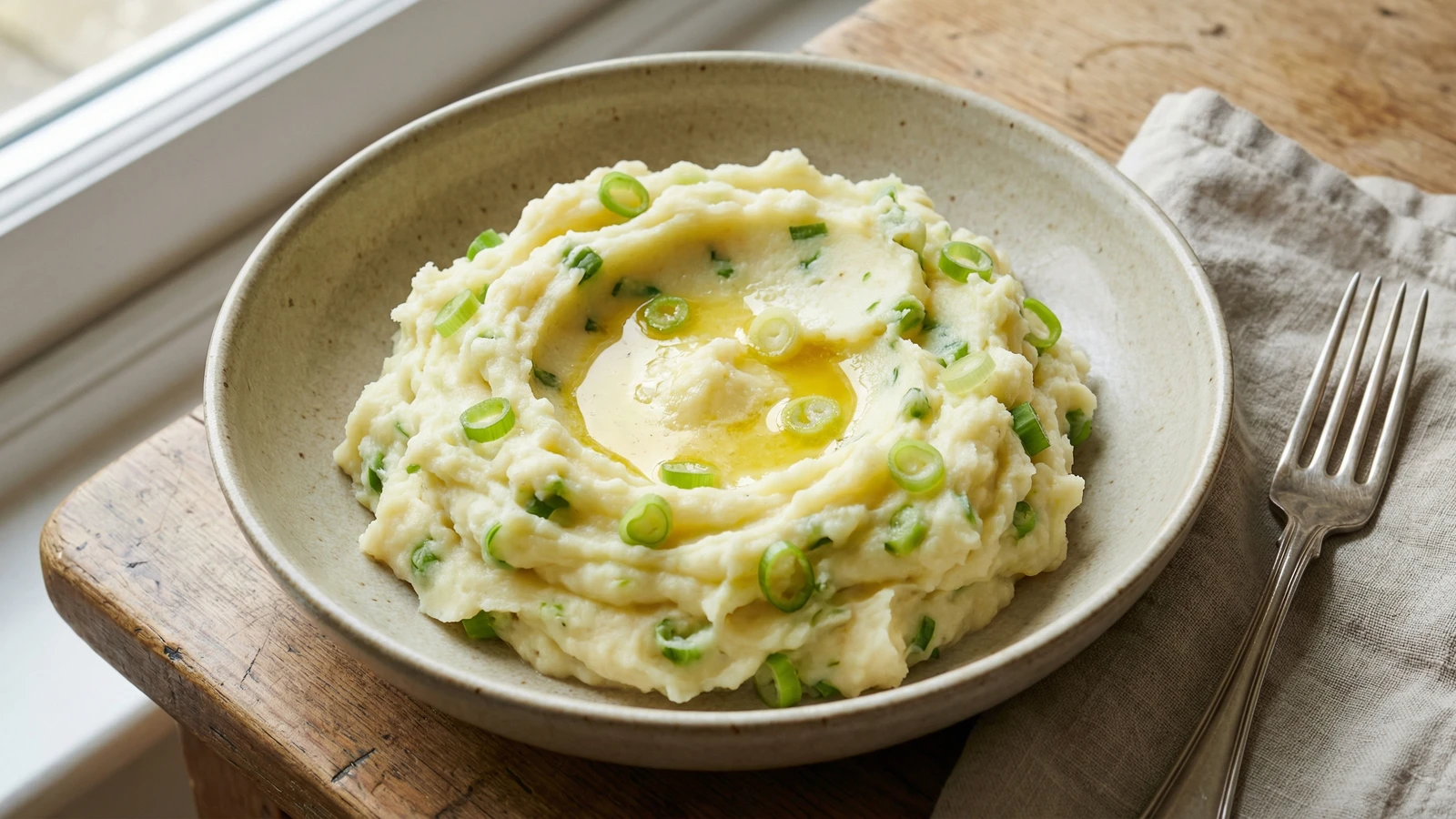
Floury potatoes beaten with spring onions warmed in milk and a good deal of butter, the kind of side dish that quietly becomes the thing you reach for first.
The first spring onions at the market are the signal. They arrive in loose bunches, still a little muddy, the white parts firm and the green tops bright enough to look lit from inside. That's when champ makes sense. Not before.
This is not a complicated thing. Potatoes, boiled and mashed. Spring onions, gently warmed in milk. Butter, more than feels polite. You beat it all together and put it in a warm bowl with another knob of butter melting on top, and that's it. That's the recipe. It takes less than half an hour, uses five ingredients, and produces something that makes people close their eyes on the first bite. I don't know why it works as well as it does. The spring onions bring a sweetness and a freshness that ordinary mash doesn't have, something green and alive in all that warm, starchy comfort.
Champ comes from the same kitchen as colcannon, but it's lighter, simpler, more of a spring dish than a winter one. No cabbage, no kale. Just the onions and the butter doing their quiet work. I make it when the evenings are still cool but the light has started to stretch, and I want something beside a piece of fish or a chop that doesn't ask too much of anyone. I wrote it down in the notebook years ago: potatoes, spring onions, butter, April. It hasn't needed updating since.
Quantity
1kg
peeled and cut into even chunks
Quantity
1 bunch (about 6-8)
trimmed and finely sliced, green and white parts
Quantity
150ml
Quantity
50g, plus extra for serving
Quantity
to taste
Quantity
to taste
| Ingredient | Quantity |
|---|---|
| floury potatoespeeled and cut into even chunks | 1kg |
| spring onionstrimmed and finely sliced, green and white parts | 1 bunch (about 6-8) |
| whole milk | 150ml |
| unsalted butter | 50g, plus extra for serving |
| fine sea salt | to taste |
| white pepper | to taste |
Put the potatoes in a large pan of cold, well-salted water. Bring to a steady boil, then lower the heat so they simmer rather than rattle. Cook until they offer no resistance to a knife, which takes twenty minutes or so depending on how large you cut them. The water should taste faintly of the sea. If it doesn't, you haven't salted it enough.
While the potatoes are simmering, pour the milk into a small saucepan and add the sliced spring onions. Set it over the gentlest heat you have. You want the milk warm and the onions just softened, still bright green, still with some life in them. Five minutes, no more. Don't let it boil or the milk will catch on the bottom and the onions will lose their colour. Take it off the heat and let it sit. The onions will keep giving their flavour to the milk while you wait.
Drain the potatoes well in a colander and return them to the hot, empty pan. Set the pan back over a low heat for a minute, shaking it gently. You'll see the surface of the potatoes go chalky and dry. That's the excess moisture leaving, and it matters. Wet potatoes make gluey mash. Dry potatoes make light mash. A small thing that changes everything.
Add the butter to the hot potatoes and mash until there are no lumps. Use a potato masher or a ricer if you have one. Never a food processor, which will turn them to wallpaper paste. Pour in the warm milk with all the spring onions and beat everything together with a wooden spoon until the mash is smooth, light, and flecked with green. It should be soft enough to fall lazily from a spoon, not stiff, not soupy. Taste it. Season with salt and white pepper. Taste it again.
Spoon the champ into a warm bowl, or pile it onto warm plates beside whatever else you're eating. Make a small well in the top and drop in a generous knob of butter. Let it sit there for a moment, melting into a golden pool. That pool of butter is not optional. It's the whole point. You eat from the outside in, dipping each forkful into the melting butter as you go.
1 serving (about 310g)
Culinary guides, cultural storytelling, and the editorial depth that makes cooking meaningful.
Discover Culinary ExplorerChef Thomas
Whole onions surrendered to a low oven with cream and thyme until they collapse into something golden, sweet and yielding, the kind of side dish that quietly upstages everything else on the table.

Chef Thomas
Celery braised long and slow in butter and good stock until it turns soft, silky, and almost sweet, the kind of quiet side dish that makes people ask what you did to it.

Chef Thomas
Leeks surrendered to butter and cream until they turn silky, sweet and yielding, the kind of side dish that quietly becomes the reason you sat down to dinner in the first place.

Chef Thomas
Peas braised in butter with wilted lettuce and spring onions, a dish that is entirely French in spirit and entirely at home on an English table in late May when the garden finally delivers.