Chef Lupita
Acúmara Tatemada al Comal
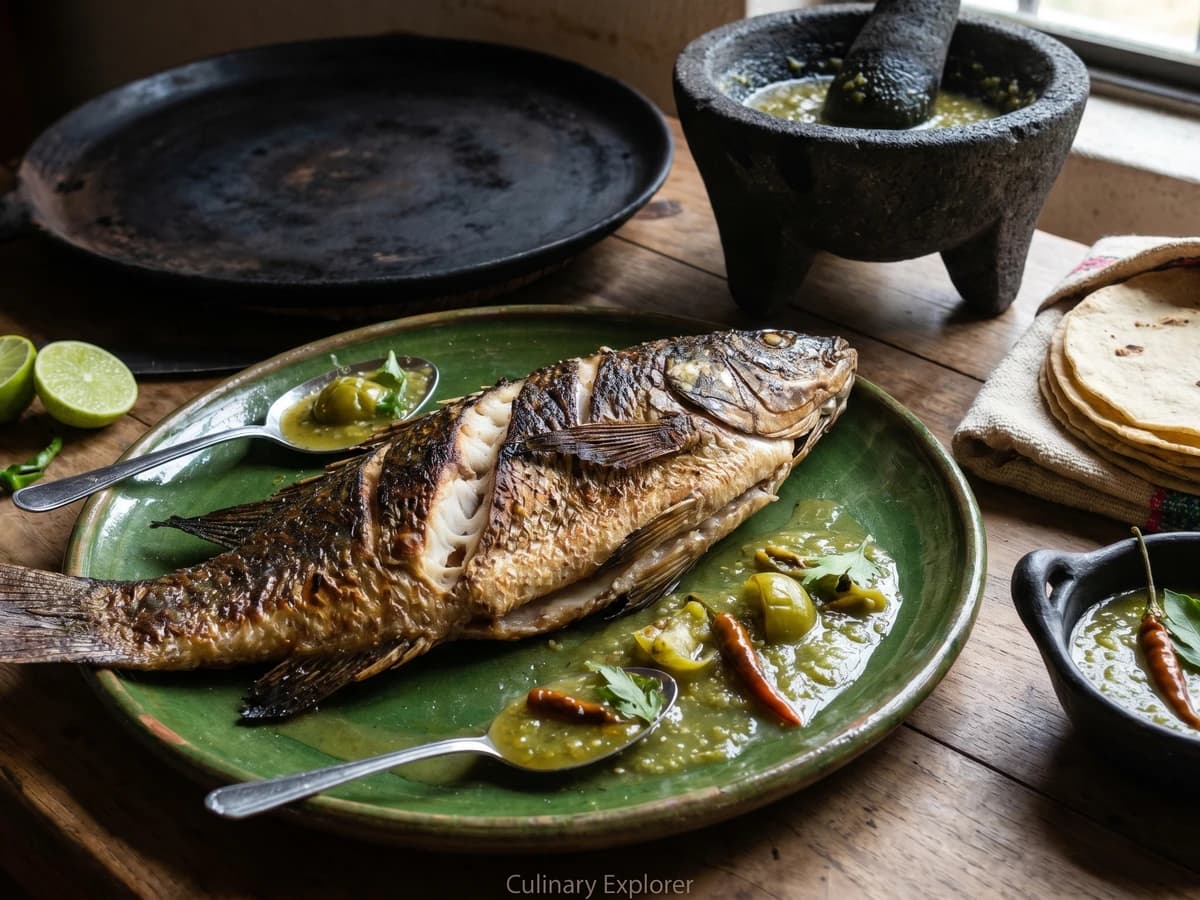
Michoacán's Lake Pátzcuaro acúmara, a whole kurucha from the lago tatemada on a comal de leña and served with chile perón atápakua, corn tortillas, and P'urhépecha discipline.
A cooking platform built around craft, culture, and the stories behind what we eat.
Created by
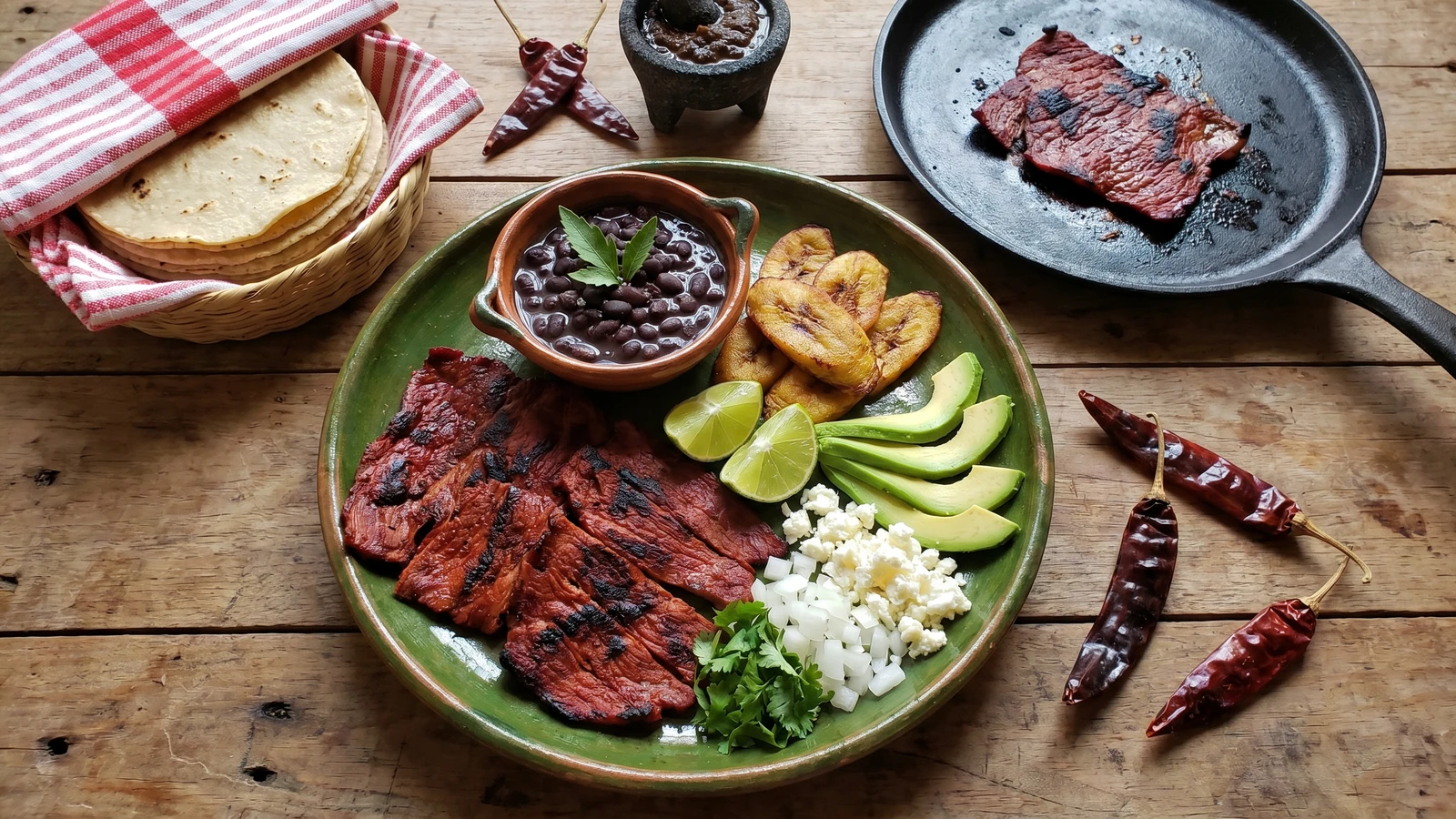
Oaxaca's adobo-rubbed thin pork seared hot and quick on the comal, served the way the Valles Centrales serves it: with black beans from the olla, fried plátano macho, avocado, queso fresco, and warm tortillas on the side.
This is from Oaxaca. Specifically from the Valles Centrales, where cecina enchilada hangs in the carnicería stalls of the Mercado Benito Juárez and the 20 de Noviembre, sheets of pork dyed deep red from the adobo, drying in the air with the chile aroma drifting halfway across the market. You point at the piece you want, the carnicero weighs it, and you carry it home or you take it across the aisle to the pasillo de las carnes asadas where they grill it for you on the spot.
This is not cecina from Yecapixtla in Morelos, which is salt-cured and pale. Cecina enchilada is a different animal. The enchilada part is not the dish you are thinking of. It means en chile, dressed in chile. Guajillo for color, ancho for sweetness, and costeño, the small chile from the Oaxacan coast, for the bright sting underneath. If you cannot find costeño, the adobo loses something specific to this state. Look for it before you settle for a substitution.
The plate is simple in its parts and serious in its execution. Black beans from the olla with epazote. Plátano macho fried until the sugars caramelize at the edges. Slices of avocado, raw white onion, queso fresco, lime, and a stack of hand-pressed tortillas. This is what comida looks like in an Oaxacan home when the carnicería sent you home with a good piece of cecina. Cada estado, su propia cocina.
My mother never cooked cecina enchilada. She was from Jalisco. The first time I made it was after a week in Oaxaca with a señora named Doña Crescencia who ran a comedor in Tlacolula. She had me stand at her comal for two days before she let me put the cecina down on it. The meat is thin, she told me, the chile sugars burn fast, and if you cook it like a steak you have ruined it. Lay it down. Wait. Flip it once. Pull it off. La cocina no es decoración, es trabajo.
Cecina is a preservation tradition that traveled to Mexico from Spain, where the word originally referred to dried, salt-cured beef from regions like León. In Mexico the technique split into two distinct lineages: the salt-cured cecina of Yecapixtla in Morelos, which preserved the original Spanish form, and the cecina enchilada of Oaxaca and the Mixteca, which married the European drying method to the indigenous chile-based adobos that had seasoned meats in Mesoamerica for centuries. The Oaxacan version owes its identity to the chile costeño, a small, bright-red chile cultivated along the state's Pacific coast and rarely found outside Oaxaca's domestic markets, which gives the adobo a heat and sharpness that distinguishes it from the milder marinades of central Mexico. The pasillo de las carnes asadas in the Mercado 20 de Noviembre, where buyers select cecina at the carnicería and have it grilled on the spot at communal comales, has operated in roughly its current form since the mid-20th century and remains one of the clearest living examples of market-to-table eating in Mexico.
Quantity
1 1/2 pounds
butterflied or pounded into thin sheets about 1/4 inch thick
Quantity
6
stemmed and seeded
Quantity
3
stemmed and seeded
Quantity
2
stemmed and seeded
Quantity
4
peeled
Quantity
1 teaspoon
Quantity
1/2 teaspoon
Quantity
4
Quantity
1/4 teaspoon
Quantity
2 tablespoons
Quantity
1 tablespoon, plus more to taste
Quantity
2 tablespoons
Quantity
1 pound
Quantity
1 medium
halved
Quantity
4
smashed
Quantity
2 sprigs
Quantity
2 tablespoons
Quantity
to taste
Quantity
2 ripe
Quantity
3 tablespoons
Quantity
2 ripe
sliced
Quantity
1/2 cup
crumbled
Quantity
1
finely diced
Quantity
for serving
Quantity
for serving
Quantity
for serving
warmed
Quantity
for serving
| Ingredient | Quantity |
|---|---|
| pork leg or sirloinbutterflied or pounded into thin sheets about 1/4 inch thick | 1 1/2 pounds |
| dried chile guajillostemmed and seeded | 6 |
| dried chile anchostemmed and seeded | 3 |
| dried chile costeñostemmed and seeded | 2 |
| garlic cloves (for adobo)peeled | 4 |
| Mexican oregano (preferably oregano de monte from Oaxaca) | 1 teaspoon |
| ground cumin | 1/2 teaspoon |
| whole cloves | 4 |
| black peppercorns | 1/4 teaspoon |
| apple cider vinegar | 2 tablespoons |
| kosher salt (for adobo) | 1 tablespoon, plus more to taste |
| lard (manteca de cerdo), for searing | 2 tablespoons |
| dried black beans (frijol negro de Oaxaca, ideally) | 1 pound |
| white onion (for beans)halved | 1 medium |
| garlic cloves (for beans)smashed | 4 |
| fresh epazote | 2 sprigs |
| lard (manteca de cerdo), for the beans | 2 tablespoons |
| kosher salt (for beans) | to taste |
| plátano macho (very yellow with black spots) | 2 ripe |
| lard or refined coconut oil, for frying the plantain | 3 tablespoons |
| Hass avocadossliced | 2 ripe |
| queso fresco (optional)crumbled | 1/2 cup |
| small white onion (for serving) (optional)finely diced | 1 |
| fresh cilantro leaves (optional) | for serving |
| lime wedges (optional) | for serving |
| hand-pressed corn tortillas (optional)warmed | for serving |
| salsa de chile pasilla oaxaqueño (optional) | for serving |
Rinse the black beans and pick out any stones or shriveled ones. Place them in a heavy clay olla or a stockpot with the halved onion, smashed garlic, and one tablespoon of lard. Cover with cold water by three inches. Bring to a gentle simmer over medium heat and cook uncovered for one and a half to two hours, until the beans are tender all the way through and the broth is dark and glossy. Add the epazote and salt only in the last twenty minutes. Salt too early and the skins toughen. Asi se hace y punto.
While the beans simmer, heat a dry comal over medium. Toast the guajillo, ancho, and costeño chiles separately, pressing them flat with a spatula for about 20 seconds per side. They should puff and turn fragrant. The costeño is small and thin and burns the fastest. Watch it. Burned chile is bitter chile and there is no recovering from it later.
Place the toasted chiles in a heatproof bowl and cover with hot tap water. Hot, not boiling. Soak for 20 minutes until pliable. Drain. On the same comal, lightly toast the cloves and peppercorns until they smell awake, about 30 seconds. Combine the soaked chiles, garlic, oregano, cumin, toasted spices, vinegar, salt, and 1/2 cup of the chile soaking liquid in a blender. Blend until completely smooth and the color of dark brick. Pass it through a fine-mesh sieve. The adobo should coat a spoon thickly. If it is too loose, the meat will not hold the marinade.
Lay the thin sheets of pork on a tray. Slather the adobo over both sides of each piece with your hands. Every inch should be coated. Stack the pieces with the adobo between them, cover, and refrigerate for at least four hours, ideally overnight. In Oaxaca's mercados, the carniceros hang the cecina enchilada in the open air for a few hours so the surface dries and the chile sets into the meat. If you have time and a clean rack, do that for the last hour before cooking.
Peel the plantains and slice them on a sharp diagonal about half an inch thick. They should be very yellow with black spots, not green. Green plantain is for tostones. Ripe plantain is for this plate. Heat the lard in a heavy skillet over medium heat. Fry the slices in a single layer for about two minutes per side, until the edges turn deep amber and the sugars caramelize into a sticky, dark crust. Transfer to a plate. Do not crowd the pan or they will steam instead of fry.
Heat a cast iron comal or a heavy skillet over medium-high until it is very hot. Add a thin film of lard. Lay one or two pieces of cecina down at a time, depending on the size of your comal. They cook fast, about 90 seconds per side. The adobo will darken and char in spots and the meat will firm up. Do not move it around looking at it. Let it sit, sear, flip once, and pull it off. Cecina is thin meat cooked hot and quick. Treat it like a steak and you will overcook it.
Lay a piece of cecina on each plate, generous and unfussy. Spoon a serving of black beans alongside, broth and all. Add three or four slices of fried plátano macho. Fan the avocado slices next to the beans and scatter queso fresco, raw white onion, and cilantro across the plate. Set lime wedges on the rim. Serve warm corn tortillas on the side wrapped in a servilleta. This is the comida plate of an Oaxaca kitchen on a normal weekday: meat, beans, plantain, avocado, tortillas. Nothing extra and nothing missing. Saber cocinar es saber vivir.
1 serving (about 580g)
Culinary guides, cultural storytelling, and the editorial depth that makes cooking meaningful.
Discover Culinary ExplorerChef Lupita
Michoacán's Lake Pátzcuaro acúmara, a whole kurucha from the lago tatemada on a comal de leña and served with chile perón atápakua, corn tortillas, and P'urhépecha discipline.

Chef Lupita
Puebla's weekday adobo of pork shoulder braised in a thick guajillo and ancho sauce sharpened with vinegar, cumin, and clove. The deep red of a market spice stall, the dish a poblana cooks without thinking.

Chef Lupita
Loreto's pit-roasted clams, planted hinge-up in beach sand and tatemadas under a fast fire of dried romerillo brush, the resinous Baja desert shrub that gives this dish its smoke.

Chef Lupita
Oaxaca's eighth mole, the silky, almond-and-cinnamon almendrado, served over poached chicken. Mild, sweet, restrained, and a quiet rebuttal to anyone who thinks Mexican food has to be hot to be Mexican.