
Chef Lupita
Arroz a la Oaxaqueña
Oaxaca's red rice, stained with tomato and fried in lard, steamed with carrots, ejotes, black beans, and epazote. The side that anchors a Oaxacan family meal and earns its place beside the main.
A cooking platform built around craft, culture, and the stories behind what we eat.

Created by
Sonora's charred cebollitas cambray, grilled whole over mesquite until the bulbs sweeten and the green tops blacken, finished with lime and salt at the parrilla. The dish that completes a northern carne asada.
This is Sonora. Specifically the Sunday carne asada in a backyard parrilla in Hermosillo or Ciudad Obregon, where the mesquite has been burning since the morning and the cebollitas go on the grate beside the arrachera. You do not eat carne asada in Sonora without cebollitas asadas. The two are one dish in two parts.
The onion is the cebolla cambray, a Mexican spring onion with a small white bulb and long green tops. Pearl onions are not the same. Green scallions are not the same. If your supermarket does not carry cebolla cambray, find a Mexican mercado and ask for them by name. The bulb has to be big enough to soften on the inside while the outside blackens. The tops have to be long enough to wilt and char without disappearing.
The wood is mesquite. This is the chaparral country of northwestern Mexico, the wood is what grows here, and the flavor of mesquite smoke is in everything Sonora grills. Charcoal will work. Gas will get you a hot grate but not the smell. Cook this on whatever you have, but understand what you are missing if you do not have mesquite.
The finish is lime and a little salsa de soya. Yes, soy sauce. The norteno parrilla has used Maggi and soy on grilled meats and cebollitas for two generations. It is not a fusion gimmick. It is how it is eaten on the ranch and at the carne asada stands of Sonora. Crush a little chiltepin over the top if you want heat. Chiltepin is the wild northern chile, tiny, dried, ferocious. The chile of the sierra. Saber cocinar es saber vivir, and in Sonora that means knowing how to manage a mesquite fire.
The cebolla cambray takes its name from Cambrai, France, where similar small bulbing onions were cultivated in the medieval period and from which the variety traveled through Spain into colonial Mexico. The Sonoran tradition of grilling cebollitas alongside beef on a mesquite parrilla is rooted in the cattle ranching culture that has defined the state since the 17th century, when Jesuit missions and later Spanish ranchos established the open-fire grilling style that became carne asada. The presence of soy sauce on the Sonoran grilling table dates to the early 20th century and reflects both the Chinese-Mexican community of the borderlands and the broader northern habit of seasoning grilled meats with the bottled umami sauces, Maggi and salsa de soya, found on every parrillada table from Mexicali to Monterrey.
Quantity
2 bunches
roots trimmed, tops left long
Quantity
3 tablespoons
Quantity
1 tablespoon, plus more to taste
Quantity
4
halved
Quantity
1/4 cup
for the table
Quantity
1 tablespoon
crushed between the fingers, for serving
Quantity
for serving
warmed on the parrilla
| Ingredient | Quantity |
|---|---|
| cebollas cambray (Mexican spring onions) with bulbs the size of a golf ballroots trimmed, tops left long | 2 bunches |
| neutral oil or melted manteca de cerdo | 3 tablespoons |
| kosher salt | 1 tablespoon, plus more to taste |
| limoneshalved | 4 |
| salsa de soya (soy sauce) (optional)for the table | 1/4 cup |
| dried chiltepin (optional)crushed between the fingers, for serving | 1 tablespoon |
| flour tortillas (optional)warmed on the parrilla | for serving |
Light a generous bed of mesquite charcoal or mesquite wood in your parrilla and let it burn down until the coals glow red under a thin coat of gray ash. Mesquite is the wood of Sonora. It burns hot and dry and it gives off a perfume that is the smell of a northern weekend. Gas grills will get you close but they will not give you this. If you have no mesquite, lump charcoal will do. Briquettes will not.
Trim the roots flush so the bulbs sit clean. Leave the green tops long, eight to ten inches, because they char and shrink. Peel off any papery outer layer that wants to come away. Rinse and dry the cebollitas completely. Water on the onions means a steamy onion instead of a charred one, and steamed cebollita is not what we are making.
Lay the cebollitas flat on a sheet pan. Drizzle the oil or melted manteca de cerdo over them and roll each one until it is lightly coated, bulb and top. Sprinkle the kosher salt across them generously. Salt before they hit the grill. Salt after and it sits on the surface; salt before and it draws out the moisture and helps the bulb caramelize.
Lay the cebollitas directly on the grate over the hot zone, bulbs first into the heat with the green tops angled toward the cooler side. Let the bulbs sit untouched for about three minutes until the underside is deeply blackened in patches. Turn them with tongs to char the other side. The bulbs need real color, not a polite tan. You are looking for blistered, dark, almost burnt skin on the outside while the inside softens and turns sweet.
Once the bulbs are blackened and yielding to a gentle squeeze with the tongs, lay the cebollitas flat across the grate so the green tops get their color too. Two minutes a side. The tops should wilt, blister, and turn deep brown in spots. The whole cebollita, bulb to tip, should look like it survived a small fire. That is exactly right. Total time on the parrilla is eight to twelve minutes depending on the size of the bulb.
Pull the cebollitas off and pile them straight onto a platter. While they are still hot from the fire, squeeze the lime halves over the pile. The juice hits the charred skin and lifts the smoke. Sprinkle a little more salt. Set the soy sauce out alongside, in a small dish for dipping, and the crushed chiltepin in a tiny jar for anyone who wants the bite. Eat them with the fingers, wrapped in a warm flour tortilla with a piece of carne asada, or alone, straight off the platter. Asi se hace y punto.
1 serving (about 130g)
Culinary guides, cultural storytelling, and the editorial depth that makes cooking meaningful.
Discover Culinary ExplorerChef Lupita
Oaxaca's red rice, stained with tomato and fried in lard, steamed with carrots, ejotes, black beans, and epazote. The side that anchors a Oaxacan family meal and earns its place beside the main.
Chef Lupita
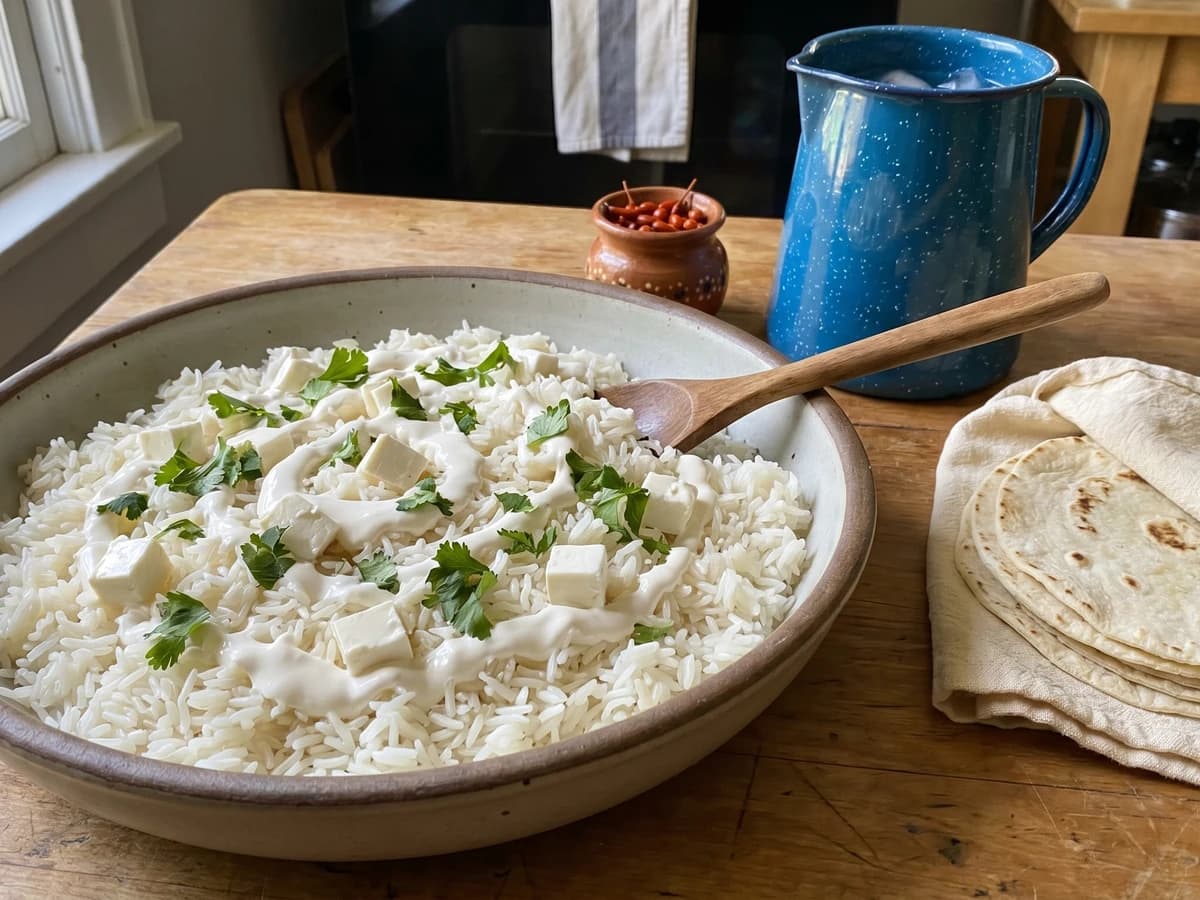
Sinaloa's home-cook white rice topped with cold cubes of cream cheese that soften into the warm grain, finished with crema and a sprinkle of chiltepin at the table. The trick that makes a side dish feel like a small luxury.
Chef Lupita
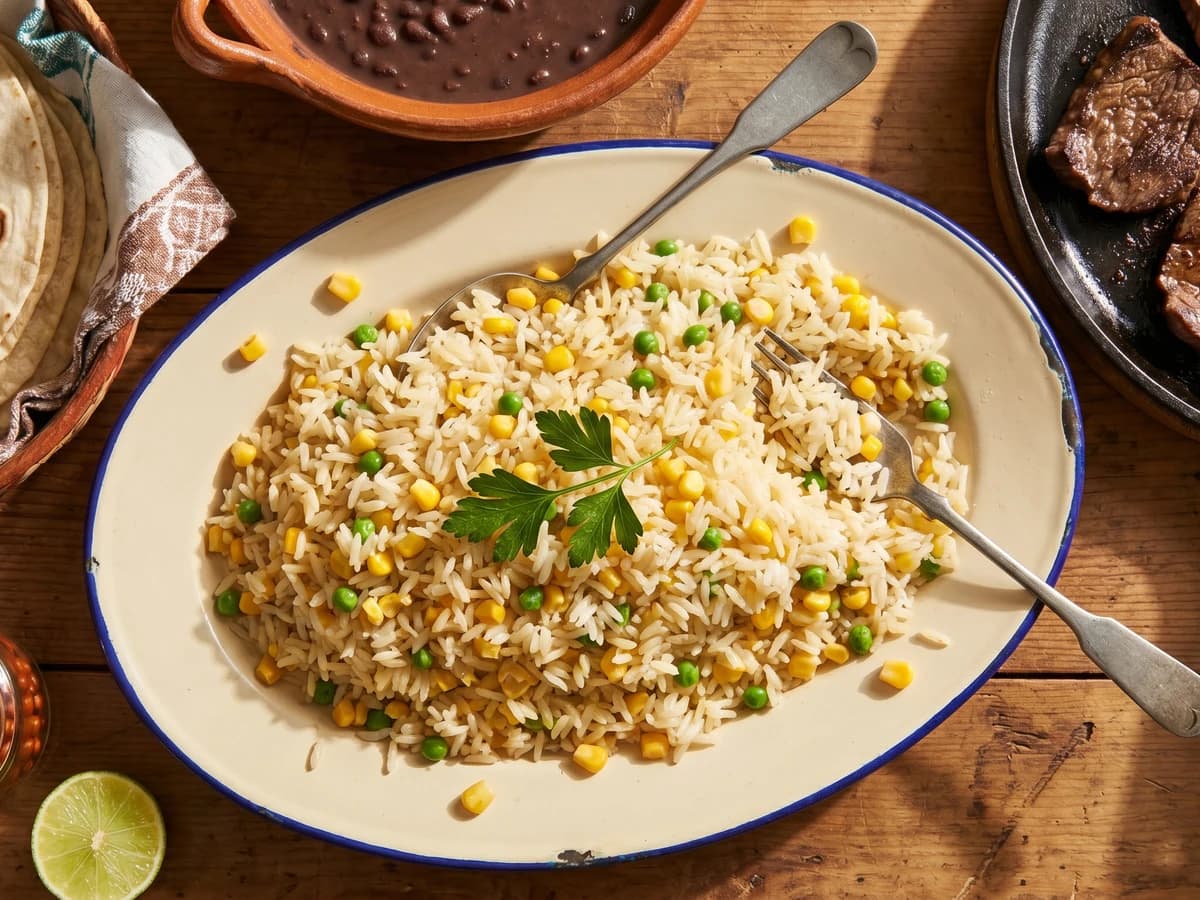
Sonora's white rice, toasted in butter and steamed with sweet corn and tender peas. The clean, quiet partner to a plate of carne asada, not the red rice of central Mexico.

Chef Lupita
Yucatán's white rice with sweet corn kernels, toasted in lard with garlic and onion. The quiet base that holds up against the peninsula's bold achiote-stained stews.