Chef Isabel
Acedías Fritas de Cádiz
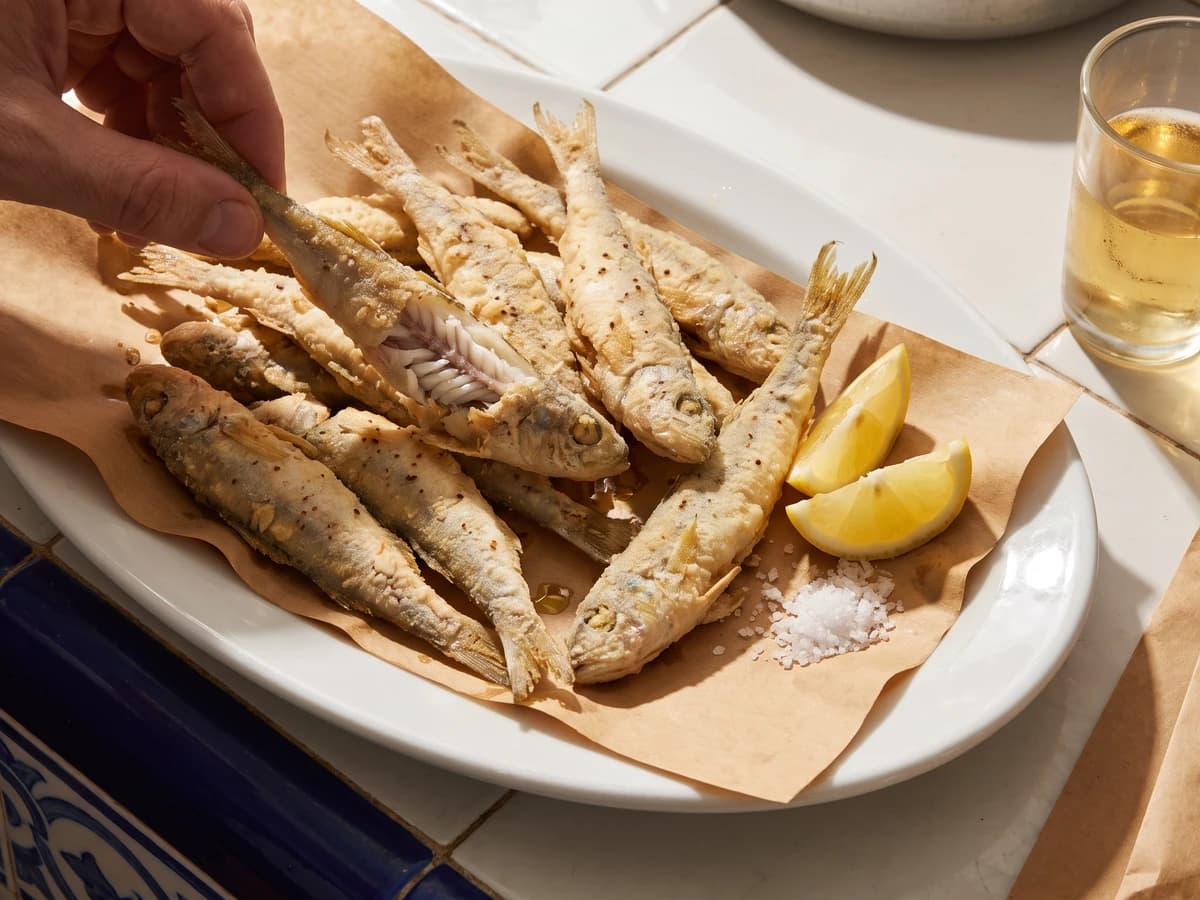
Acedías fritas belong to Cádiz: tiny wedge sole, salted, dusted in frying flour, and dropped into very hot olive oil so the rims crisp while the fish stays tender.
A cooking platform built around craft, culture, and the stories behind what we eat.
Created by
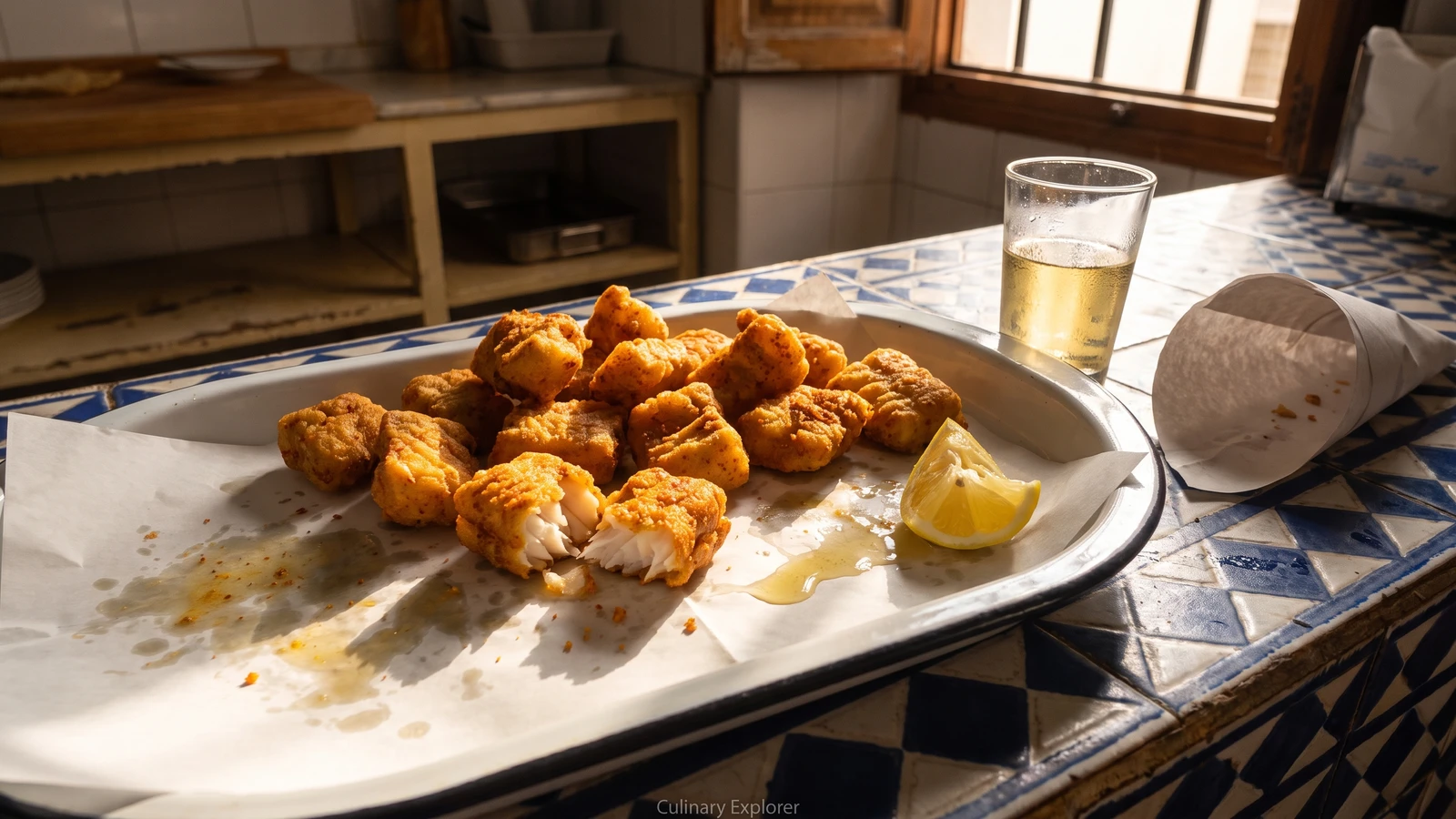
Cazón en adobo is Cádiz in a paper cone: firm dogfish soaked overnight in vinegar, garlic, oregano, cumin, and pimentón, then floured lightly and fried hot.
Cazón en adobo is Cádiz's fried fish, gaditano and Andaluz: firm dogfish cut into cubes, soaked in vinegar, garlic, oregano, cumin, and pimentón, then floured and fried until the crust is crisp and the inside stays juicy. This is not plain pescado frito with seasoning sprinkled on top. The adobo goes all the way through the fish before the flour ever touches it.
The soak decides the dish. Cazón is firm and a little marine, and the vinegar tightens it, seasons it, and takes the edge off the shark's stronger smell. Give it the night in the fridge. Then drain it well and don't rinse, because wet fish makes a gummy jacket and rinsed fish tastes of nothing. Hot oil, thin flour, small batches. Siempre sale, si lo sigues.
No cazón where you are? Ask for rape, monkfish, cut into the same 3cm pieces. It is sweeter and less briny, so give it 6 to 8 hours instead of the full night. Firm cod or hake works at a pinch, but only 3 to 4 hours and a gentler hand, because it flakes sooner. No hace falta haber pisado España, but the adobo must still be allowed to do its work.
In my Margin beside this one I wrote escurrir sin lavar, drain without rinsing. Small line, large consequence. Pésalo, no lo adivines, and fry only when people are ready to eat.
Cazón en adobo belongs to Cádiz and the Andalusian coast, where fishmongers and freidurías turned firm shark into pescado frito with a vinegar adobo that seasoned and preserved it before the fryer. The vinegar points inland to the Sherry country around Jerez, Sanlúcar, and El Puerto, while cumin, oregano, garlic, and pimentón give the fish the warm, sharp smell people recognize before they see the plate. In Cádiz it is often called bienmesabe, meaning it tastes good to me, a name that makes sense only after the full soak; without the adobo it is just fried fish.
Quantity
800g
skinned, trimmed, cut into 3cm cubes
Quantity
200ml
Quantity
200ml
Quantity
6
lightly crushed
Quantity
2 teaspoons
Quantity
1 teaspoon
Quantity
1 teaspoon
Quantity
2
Quantity
10g, plus more to finish
Quantity
6
lightly cracked
Quantity
160g
or 110g plain flour mixed with 50g fine semolina
Quantity
750ml
for frying
Quantity
1
cut into wedges
| Ingredient | Quantity |
|---|---|
| cazón (dogfish or small shark)skinned, trimmed, cut into 3cm cubes | 800g |
| vinagre de Jerez or good white wine vinegar | 200ml |
| cold water | 200ml |
| garlic cloveslightly crushed | 6 |
| dried oregano | 2 teaspoons |
| ground cumin | 1 teaspoon |
| sweet pimentón | 1 teaspoon |
| bay leaves | 2 |
| fine sea salt | 10g, plus more to finish |
| black peppercornslightly cracked | 6 |
| harina para freír pescadoor 110g plain flour mixed with 50g fine semolina | 160g |
| mild olive oilfor frying | 750ml |
| lemon (optional)cut into wedges | 1 |
Ask the fishmonger to skin the cazón and remove any central cartilage, then cut it into 3cm cubes. Pat the pieces dry before they go into the adobo. The fish should smell clean and of the sea; if it smells sharp or ammoniac, leave it at the market.
In a glass or ceramic bowl, whisk the vinegar, cold water, crushed garlic, oregano, cumin, pimentón, bay leaves, salt, and cracked pepper. The water matters; straight vinegar bullies the fish. This adobo should smell sharp, garlicky, and warm from the cumin.
Add the cazón and turn every piece through the adobo. Cover and refrigerate for 8 to 12 hours, turning once if you remember. This is the method that decides the dish: one hour only seasons the surface, but the overnight soak gives Cádiz its bite.
Lift the fish into a sieve, discard the adobo, and remove the garlic and bay. Let the pieces drain for 15 minutes, then pat them so the surface is damp but not wet. Do not rinse. You waited for that flavor, so keep it.
Pour the olive oil into a wide heavy pan to a depth of about 4cm and heat it to 180C. Set a wire rack over a tray, or use clean paper if that is what you have. Put the frying flour in a shallow dish with a small pinch of salt.
Flour only one batch at a time. Toss the drained fish in the harina para freír, press lightly so it catches, then shake off more than you think you should. The coating should be thin and powdery, not a paste.
Slide the fish into the oil in small batches, leaving space between the pieces. Fry for 2 to 3 minutes, turning once, until the crust is pale gold and crisp and the fish is opaque inside. Keep the oil between 175C and 180C; crowded oil drops cold and the coating drinks it.
Drain the cazón on the rack and salt it lightly while the crust still has its olive-oil gloss. Pile it on paper or a warm plate and serve at once with lemon wedges, if you like. A squeeze is enough. Don't drown the adobo; it already has its vinegar.
1 serving (about 145g)
Culinary guides, cultural storytelling, and the editorial depth that makes cooking meaningful.
Discover Culinary ExplorerChef Isabel
Acedías fritas belong to Cádiz: tiny wedge sole, salted, dusted in frying flour, and dropped into very hot olive oil so the rims crisp while the fish stays tender.
Chef Isabel
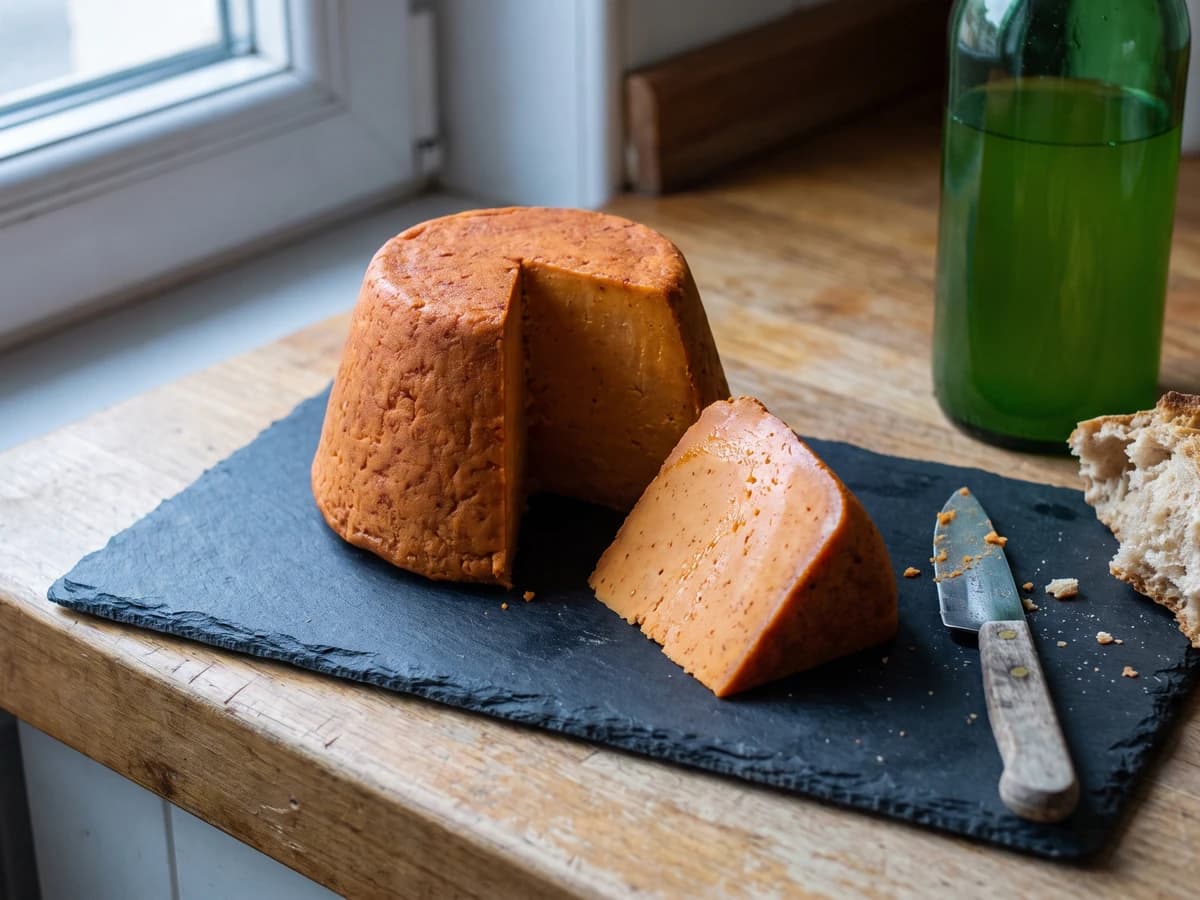
Afuega'l Pitu Roxu is Asturias in a small cheese: cow's milk set slowly to a dense curd, drained without squeezing, then kneaded with pimentón until it turns orange and grips the throat.
Chef Isabel
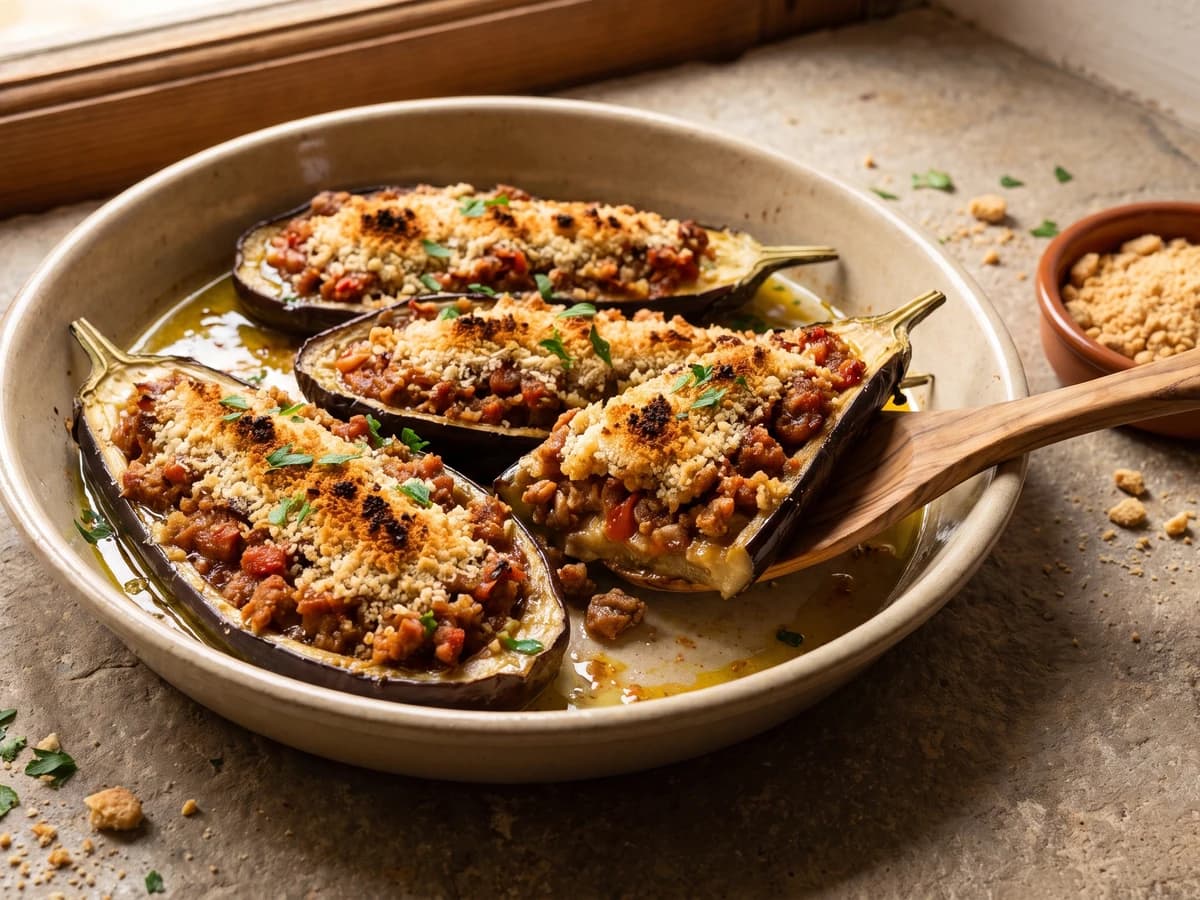
Albergínies farcides are Mallorca's summer stuffed aubergines: tender boiled shells, a slow pork sofrito with moraduix, and a plain breadcrumb cap baked until the top turns crisp and golden.

Chef Isabel
Carxofes farcides are Catalan stuffed artichokes: tender hearts filled with jamón, slow sweet onion, and breadcrumbs, then baked in a light creamy sauce until the tops turn golden.