
Chef Graziella
Agnello al Forno con Patate
The Sunday lamb of Puglia, roasted with potatoes until they absorb every precious drop of rendered fat. In this dish, the potatoes become the reason you came to the table.
A cooking platform built around craft, culture, and the stories behind what we eat.
Created by
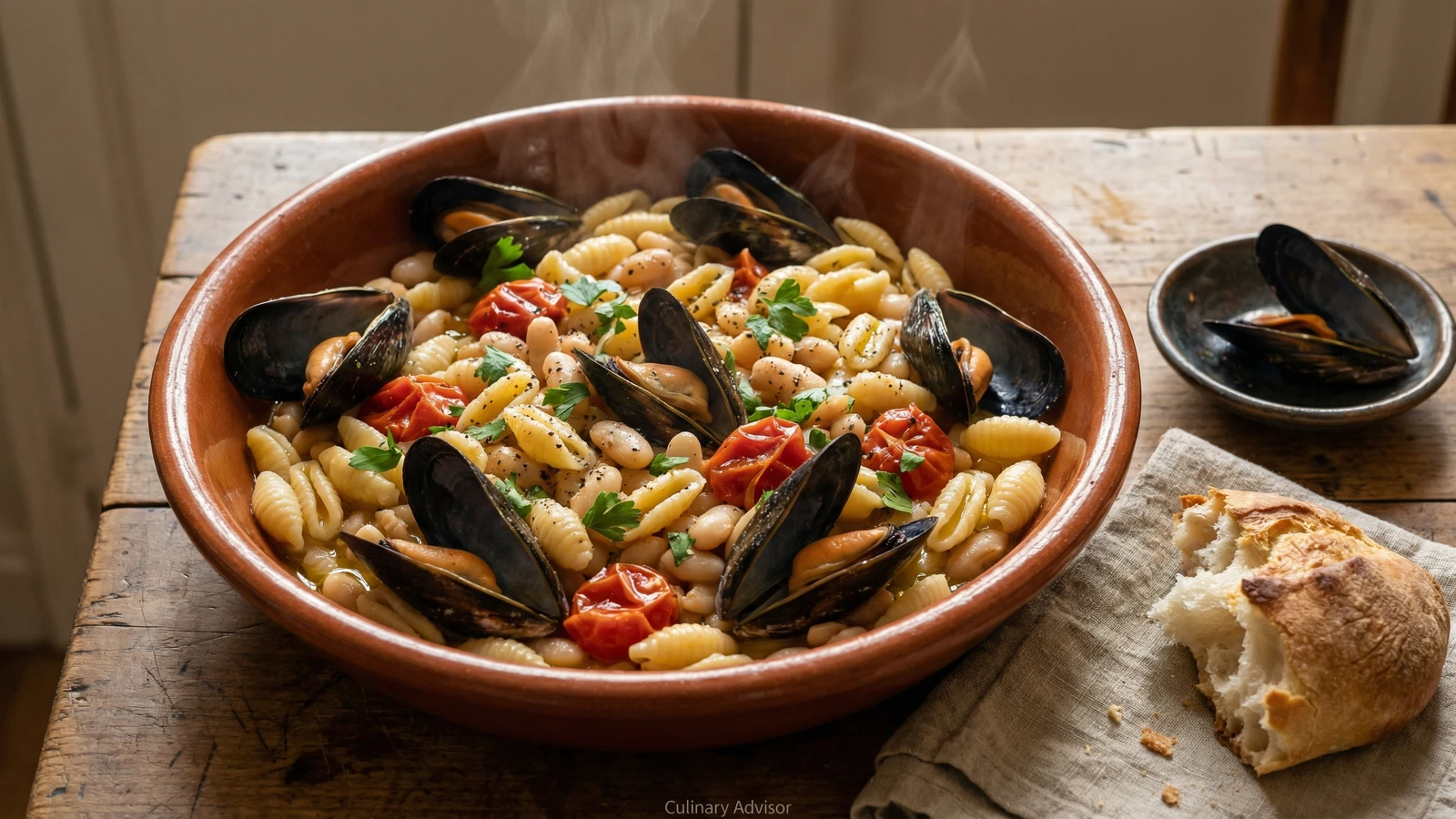
Where the Adriatic meets the wheat fields of Puglia: briny mussels, creamy cannellini, and chewy cavatelli dressed in nothing but good olive oil and the juice the shellfish surrender.
This dish tells you everything about Puglia. The region has eight hundred kilometers of coastline and some of the finest wheat in Italy. The poor had mussels, which cost nothing because they grew on the rocks. They had beans, which they dried in summer and cooked all winter. They had durum wheat for pasta. They combined what they had, and what they created was this.
Mare e terra, the Italians call it. Sea and land on the same plate. In Puglia, this is not a concept invented by modern chefs. This is Tuesday dinner. The mussels give their briny liquor to the pot. The beans provide body and a kind of creaminess that makes you forget there is no cream. The cavatelli, those little rolled shells made from semolina and water, catch both.
There is no cheese. I will say this once, and you will remember it: cheese does not go on seafood pasta. This is not a suggestion. This is Italian cooking.
The pairing of shellfish and legumes along the Pugliese coast dates to the Arab influence on southern Italian cooking, which introduced the practice of combining humble proteins in unexpected ways. Bari's fishermen brought mussels home from morning catches, while their wives had beans simmering over the fire. The combination emerged from necessity and remained for its genius.
Quantity
1 pound
dried semolina pasta
Quantity
2 pounds
scrubbed and debearded
Quantity
1 cup
soaked overnight
Quantity
1/2 cup, plus more for finishing
Quantity
4
sliced thin
Quantity
1/2 teaspoon
Quantity
1 cup
Quantity
12 ounces
halved
Quantity
1/2 cup
chopped
Quantity
to taste
Quantity
to taste
freshly ground
| Ingredient | Quantity |
|---|---|
| cavatellidried semolina pasta | 1 pound |
| fresh musselsscrubbed and debearded | 2 pounds |
| dried cannellini beanssoaked overnight | 1 cup |
| extra virgin olive oil | 1/2 cup, plus more for finishing |
| garlic clovessliced thin | 4 |
| crushed red pepper flakes | 1/2 teaspoon |
| dry white wine | 1 cup |
| cherry tomatoeshalved | 12 ounces |
| fresh flat-leaf parsleychopped | 1/2 cup |
| kosher salt | to taste |
| black pepperfreshly ground | to taste |
If using dried beans, drain them from their soaking water and place in a pot with fresh water to cover by three inches. Bring to a simmer and cook until tender but not falling apart, 45 minutes to one hour. The beans should hold their shape when lifted but yield completely when bitten. Drain, reserving half a cup of the cooking liquid. If using canned beans, drain and rinse them thoroughly. Set aside.
Examine each mussel. Discard any with cracked shells or any that remain open when tapped sharply on the counter. These are dead and will make you ill. Pull away the beards, the fibrous threads protruding from the shells. Scrub the shells under cold running water. Place the cleaned mussels in a bowl and refrigerate until needed.
In a pot large enough to hold all the mussels, warm the olive oil over medium heat. Add the sliced garlic and cook gently until it turns pale gold and fragrant, about two minutes. Watch it carefully. The moment before it would brown, add the red pepper flakes and stir once. Add the halved cherry tomatoes and a generous pinch of salt. Cook until the tomatoes begin to collapse and release their juices, about five minutes.
Add the wine to the pot and let it bubble for thirty seconds. Add the mussels all at once. Cover the pot immediately and increase the heat to high. Steam until the mussels open, shaking the pot occasionally, three to five minutes. The moment the shells gape open, they are done. Remove the pot from heat.
Using a slotted spoon, transfer the mussels to a bowl. Discard any that failed to open. Remove approximately half the mussels from their shells and return the meat to the pot. Leave the remaining mussels in their shells for presentation. Add the cooked beans to the pot and stir gently. Taste the liquid and adjust salt. The mussels will have contributed brine, so proceed cautiously.
Bring a large pot of water to a vigorous boil. Salt it generously. It should taste like the sea. Add the cavatelli and cook according to the package directions until al dente, typically nine to eleven minutes for dried cavatelli. Reserve one cup of the pasta cooking water before draining.
Return the pot with the mussel sauce to medium heat. Add the drained cavatelli and toss to coat. Add the reserved shell-on mussels. If the pasta seems dry, add splashes of pasta water until it moves freely and the sauce clings to each piece. The beans may break slightly. This is correct. They thicken the sauce. Stir in most of the parsley, reserving some for garnish. Remove from heat and drizzle generously with your best olive oil.
Divide among warmed shallow bowls, distributing the shell-on mussels evenly. Scatter the remaining parsley over each portion. Finish with another thread of olive oil and a few grinds of black pepper. Serve at once. Once the pasta is sauced, invite your guests and family to put off talking and start eating.
1 serving (about 450g)
Culinary guides, cultural storytelling, and the editorial depth that makes cooking meaningful.
Discover Culinary ExplorerChef Graziella
The Sunday lamb of Puglia, roasted with potatoes until they absorb every precious drop of rendered fat. In this dish, the potatoes become the reason you came to the table.

Chef Graziella
The little hollowed shells of Puglia and Molise, shaped with nothing more than two fingers and a wooden board. The motion takes practice. The result catches sauce like nothing else.

Chef Graziella
Puglia's beloved gratinated mussels, where briny shellfish meet a golden crust of breadcrumbs, pecorino, and parsley. Simple enough for a weeknight, impressive enough to close a dinner party.

Chef Graziella
The pasta of Puglia, shaped one ear at a time by dragging semolina dough across a wooden board. No machine can replicate this texture. Your hands are the only tools that matter.