Chef Lupita
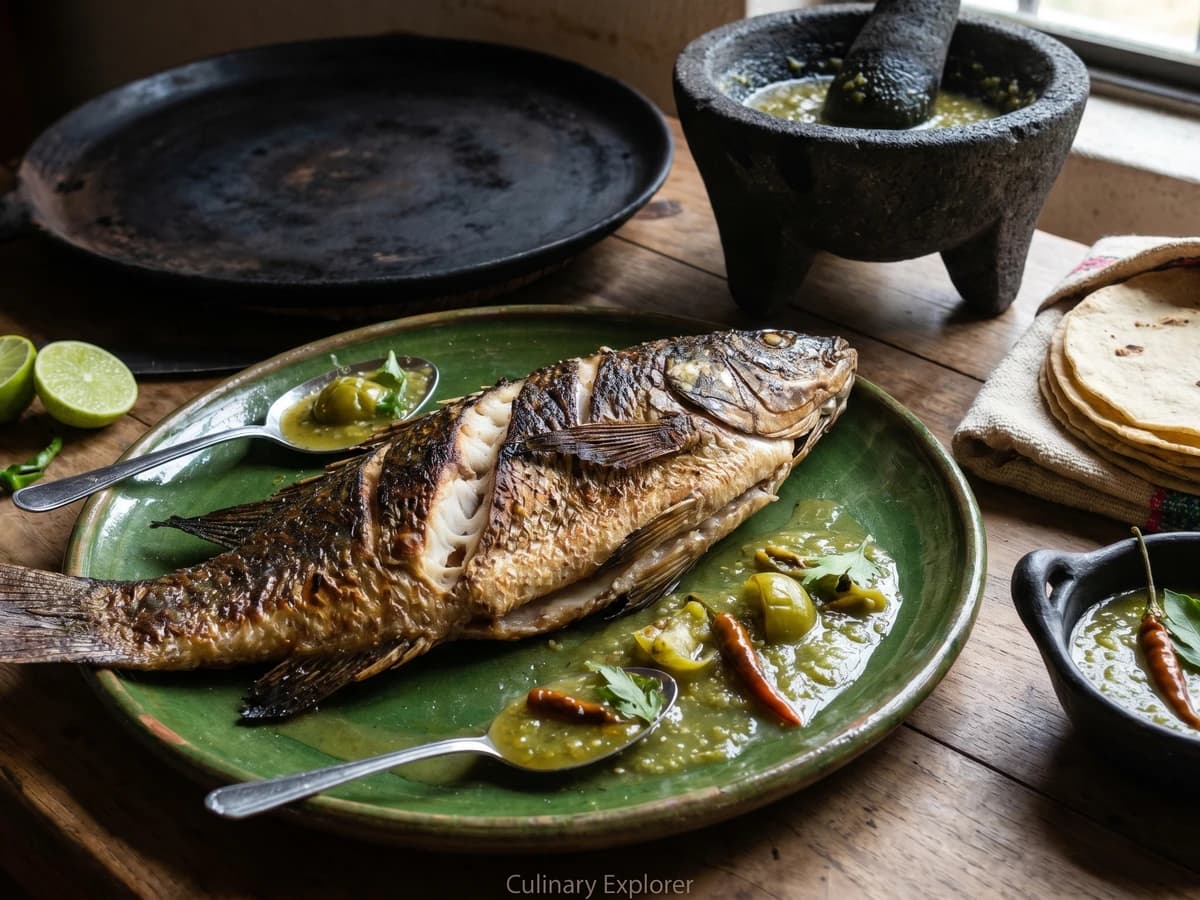
Acúmara Tatemada al Comal
Michoacán's Lake Pátzcuaro acúmara, a whole kurucha from the lago tatemada on a comal de leña and served with chile perón atápakua, corn tortillas, and P'urhépecha discipline.
A cooking platform built around craft, culture, and the stories behind what we eat.

Created by
Mexicali's Cantonese-Mexican stir-fried pork shoulder, marinated overnight in soy, hoisin, achiote, and piloncillo, then seared hot in a wok and glazed in its own reduction.
This is from Mexicali, Baja California. Specifically from La Chinesca, the Chinatown that grew up in Mexicali in the early 1900s when Cantonese laborers came north to dig the irrigation canals of the Mexicali Valley and stayed to feed a city. Mexicali has the largest Chinese community in Mexico, more Chinese restaurants per capita than anywhere else in the country, and a hybrid kitchen tradition that no other Mexican state can claim.
Carnitas coloradas are the Mexicali version of Cantonese char siu. Same idea: pork shoulder marinated in a sweet-savory red sauce, cooked over high heat until the edges lacquer. But the Mexicali cooks did not have all the Chinese pantry. They had the local mercado. So the achiote slipped in next to the five-spice. The piloncillo replaced rock sugar where it had to. The flour tortilla showed up next to the steamed rice. This is not a fusion dish in the food-magazine sense. This is what happened when two grandmothers cooked in the same kitchen for a hundred years.
The pork has to be cut against the grain or it ruins. The marinade has to sit overnight or it does not penetrate. The wok has to be hotter than you think your stove can manage. These are not suggestions. These are the parts that make this dish carnitas coloradas and not pork strips with red sauce. La cocina no es decoracion, es trabajo. Saber cocinar es saber vivir.
The Chinese community in Mexicali traces to the late 19th and early 20th centuries, when the Colorado River Land Company recruited Cantonese laborers to clear and irrigate the Mexicali Valley for cotton cultivation. By the 1920s, Mexicali's Chinese population outnumbered its Mexican residents, and La Chinesca, the underground tunnel network and street-level commercial district, became the heart of a Cantonese-Mexican culinary exchange that produced its own dishes, vocabulary, and home-cooking traditions. The carnitas coloradas, alongside chop suey estilo Mexicali and the city's distinctive style of fried rice with carne asada, emerged from this exchange and remain markers of regional identity unique to Baja California; no other Mexican state developed a comparable Chinese-Mexican home cuisine.
Quantity
3 pounds
cut into 1/2-inch thick strips against the grain
Quantity
1/4 cup
Quantity
2 tablespoons
Quantity
1/4 cup
Quantity
3 tablespoons
Quantity
3 tablespoons
grated, or substitute dark brown sugar
Quantity
2 tablespoons
or dry sherry
Quantity
2 tablespoons
Quantity
1 tablespoon
mashed
Quantity
1 teaspoon
Quantity
1 teaspoon
dissolved in 1 tablespoon hot water
Quantity
1/2 teaspoon coloring or 1 tablespoon beet juice
Quantity
6
finely minced
Quantity
1 tablespoon
finely grated
Quantity
2
white and green parts, finely chopped
Quantity
1 teaspoon
Quantity
1/2 teaspoon
Quantity
3 tablespoons
for stir-frying
Quantity
for serving
warmed
Quantity
for serving
Quantity
for serving
Quantity
for serving
Quantity
for serving
Quantity
for serving
Quantity
for serving
| Ingredient | Quantity |
|---|---|
| boneless pork shouldercut into 1/2-inch thick strips against the grain | 3 pounds |
| Chinese light soy sauce | 1/4 cup |
| Chinese dark soy sauce | 2 tablespoons |
| hoisin sauce | 1/4 cup |
| Mexican honey | 3 tablespoons |
| piloncillograted, or substitute dark brown sugar | 3 tablespoons |
| Shaoxing wineor dry sherry | 2 tablespoons |
| rice vinegar | 2 tablespoons |
| fermented red bean curd (nam yu)mashed | 1 tablespoon |
| Chinese five-spice powder | 1 teaspoon |
| achiote pastedissolved in 1 tablespoon hot water | 1 teaspoon |
| natural red food coloring or beet juice (optional) | 1/2 teaspoon coloring or 1 tablespoon beet juice |
| garlic clovesfinely minced | 6 |
| fresh gingerfinely grated | 1 tablespoon |
| green onionswhite and green parts, finely chopped | 2 |
| kosher salt | 1 teaspoon |
| white pepper | 1/2 teaspoon |
| lard or peanut oilfor stir-frying | 3 tablespoons |
| hand-pressed flour tortillas (optional)warmed | for serving |
| steamed white rice (optional) | for serving |
| sliced cucumber (optional) | for serving |
| diced raw white onion (optional) | for serving |
| chopped cilantro (optional) | for serving |
| lime wedges (optional) | for serving |
| salsa de chile de arbol (optional) | for serving |
Lay the pork shoulder on a clean cutting board and find the direction of the grain. Slice across it into strips about half an inch thick and three inches long. Across the grain, not with it. Strips cut the wrong way turn stringy in the wok and you will know the moment you bite one. The Chinese cooks in Mexicali learned this from their grandfathers and now you know it too.
In a large bowl, whisk together the light and dark soy sauces, hoisin, honey, piloncillo, Shaoxing wine, rice vinegar, mashed fermented bean curd, five-spice powder, dissolved achiote paste, food coloring or beet juice if using, garlic, ginger, green onions, salt, and white pepper. Whisk until the piloncillo is dissolved and the marinade is uniform and red. The achiote is your Mexican fingerprint on this Chinese marinade. La Chinesca cooks adopted it from the local mercado because it gave the same lacquered red the canton cooks wanted, with ingredients they could buy down the street.
Add the pork strips to the marinade. Turn each piece so every strip is coated. Cover and refrigerate for at least six hours, ideally overnight. This is not a step you rush. The salt in the soy and the acid in the vinegar need time to work into the meat. No me vengas con atajos. A two-hour marinade gives you red pork. An overnight marinade gives you carnitas coloradas.
When you are ready to cook, lift the pork from the marinade with a slotted spoon and let it drain in a colander for five minutes. Pour the marinade into a small saucepan. You will reduce it later into a glaze. Pat the pork pieces lightly with paper towels. Wet pork steams in the wok. Drained pork sears.
Bring the reserved marinade to a boil over medium-high heat. Lower to a steady simmer and cook for eight to ten minutes, until it thickens enough to coat the back of a spoon. It should look like dark cherry syrup with a glossy shine. This is what gives the pork its lacquered finish at the end. The boil also kills anything left from the raw pork, so the glaze is safe to use.
Set a carbon steel wok or a heavy cast iron skillet over the highest heat your stove can produce. Let it heat for three full minutes until a drop of water vaporizes the moment it hits the surface. Add the lard. The fat should shimmer immediately and start to smoke at the edges. If your stove cannot get hot enough, work in smaller batches. Crowding the pan is the enemy of the sear.
Add a third of the pork to the wok in a single layer. Do not stir for the first 45 seconds. Let the meat sear and pick up dark, charred edges where it touches the metal. Then toss and stir aggressively for two more minutes, until the pork is cooked through and the outside is mahogany dark with crisp edges. Transfer to a clean platter and repeat with the remaining two batches. Add a little more lard between batches if the wok looks dry.
Return all the pork to the wok over medium-high heat. Pour the reduced glaze over the meat and toss for one minute, just long enough for every piece to take on the lacquer. The pork should look glossy, dark red, and the edges should crackle. Pull the wok off the heat the moment the glaze coats. Overcooked at this point and the sugars burn.
Pile the pork on a wide plate. Set out warm flour tortillas, steamed white rice, sliced cucumber, raw white onion, cilantro, lime, and salsa de chile de arbol in small dishes around the table. In Mexicali, you eat this two ways: as a taco on a flour tortilla with cilantro and onion, or over rice with cucumber and lime. Both are correct. Cada estado, su propia cocina, and Baja California's kitchen has two grandmothers.
1 serving (about 250g)
Culinary guides, cultural storytelling, and the editorial depth that makes cooking meaningful.
Discover Culinary ExplorerChef Lupita
Michoacán's Lake Pátzcuaro acúmara, a whole kurucha from the lago tatemada on a comal de leña and served with chile perón atápakua, corn tortillas, and P'urhépecha discipline.

Chef Lupita
Puebla's weekday adobo of pork shoulder braised in a thick guajillo and ancho sauce sharpened with vinegar, cumin, and clove. The deep red of a market spice stall, the dish a poblana cooks without thinking.

Chef Lupita
Loreto's pit-roasted clams, planted hinge-up in beach sand and tatemadas under a fast fire of dried romerillo brush, the resinous Baja desert shrub that gives this dish its smoke.

Chef Lupita
Oaxaca's eighth mole, the silky, almond-and-cinnamon almendrado, served over poached chicken. Mild, sweet, restrained, and a quiet rebuttal to anyone who thinks Mexican food has to be hot to be Mexican.