Chef Lupita
Acúmara Tatemada al Comal
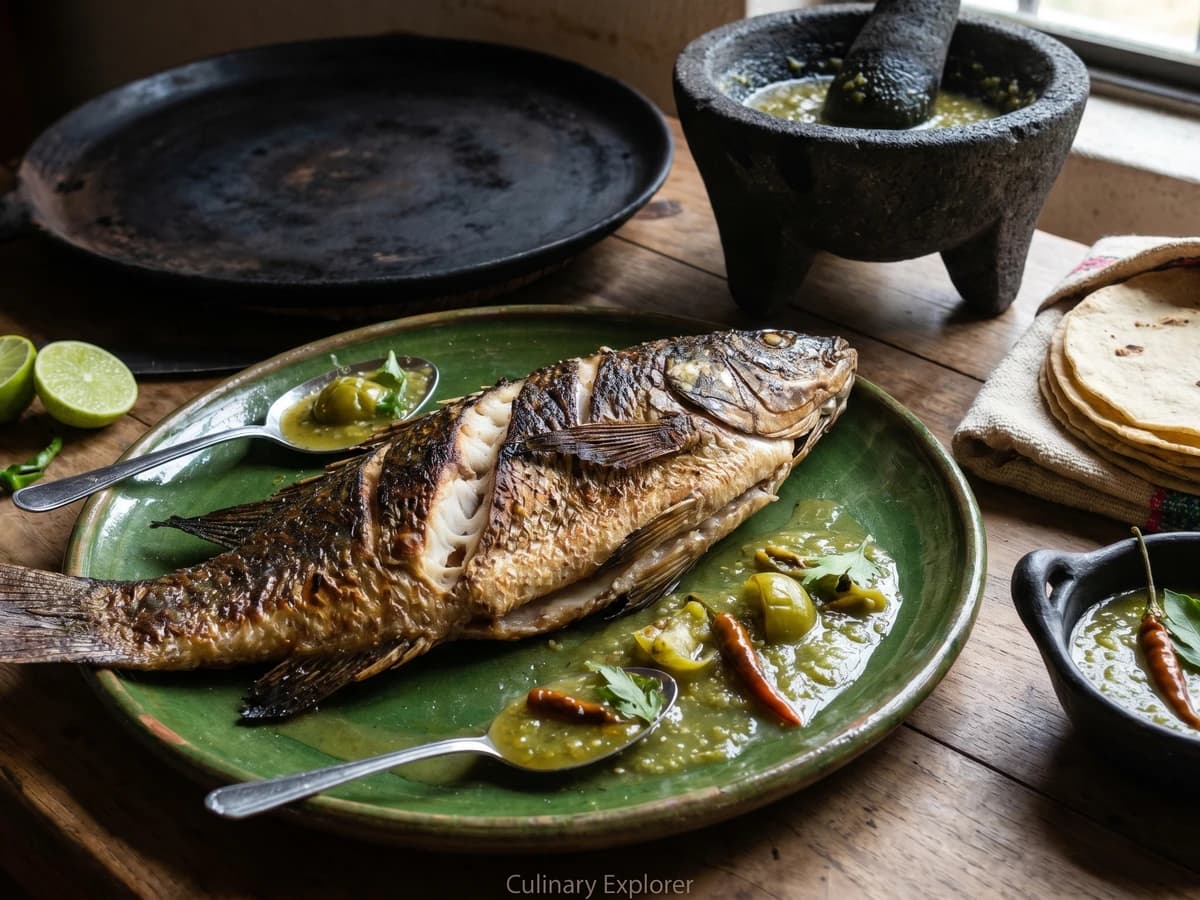
Michoacán's Lake Pátzcuaro acúmara, a whole kurucha from the lago tatemada on a comal de leña and served with chile perón atápakua, corn tortillas, and P'urhépecha discipline.
A cooking platform built around craft, culture, and the stories behind what we eat.
Created by
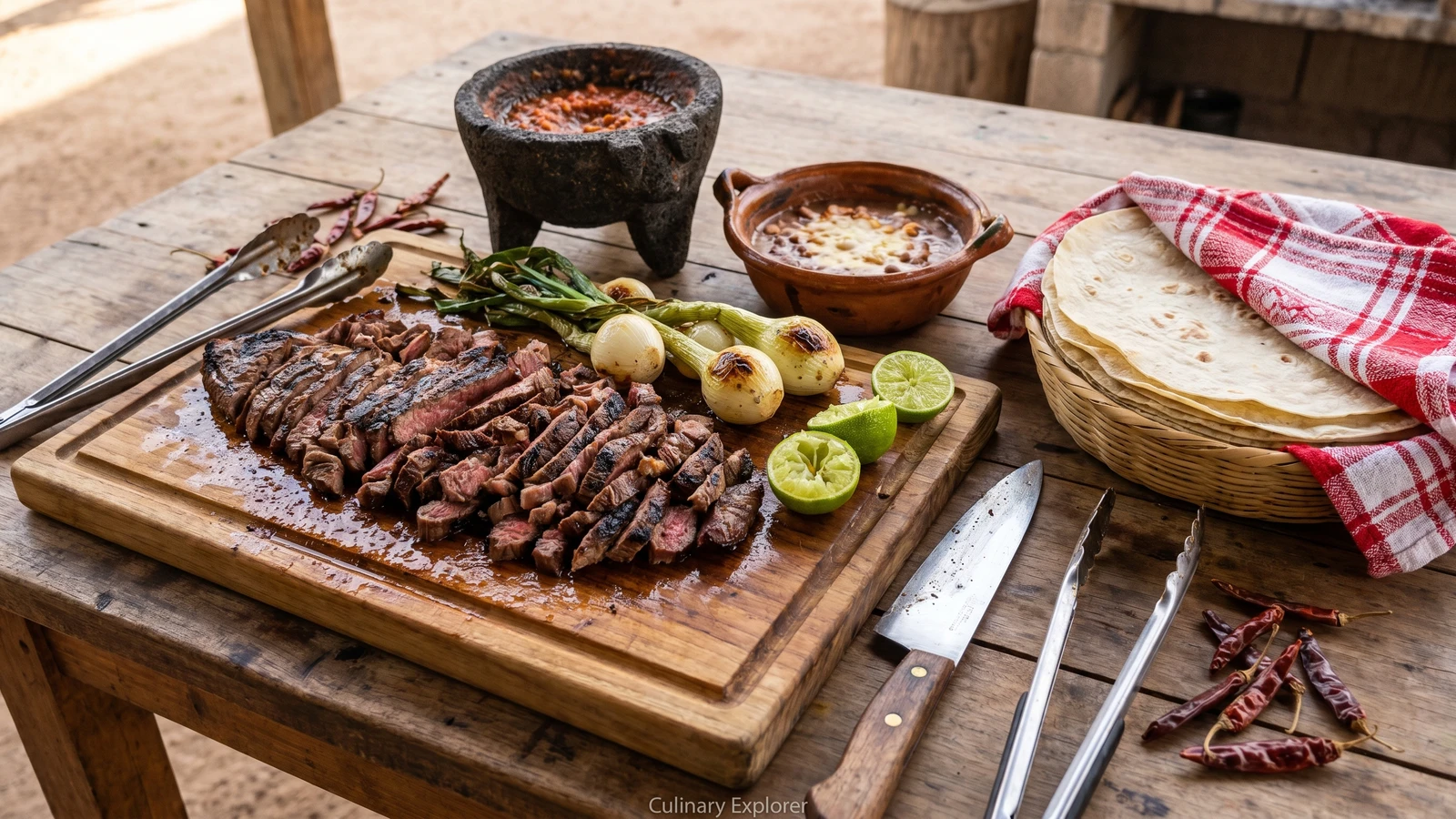
Sonora's gold-standard grill: thin diezmillo cooked hot and fast over mesquite coals, salted simply, chopped on the board, and served with sobaquera tortillas, frijoles puercos, and a rough salsa de chiltepin.
This is a Sonoran dish. Not a Texan one, not a generic Mexican one, not whatever a backyard barbecue calls carne asada when it is really skirt steak in a soy-and-lime marinade. Sonora is cattle country, the largest beef-producing state in Mexico, and carne asada there is the centerpiece of every Saturday afternoon, every birthday, every soccer game on television.
The rules are simple and they are absolute. Thin meat, a quarter-inch thick. Diezmillo is the cut, chuck flap with the right balance of fat and chew, though top sirloin and arrachera will work if your butcher knows what you are asking for. Coarse sea salt, nothing else, before it hits the grill. No marinade. No soy sauce. No beer. The Sonorans figured out long ago that good cattle over a mesquite fire does not need to be disguised. La carne se respeta.
The fire is mesquite. Not gas, not briquettes, not pellets. The mesquite that grows across the Sonoran desert is what gives the meat its smoke, and the cooks of Hermosillo and Ciudad Obregon will tell you the wood is half the recipe. The other half is the chiltepin, the wild bird-pepper that grows in the Sierra Madre Occidental and is gathered by hand by the people of the sierras and the Yaqui and Mayo communities. A salsa de chiltepin is hot and floral and tastes like the desert it grew in.
My mother was from Jalisco, not Sonora, but the first time I ate carne asada in Hermosillo, I understood why the north defends its food the way it does. The sobaqueras came folded around the meat, the cebollitas were charred and squeezed with lime, and a senora named Dona Aurelia ground chiltepin in a molcajete on the patio while the men worked the coals. She told me: in Sonora we do not season the meat. We respect it. Saber cocinar es saber vivir.
Sonora's carne asada tradition rests on the state's status as Mexico's largest cattle-producing region, a position established in the colonial period when Jesuit missions introduced European cattle to the northwest in the 17th century and the open range of the Sonoran desert proved ideal for ranching. The chiltepin, often called the mother of all chiles because genetic evidence places the wild ancestor of all cultivated capsicum species in the Sonora-Chihuahua region, has been gathered rather than farmed for thousands of years and is still harvested wild by indigenous Yaqui, Mayo, and Pima communities and sold by weight at premium prices in mercados across the north. The sobaquera tortilla, sometimes called tortilla de agua, is a hallmark of Sonoran wheat-growing country: wheat arrived with the Spanish and the dry climate and irrigated valleys of the Rio Yaqui made northern Mexico a wheat region, which is why the flour tortilla, foreign to central and southern Mexico, is the daily bread of the Sonoran table.
Quantity
3 pounds
sliced 1/4-inch thick
Quantity
2 tablespoons
Quantity
2
halved
Quantity
8 to 10 fresh or 1 tablespoon dried
Quantity
4 medium
Quantity
2
Quantity
1/2 small
Quantity
1 small bunch
leaves and tender stems
Quantity
1 teaspoon
Quantity
8 cebollitas or 1 bunch scallions
Quantity
12
warmed
Quantity
for serving
Quantity
for serving
Quantity
for serving
Quantity
for serving
| Ingredient | Quantity |
|---|---|
| diezmillo (beef chuck flap or thinly sliced top sirloin)sliced 1/4-inch thick | 3 pounds |
| coarse sea salt | 2 tablespoons |
| limeshalved | 2 |
| chiltepin (fresh or dried) | 8 to 10 fresh or 1 tablespoon dried |
| Roma tomatoes | 4 medium |
| garlic cloves | 2 |
| white onion | 1/2 small |
| fresh cilantroleaves and tender stems | 1 small bunch |
| kosher salt (for the salsa) | 1 teaspoon |
| cebollitas (Mexican spring onions) or thick scallions | 8 cebollitas or 1 bunch scallions |
| sobaquera or large flour tortillaswarmed | 12 |
| guacamole (optional) | for serving |
| frijoles puercos or refried pinto beans (optional) | for serving |
| lime wedges (optional) | for serving |
| salsa de chiltepin (optional) | for serving |
Light a chimney of mesquite charcoal or, better, a hardwood fire of mesquite splits. Let it burn down until the flames die and the coals glow red under a thin gray ash. This is the heart of carne asada sonorense. Mesquite gives the meat the smoke that the cooks of Hermosillo and Ciudad Obregon recognize as their own. Gas grills will cook the meat. They will not give you carne asada. No me vengas con atajos.
Place the tomatoes, garlic, and onion on the grill grate at the edge of the fire while the coals settle. Turn them as the skins blister and char in spots, about 8 minutes. Pull them off when the tomatoes are soft and the garlic is tender. In a molcajete, grind the chiltepin with the salt until it becomes a coarse powder. The chiltepin is the soul of Sonoran salsa, a wild bird-pepper that grows in the hills of the Sierra Madre Occidental and is gathered by hand. It is hot and floral and tastes like nothing else. Add the charred garlic and grind to a paste. Add the onion and tomato and pound coarsely. Stir in the cilantro at the end. The salsa should be rough, not smooth.
Lay the diezmillo flat on a tray. Sprinkle both sides with the coarse sea salt. That is all. No marinade, no soy sauce, no beer, no lime juice before grilling. Sonoran carne asada is salt and smoke. The meat is good because the cattle in Sonora are good, and the cooks there learned long ago that a good cut over a mesquite fire does not need to be hidden under a marinade. Asi se hace y punto.
While the coals are still very hot, lay the cebollitas across the grate. Turn them as the white bulbs blister and the green tops char. They are ready in about 5 minutes. Squeeze a lime half over them and salt them lightly. Set them on the platter where the meat will go. The cebollita is part of the plate, not a garnish. In Sonora it sits next to the meat, eaten in the same bite as the tortilla.
When the coals are at their hottest, lay the diezmillo directly on the grate. The fat should hit the coals and crackle. Cook for 90 seconds to 2 minutes per side, no more. The meat is so thin it cooks almost instantly. You want a dark crust on the outside and the inside just barely past pink. Pull it off the moment it tightens. Carne asada cooked past medium is ruined carne asada. There is no recovering from it later.
Pile the grilled meat on a wooden cutting board. Let it rest for 3 minutes, no longer. Then chop it roughly with a heavy knife into bite-sized pieces. The cooks in Sonora chop the meat right at the grill while the family waits at the table. Squeeze the second lime over the chopped meat and toss once.
Heat the sobaquera tortillas on the comal or directly on the cooler edge of the grill, about 20 seconds per side, until they are pliable and lightly spotted. The sobaquera is the giant flour tortilla of Sonora, paper-thin and almost translucent, named because the women who roll them stretch them across the forearm, under the armpit, until they are wide as a dinner plate. Flour tortillas are a northern tradition. They belong here. Corn tortillas would be wrong on this plate.
Pile the chopped meat on a wooden board or a wide clay platter. Set the cebollitas alongside. Put the sobaqueras in a basket wrapped in a cloth. Set out the salsa de chiltepin, the guacamole, the frijoles puercos, and lime wedges. Each person builds their own taco at the table. Cada estado, su propia cocina, and this is how the cocina of Sonora comes to the table. Recetas probadas y garantizadas.
1 serving (about 520g)
Culinary guides, cultural storytelling, and the editorial depth that makes cooking meaningful.
Discover Culinary ExplorerChef Lupita
Michoacán's Lake Pátzcuaro acúmara, a whole kurucha from the lago tatemada on a comal de leña and served with chile perón atápakua, corn tortillas, and P'urhépecha discipline.

Chef Lupita
Puebla's weekday adobo of pork shoulder braised in a thick guajillo and ancho sauce sharpened with vinegar, cumin, and clove. The deep red of a market spice stall, the dish a poblana cooks without thinking.

Chef Lupita
Loreto's pit-roasted clams, planted hinge-up in beach sand and tatemadas under a fast fire of dried romerillo brush, the resinous Baja desert shrub that gives this dish its smoke.

Chef Lupita
Oaxaca's eighth mole, the silky, almond-and-cinnamon almendrado, served over poached chicken. Mild, sweet, restrained, and a quiet rebuttal to anyone who thinks Mexican food has to be hot to be Mexican.