
Chef Graziella
Arancini alla Siciliana
Golden fried rice balls from Sicily, where Arab culinary influence meets Italian home cooking. The saffron-perfumed rice conceals a heart of slow-simmered ragù and sweet peas.
A cooking platform built around craft, culture, and the stories behind what we eat.
Created by
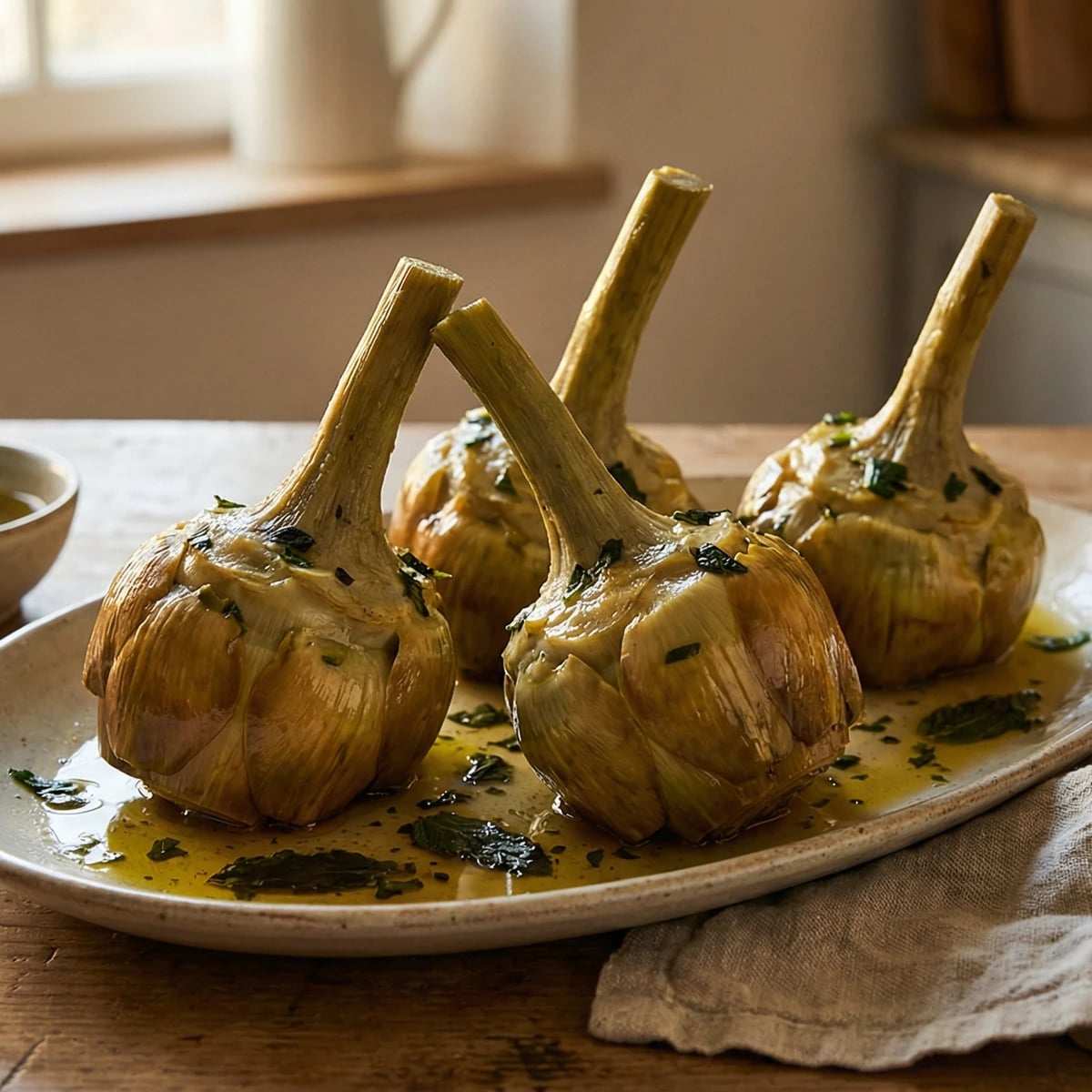
Rome's springtime ritual: whole artichokes stuffed with mint and garlic, braised upside-down until the leaves pull away like butter. The technique is precise, the reward profound.
The artichoke is not a vegetable that gives itself easily. You must earn it. The outer leaves are armor. The choke wants to choke you. Only proper cleaning, patient braising, and the right aromatics transform this thorny thing into something worth the effort.
Romans have understood this for centuries. Carciofi alla romana is one of two great Roman artichoke preparations (the other is carciofi alla giudia, fried crisp in the Jewish tradition). This version braises the artichokes upside-down, stems pointing to heaven, in olive oil scented with mint and garlic. The mint is essential. Not basil, not oregano, not thyme. Mint. This is Roman cooking, and Romans use mint with artichokes the way Genovesi use basil with everything.
The technique seems odd until you understand it. Cooking the artichokes inverted allows the oil and steam to penetrate between the leaves, tenderizing them uniformly. The stems, once peeled of their bitter outer layer, are as delicate as the heart itself. To discard them is waste. To serve this dish without them is to miss the point entirely.
Carciofi alla romana belongs to the cucina romanesca tradition that predates Italian unification, rooted in the cooking of the Roman campagna. The dish reached its refined form in the trattorias around Campo de' Fiori by the late 19th century, though Roman home cooks had been braising artichokes with wild mint gathered from hillsides for generations before anyone thought to write it down.
Quantity
4 large
with stems attached
Quantity
2
halved
Quantity
1/2 cup
roughly chopped
Quantity
3
minced fine
Quantity
1/4 cup
chopped fine
Quantity
to taste
Quantity
to taste
freshly ground
Quantity
3/4 cup
Quantity
1 cup
| Ingredient | Quantity |
|---|---|
| globe artichokeswith stems attached | 4 large |
| lemonshalved | 2 |
| fresh mint leavesroughly chopped | 1/2 cup |
| garlic clovesminced fine | 3 |
| fresh flat-leaf parsleychopped fine | 1/4 cup |
| kosher salt | to taste |
| black pepperfreshly ground | to taste |
| extra virgin olive oil | 3/4 cup |
| water | 1 cup |
Fill a large bowl with cold water and squeeze in the juice of one lemon, dropping the halves into the bowl. This prevents the artichokes from oxidizing as you work. They turn brown within minutes of cutting. You must work quickly and have the water ready before you begin.
This is where most cooks fail. Working with one artichoke at a time, snap off the tough outer leaves until you reach leaves that are pale yellow-green and tender at the base. You will remove more than you expect. Cut off the top third of the artichoke with a sharp knife. Using a paring knife, trim around the base where you removed the outer leaves, removing any dark green patches. Peel the stem with a vegetable peeler, leaving it attached. The stem, once peeled, is as tender and flavorful as the heart.
Spread the leaves of each cleaned artichoke gently to expose the center. Using a small spoon or melon baller, scrape out the fuzzy choke and any purple-tipped inner leaves. Be thorough. The choke is inedible and unpleasant. Rub all cut surfaces with lemon and drop the artichoke into the acidulated water. Repeat with remaining artichokes.
Combine the chopped mint, minced garlic, and parsley in a small bowl. Season generously with salt and pepper. Mix well. This mixture, called the battuto, goes into the center of each artichoke.
Remove the artichokes from the water and shake off excess liquid. Gently spread the leaves apart and press the mint mixture into the center cavity and between the inner leaves. The leaves should close back around the filling. Do not force too much filling in. What you keep out matters.
Choose a heavy pot just wide enough to hold the artichokes snugly, stems pointing up. This is essential. The artichokes braise upside-down, with their heads in the oil. Place them stem-up in the pot, fitting them close together so they support each other. Pour the olive oil over them, letting it run down between the leaves. Add the water to the pot.
Bring the liquid to a simmer over medium heat. Reduce heat to low, cover the pot, and cook until the artichokes are completely tender when pierced at the base with a knife, 35 to 45 minutes. The timing depends on the size and freshness of your artichokes. Check after 30 minutes. If the liquid evaporates before the artichokes are done, add a few tablespoons of water.
Remove the lid and let the artichokes cool in the pot for 10 minutes. Transfer to a serving plate, stem-side up, and spoon the braising liquid over them. Serve warm or at room temperature. Romans argue about which is correct. Both are right. Squeeze the remaining lemon over the top just before serving.
1 serving (about 200g)
Culinary guides, cultural storytelling, and the editorial depth that makes cooking meaningful.
Discover Culinary Explorer
Chef Graziella
Golden fried rice balls from Sicily, where Arab culinary influence meets Italian home cooking. The saffron-perfumed rice conceals a heart of slow-simmered ragù and sweet peas.

Chef Graziella
The silken salt cod spread of Venice, beaten to cloud-like cream through patience and proper technique. No cream touches this dish. The emulsion of fish and olive oil creates all the richness you need.

Chef Graziella
The warming anchovy bath of Piedmont, where garlic is mellowed to sweetness and anchovies dissolve into something that draws a whole table together around one fragrant pot.

Chef Graziella
The classic antipasto of Lombardy, where air-dried beef from the Alpine valleys meets peppery wild arugula and thin curls of aged cheese. Nothing more. Nothing less.