Chef Graziella
Carciofi alla Romana
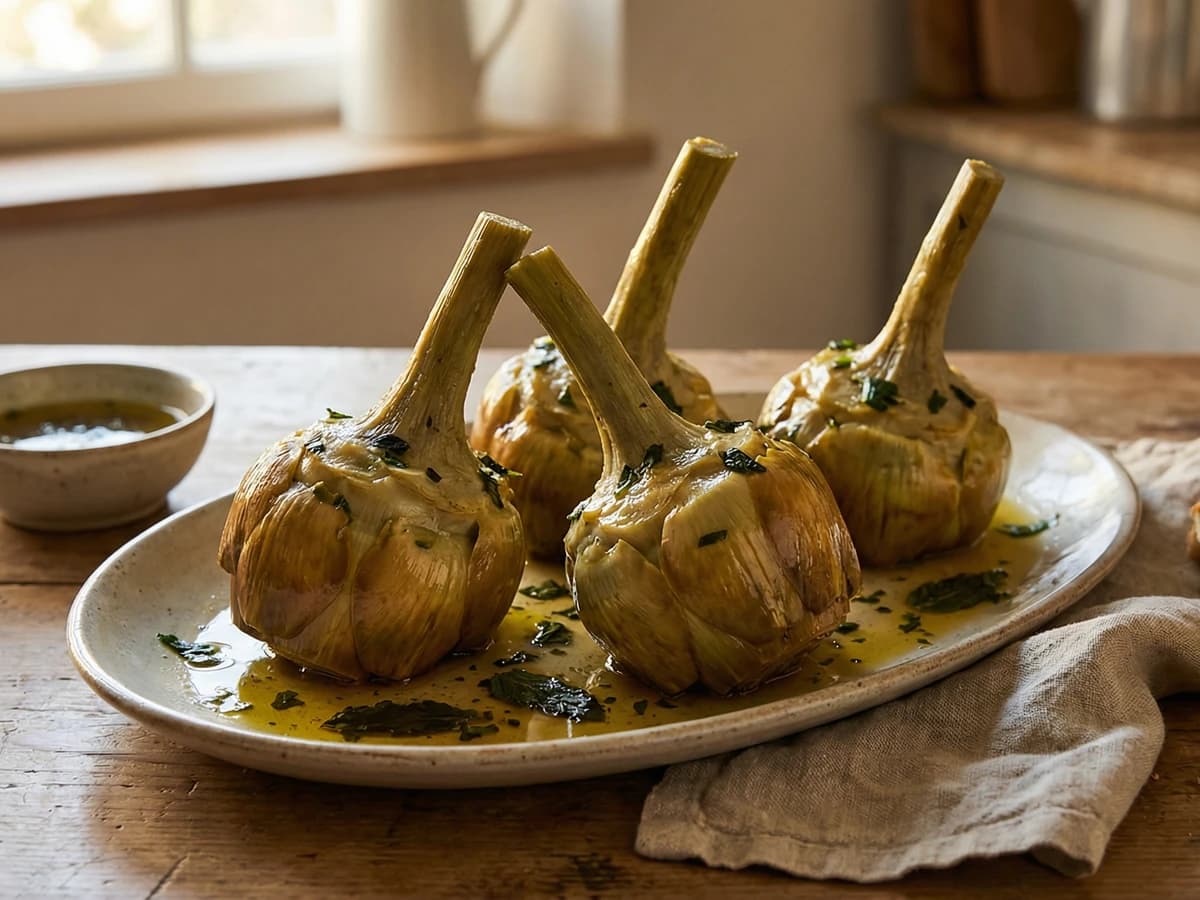
Rome's springtime ritual: whole artichokes stuffed with mint and garlic, braised upside-down until the leaves pull away like butter. The technique is precise, the reward profound.
A cooking platform built around craft, culture, and the stories behind what we eat.
Created by
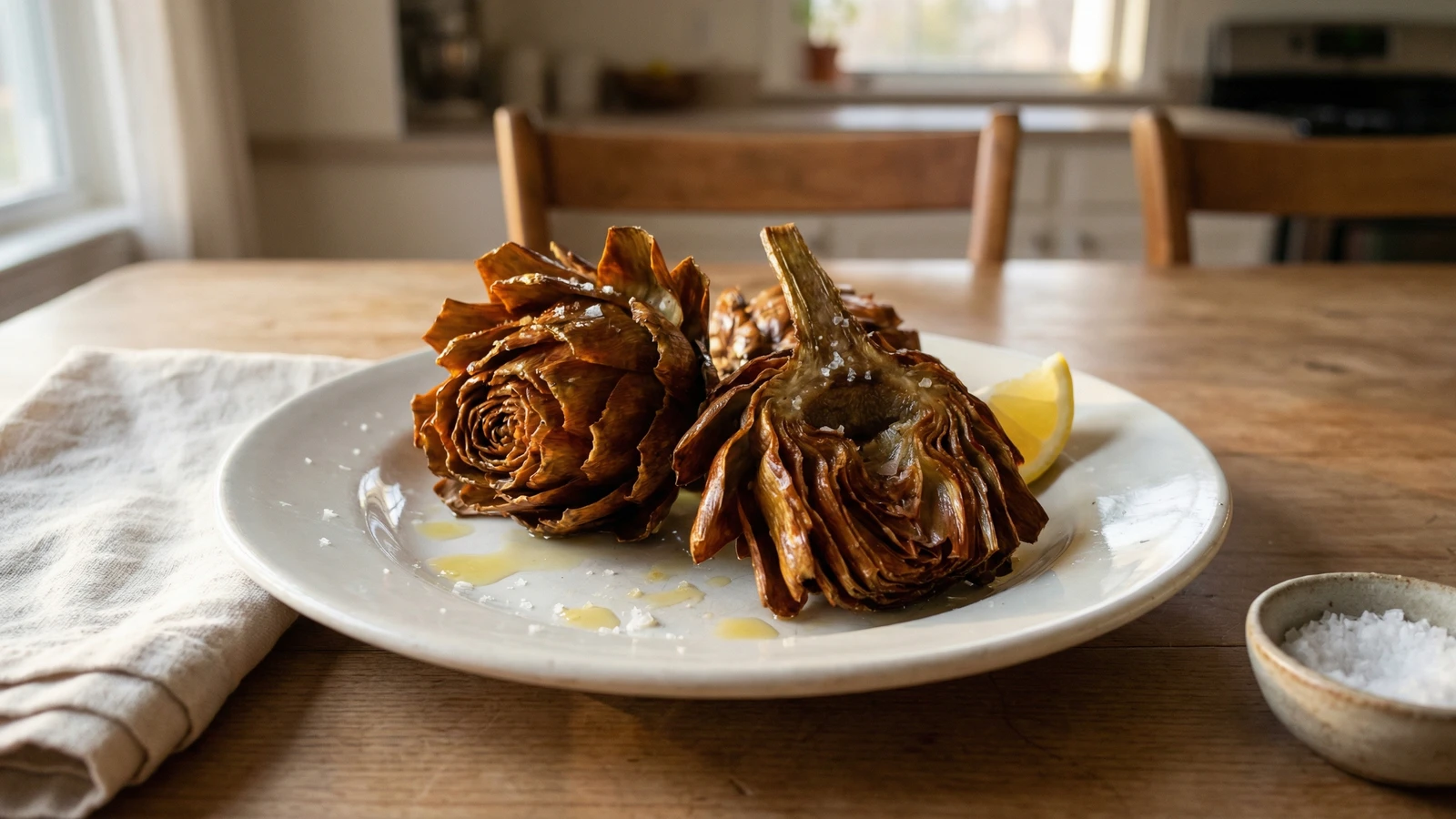
The legendary fried artichokes of Rome's Jewish quarter, each leaf crisp enough to shatter between your teeth, the heart tender as butter. Four ingredients. Technique is everything.
This is a dish of trimming and technique. The artichokes of the Roman ghetto have been prepared this way for five hundred years, and the method has not changed because it cannot be improved. You remove the tough outer leaves until only tenderness remains. You press the artichoke flat so the leaves fan open like a bronze chrysanthemum. You fry it twice: first gently to cook the heart, then fiercely to crisp every petal.
Americans add things. Breadcrumbs. Garlic. Herbs. This is wrong. The artichoke needs only olive oil and salt. What you keep out is as significant as what you put in. The Jewish cooks of Rome understood that restraint creates intensity.
Simple does not mean easy. The trimming alone takes practice. You will think you are throwing away too much of the artichoke. You are not. Every tough leaf you leave attached is one that will not crisp, one that will stick in your teeth. Be ruthless. The reward is a vegetable transformed into something that exists nowhere else: shattering and tender, bitter and sweet, impossibly light.
Carciofi alla Giudia emerged from Rome's Jewish ghetto, where the community had lived since 1555 when Pope Paul IV confined them to a few blocks near the Tiber. Forbidden many professions and ingredients, Jewish cooks turned the Roman artichoke into something extraordinary. The dish became so celebrated that it crossed the ghetto walls, appearing on tables throughout the city while remaining, always, Jewish-style.
Quantity
4 large
Quantity
2
halved
Quantity
4 cups
for frying
Quantity
to taste
| Ingredient | Quantity |
|---|---|
| globe artichokes | 4 large |
| lemonshalved | 2 |
| extra virgin olive oilfor frying | 4 cups |
| flaky sea salt | to taste |
Fill a large bowl with cold water and squeeze in the juice of both lemons. Drop the lemon halves into the bowl. You will work quickly, but the artichokes must go into this water the moment you finish trimming each one. Oxidation is the enemy. A brown artichoke is a ruined artichoke.
This is where amateurs fail. Snap off the tough outer leaves by bending them backward until they break at the tender base. Continue removing leaves until you reach the pale yellow-green inner leaves. You will think you are removing too much. You are not. Cut off the top third of the artichoke with a sharp knife. Pare the stem, leaving about two inches attached, and trim the dark green outer layer from the base. Rub every cut surface with lemon immediately. Submerge in the acidulated water. Repeat with remaining artichokes.
Remove one artichoke from the water and shake off excess liquid. Hold it by the stem and gently spread the leaves open with your fingers, pressing down against a work surface. The artichoke should begin to flatten and the leaves fan outward like a flower. If there is a fuzzy choke in the center, scrape it out with a small spoon. Return to the lemon water. Repeat with all artichokes.
Remove the artichokes from the water and pat them completely dry with clean towels. Shake them gently to release water trapped between the leaves. Water and hot oil are enemies. Any moisture will cause dangerous spattering and prevent proper crisping. The artichokes must be dry.
Pour the olive oil into a deep pot or Dutch oven. The oil should be at least three inches deep. Heat to 300°F. Working with one artichoke at a time, lower it into the oil stem-side up. The leaves should spread against the bottom of the pot. Fry gently for 8 to 10 minutes, turning occasionally, until the leaves are tender when pierced with a knife. The artichoke will be pale gold, not crisp. Remove and drain upside down on paper towels. Repeat with remaining artichokes.
Increase the oil temperature to 350°F. Return each artichoke to the oil, this time pressing it firmly against the bottom of the pot with a long-handled slotted spoon. The leaves will spread dramatically and begin to crisp. Fry for 2 to 3 minutes, pressing occasionally, until the leaves are deep golden brown and shatteringly crisp. The edges should look almost burnt. They are not. Remove and drain upside down.
While the artichokes are still hot, sprinkle generously with flaky sea salt. Some Roman cooks flick cold water onto the hot artichokes with their fingers. This creates a dramatic sizzle and, they say, additional crispness. Serve immediately. These wait for no one. The leaves should shatter when you bite them, then melt on your tongue.
1 serving (about 120g)
Culinary guides, cultural storytelling, and the editorial depth that makes cooking meaningful.
Discover Culinary ExplorerChef Graziella
Rome's springtime ritual: whole artichokes stuffed with mint and garlic, braised upside-down until the leaves pull away like butter. The technique is precise, the reward profound.

Chef Graziella
Roman artichokes pureed with sharp pecorino and bright lemon, spread onto warm bread or scooped with crisp vegetables. This is spring on the table.

Chef Graziella
Rome's beloved fried zucchini blossoms, stuffed with mozzarella that stretches and anchovy that provides salt and depth. A fleeting summer pleasure that rewards those who seek out perfect ingredients.
Chef Graziella
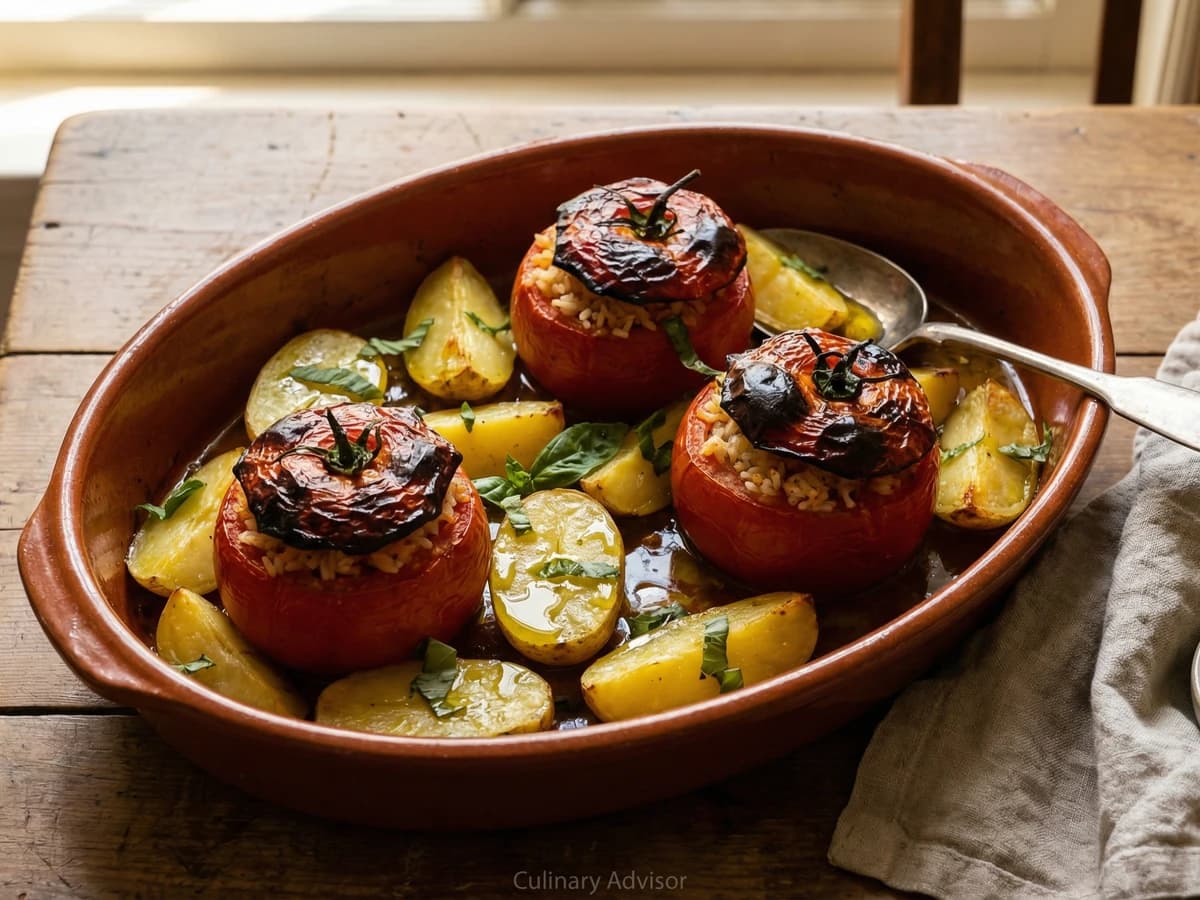
Roman stuffed tomatoes, baked until the lids char and the rice drinks in every drop of summer. Served at room temperature, as tradition demands, these are the taste of August in Rome.