Chef Lupita
Acúmara Tatemada al Comal
Michoacán's Lake Pátzcuaro acúmara, a whole kurucha from the lago tatemada on a comal de leña and served with chile perón atápakua, corn tortillas, and P'urhépecha discipline.
A cooking platform built around craft, culture, and the stories behind what we eat.
Created by
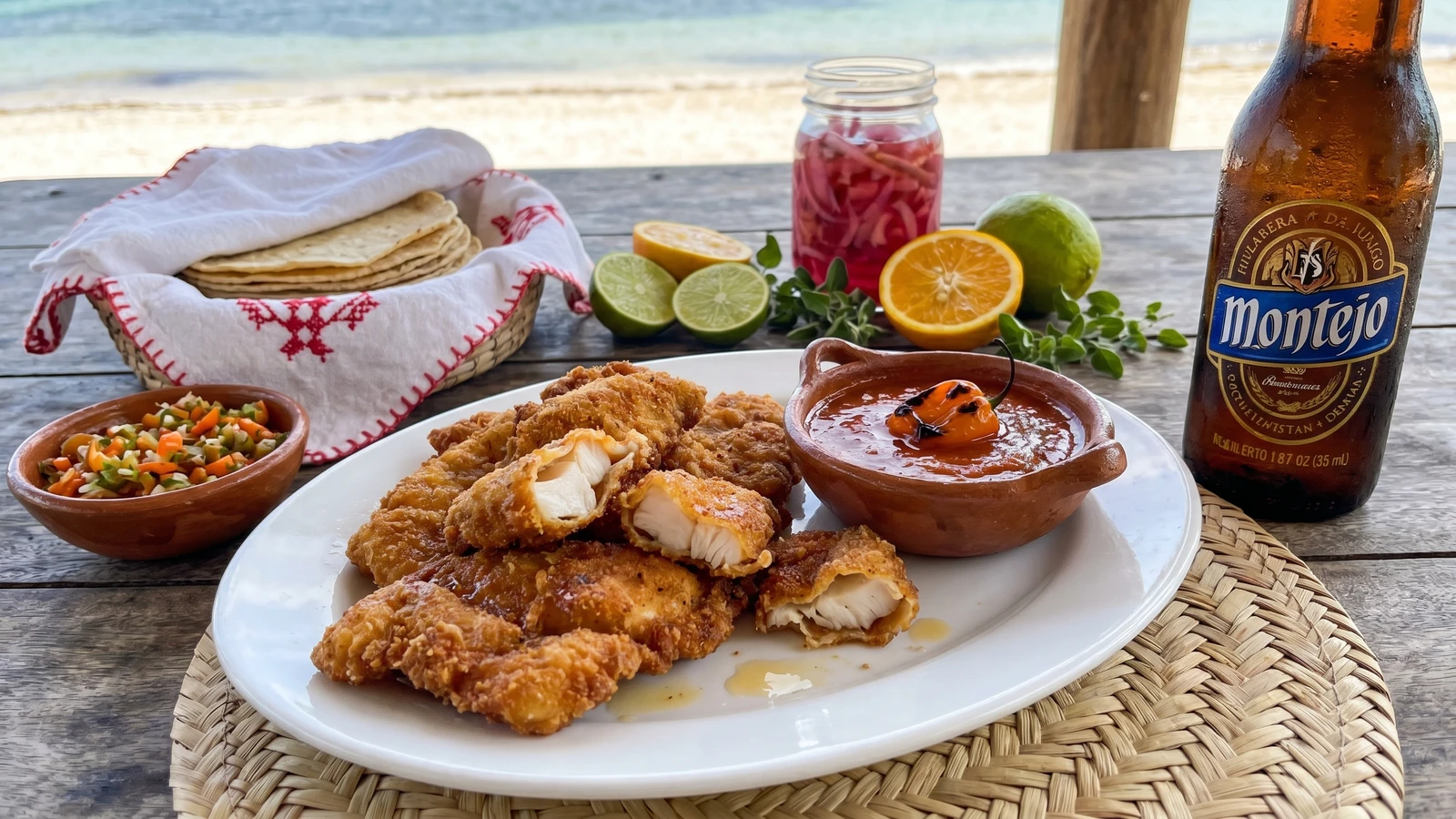
Isla Mujeres' breaded queen conch, pounded thin and fried in lard until the crust turns gold, served with smoky chiltomate, salsa de habanero tatemado, and a stack of warm corn tortillas on a wooden palapa table.
This is from Quintana Roo. From Isla Mujeres specifically, the small island off the coast of Cancun where the conch divers bring the caracol rosado in by skiff and the cocineras at the palapa restaurants on Playa Norte have been frying it the same way for three generations. Mainland Mexico does not eat caracol like this. The Yucatan peninsula does, and the island cooks of Quintana Roo perfected it.
The caracol has to be pounded. There is no shortcut around this. Queen conch is dense, slow-twitch muscle from an animal that spends its life dragging a heavy shell across the sea floor. You either break the fibers with a mallet before you cook it, or you break your teeth on it after. The cooks in Isla Mujeres use a smooth stone the size of a fist, picked up off the beach. A meat mallet works fine.
The marinade is milk and naranja agria. Not lime. Naranja agria is the sour orange that defines peninsular cooking, the same fruit that goes into the recado for cochinita pibil and the marinade for tikinxic. If you cannot find it, mix fresh orange juice with lime juice in equal parts and call it a compromise. The crust is breadcrumbs mixed with crushed saltines, which is how the island cooks get that particular texture, lighter than pure pan molido and a shade darker when it fries. La manteca es el sabor. Use lard. Vegetable oil makes a different dish.
My notebook from my Quintana Roo trip has a page from a cocinera named Doña Hilaria who ran a six-table palapa near the lighthouse. She told me the secret was three minutes in the lard, no more, and the habanero on the table, not in the breading. The fish is the fish. The chile is the chile. Saber cocinar es saber vivir.
Queen conch (Strombus gigas, called caracol rosado in Spanish and the Mayan term sak xuux in some Quintana Roo communities) has been harvested across the Caribbean coast of the Yucatan peninsula since pre-Columbian times, and Mayan middens on Cozumel and Isla Mujeres contain conch shells dating back over a thousand years. The breaded and fried preparation is a 20th-century development that combined the indigenous knowledge of how to clean and tenderize the meat with European breading techniques brought by Spanish and later Lebanese settlers to the peninsula. Since 2003, queen conch has been listed under CITES Appendix II due to overharvesting across the Caribbean, and Mexico maintains a strict fishing season (typically November through April) and quota system in Quintana Roo waters, meaning responsibly sourced caracol is now a seasonal ingredient that respects the rhythms of the reef.
Quantity
1 1/2 pounds
dark skin removed
Quantity
1 cup
Quantity
2, juiced
or substitute equal parts fresh orange juice and lime juice
Quantity
2
finely grated
Quantity
1 teaspoon, plus more for seasoning
Quantity
1/2 teaspoon
Quantity
1 cup
Quantity
3
beaten
Quantity
2 cups
Quantity
1/2 cup
crushed
Quantity
1 teaspoon
crumbled
Quantity
1 pound
Quantity
4
for the chiltomate
Quantity
1, whole
for the chiltomate
Quantity
1/2 small
halved, for the chiltomate
Quantity
2
for the chiltomate
Quantity
1 tablespoon
for the chiltomate
Quantity
to taste
Quantity
2
for the salsa tatemada
Quantity
2, juiced
for the salsa tatemada
Quantity
1/2 small
finely chopped, for the salsa tatemada
Quantity
for serving
Quantity
for serving
Quantity
for serving
warmed
| Ingredient | Quantity |
|---|---|
| cleaned queen conch (caracol rosado), foot onlydark skin removed | 1 1/2 pounds |
| whole milk | 1 cup |
| sour oranges (naranja agria)or substitute equal parts fresh orange juice and lime juice | 2, juiced |
| garlic clovesfinely grated | 2 |
| kosher salt | 1 teaspoon, plus more for seasoning |
| freshly ground black pepper | 1/2 teaspoon |
| all-purpose flour | 1 cup |
| large eggsbeaten | 3 |
| fine dry breadcrumbs (pan molido) | 2 cups |
| saltine crackers (galletas saladas)crushed | 1/2 cup |
| dried Mexican oregano, preferably oregano yucatecocrumbled | 1 teaspoon |
| manteca de cerdo (pork lard) for frying | 1 pound |
| ripe Roma tomatoesfor the chiltomate | 4 |
| chile habanerofor the chiltomate | 1, whole |
| white onionhalved, for the chiltomate | 1/2 small |
| garlic cloves, unpeeledfor the chiltomate | 2 |
| manteca de cerdofor the chiltomate | 1 tablespoon |
| salt | to taste |
| chiles habanerosfor the salsa tatemada | 2 |
| sour orangesfor the salsa tatemada | 2, juiced |
| red onionfinely chopped, for the salsa tatemada | 1/2 small |
| lime wedges (optional) | for serving |
| pickled red onion (cebolla morada encurtida) (optional) | for serving |
| hand-pressed corn tortillas (optional)warmed | for serving |
Place each piece of conch foot between two sheets of plastic wrap or inside a heavy zip-top bag. Pound with a meat mallet, the flat side of a heavy cleaver, or a smooth river stone the way the cocineras in Isla Mujeres do, until each piece is about a quarter inch thick. This is not optional. Caracol is dense muscle. Without the pounding, it cooks into shoe leather. Work each piece until it is flat, even, and a little wider than it started.
Combine the milk, sour orange juice, grated garlic, salt, and black pepper in a shallow bowl. Lay the pounded conch into the marinade in a single layer. The milk tenderizes what the mallet started. The naranja agria does the work the lime would do on the mainland: it brightens the meat and cuts the natural sweetness of caracol. Cover and refrigerate for 20 minutes. No longer. The sour orange will start to cook the flesh past that point and you want the conch to crisp in the lard, not in the bowl.
While the caracol marinates, heat a dry comal over medium-high. Char the tomatoes, the halved onion, the unpeeled garlic, and the whole habanero. Turn them as they blacken. The tomato skins should split and blister. The garlic should be soft inside its papery skin. The habanero should be evenly black on the outside. Peel the garlic. Drop everything except the habanero into a blender and pulse to a chunky puree. Melt one tablespoon of lard in a small clay cazuela over medium heat and pour the puree in. It will sputter. Cook for ten minutes until it darkens and the fat separates. Salt to taste. The whole charred habanero goes on top of the cazuela as a warning and a perfume. Whoever wants the heat breaks it open into their own portion.
Char the two remaining habaneros on the same comal until the skins are black and the flesh has softened, about four minutes total, turning often. Stem them but leave the seeds in unless you want to lower the heat. Chop very fine, almost to a paste, by hand on a wooden board. The molcajete works too, but Yucatecan cooks tend to use the knife. Scrape into a small bowl and add the chopped red onion, the sour orange juice, and a pinch of salt. Stir. This is the salsa that wakes the dish up. A teaspoon per bite is enough. More than that and you stop tasting the caracol.
Lift the caracol out of the marinade and pat each piece dry with a clean cotton towel. Wet meat will not bread cleanly. Set out three shallow plates: flour in the first, beaten eggs in the second, and breadcrumbs mixed with the crushed saltines and the crumbled oregano yucateco in the third. The saltines give the crust the particular crunch the cooks on the island use. Pan molido alone is too uniform. The galletas break up the texture and brown a shade darker.
Working one piece at a time, dredge in the flour and shake off the excess, then dip in the egg, letting the extra drip away, then press firmly into the breadcrumb mixture, coating both sides completely. Set each breaded piece on a wire rack as you go. Let them rest for ten minutes before frying. This rest is what holds the crust on. Skip it and the breading slides off into the lard.
Melt the manteca in a heavy deep skillet or wide cazuela over medium-high until it reaches 350F. Test it with a pinch of breadcrumbs: they should sizzle and brown in about ten seconds. La manteca es el sabor. Vegetable oil will fry the caracol, yes, but it will not give you the flavor that the island cocineras get. Lay the breaded caracol into the lard in batches, never crowding the pan. Fry for two minutes on the first side, until the crust turns deep gold, then flip and fry one more minute on the second side. Total cooking time is three minutes, no more. Caracol overcooks the moment you look away.
Lift the caracol out with a slotted spider and set on a wire rack lined with brown paper or a clean cotton towel. Do not stack the pieces. Stacking steams the crust and you lose the crunch you worked for. Move them onto a warm porcelain platter. Spoon the chiltomate alongside, set the salsa de habanero tatemado in a small clay bowl, and bring out the pickled red onion, lime wedges, and warm corn tortillas. The diner builds each bite at the table. Así se hace y punto.
1 serving (about 365g)
Culinary guides, cultural storytelling, and the editorial depth that makes cooking meaningful.
Discover Culinary ExplorerChef Lupita
Michoacán's Lake Pátzcuaro acúmara, a whole kurucha from the lago tatemada on a comal de leña and served with chile perón atápakua, corn tortillas, and P'urhépecha discipline.

Chef Lupita
Puebla's weekday adobo of pork shoulder braised in a thick guajillo and ancho sauce sharpened with vinegar, cumin, and clove. The deep red of a market spice stall, the dish a poblana cooks without thinking.

Chef Lupita
Loreto's pit-roasted clams, planted hinge-up in beach sand and tatemadas under a fast fire of dried romerillo brush, the resinous Baja desert shrub that gives this dish its smoke.

Chef Lupita
Oaxaca's eighth mole, the silky, almond-and-cinnamon almendrado, served over poached chicken. Mild, sweet, restrained, and a quiet rebuttal to anyone who thinks Mexican food has to be hot to be Mexican.