
Chef Graziella
Anelletti al Forno
The Sunday pasta of Palermo, where tiny rings of dried pasta bake with meat ragù, sweet peas, and melting cheese until a burnished crust forms that families fight over at the table.
A cooking platform built around craft, culture, and the stories behind what we eat.

Created by
The great sweet-sour eggplant dish of Sicily, where each vegetable is fried separately then united in a tomato sauce sharpened with vinegar and softened with a little sugar. This is not a recipe to rush.
Caponata is not a salad. It is not a relish. It is not a condiment. It is a dish unto itself, one of the great vegetable preparations of the Mediterranean, and it demands to be treated with the seriousness it deserves.
The method is not negotiable. Each vegetable must be fried separately in good olive oil, then drained, then combined only at the end with the agrodolce sauce. This takes time. Those who dump everything into one pan and call it caponata have made something else entirely. They have made a vegetable stew. Sicilians would not recognize it.
The sweet-sour balance is the soul of this dish. Too much sugar and it becomes cloying. Too much vinegar and it becomes harsh. The ratio I give you has been refined over generations. Trust it. The flavors will meld overnight, the vinegar will soften, the sugar will integrate. Caponata made today and eaten today is only a preview of what it will become tomorrow.
There are said to be over thirty versions within Sicily alone. Palermo adds pine nuts and raisins. Catania keeps it austere. Trapani includes almonds. All are correct in their place. What I give you is the essential foundation, the version from which all others descend.
Caponata's origins trace to Arab Sicily, where the sweet-sour flavor principle arrived from the Middle East in the 9th century. The name may derive from 'caupona,' the Latin word for tavern, where sailors ate dishes of vinegar-preserved vegetables. By the 18th century, wealthy Sicilian households served elaborate versions with lobster and octopus, while the poor made do magnificently with eggplant alone.
Quantity
2 pounds (about 3 medium)
cut into 1-inch cubes
Quantity
for salting and seasoning
Quantity
1 cup, or as needed for frying
Quantity
4 stalks
stalks cut into 1/2-inch pieces, leaves reserved
Quantity
1 large
diced
Quantity
1 can (14 ounces)
crushed by hand
Quantity
1/4 cup
Quantity
2 tablespoons
Quantity
1/2 cup
pitted and halved
Quantity
3 tablespoons
rinsed if salt-packed
Quantity
2 tablespoons
lightly toasted
Quantity
2 tablespoons
Quantity
to taste
freshly ground
| Ingredient | Quantity |
|---|---|
| Italian eggplantcut into 1-inch cubes | 2 pounds (about 3 medium) |
| kosher salt | for salting and seasoning |
| extra virgin olive oil | 1 cup, or as needed for frying |
| celery stalks with leavesstalks cut into 1/2-inch pieces, leaves reserved | 4 stalks |
| yellow oniondiced | 1 large |
| San Marzano tomatoescrushed by hand | 1 can (14 ounces) |
| red wine vinegar | 1/4 cup |
| sugar | 2 tablespoons |
| green olivespitted and halved | 1/2 cup |
| capersrinsed if salt-packed | 3 tablespoons |
| pine nutslightly toasted | 2 tablespoons |
| golden raisins | 2 tablespoons |
| black pepperfreshly ground | to taste |
Place the eggplant cubes in a colander set over a bowl. Toss with two tablespoons of kosher salt. Let stand for at least 30 minutes, preferably one hour. The eggplant will weep dark liquid. This removes bitterness and, more importantly, collapses the spongy cells so the eggplant absorbs less oil when fried. Rinse briefly and pat very dry with clean towels.
In a large, deep skillet, heat half an inch of olive oil over medium-high heat until shimmering. Working in batches to avoid crowding, fry the eggplant cubes until golden brown on all sides, about 4 minutes per batch. The cubes should be deeply colored, not pale. Transfer to a plate lined with paper towels. Add more oil between batches as needed.
In the same oil, fry the celery pieces until they develop golden spots and soften slightly, about 3 minutes. The celery should retain some crunch. Transfer to the plate with the eggplant. The celery brings necessary texture. Do not overcook it into submission.
Pour off all but three tablespoons of oil from the skillet. Add the diced onion and cook over medium heat, stirring occasionally, until soft and golden at the edges, about 10 minutes. The onion is the only component that does not need to be fried until crisp. It should be sweet and yielding.
Add the crushed tomatoes to the onion and cook, stirring occasionally, until the mixture thickens and the raw tomato smell disappears, about 10 minutes. Stir in the vinegar and sugar. Let it bubble for 2 minutes. Taste. The sauce should be noticeably sweet and noticeably sour, in that order. Adjust if needed, remembering that both flavors will mellow overnight.
Remove the skillet from heat. Gently fold in the fried eggplant, fried celery, olives, capers, pine nuts, and raisins. Season with black pepper. Taste for salt, keeping in mind that the olives and capers contribute salinity. The mixture should be cohesive but not soupy. Each vegetable should remain distinct.
Transfer to a serving dish and let cool to room temperature. Cover and refrigerate overnight, or for at least four hours. Before serving, bring to room temperature and taste again for seasoning. Scatter the reserved celery leaves over the top. Serve with crusty bread to catch every drop of the agrodolce juices.
1 serving (about 215g)
Culinary guides, cultural storytelling, and the editorial depth that makes cooking meaningful.
Discover Culinary ExplorerChef Graziella
The Sunday pasta of Palermo, where tiny rings of dried pasta bake with meat ragù, sweet peas, and melting cheese until a burnished crust forms that families fight over at the table.

Chef Graziella
Golden fried rice balls from Sicily, where Arab cooks first wrapped saffron-scented rice around meat and cheese. The exterior shatters; the interior yields. This is street food elevated to art.
Chef Graziella
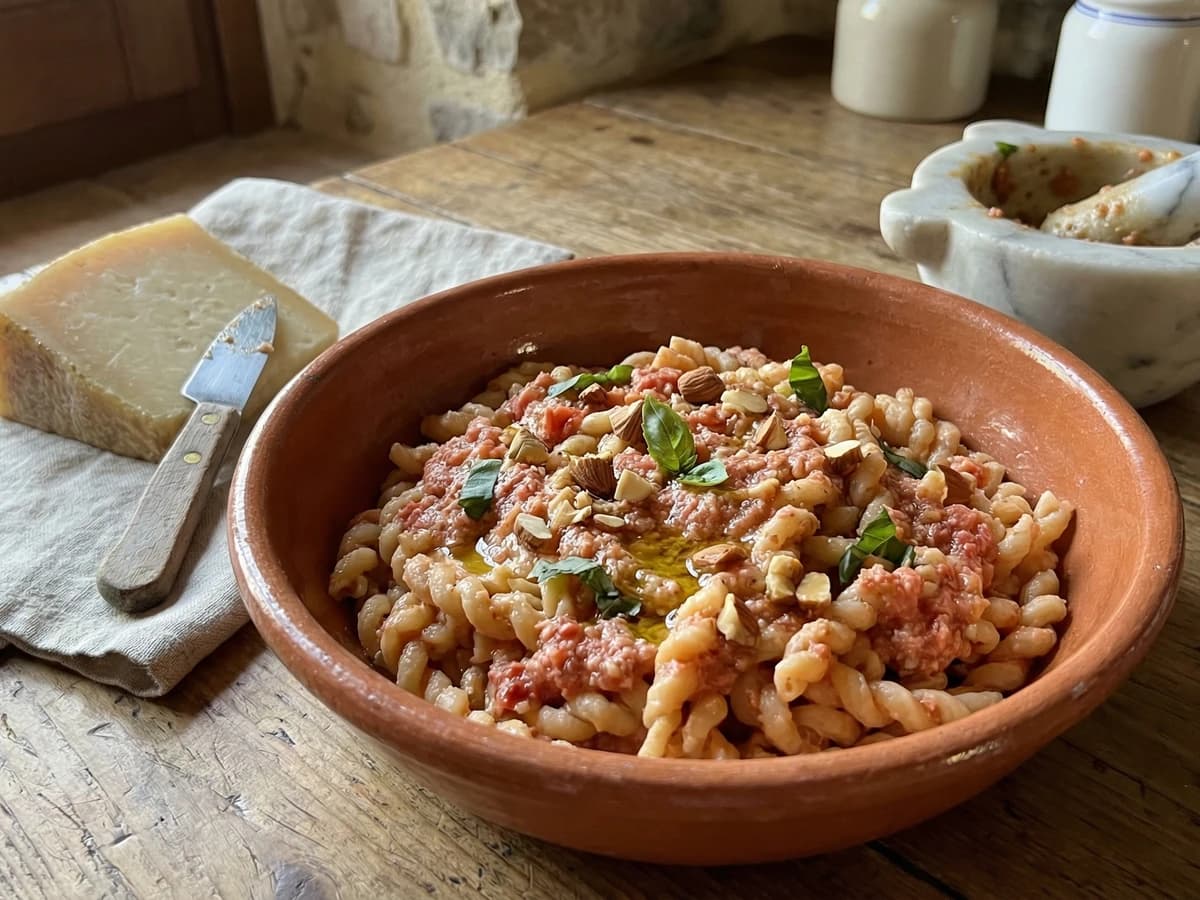
Sicily's raw tomato and almond pesto, pounded in a mortar as it has been for centuries, tossed with hand-twisted pasta that traps the sauce in every spiral. Trapani's gift to the world.
Chef Graziella
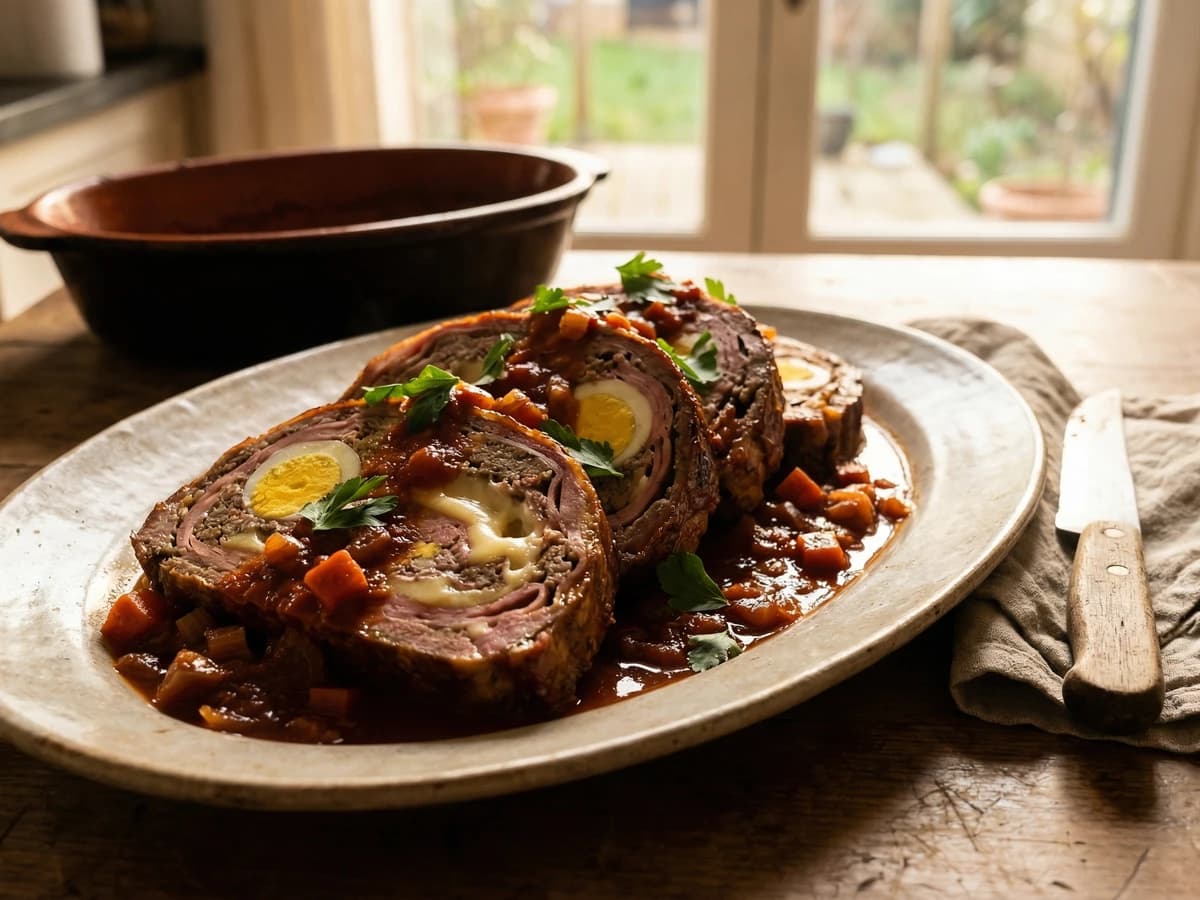
The great stuffed beef roll of Palermo, braised until tender and sliced to reveal the mosaic of mortadella, eggs, and cheese hidden within. This is what Sicilian grandmothers make when the occasion demands something extraordinary.