
Chef Graziella
Brutti ma Buoni
The cookies that prove beauty is the enemy of honest baking. Lumpy, cracked, and perfect, these hazelnut meringues are crisp shells hiding chewy, nutty centers.
A cooking platform built around craft, culture, and the stories behind what we eat.
Created by
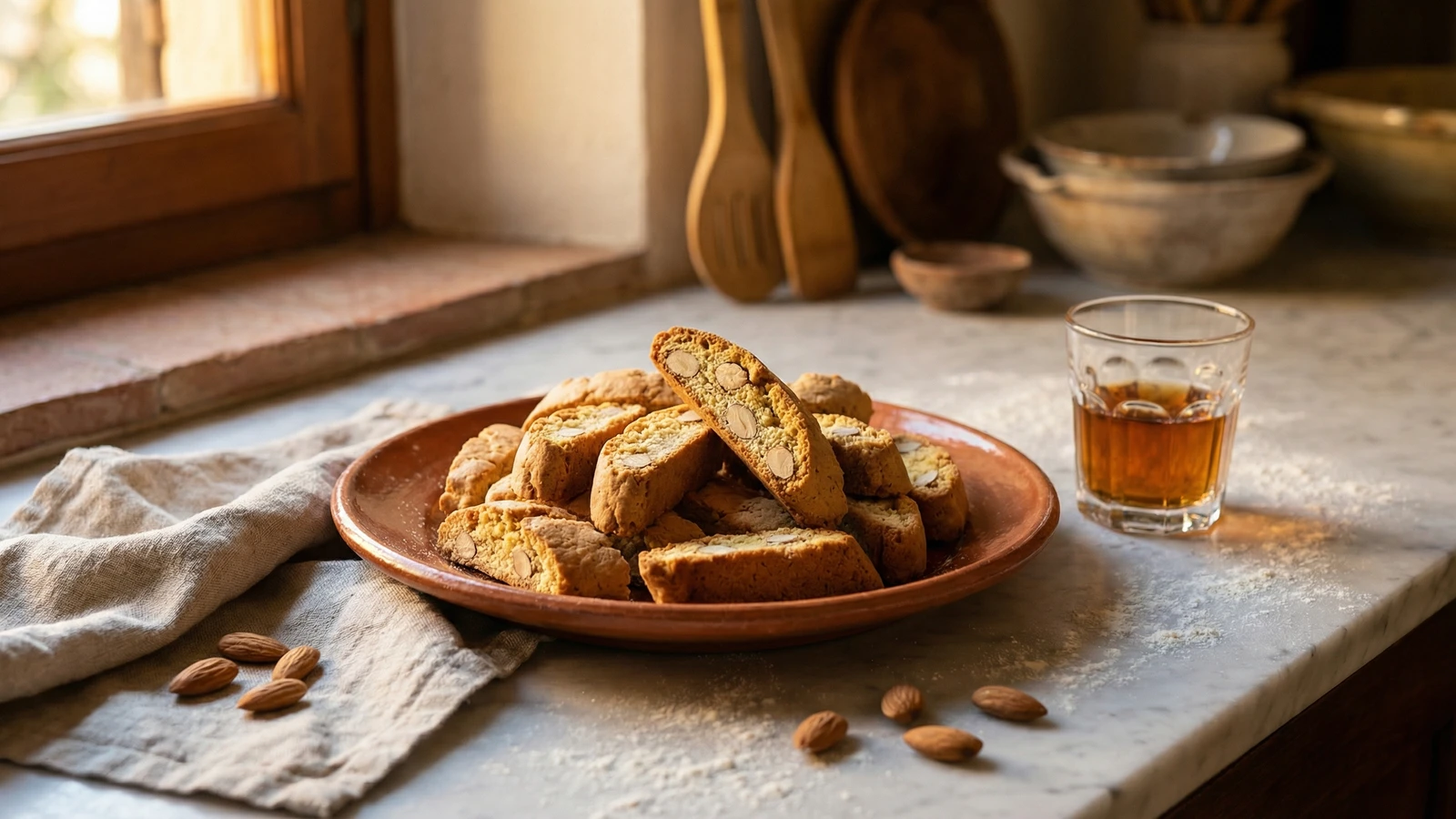
The original twice-baked almond cookies of Tuscany, made without butter as tradition demands, hard enough to shatter between your teeth until you dip them in Vin Santo and they surrender.
Americans call every Italian cookie a biscotti. This is incorrect. Biscotti means twice-baked, and it describes a method, not a category. These are the biscotti, the ones from Prato that gave the name to everything that followed. Every almond cookie you have eaten in a coffee shop owes its existence to this recipe.
Traditional cantucci contain no butter and no oil. This shocks Americans, who believe fat is essential to baked goods. The Pratesi knew better. The absence of fat creates a cookie that shatters cleanly, that keeps for weeks in a tin, that softens perfectly when dipped in wine. The fat would make them tender. Tender is not what we want.
They are meant to be hard. I say this because invariably someone will write to tell me their cookies came out too crunchy. They did not. They came out correct. The hardness is the point. You dip them in Vin Santo, the amber dessert wine of Tuscany, and you hold them there for a moment. The wine soaks into the crumb. The almond releases its perfume. You eat them before they fall apart. This is the ritual. This is what the textile workers of Prato have done since their great-grandmothers taught them.
The biscottificio of Antonio Mattei in Prato has baked these cookies continuously since 1858, though recipes for twice-baked almond biscuits appear in Tuscan records centuries earlier. Prato, a textile town northwest of Florence, became so identified with these cookies that Italians still call them 'biscotti di Prato,' distinguishing them from the countless variations that followed.
Quantity
2 cups (280g)
Quantity
1 cup (200g)
Quantity
1 teaspoon
Quantity
1/4 teaspoon
Quantity
3
at room temperature
Quantity
1 teaspoon
Quantity
1 teaspoon
finely grated
Quantity
1 1/2 cups (200g)
skin on
Quantity
1
beaten with 1 tablespoon water, for glaze
| Ingredient | Quantity |
|---|---|
| all-purpose flour | 2 cups (280g) |
| granulated sugar | 1 cup (200g) |
| baking powder | 1 teaspoon |
| fine sea salt | 1/4 teaspoon |
| large eggsat room temperature | 3 |
| pure vanilla extract | 1 teaspoon |
| orange zestfinely grated | 1 teaspoon |
| whole raw almondsskin on | 1 1/2 cups (200g) |
| egg yolkbeaten with 1 tablespoon water, for glaze | 1 |
Position a rack in the center of your oven and heat to 325°F (165°C). Line a large baking sheet with parchment paper. The moderate temperature is essential. Too hot and the outside browns before the inside sets. Too cool and the cookies spread before they firm.
In a large bowl, whisk together the flour, sugar, baking powder, and salt until evenly combined. Make a well in the center. The mixing need not be elaborate. You are simply distributing the leavening.
Crack the three eggs into the well. Add the vanilla extract and orange zest. Using a fork, beat the eggs lightly, then begin incorporating the flour from the edges of the well, working gradually inward. When the mixture becomes too stiff for the fork, switch to your hands.
Add the whole almonds to the dough. Knead briefly to distribute them evenly throughout. The almonds must remain whole. Chopped almonds are a corruption of the original. The whole nuts create the characteristic appearance when you slice the logs, and they provide textural contrast.
Divide the dough in half. On the prepared baking sheet, shape each portion into a log approximately 12 inches long and 2 inches wide, leaving at least 3 inches between them. The logs will spread during baking. Flatten the tops slightly with your palm. Brush generously with the egg wash, which creates the characteristic golden sheen.
Bake until the logs are golden brown and firm to the touch, 30 to 35 minutes. A crack down the center is normal and desirable. Remove from the oven and let cool on the pan for 10 minutes. The logs must be cool enough to handle but still warm. Reduce the oven temperature to 300°F (150°C).
Transfer the logs to a cutting board. Using a sharp serrated knife, cut on a diagonal into slices about 3/4 inch thick. The angle matters. A steep diagonal creates the elegant elongated shape. A straight cut creates stubby rounds. The knife must be sharp or the almonds will shatter the slices. Work with confidence. Hesitation causes crumbling.
Arrange the slices cut side down on the baking sheet. They can be close together as they will not spread. Bake for 8 minutes. Turn each cookie over. Bake another 8 to 10 minutes, until deeply golden and completely dry. The cookies will still feel slightly soft when hot. They harden as they cool. This is the moment that determines their texture. Under-baked cantucci become chewy. Properly baked cantucci shatter.
Transfer the cookies to a wire rack and cool completely. They will crisp as they reach room temperature. Store in an airtight container at room temperature. They keep for three weeks easily, improving after the first day as the flavors meld. Serve with Vin Santo for dipping, or espresso if wine is not appropriate to the hour.
1 serving (about 19g)
Culinary guides, cultural storytelling, and the editorial depth that makes cooking meaningful.
Discover Culinary ExplorerChef Graziella
The cookies that prove beauty is the enemy of honest baking. Lumpy, cracked, and perfect, these hazelnut meringues are crisp shells hiding chewy, nutty centers.

Chef Graziella
The ancient spiced honey cookies of Siena, dense with walnuts and candied fruit, perfumed with anise. Medieval travelers sustained themselves with these at stable inns, and the name stuck.

Chef Graziella
The ancient almond cookies of Siena, soft as a whisper, crackled on top, buried in powdered sugar. Eight centuries of Tuscan tradition in every bite.

Chef Juliette
A pale short-paste shell holds silken, lightly sweet carrot purée beneath neat glazed half-discs, their butter syrup catching the light: a classical tart poised between vegetable course and sweet.