
Chef Remy
Andouille and Potato Hash
Smoky andouille sausage nestled among golden, shatteringly crisp potatoes and the holy trinity of peppers and onions, the kind of generous Louisiana breakfast that keeps you going until dinner.
A cooking platform built around craft, culture, and the stories behind what we eat.
Created by Chef Remy
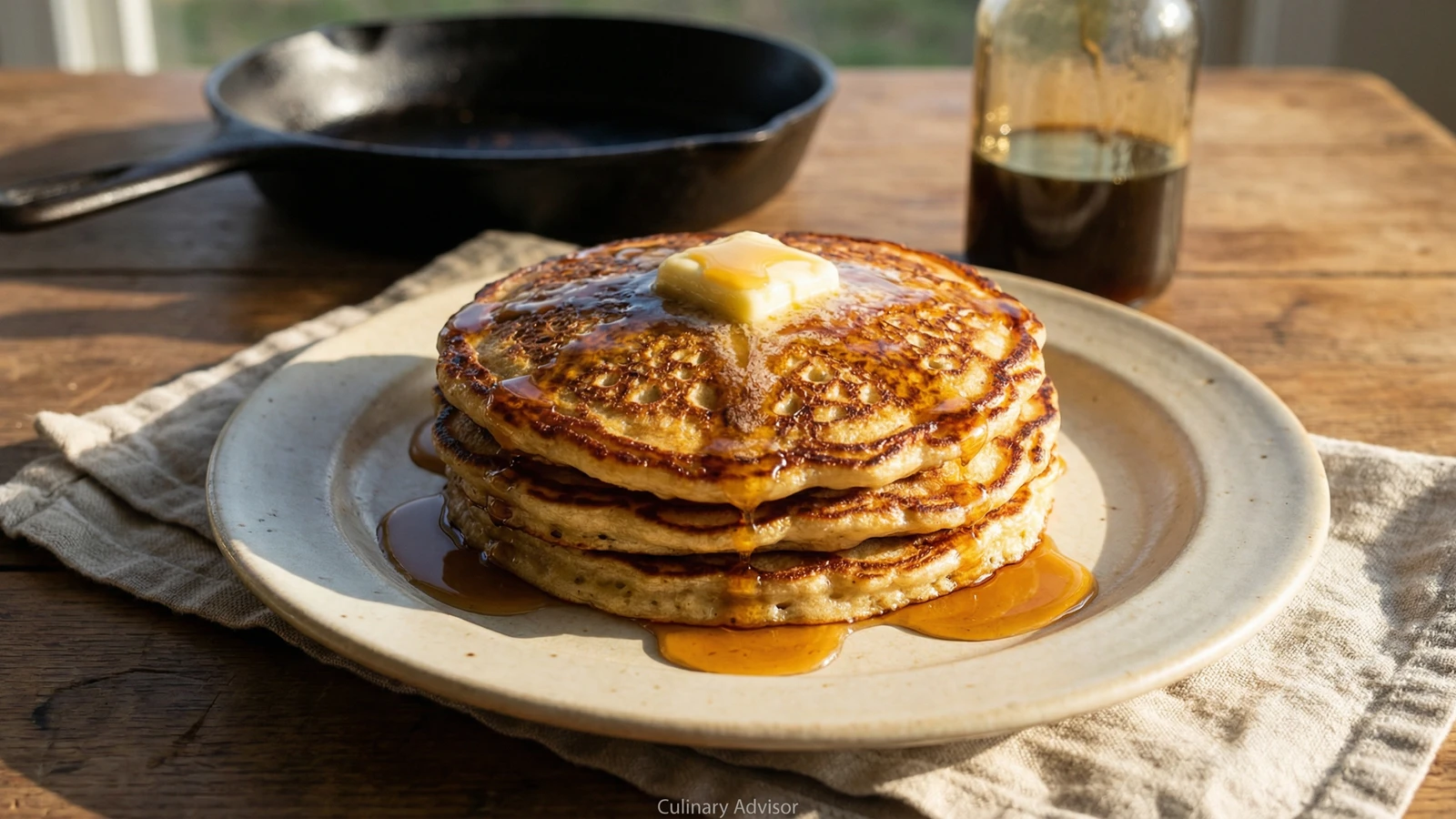
Tender buttermilk griddle cakes with cane syrup baked right into the batter, cooked on a well-seasoned cast iron until golden and lacy at the edges, served the way grandma Evangeline made them: drowning in butter and Steen's syrup.
You can tell everything about a Louisiana kitchen by watching how they make their griddle cakes on a Sunday morning. My grandmother Evangeline never owned a nonstick pan in her life. She used the same cast iron griddle her mother used, and her mother before that. Four generations of Boudreaux breakfasts came off that griddle, and every single one of them was served with Steen's cane syrup. That's the bayou way.
The secret to these griddle cakes lives in two places: the buttermilk and the cane syrup in the batter itself. Buttermilk gives you that tender, almost custard-like center that regular milk can't touch. The acidity reacts with the baking soda and creates tiny air pockets that make each cake light as a cloud. And that tablespoon of cane syrup in the batter? It caramelizes against the hot iron, giving you edges that turn golden and lacy while the center stays soft.
At Lagniappe, we serve these on Saturday and Sunday mornings only. Folks line up before we open the doors. They know what's waiting for them: a stack of cakes straight from cast iron, a pat of good salted butter melting down the sides, and enough Steen's to turn the whole plate into a sweet, sticky mess. That's exactly how it should be. Good food is honest food, and there's nothing more honest than a proper Louisiana breakfast.
Quantity
2 cups
Quantity
2 tablespoons
Quantity
1 1/2 teaspoons
Quantity
1/2 teaspoon
Quantity
3/4 teaspoon
Quantity
2 cups
cold
Quantity
2
at room temperature
Quantity
1/4 cup
melted and slightly cooled
Quantity
1 tablespoon, plus more for serving
Quantity
1 teaspoon
Quantity
for cooking and serving
Quantity
for serving
| Ingredient | Quantity |
|---|---|
| all-purpose flour | 2 cups |
| granulated sugar | 2 tablespoons |
| baking powder | 1 1/2 teaspoons |
| baking soda | 1/2 teaspoon |
| fine sea salt | 3/4 teaspoon |
| buttermilkcold | 2 cups |
| large eggsat room temperature | 2 |
| unsalted buttermelted and slightly cooled | 1/4 cup |
| pure cane syrup (Steen's preferred) | 1 tablespoon, plus more for serving |
| pure vanilla extract | 1 teaspoon |
| salted butter | for cooking and serving |
| pure cane syrup (Steen's) | for serving |
In a large mixing bowl, whisk together the flour, sugar, baking powder, baking soda, and salt until everything is evenly distributed. Make a well in the center. This takes thirty seconds but matters more than you think. Clumps of baking powder mean uneven rise, and nobody wants a flat spot in their griddle cake.
In a separate bowl, whisk together the cold buttermilk, eggs, melted butter, cane syrup, and vanilla until smooth. The buttermilk should be cold straight from the refrigerator. Cold buttermilk meeting warm butter creates tiny flecks that melt during cooking, giving you those little pockets of richness throughout each cake.
Pour the wet ingredients into the well of the dry ingredients. Fold with a rubber spatula using broad, gentle strokes until just combined. Stop the moment you no longer see dry flour. The batter will be lumpy. It should be lumpy. Those lumps are pockets of air that become tender spots in your finished cakes. Overmix this batter and you'll be chewing rubber.
Set a large cast iron skillet or griddle over medium heat and let it warm for a good five minutes. Cast iron needs time to heat evenly. Add a thin pat of salted butter and let it melt and foam. When the foam subsides and the butter smells nutty but hasn't browned, you're ready. If it browns immediately, your pan is too hot. Cool it down and start again.
Flick a few drops of water onto the surface. They should dance and sizzle, evaporating in about two seconds. If they sit there doing nothing, you need more heat. If they vanish instantly with an angry hiss, you need less. This test tells you more than any thermometer. Trust your senses.
Using a quarter-cup measure, pour batter onto the hot griddle, leaving a few inches between each cake. Do not spread or touch them. Let them cook undisturbed until bubbles rise to the surface and begin to pop, the edges look set and slightly dry, and the underside is deep golden when you lift a corner. This takes about two to three minutes. Patience here pays off. Flip too early and you'll tear the cake.
Slide your spatula under each cake with confidence and flip in one smooth motion. Cook the second side until golden, another one to two minutes. The second side never colors as evenly as the first, and that's fine. Press gently with your spatula. When the cake springs back, it's done.
Transfer finished cakes to a wire rack set inside a rimmed baking sheet in a 200°F oven. Add a fresh pat of butter to the skillet before each batch. Work through the remaining batter, adjusting heat as needed. Your griddle will get hotter as you go, so stay attentive.
Stack three cakes on each warmed plate. Top with a generous pat of salted butter and let it melt into golden rivulets. Drizzle Steen's cane syrup over everything with a heavy hand. This is not the time for restraint. Serve while the butter is still melting and the edges are still warm. When the last bite is as good as the first, you've done it right.
1 serving (about 240g)
Culinary guides, cultural storytelling, and the editorial depth that makes cooking meaningful.
Discover Culinary ExplorerChef Remy
Smoky andouille sausage nestled among golden, shatteringly crisp potatoes and the holy trinity of peppers and onions, the kind of generous Louisiana breakfast that keeps you going until dinner.

Chef Remy
Smoky andouille sausage and melty pepper jack cheese nestled in a silky Cajun-spiced custard with the holy trinity, all wrapped in a buttery, shatteringly flaky crust that belongs on every Louisiana brunch table.

Chef Remy
Smoky andouille and the holy trinity meet fire-roasted tomatoes in this Louisiana riff on shakshuka, with eggs poached until the whites set and the yolks run golden into spicy Creole sauce.

Chef Remy
Homemade pork and rice sausage with three-pepper heat and fresh herbs, stuffed into natural casings and pan-fried until the casing crackles and the filling stays impossibly moist inside.