Chef Lupita
Acúmara Tatemada al Comal
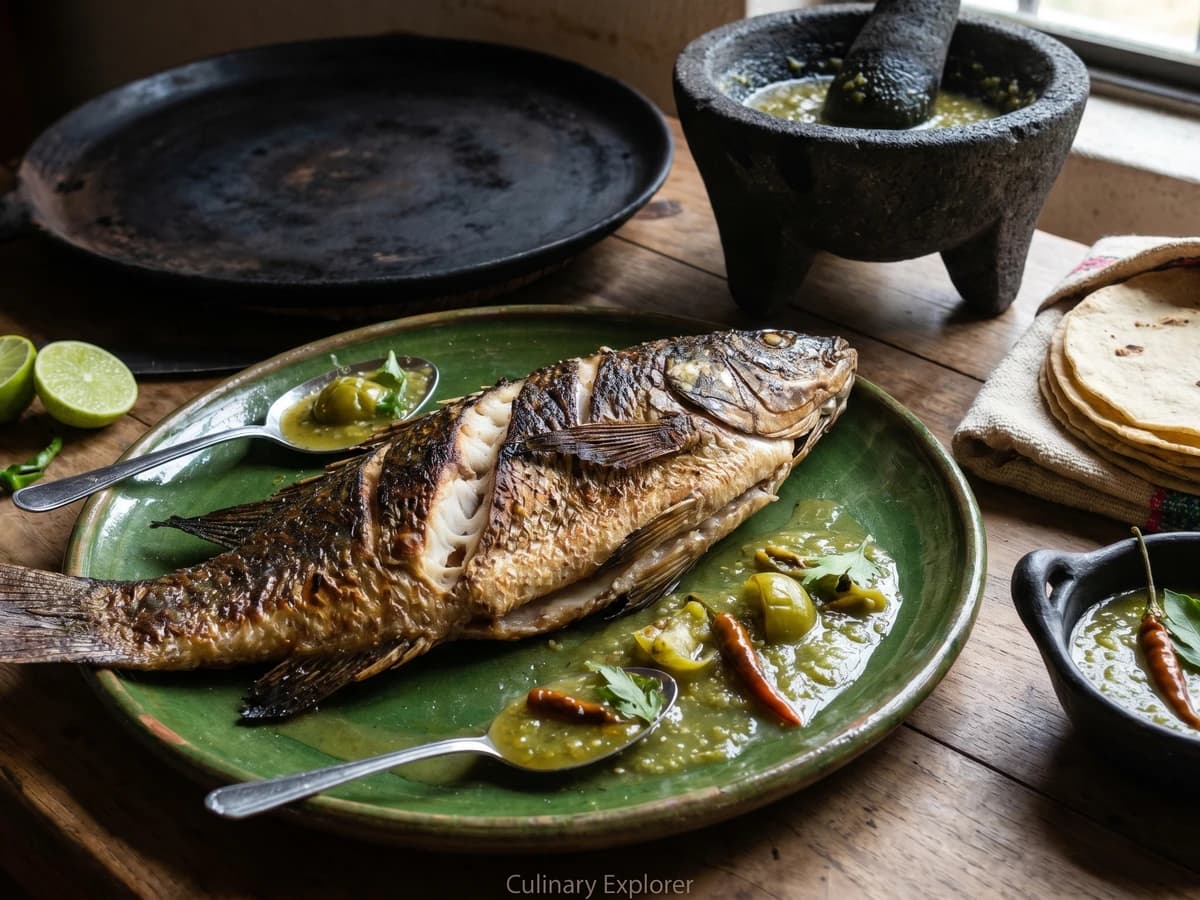
Michoacán's Lake Pátzcuaro acúmara, a whole kurucha from the lago tatemada on a comal de leña and served with chile perón atápakua, corn tortillas, and P'urhépecha discipline.
A cooking platform built around craft, culture, and the stories behind what we eat.

Created by
Sinaloa's everyday shrimp plate: head-on camarones seared hard in butter and a small mountain of sliced golden garlic, finished with lime, salsa inglesa, and a single chile de arbol for backbone.
This dish belongs to Sinaloa. The Pacific coast, the marisquerias of Mazatlan and Culiacan, the family kitchens of Los Mochis and Topolobampo where the shrimp is local, the limes are small and green, and the garlic is sliced, never minced. Sinaloa is the largest shrimp-producing state in Mexico and that fact shapes the cooking. Camarones al mojo de ajo is what you make on a Tuesday when the boats came in that morning. It takes twenty minutes. It feeds a family. Cada estado, su propia cocina, and this is one of theirs.
The technique is simple and the technique is everything. Slice two whole heads of garlic into thin coins. Toast them slowly in butter and oil until they go pale gold. Pull them out. Sear the shrimp hard and fast in the perfumed fat. Put the garlic back in with more butter, lime, salsa inglesa, and a single chile de arbol broken in half for warmth. That is the mojo. Three rules: head-on shrimp, sliced garlic not minced, and pull the pan off the heat before you think you should. Overcooked shrimp and burned garlic are the two ways this dish dies.
My mother did not cook Sinaloense food. She was from Jalisco, inland, and the seafood she knew was from a freezer. The first time I ate proper camarones al mojo de ajo I was twenty-eight, in a marisqueria in Mazatlan with a plastic tablecloth and a Pacifico in front of me, and the senora who ran the kitchen brought the platter out with the heads still on and told me to eat them with my hands. I wrote her recipe in the margin of my mother's notebook, on a page that had been waiting for it. La cocina no es decoracion, es trabajo, and this is honest, fast, coastal work.
Sinaloa's identity as Mexico's leading shrimp producer was cemented in the second half of the 20th century with the development of large-scale aquaculture along the coastal lagoons of the Sea of Cortez, though the wild-caught fishery in towns like Topolobampo, Teacapan, and Mazatlan dates back centuries. Mojo de ajo as a preparation arrived through the Spanish-Caribbean culinary axis, the word 'mojo' deriving from the Portuguese 'molho' meaning sauce, and was adapted along Mexico's Pacific coast using local shrimp, Mexican lime, and the regional habit of finishing seafood with Worcestershire and Maggi sauces, both 19th- and early 20th-century European imports that became fixtures of the marisqueria table. The dish's marriage of European butter-and-garlic technique with native Pacific shrimp represents the kind of regional synthesis that flattens easily under the label of generic Mexican cooking, when in fact it could only have been born on the Sinaloa coast.
Quantity
1 1/2 pounds (about 16 to 20)
shell on, deveined through the back
Quantity
2
cloves peeled and thinly sliced (about 1 cup of slices)
Quantity
6 tablespoons
Quantity
3 tablespoons
such as canola or sunflower
Quantity
2
stemmed and broken in half
Quantity
1 teaspoon, plus more to taste
Quantity
1/2 teaspoon
Quantity
1 tablespoon
Quantity
1 teaspoon
Quantity
from 2 limes, plus extra wedges for serving
Quantity
2 tablespoons
Quantity
for serving
Quantity
for serving
warmed
Quantity
for serving
Quantity
for serving
| Ingredient | Quantity |
|---|---|
| large head-on shrimpshell on, deveined through the back | 1 1/2 pounds (about 16 to 20) |
| whole heads of garliccloves peeled and thinly sliced (about 1 cup of slices) | 2 |
| unsalted butter | 6 tablespoons |
| neutral oilsuch as canola or sunflower | 3 tablespoons |
| dried chile de arbolstemmed and broken in half | 2 |
| kosher salt | 1 teaspoon, plus more to taste |
| freshly cracked black pepper | 1/2 teaspoon |
| Worcestershire sauce (salsa inglesa) | 1 tablespoon |
| Maggi sauce (jugo Maggi) | 1 teaspoon |
| Mexican lime juice | from 2 limes, plus extra wedges for serving |
| chopped flat-leaf parsley | 2 tablespoons |
| cooked white rice (optional) | for serving |
| hand-pressed corn tortillas (optional)warmed | for serving |
| sliced avocado (optional) | for serving |
| lime wedges (optional) | for serving |
Leave the heads on and the shells on. The heads carry the flavor and the shells protect the meat from going rubbery in the pan. Devein each shrimp by sliding a small knife or skewer along the back through the shell to lift the dark vein out. Rinse, pat dry, and season with the salt and black pepper. Let them sit at room temperature for ten minutes while you cut the garlic.
Peel two whole heads of garlic and slice each clove into thin coins, about the thickness of a Mexican peso piece. You want slices, not paste. Minced garlic burns in seconds and turns the mojo bitter. Sliced garlic toasts evenly, goes golden, and stays sweet. No me vengas con atajos. The knife work is the recipe.
Set a wide heavy skillet over medium-low heat. Add the oil first, then 4 tablespoons of the butter. Once the butter foams and the foam settles, add all the sliced garlic and the chile de arbol halves. Stir constantly with a wooden spoon. The garlic should sizzle quietly, never aggressively. Cook for five to seven minutes until the slices turn pale gold and smell sweet. Pull the pan off the heat the moment they hit gold. They go from gold to burned in fifteen seconds. Burned garlic is bitter garlic and there is no rescuing it.
Using a slotted spoon, lift the toasted garlic and chile out of the pan and onto a plate. Leave the chile-and-garlic-perfumed butter and oil in the skillet. This is your mojo base. The garlic will go back in at the end so it stays crisp instead of stewing into the shrimp.
Raise the heat under the skillet to medium-high. When the garlic-scented fat is shimmering, lay the shrimp in a single layer. Do not crowd the pan. Work in two batches if you need to. Cook for about 90 seconds on the first side without moving them. The shells will turn coral and the edges will curl. Flip each one and cook 60 to 90 seconds on the second side. The shrimp is done when the shell is bright orange-pink and the flesh just at the back of the head turns opaque. Asi se hace y punto. Overcooked shrimp is a sin in Sinaloa.
Lower the heat to medium. Return the toasted garlic and chile to the pan. Add the remaining 2 tablespoons of butter, the Worcestershire, the Maggi, and the lime juice. Swirl the pan to emulsify. The butter and lime should cling to every shrimp in a glossy yellow-gold sauce streaked with garlic and flecks of red chile. Taste the sauce. Adjust salt. Throw in the parsley and toss once more.
Slide the shrimp and all of the mojo onto a warm platter. Spoon the extra garlic from the bottom of the pan over the top. Serve right away with white rice to catch the sauce, warm corn tortillas to make tacos at the table, sliced avocado on the side, and a stack of lime wedges. Eat with your hands. Pull the heads off and suck the juice out before you peel the shells. That is how it is done on the Sinaloa coast. Recetas probadas y garantizadas.
1 serving (about 500g)
Culinary guides, cultural storytelling, and the editorial depth that makes cooking meaningful.
Discover Culinary ExplorerChef Lupita
Michoacán's Lake Pátzcuaro acúmara, a whole kurucha from the lago tatemada on a comal de leña and served with chile perón atápakua, corn tortillas, and P'urhépecha discipline.

Chef Lupita
Puebla's weekday adobo of pork shoulder braised in a thick guajillo and ancho sauce sharpened with vinegar, cumin, and clove. The deep red of a market spice stall, the dish a poblana cooks without thinking.

Chef Lupita
Loreto's pit-roasted clams, planted hinge-up in beach sand and tatemadas under a fast fire of dried romerillo brush, the resinous Baja desert shrub that gives this dish its smoke.

Chef Lupita
Oaxaca's eighth mole, the silky, almond-and-cinnamon almendrado, served over poached chicken. Mild, sweet, restrained, and a quiet rebuttal to anyone who thinks Mexican food has to be hot to be Mexican.