
Chef Isabel
Aguaillo de la Sierra de Cadiz
Aguaillo is from the Sierra de Cadiz: cold water, stale bread, garlic, oil and vinegar, closer to a field drink than a bowl of soup, and sharp enough to wake you in the heat.
A cooking platform built around craft, culture, and the stories behind what we eat.
Created by
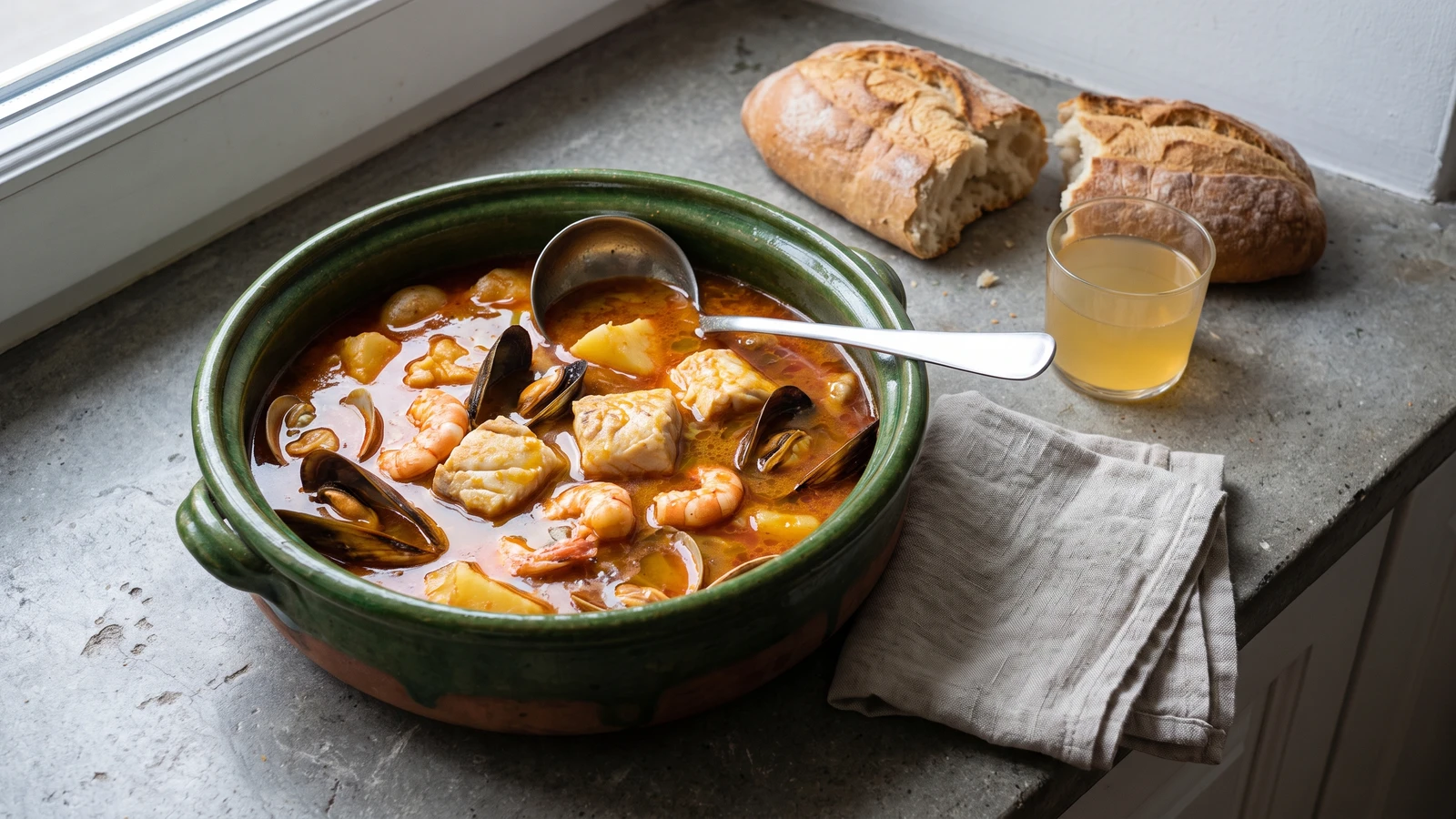
Caldereta marinera Asturiana is the fishermen's pot of Lastres: rockfish, shellfish, potato, tomato, and pepper, kept soupy and carried by a slow sofrito.
Caldereta marinera Asturiana belongs to the Cantabrian coast, especially Lastres, where firm fish, shellfish, potato, tomato, and pepper make a stew that is meant to be eaten with a spoon. Esto es de Asturias, no de "España" a secas. It is not a thick fish casserole, and it is not a showy seafood platter. The broth matters as much as what sits in it.
The method that decides it is the sofrito, the slow onion base. Cook the onion, pepper, garlic, and tomato low until they go sweet and jammy, with almost no raw edge left. That is where the stew gets its body. Rush it and the broth tastes thin, no matter how good the fish is.
If you are far from Asturias, no hace falta haber pisado España. Use firm white fish that will not collapse, monkfish if you can, cod or hake at a pinch, and add clams or mussels for the sea taste the rockfish would have given you. What changes is the depth: proper fish bones and shellfish give the broth a stronger Cantabrian spine. Make the stock, build the sofrito, add the fish only at the end. Siempre sale, si lo sigues.
Caldereta marinera Asturiana is tied to Lastres, a fishing village in the concejo of Colunga, where Casa Eutimio made its version a local point of pride. The dish belongs to the family of fishermen's stews cooked from the day's catch, especially rockfish too bony or irregular for clean fillets but excellent for broth. Potatoes, pepper, tomato, cider, and a spoonable finish mark it as Asturian coastal cooking, not a generic seafood stew.
Quantity
1kg
cut into large pieces
Quantity
500g
Quantity
300g
scrubbed
Quantity
300g
scrubbed and debearded
Quantity
300g
shells on
Quantity
700g
peeled and cut into 3cm chunks
Quantity
2 medium
finely chopped
Quantity
1
finely chopped
Quantity
1
finely chopped
Quantity
4
finely chopped
Quantity
350g fresh or 300g canned
grated if fresh
Quantity
150ml
Quantity
1.4 litres
Quantity
80ml
Quantity
1
Quantity
1 teaspoon
Quantity
1 pinch
Quantity
25g
toasted
Quantity
20g
toasted
Quantity
2 tablespoons, plus more to finish
chopped
Quantity
to taste
Quantity
to taste
| Ingredient | Quantity |
|---|---|
| mixed firm white fish, such as monkfish, hake, cod, conger eel, or rockfishcut into large pieces | 1kg |
| fish bones and heads, preferably rockfish or hake bones | 500g |
| clamsscrubbed | 300g |
| musselsscrubbed and debearded | 300g |
| large prawns or langoustinesshells on | 300g |
| waxy potatoespeeled and cut into 3cm chunks | 700g |
| onionsfinely chopped | 2 medium |
| red pepperfinely chopped | 1 |
| green pepperfinely chopped | 1 |
| garlic clovesfinely chopped | 4 |
| ripe tomatoes, or good canned crushed tomatograted if fresh | 350g fresh or 300g canned |
| dry Asturian cider, or dry white wine | 150ml |
| water | 1.4 litres |
| extra virgin olive oil | 80ml |
| bay leaf | 1 |
| sweet pimentón de la Vera | 1 teaspoon |
| saffron threads (optional) | 1 pinch |
| stale breadtoasted | 25g |
| blanched almondstoasted | 20g |
| parsleychopped | 2 tablespoons, plus more to finish |
| salt | to taste |
| black pepper | to taste |
Peel the prawns, keeping the shells and heads for the stock, and chill the peeled prawns with the fish. Put the shells, heads, fish bones, bay leaf, and 1.4 litres water in a pot. Bring just to a simmer, skim the foam, and cook gently for 25 minutes. Strain and press lightly on the shells. You want about 1 litre of clean stock.
Warm the olive oil in a wide heavy cazuela or pot. Add the onions and peppers with a good pinch of salt and cook over low heat for 20 minutes, stirring now and then, until soft, dark gold at the edges, and sweet. Add the garlic and cook 2 minutes more. Stir in the grated tomato and cook 15 minutes, until the mixture is thick and jammy. This slow sofrito is the floor of the stew.
Add the pimentón and saffron and stir for only 10 seconds, just until fragrant. Pour in the cider and let it bubble for 2 minutes, scraping the bottom of the pot. Pimentón scorches fast, and scorched pimentón tastes bitter. Keep your eye on it.
Add the potatoes and turn them through the sofrito until stained red-gold. Pour in 900ml of the hot fish stock, enough to cover the potatoes generously, and simmer uncovered for 18 to 22 minutes, until the potatoes are just tender at the point of a knife. Keep the pot soupy; add more stock if the liquid drops too low.
Crush the toasted bread, toasted almonds, parsley, and a pinch of salt in a mortar with 2 tablespoons of the hot broth until you have a rough paste. This picada, the pounded thickener, gives the broth a little body without turning it heavy.
Stir the picada into the pot. Season the fish pieces with salt and pepper, lay them over the potatoes, and tuck in the clams, mussels, and peeled prawns. Cover and simmer gently for 6 to 8 minutes, shaking the pot once or twice by the handles, until the fish flakes, the prawns turn pink, and the shells open. Do not stir with a spoon now, or the fish will break.
Discard any clams or mussels that stay closed. Taste the broth for salt, scatter with a little parsley, and rest the stew off the heat for 5 minutes. Serve it in deep bowls with potato, fish, shellfish, and plenty of broth in each one. Bread on the table is not decoration here. It has work to do.
1 serving (about 520g)
Culinary guides, cultural storytelling, and the editorial depth that makes cooking meaningful.
Discover Culinary ExplorerChef Isabel
Aguaillo is from the Sierra de Cadiz: cold water, stale bread, garlic, oil and vinegar, closer to a field drink than a bowl of soup, and sharp enough to wake you in the heat.

Chef Isabel
Ajilimojili is Jaen's tomato-free cold soup: potato, roasted red pepper, garlic, olive oil, and vinegar pounded into a cool, silky spoonful.

Chef Isabel
Ajo carretero is Soriano, from the pine country of Soria: lamb cooked in a plain garlicky broth, then served the old way, meat first and bread-soaked soup after.

Chef Isabel
Ajoblanco Extremeño is the poor-kitchen cold soup of Extremadura: bread, garlic, oil, egg yolk, vinegar, and icy water, with no almonds. Whisk it slowly and serve it bien fresquito.