
Chef Juliana
Amalá de Xangô
You don't need mystery for this pot. You need okra, dendê, onion, dried shrimp, and the patience to stir until the quiabo gives up its own caldo.
A cooking platform built around craft, culture, and the stories behind what we eat.

Created by
Whole fish in a pot looks like a test. It isn't. Build the refogado, layer the filhote, let tucupi do its work, and the Círio table starts making sense.
You see a big piece of fish, tucupi, jambu, dried shrimp, and that quiet voice starts: isso não é pra mim. I know that voice. I had it in my own kitchen, standing over onions I had managed to burn and undercook at the same time, which is a talent nobody needs to keep.
This is a Pará festive pot, and I say that with respect. Belém's cooks, and the cooks across Pará and Amazonas who carry these flavors every year, are the people to learn from first. What I can do is teach you the slow technique in plain steps, because cozinhar não é dom, é um aprendizado. A gente builds flavor from an honest refogado, onion, garlic, tomato, sweet pepper, pimenta-de-cheiro. Then the tucupi goes in already boiled and safe, the fish cooks in layers, and the jambu waits until the end so that little mouth-tingle, the paralisia, stays alive.
A real caldeirada is not stirred like soup. You layer it, you simmer it gently, and you move the pot instead of bullying the fish with a spoon. Stir too much and you get delicious mush, which is still dinner, but not the dinner we came for. The pirão on the side is the same lesson twice: use the broth you made, thicken it with farinha, and stop when it pulls from the spoon in soft waves.
This isn't a Tuesday shortcut dish. It's Almoço do Círio food, celebration food, crowd-around-the-table food. Serve it with white rice, pirão, maybe beans and something green beside it, and the everyday Brazilian plate puts on its church clothes without pretending to be anyone else.
The Círio de Nazaré has been held in Belém since 1793, and the October lunch that follows is often treated in Pará like Christmas: a long table with caldeirada, pato no tucupi, maniçoba, vatapá paraense, rice, farofa, and leftovers that improve for days. Tucupi and maniva come from cassava, a plant Indigenous cooks learned to detoxify with technique: raw cassava leaves are cyanogenic, so maniva for maniçoba must boil for days, traditionally seven, while tucupi is also boiled before use so it is safe and sour-bright. Pará's festive table carries Indigenous cassava knowledge, Afro-Brazilian seasoning, Portuguese stewing habits, and local Amazonian ingredients without needing any mystique pasted on top.
Quantity
1.5 kg
cut 2 to 3 cm thick
Quantity
1 1/2 teaspoons, divided, plus more to taste
Quantity
2 tablespoons
Quantity
3 tablespoons
Quantity
1 large
thinly sliced
Quantity
4 cloves
minced
Quantity
1 small
thinly sliced
Quantity
1 small
thinly sliced
Quantity
2 medium
chopped
Quantity
2
whole and lightly slit, or use 1 small sweet chile
Quantity
1/2 cup
rinsed well
Quantity
4 cups
safe for cooking
Quantity
1 cup, as needed
Quantity
2
peeled and halved
Quantity
1 packed cup
washed
Quantity
1/2 cup
chopped, plus more for finishing
Quantity
1 cup, plus more if needed
for pirão
| Ingredient | Quantity |
|---|---|
| filhote steaks or thick skin-on piecescut 2 to 3 cm thick | 1.5 kg |
| salt | 1 1/2 teaspoons, divided, plus more to taste |
| lime juice | 2 tablespoons |
| dendê oil or neutral oil | 3 tablespoons |
| onionthinly sliced | 1 large |
| garlicminced | 4 cloves |
| green bell pepperthinly sliced | 1 small |
| red bell pepperthinly sliced | 1 small |
| ripe tomatoeschopped | 2 medium |
| pimentas-de-cheirowhole and lightly slit, or use 1 small sweet chile | 2 |
| dried salted shrimprinsed well | 1/2 cup |
| boiled tucupisafe for cooking | 4 cups |
| water or fish stock | 1 cup, as needed |
| boiled eggspeeled and halved | 2 |
| jambu leaves and tender stemswashed | 1 packed cup |
| cilantro or chicory herbchopped, plus more for finishing | 1/2 cup |
| fine farinha de mandiocafor pirão | 1 cup, plus more if needed |
Pat the filhote dry and season it with 1 teaspoon of the salt and the lime juice. Let it sit for 20 minutes while you prep everything else. The salt has time to move into the fish, and the lime wakes it up without turning the outside tight and chalky. Don't leave it in lime for an hour and then blame the fish for acting cooked before it meets the pot.
Put the dried shrimp in a small bowl, cover with warm water, swish, drain, and repeat once. Taste one. It should still taste like shrimp and salt, not like the sea slapped you. This matters because the tucupi will reduce a little, and too much salt now becomes a loud pot later.
Warm the oil in a wide heavy pot over medium heat. Add the onion and peppers and cook until they murchar, soft and glossy at the edges, about 6 minutes. Add the garlic, tomatoes, pimentas-de-cheiro, and rinsed shrimp, then refogar until the tomato starts to collapse and smell sweet, about 5 minutes more. This is the foundation. Powder can't do this for you, because powder never softened an onion in its life.
Pour in the boiled tucupi and 1/2 cup of the water or fish stock. Bring it to a lively simmer, then lower the heat and let it ferver gently for 10 minutes. Taste the broth before the fish goes in. It should be bright, savory, lightly salty, and a little sharp. If the tucupi tastes raw or harsh, simmer it longer; if it is already too salty, add the remaining 1/2 cup water now.
Lay the filhote pieces into the simmering broth in one snug layer. Spoon a little broth over the top, cover the pot, and keep the heat low enough that the surface only trembles. Cook 12 to 15 minutes, depending on thickness, until the fish turns opaque and flakes when nudged at the thickest part. Don't stir. Shake the pot gently if you need to move things around. A real caldeirada is built in layers, not beaten into mush.
Tuck the jambu into the pot for the last 2 to 3 minutes, just until the leaves wilt and turn deep green. Add the boiled egg halves and the chopped cilantro or chicory, then taste the broth for salt. Jambu goes in late because its paralisia, that little buzzing tingle, fades when you cook it too long. We want it alive, not exhausted.
Ladle 2 cups of the hot caldeirada broth into a small saucepan, taking care not to break the fish. Bring it to a gentle simmer, then rain in the farinha with one hand while stirring with the other. Cook 3 to 5 minutes, until it thickens into a soft spoonable pirão that falls in slow ribbons. Add more broth if it gets stiff, or a spoonful more farinha if it runs like soup. The point is to carry the tucupi, not turn it into cement.
Serve the fish in wide bowls with plenty of tucupi broth, jambu, shrimp, and a half egg. Put the pirão beside it, not hidden underneath, and serve white rice for catching the broth. This is festa food, so feed the table properly: rice, fish, pirão, something green, and time enough for people to go quiet after the first spoonful.
1 serving (about 550g)
Culinary guides, cultural storytelling, and the editorial depth that makes cooking meaningful.
Discover Culinary ExplorerChef Juliana
You don't need mystery for this pot. You need okra, dendê, onion, dried shrimp, and the patience to stir until the quiabo gives up its own caldo.

Chef Juliana
You think a Polish hunter's stew is not for your kitchen. Wrong. Brown meat properly, build a real refogado, simmer cabbage low, and tomorrow's lunch is already better.
Chef Juliana
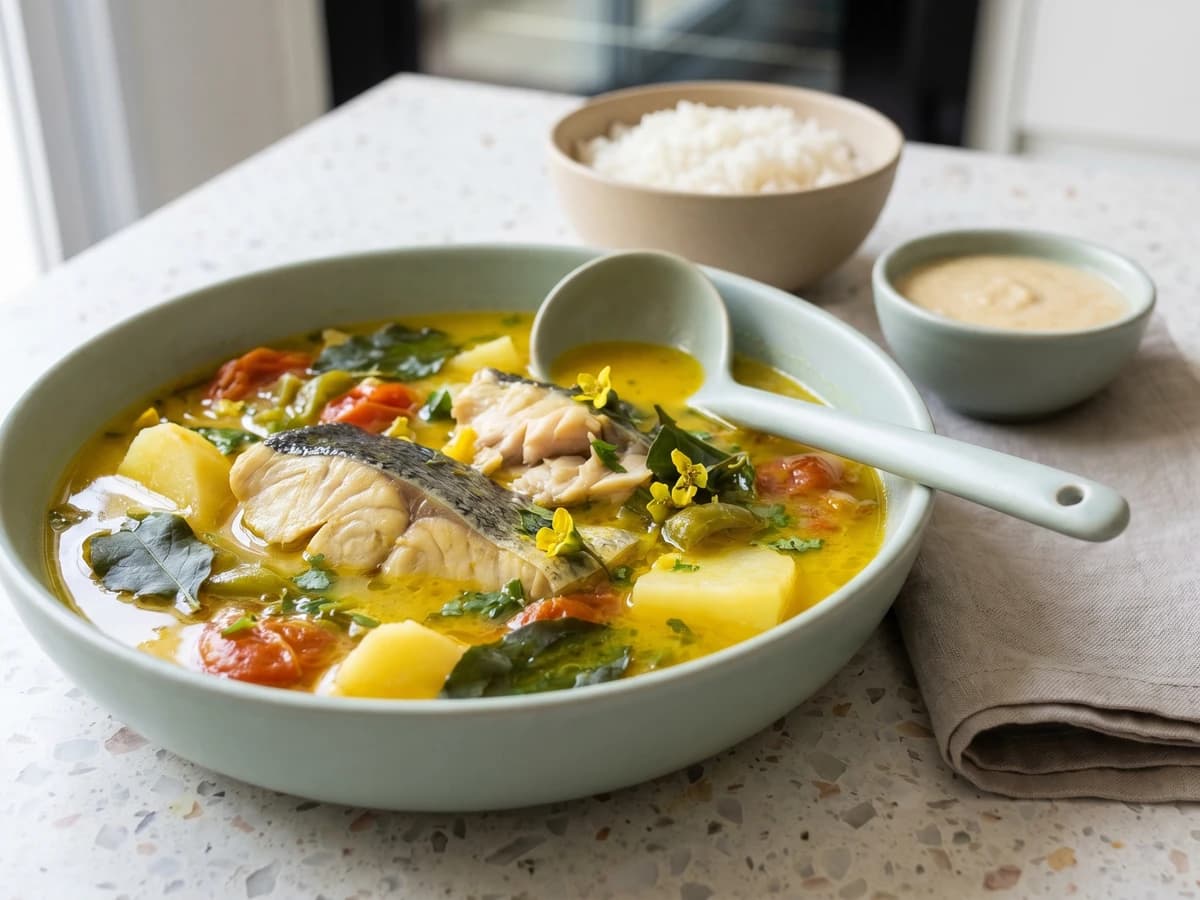
You don't need river wisdom in your bones to cook tambaqui well. You need real tucupi, a calm simmer, and the sense to let the fish stay whole until it gives.
Chef Juliana
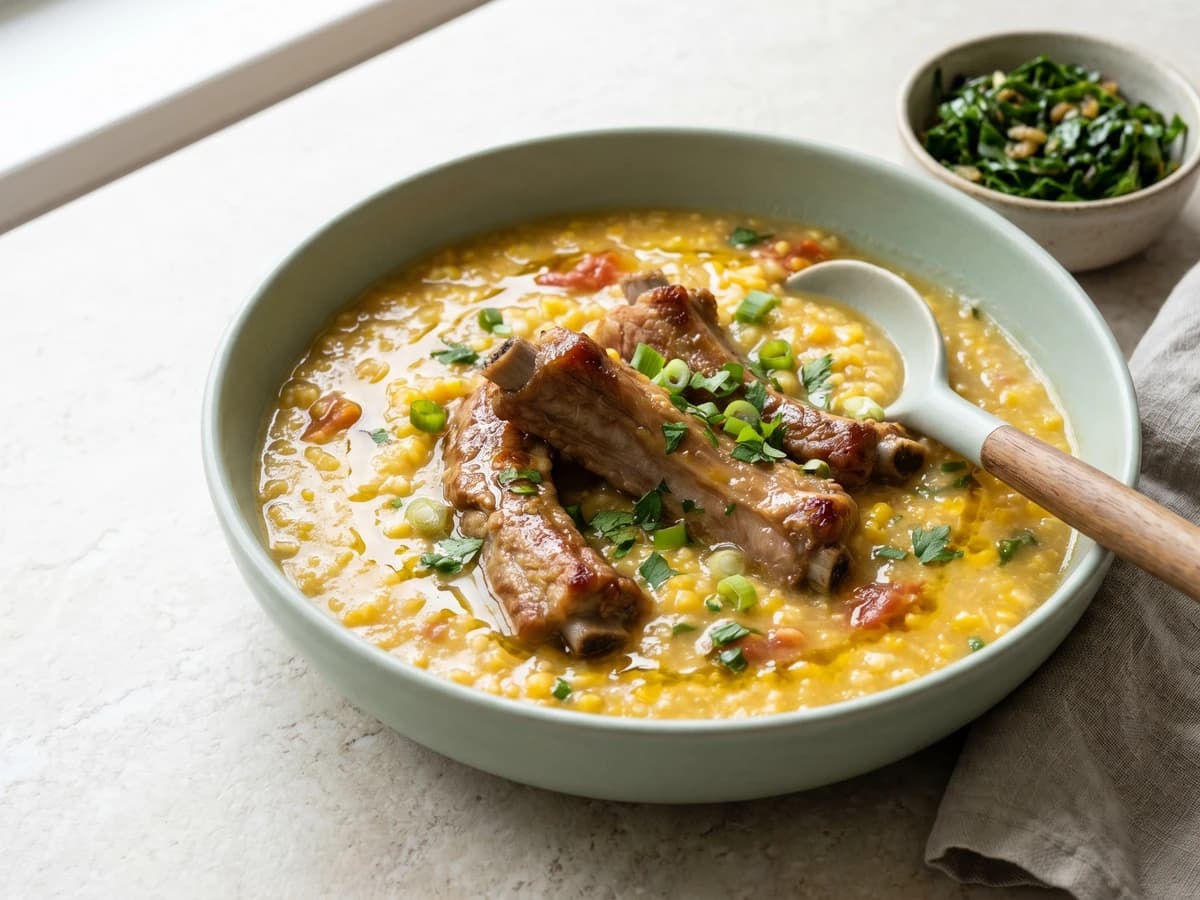
You don't need a secret hand for this pot. Brown the ribs, soften the corn, build the refogado, and let the caldo thicken itself like comida de verdade does.